Tag Archives: writing

Creativity is a Team Sport

I like when ideas about creativity surprise me from random sources; when an idea is sparked by an non-fiction article, paragraph of fiction, line of poetry, a photograph, an emotion ignited by the news or the delicious consumption of a six-pack of doughnuts.

Recently I was reading an article, “5 Practices We Need Back In Our Lives,” and one section on mutual encouragement stood out. Here is the relevant section (my emphases):

Mutual Encouragement

As a kid, I played a lot of sports. Although I enjoyed the competition, I mostly loved being on a team and working toward a larger purpose. In that context, every teammate becomes a cheerleader. There’s nothing quite like the energy created by mutual encouragement. It lifts spirits and helps everyone perform at their highest level.

Why, I wonder, does this type of encouragement fade as we grow older? Instead of cheerleaders, we become critics of one another. Perhaps it’s because we’re no longer on a team—at least that’s how we choose to see it. Instead, it’s us versus the world.

It’s time to begin encouraging those around us—family, friends, even co-workers. God calls us to “spur one another on toward love and good deeds” (Hebrews 10:24). Practicing this won’t merely lift others’ spirits and improve their performance, it will leave everyone feeling as though they’re on the same team, working toward a common purpose.

So often as creative people we think we are working in isolation (every man is an island when it comes to creative work), disconnected and removed from other creative people. This is especially true of the mythology of writers (of which I am one), that we spend our time locked away in a distant castle/apartment/coffee shop/ball pit at IKEA, removed from the smothering cloying atmosphere of people, suffering for our art.

What are we to do?

A past student of mine was a long distance marathon swimmer. He become the youngest male to swim the English Channel. While it was him in the water for many many hours, he spoke of the team around him who lifted his spirits when he was exhausted, dejected, and wanting to give up.

I feel there has been a shift in thinking and in culture regarding the isolated creator. We are moving towards a group consciousness and collectivisation in support of one another.

Whether this is groups that meet in real life or virtually in online groups and forums, the mutual encouragement gained shows that we are a team working towards a common goal and purpose.

Personally I’d like to see collectives grow organically, places where creatives of all pursuits and passions can meet to create, discuss, encourage, critique, edit, beta, inspire.

Imagine a salon of poets, writers, musicians, artists, dancers, sculptors, IT gamers, apps developers, philosophers, mathematicians, scientists, any type of creative person. A cultural think tank, brains trust, hot house, backyard barbecue  where we all bring a plate of food to share (a very Australian idiom) and get to enjoy each others’ company, ideas and encouragement (sorry to mix metaphors).

At its most basic, creativity is a team sport. We might work in isolation but our success depends on our community and relationships.

Here’s my game plan:

  • Join a team.
  • Create community.
  • Foster relationships.
  • Encourage and equip others.
The Significance of Creativity

The Significance of Creativity, or to put it another way, creativity creates significance (the noun/verb, subject/verb is a little awkward, not to mention the repetition. Oh, the vagaries of the English language).

Creativity is an act that begins with you, as an internal locus of control. It is inwardly focused, a way of understanding who you are, what you stand for and what you believe in. 

What Does Creativity Create in You?

Whether you’re at the start of your creative journey, been at it for a little while or have carved highways for others to follow, creativity creates four things within an individual: significance, community, conversation and legacy.

Significance

* Creativity creates an understanding of who you are.

Perhaps you started creating to work out the impact of a significantly emotional event in your life or as a way of exploring new ideas. 

Whatever the reason, it forms a significant part of who you are, what you identify with and how it is manifested in your creativity.

It is intensely personal, even private, and may never be shared with anyone else. It does not negate the significance of who you are. As intensely personal as creativity is, when shared with others, it gives them an insight into who you are. You have purpose and meaning, a spiritual dimension to your life.

Community

* Creativity is not a field limited to the individual.

It is often done as an individual but you should not be without a community.

Finding like-minded people as a support helps you continue what you are doing. They are a back up for when life is brutal and you want to chuck it all away. They are your confidantes and encouragers. They are also those who will love you deeply and tell you the truth about your work, especially when it sucks and needs more work.

In turn, you can teach others and expand the creative community.

Conversation

* talk to people about what you do and why.

You have a cause to champion, a positive reason to speak into people’s lives. It’s not all about you, dominating the conversation about your most recent creative project or endeavour. If people are willing to listen, speak. 

However, can you steer the conversation around to what makes your listener creative? Can you open up their mind to the possibilities of a creative project? Can you encourage them to take up an old hobby, long neglected, or aim for something new, something they have always wanted to do?

Legacy

* your work is a testament to others.

It is your character imprinted onto your creative work like children; lived, learned and loved, cherished as valuable and positive traits to have. Your commitment to others as teacher, or encourager, facilitator, supporter, collaborator.

Contribute your verse and know the significance creativity plays in your life and potentially in the life of others.

A Little Prompting #14

Many apologies for the lack of prompts last week. There are many excuses possible; some fanciful, some hyperbolic, some completely fictional.

In truth, it was my wife’s birthday so that will be the focus of this week’s prompts.

THEME Birthday 
RANDOM LINE PROMPT She waited patiently for her father to pass the silver mixing bowl and purple rubber spatula so she could feast on the streaks of cake mixture left inside.
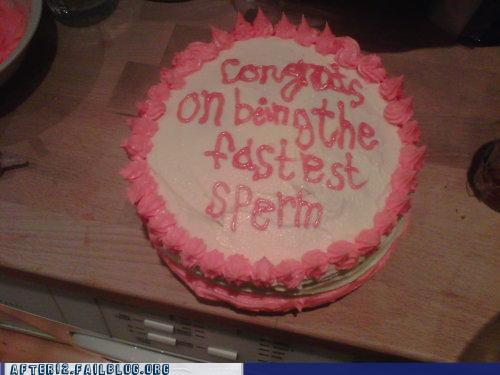
PHOTOGRAPH  party-fails-a-winner-was-you-birthday-cake-sperm(I couldn’t resist).
SONG/MUSIC VIDEO Things of Stone and Wood – Happy Birthday Helen 
SENSORY SUGGESTION  The burnt magnesium smell of sparklers wafting on the air.
QUOTE Today you are you! That is truer than true! There is no one alive who is you-er than you!
Dr Seuss

Go forth and (pro)create!

More Collaborative Poetry

I wrote another haiku yesterday, posted it to twitter and copied in Sean (@SeanBlogonaut) to see what he could add to form a tanka.

fading amber leaves
blown into the courtyard corner
lovers’ forgotten kisses

Sean added the final lines:

fading amber leaves
blown into the courtyard corner
lovers’ forgotten kisses
would that my love return
like the green leaves of spring

He also played with the second last line

fading amber leaves
blown into the courtyard corner
lovers’ forgotten kisses
how I wish my lover would return
like the green leaves of spring

We were playing around with this on Facebook, on a private page for our small group of writers, and after reading through Sean’s ideas, I added my own versions.

fading amber leaves
blown into the courtyard corner
lovers’ forgotten kisses
I wait for my love’s return
with the green shoots of spring

*****

fading amber leaves
blown into the courtyard corner
lovers’ forgotten kisses
I wait for my heart’s return
with the green shoots of spring

This is the fun of collaboration, learning with each other the intricacies of a new art form.

Into the mix Jodi Cleghorn (@JodiCleghorn) added her own version using my original haiku and added her own final lines to form another tanka.

fading amber leaves
blown into the courtyard corner
lovers’ forgotten kisses
left to decay
with the memory of you

As she said, “Thank you for new ways to play and collaborate.” 

Ultimately, this is what it is all about: new ways to play and collaborate. The apparent simplicity of haiku and tanka reveals a deeper, more sophisticated art form that while simple to learn is difficult to execute and takes years to master.

But the evening’s fun continued. Jodi wrote two haiku while out at the shops and posted them for us to add two final lines to form a tanka.

an autumnal drift
shedding selves compost
buried beneath

*****

frost-bitten feet
walk from the place
I forgot to leave

I took the haiku and added my own final couplet

an autumnal drift
shedding selves compost
buried beneath
resurrection of the dead
in someone else’s life

*****

frost-bitten feet
walk from the place
I forgot to leave
in the hope
your heart will thaw

frost-bitten feet
walk from the place
I forgot to leave
in the hope
your heart would thaw

In the last two, the change of a single word, “would” for “will” creates two very different meanings and both a valid.

Here’s a challenge: take my haiku and write two final lines to form a tanka.

fading amber leaves
blown into the courtyard corner
lovers’ forgotten kisses

Collaborative Poetry

Recently I tweeted the following haiku:

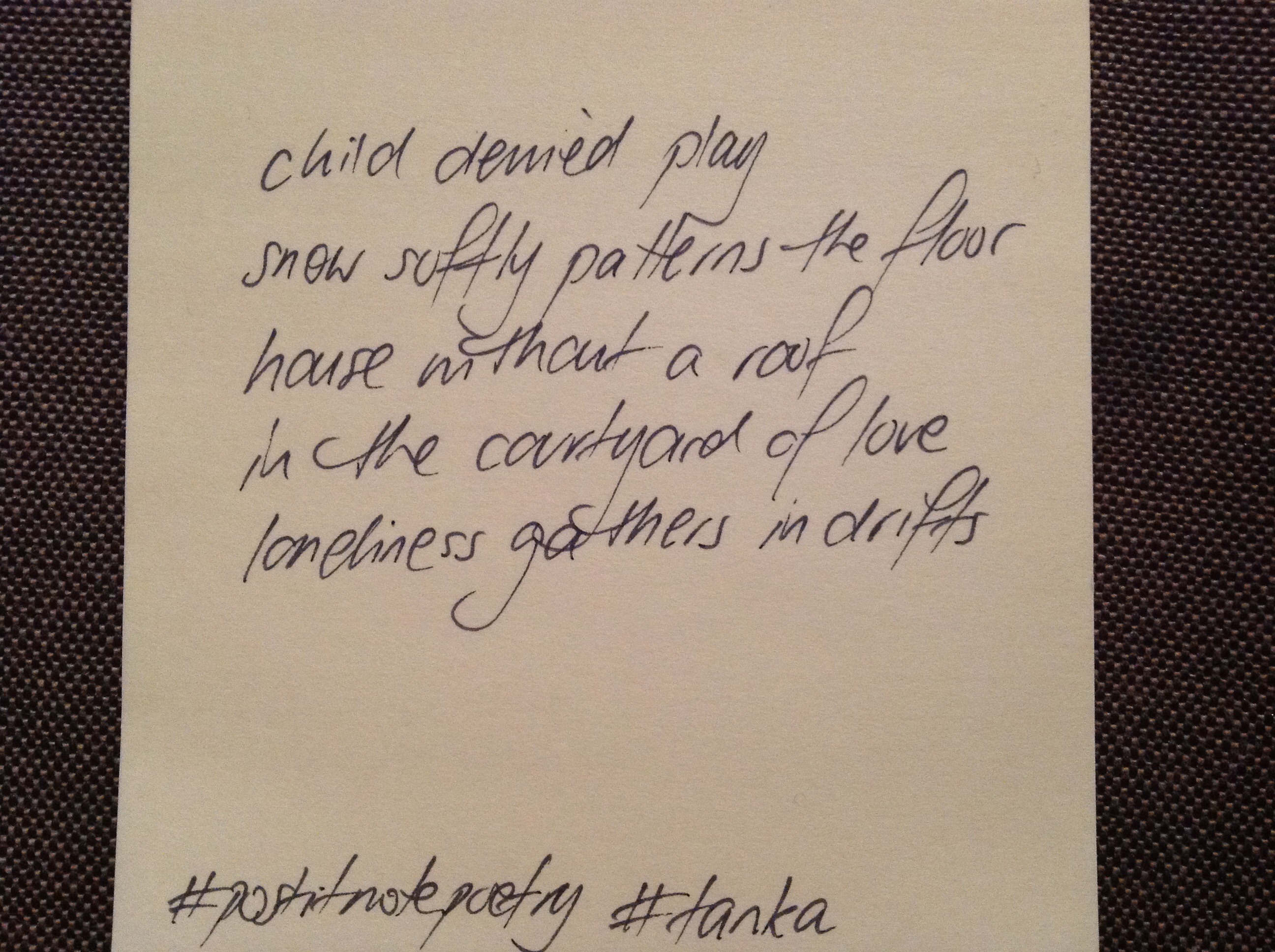
child denied play
snow softly patterns the floor
house without a roof

and tagged a friend, Sean (@SeanBlogonaut) who is another poet and writer. He is particularly fond of haiku, tanka and renga. He has given my wonderful insight into how haiku should be written in English (focus more on the imagery, the phrase and the fragment, rather than the counting of syllables. It is one of the vagaries of using a poetic form which has its origins in another language; the Japanese use sound units which are different to English syllables).

He added the following two lines to form a tanka:

in the courtyard of love
loneliness gathers in drifts

Creating a new poem

child denied play
snow softly patterns the floor
house without a roof
in the courtyard of love
loneliness gathers in drifts

I am used to collaborative writing and I want to further explore it with Sean, particularly as he raised the idea with me a couple of weeks back but we haven’t been able to catch up yet to write renga.

Collaborating with a new writing partner has benefits:

1. You learn new skills

A collaboration can be of equals, or a master and novice. In the case of writing renga with Sean, I would be the novice. But the collaboration is one of exploring a poetic form and learning more from each other.

2. The sum is greater than its parts

Or, two heads are better than one. New eyes, old heads, different perspectives, new ways of writing. You learn from another about your own writing from the writing of others. You learn how the other person constructs a phrase, sentence or image, and you get to explore why. It’s another skill/technique you can add to your own writer’s toolbox.

3. It’s fun

Yep. It’s fun. Creating a piece of work should be fun. It’s also hard work but the fun of creating something together, a shared community and body of work is a fantastic feeling.

image

Find a creative partner and create something new. It may only be a one-off piece of work or it may lead to a long term collaboration. Try it. Invite someone to participate.

The Selfie and Art

The Selfie Generation and The Misunderstanding of Art
 
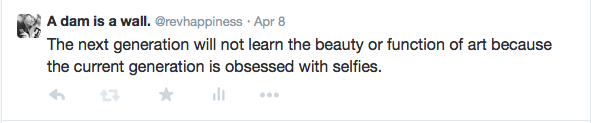
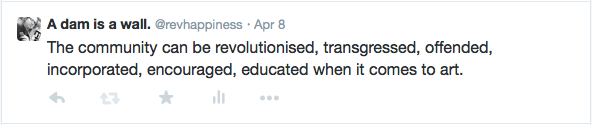
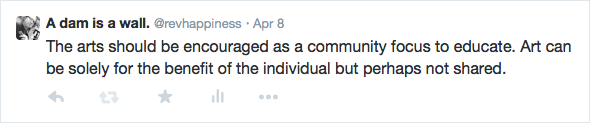
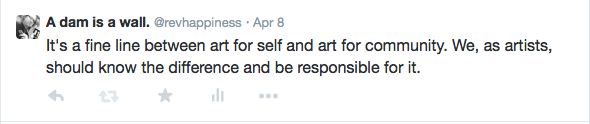
While away on holidays the thought of the ubiquitious selfie struck me as an indicative misunderstanding of the way art functions in society.  Without giving it too much thought I put the random thoughts to twitter.Screen Shot 2015-04-16 at 9.37.14 pm

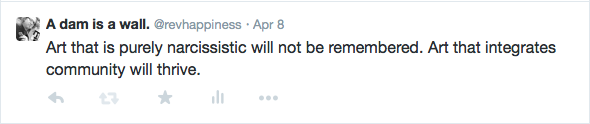
Screen Shot 2015-04-16 at 9.37.25 pm 
There has been commentary on the narcissism of the selfie, and the selfie generation. Self portraits are nothing new in terms of the history of art but the selfie has predominated in a digital age and the shift in societal thinking. It is nothing more than self-aggrandisement.
The selfie misses the vital point of art and its function in society as a whole and the community on a smaller level, leading to this statement:
 
Screen Shot 2015-04-16 at 9.37.35 pm
 
Ultimately I don’t care about the photos of yourself, or of your food, or your beverage, or any other piece of ennui you care to photograph and post on social media. What I do care about is the image you have carefully and thoughtfully constructed in order to tell a story.
It can be a photograph, a drawing, a doodle, a sketch, done with crayons, pencils, textas, salt and pepper, the spilt milk on the table and played with to create a pattern. 
The fact is, the art is deliberate and has a purpose. The fact a company can sell a book of Kim Kardashian selfies says a lot about the disposable artistic culture we live in. We have monetised narcissism which diminishes the value of art as a whole and what people are willing to pay to contribute to a vibrant arts culture. The same thing can be said for reality tv celebrities and their ‘biography.’ It cheapens the literary culture and pushes publishing to look for the next quick cash cow they can milk then slaughter. 
If we want art to have longevity it must have purpose, definition and an audience. A selfie has none of them.
Screen Shot 2015-04-16 at 9.37.44 pm
There is a place for art for the individual and the self. But it is not art to be shared publicly. It can be shared with a few select people but not for the whole community. I don’t show the scraps of sentences found littered in my notebook or my practice pieces to the readers of my blog (unless I am using it to illustrate a point). This is the art for myself. Only when the piece is completed, edited, refined will I show it to my audience. I know what is done for myself and what is done for my audience. 
By all means, take selfies and share them with your audience. Just don’t cal it art.
Screen Shot 2015-04-16 at 9.37.58 pm

 Feel free to disagree with me in the comments; I would like your feedback on this.

What’s your opinion on the selfie as ‘art’? 

Mending the War – Flash Fiction

This was a piece I submitted last year to a competition. No result. Another piece to help me practice. 

But I’d like you to have a read and tell me what you think.

She looked up from the sock she was darning, needle paused mid-stitch, and watched the missile burn across the blank expanse of blue sky, rending it in two.

“Where is it going?” asked her granddaughter.

“To war.”

The smoke trail began as a small tear, slowly expanding, making the rift wider, ragged. Slowly, imperceptibly at first, the blue pushed through the vapour trail, dissipating the smoke.

“There will be another,” said the grandmother.

“When will we have peace?”

The needle wound through the fabric and pulled the two halves together.

“When we have learned to mend our hearts.”

A Little Prompting #12

Pens at the ready? Paint squeezed onto the palette? Pencil sharpened?

Ready. Set. Go! for this week’s set of prompts

THEME Ego is not a dirty word
RANDOM LINE PROMPT She felt like a slowly deflating balloon; as fast as she patched the holes new ones appeared. 
PHOTOGRAPH  apple-watch-gold

http://www.iphonehacks.com/2015/02/apple-installing-safes-retail-stores-gold-plated-apple-watch.html

SONG/MUSIC VIDEO Living Colour – Cult of Personality

SENSORY SUGGESTION The gentle pressure of a shirt collar against the neck as a tie is adjusted.
QUOTE I fed my ego but not my soul – Yakov Smirnoff

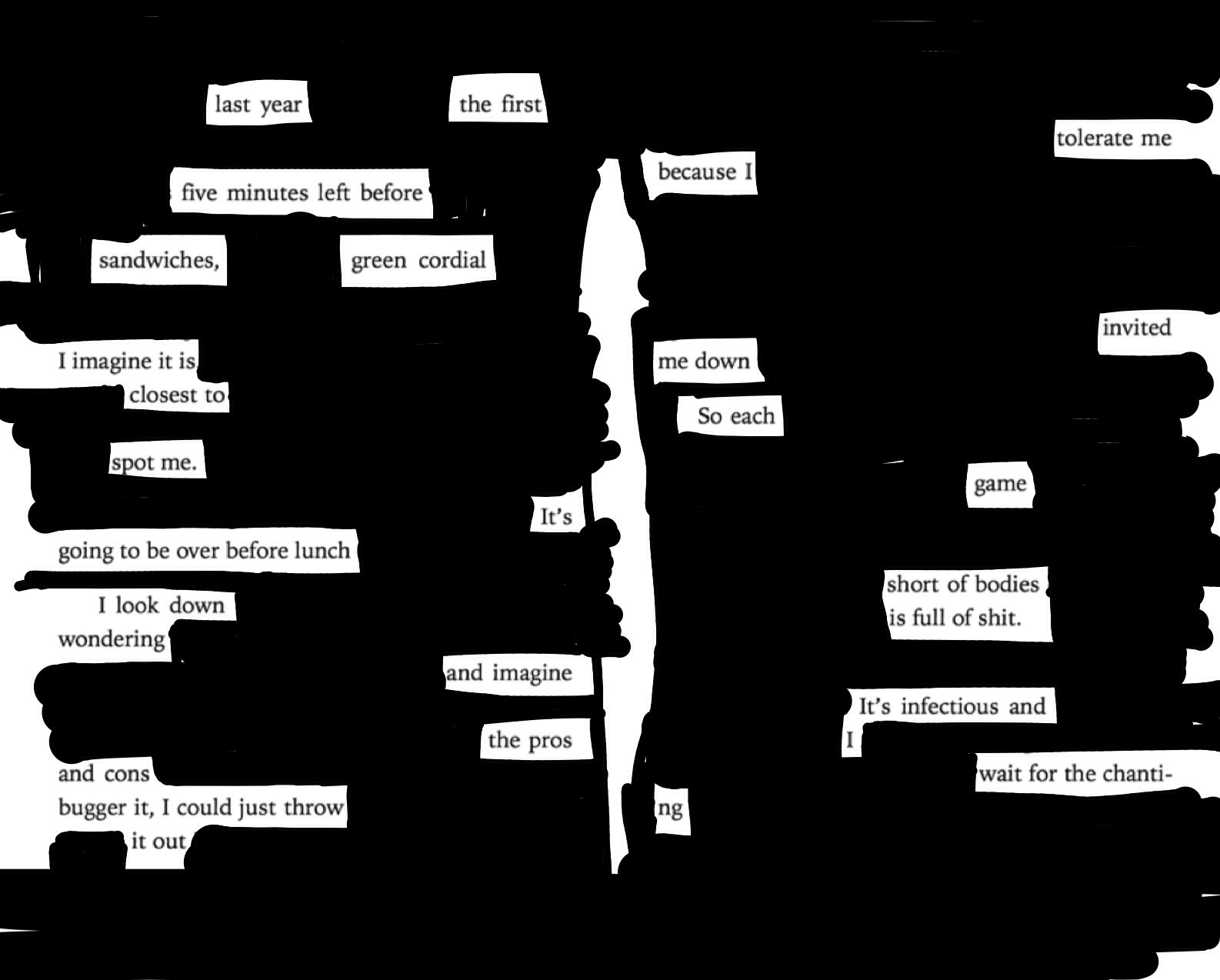
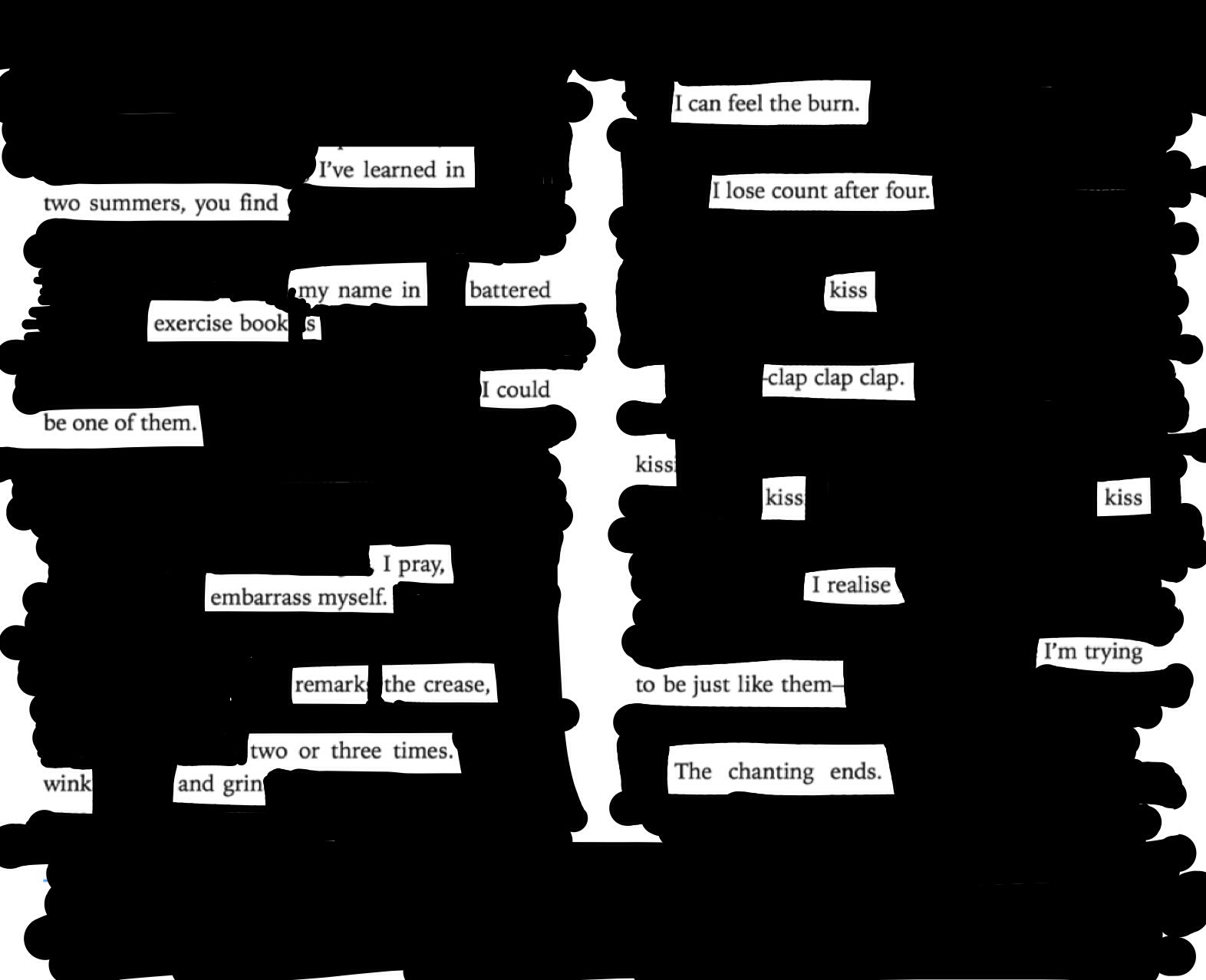
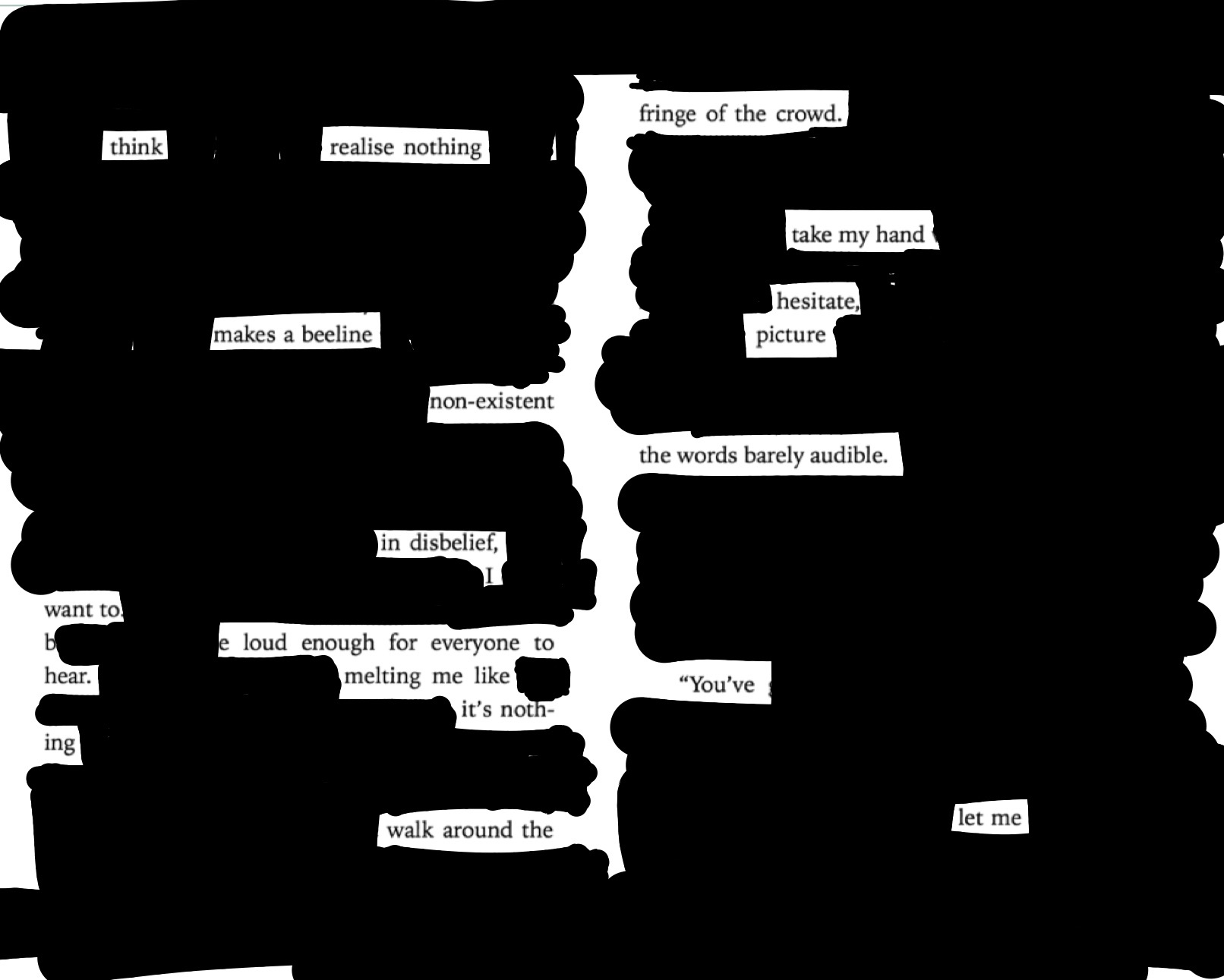
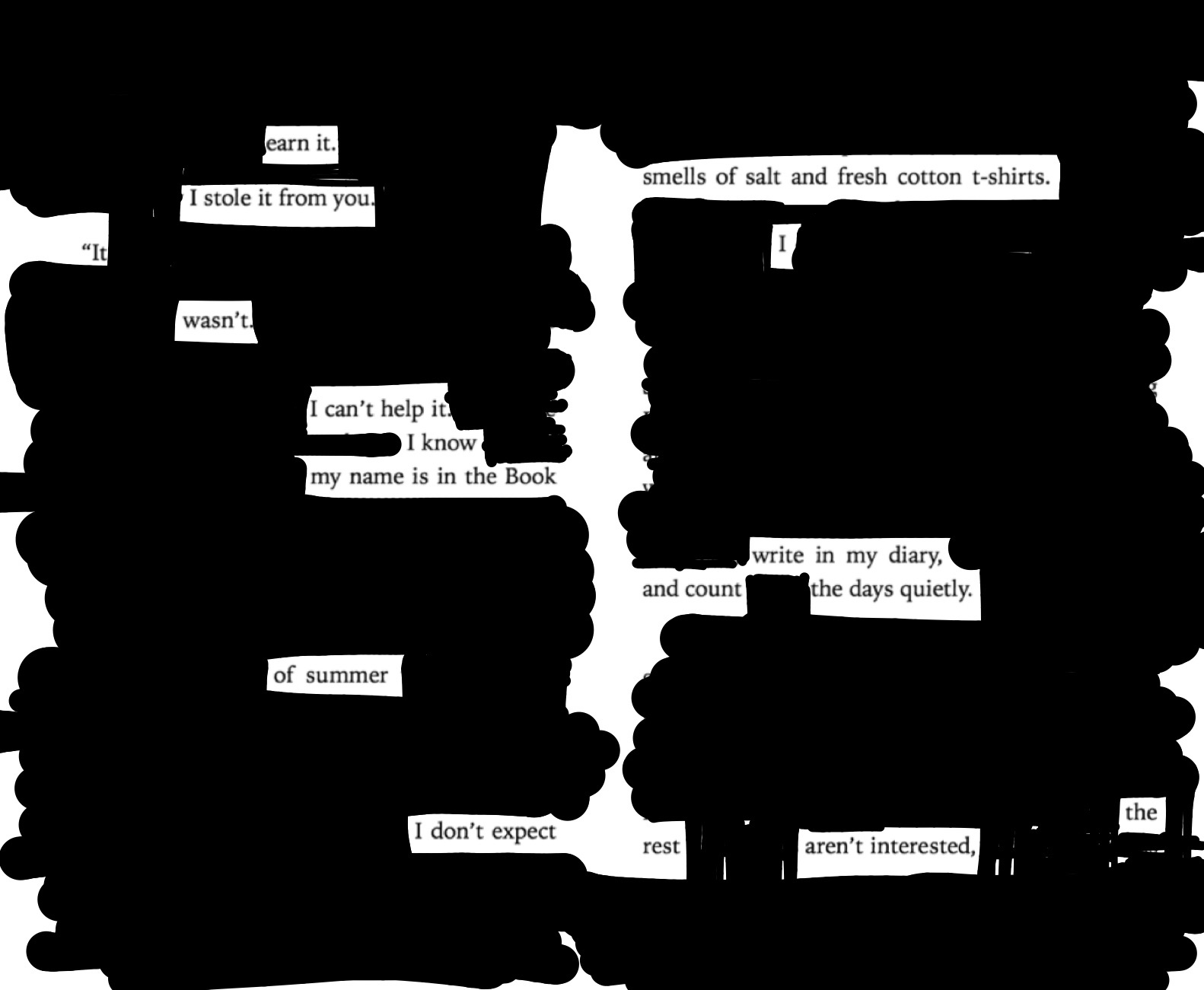
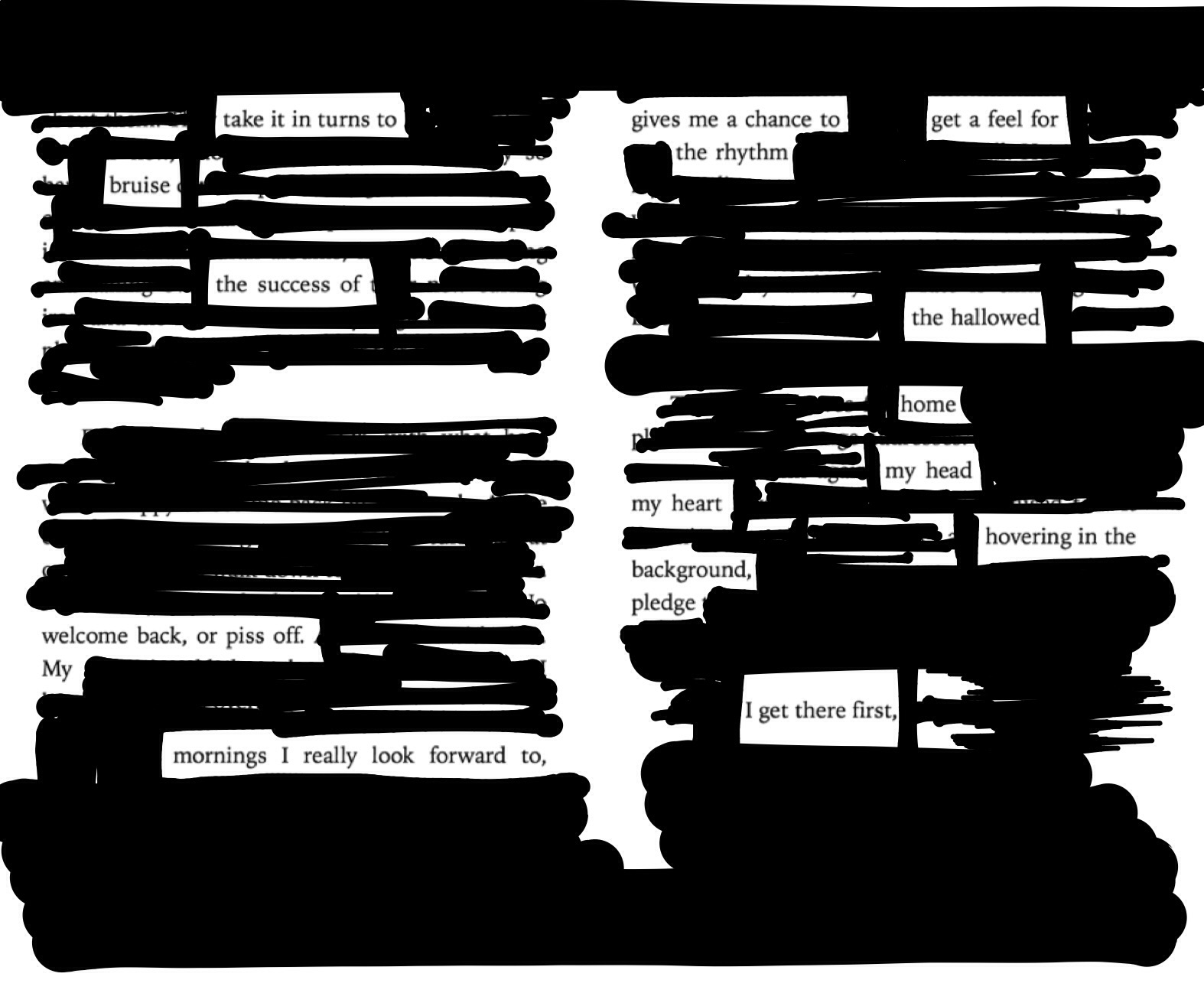
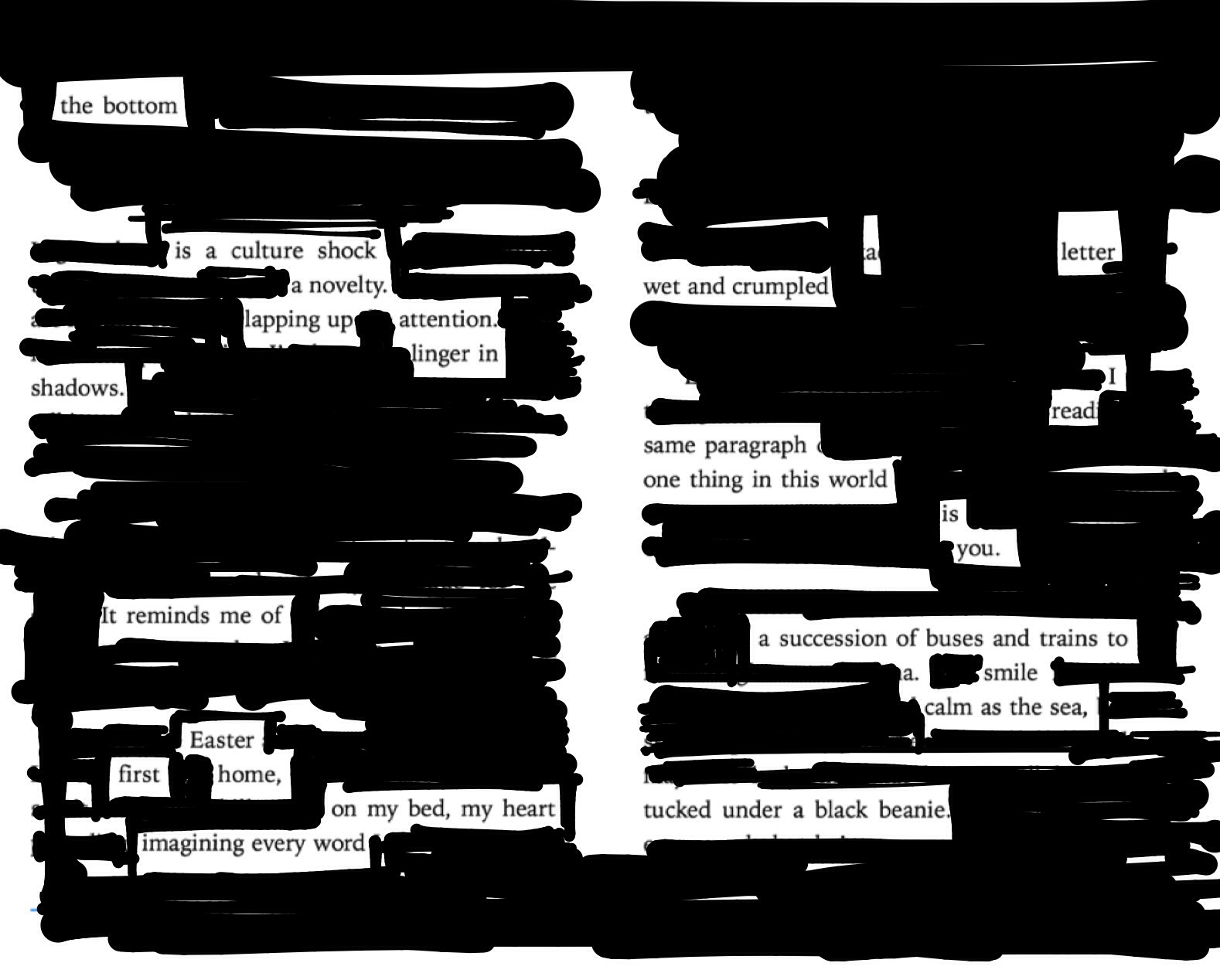
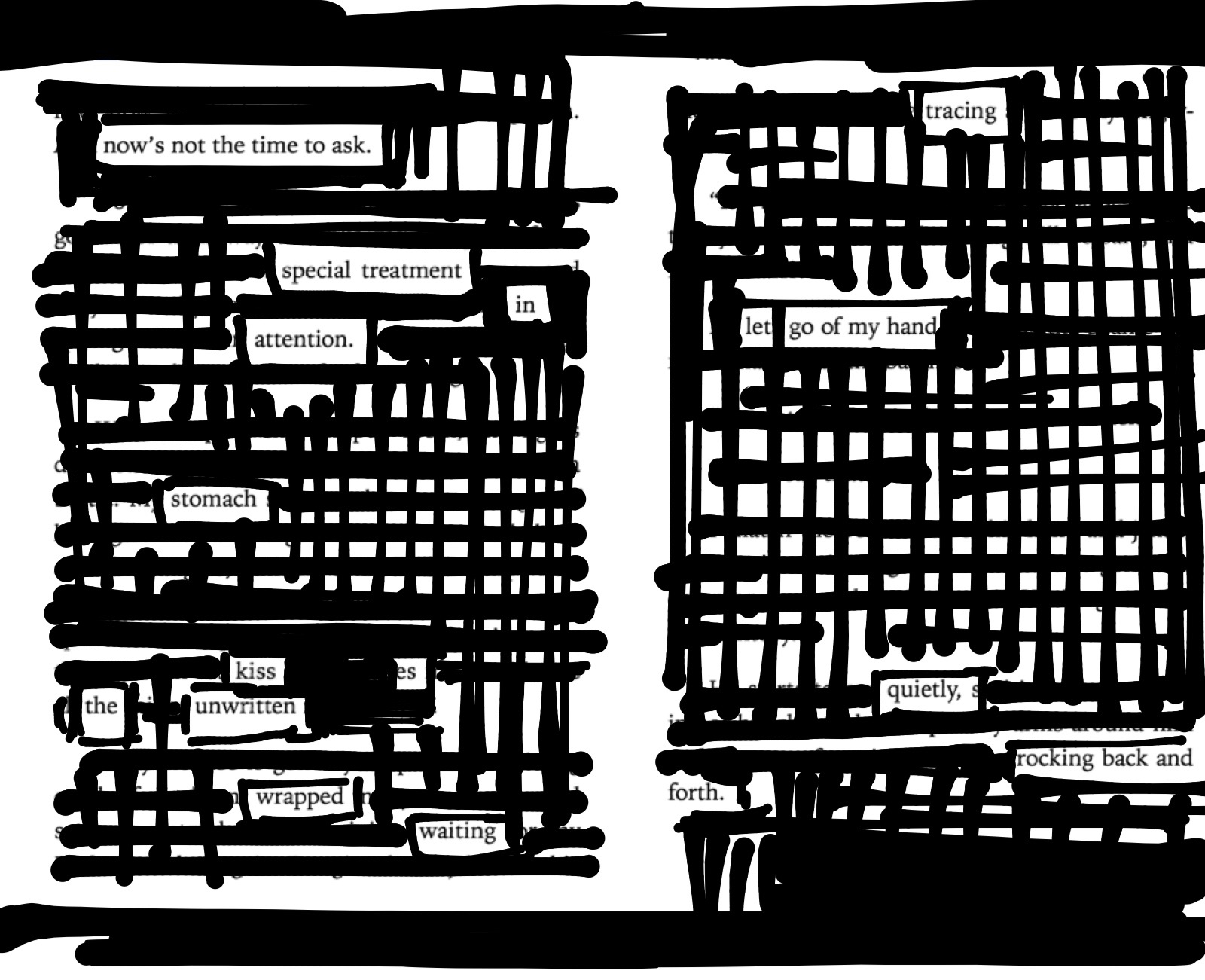
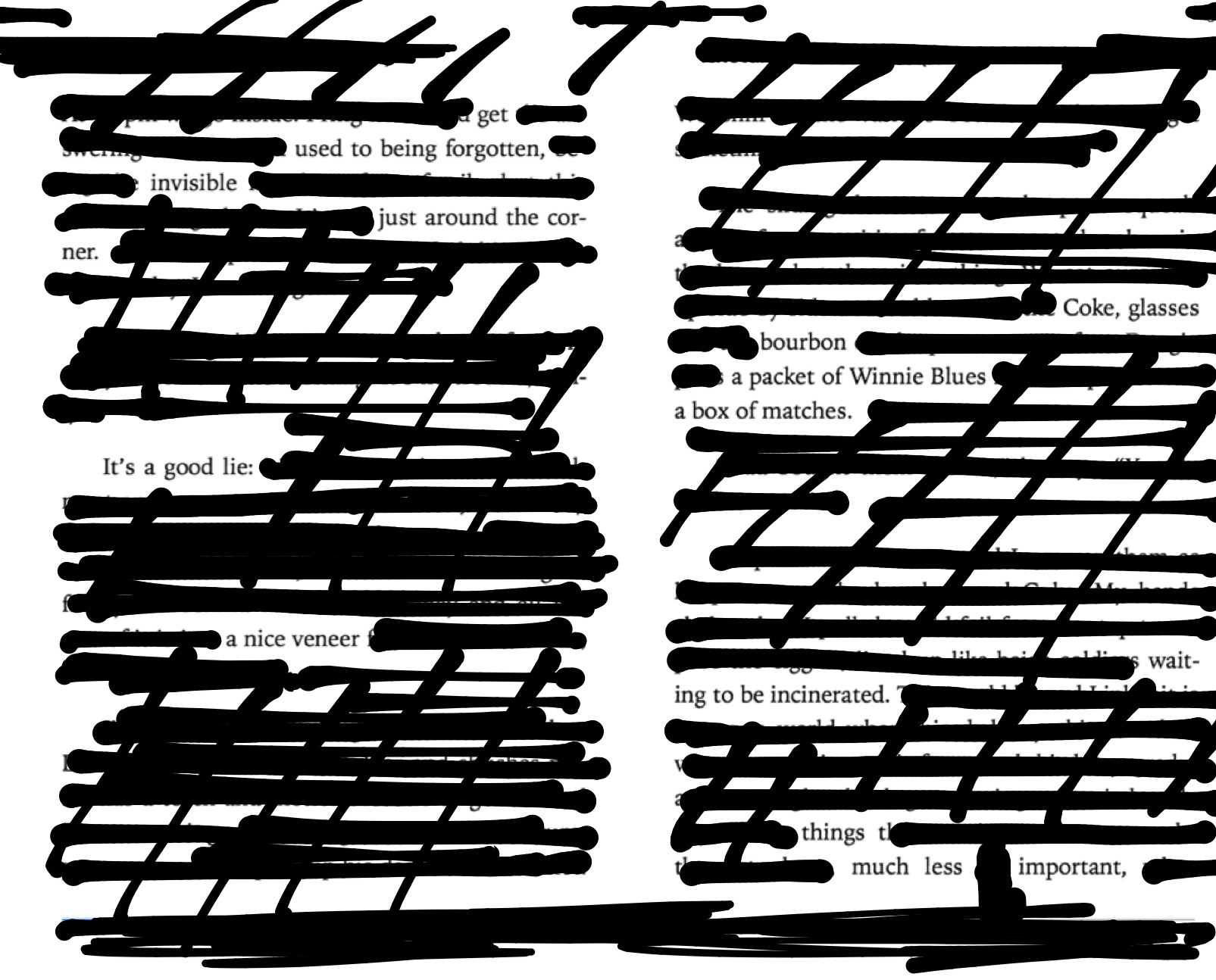
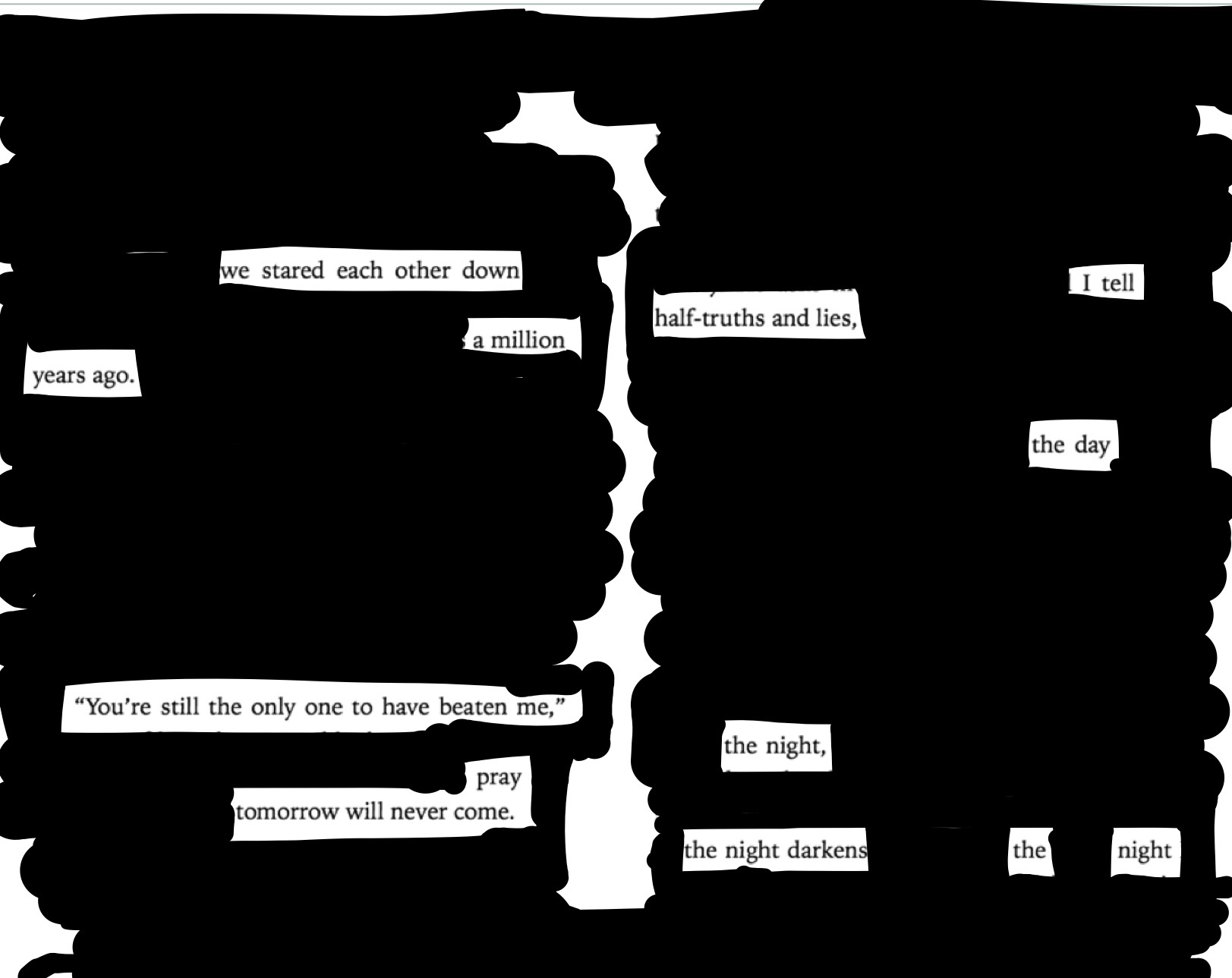
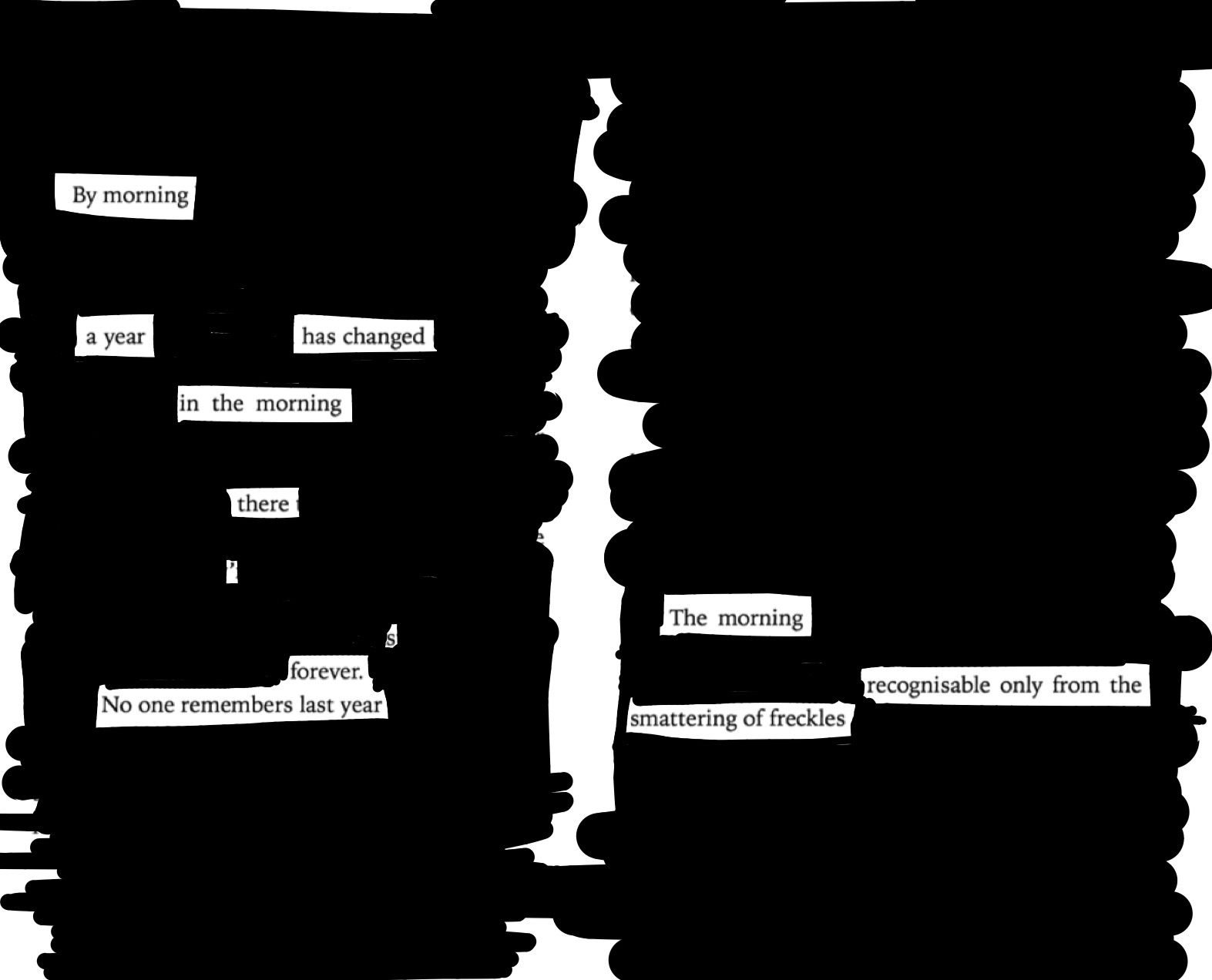
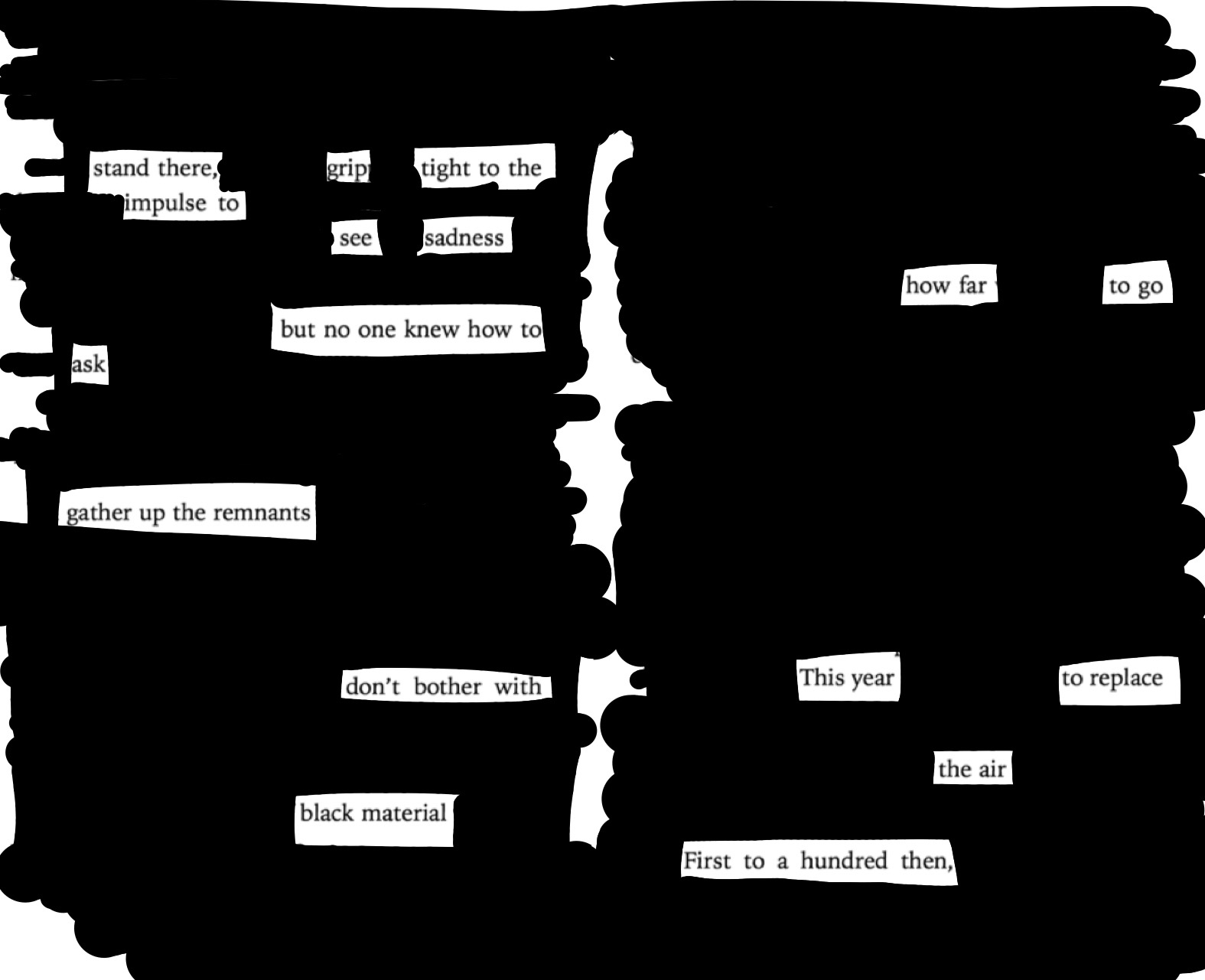
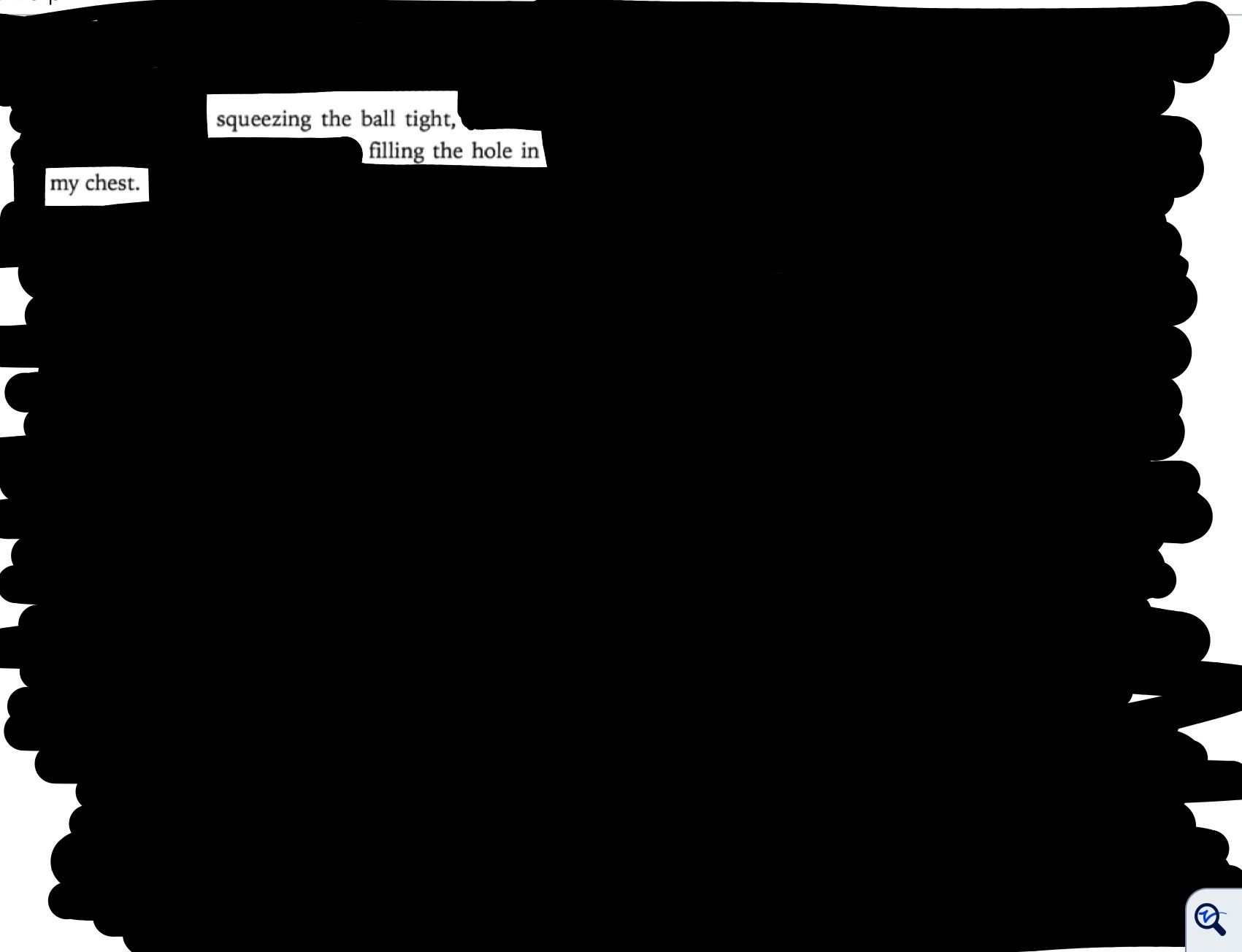
First To A Hundred – A Blackout Poem

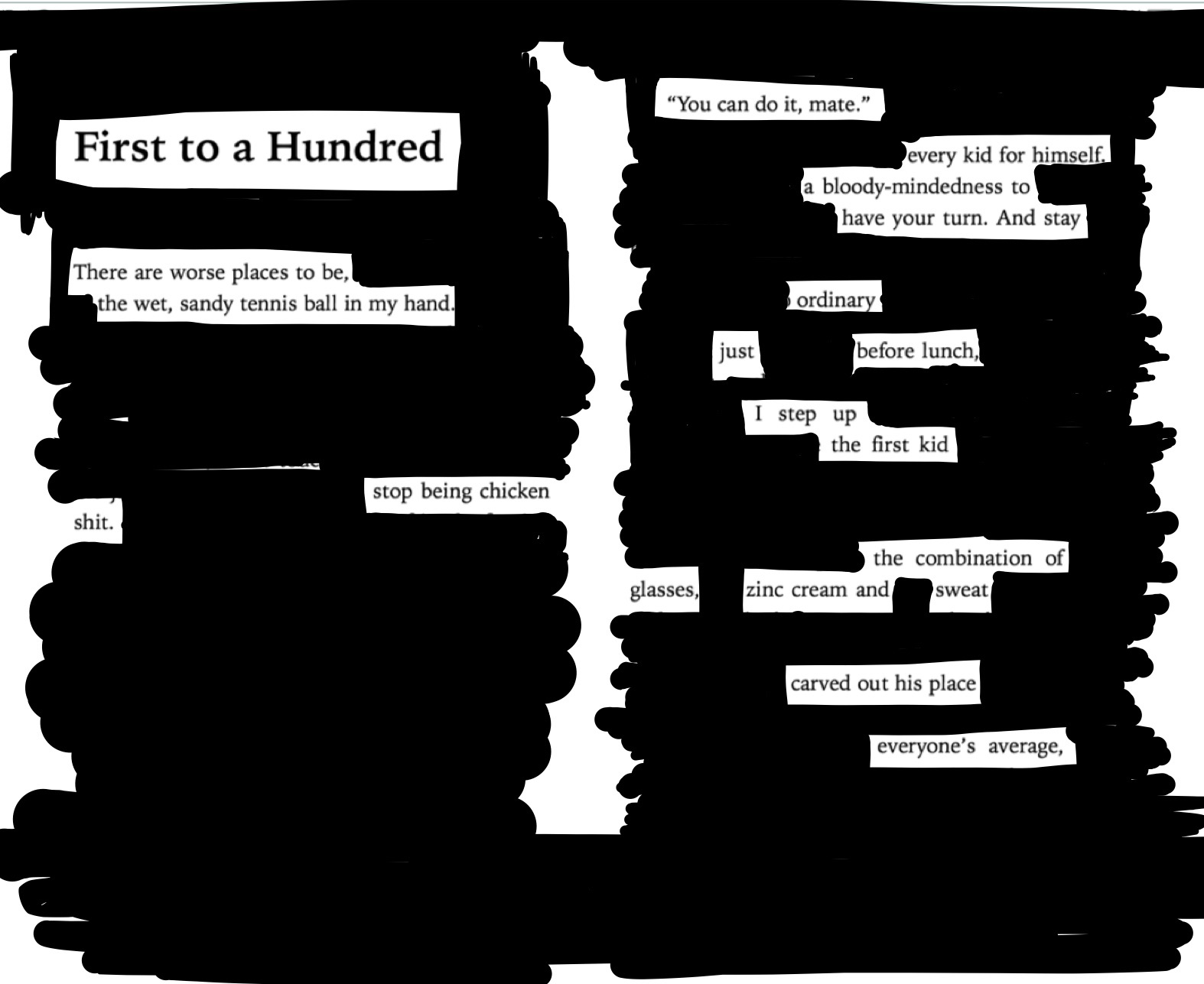
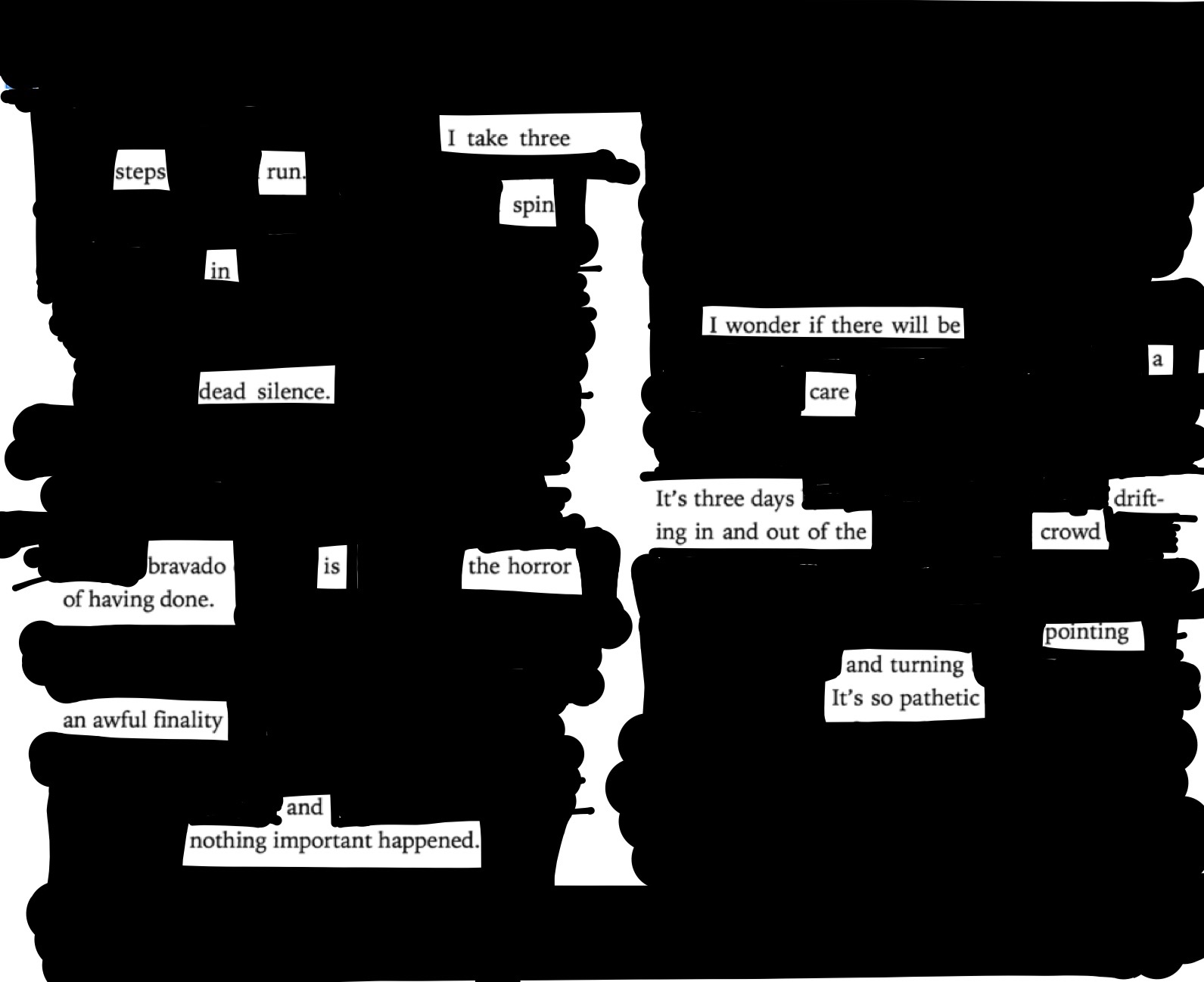
The short story, First To A Hundred, by Jodi Cleghorn, appeared in Issue 8 of Tincture Journal. After writing Post Marked: Piper’s Reach together, and after many times making Jodi cry, she had not succeeded in making me reach for a box of tissues to wipe away the tears.

But she did it with this story.

I read early versions and drafts, and it languished for ages without finding a publication until Daniel Young of Tincture took it on.

I strongly recommend you go and buy a copy of Tincture and read the story as it is so beautiful. Then drop in here to read this version. As I was creating it, the voice of Dougie came through, almost unconsciously. It wasn’t until I was half way through that I heard the voice more clearly and channelled it for the remainder.

It’s a long story, but well worth the read.

Below is the poem. You will need to read it as a two-panel cartoon (L-R) then down the page.

Enjoy.

image

image

image

image

image

image

image

image image image image

image

image

image

Moving Forward When You’re Stuck Looking Behind You

How do you move forward creatively when you feel like you’re stuck looking back?

In the last couple of weeks I have been re-reading the collaborative epistolary novel, Post Marked: Piper’s Reach, I wrote with Jodi Cleghorn between January 2012 and April 2013. 

The novel has been thoroughly edited and we are now at the place of writing the synopsis. Late last year we began the process but due to a range of metaphysical circumstances it had been put on hold. 

For me, because I cannot speak on behalf of Jodi, the latter half of last year burned me out creatively. The pressure of my job (high school English teacher) and other external pressures saw me roll into January hoping for a recovery. But it never happened.

Putting this out there and waving it around with abandon: Writing a synopsis sucks.

It’s the Pit Of Despair from The Princess Bride coupled with the Pit of the Almighty Sarlac from Star Wars topped off by The Buzz Cut from Wayne’s World (Boy, it really does suck). As we wrote it, we felt the summary sucking the life away from the narrative we had created.

On top of the synopsis situation, other projects lay scattered like discarded underpants and it was killing me that they were unfinished. My sense of self in regard to my creativity and writing had disintegrated. I doubted my writing skills and wondered if it was worth continuing. Doubt is insidious, and lethal, to a creative life. 

But I am not one to go quietly into the night for a bag of doughnuts and never return. I used February and Post It Note Poetry to begin the rebuilding process. I gave myself permission to put projects on hold, think them through again.

Now that it is March, I returned to the first project on the list: the Post Marked: Piper’s Reach synopsis. I opened up the final document and began reading, familiarising myself with the story again. It was nice to come at it again with new and fresh eyes, delving into other aspects of the characters again and their development, marking up plot points and knowing I’ll probably cry at the end. Again. (And, yes, I did cry).

While doing this I went back to other pieces written in the Piper’s Reach world. The stories precede the events of the novel in that they are about the lives of Jude and Ella-Louise in their youth and in their adult life. They were done as an indulgent exploration of our characters from different perspectives (letters have a very limited frame of reference when writing).

The first is the Christmas Special Jodi and I wrote at the end of 2012. It recounts the events of the Surf Club Christmas party (mentioned in the novel) when Jude and Ella-Louise were in Year 11 (their second last year of high school). It introduces the main characters from a different perspective as each character had the opportunity to speak in their own voice, not limited to the first person recounting of Jude or Ella-Louise. You can read the Christmas Special here.

The second story is from Jodi. “What I Left To Forget” tells the story of Charlotte MacKay and Jake de Britto and is told from the 3rd person, a departure from the narrow focus of a personal letter.

I wrote a companion piece to it, which precedes it chronologically, but was written after a comment I left on Jodi’s blog where I riffed an idea. Jodi dared me to write a romance from the perspective of Jake. The resultant piece was The Photographer’s Concerto.

Any of the pieces can be read without knowledge of Piper’s Reach, and you can read the first letter from Ella-Louise here.

How did this help me move forward? 

Up until the reread, I doubted I could write well again. I hated what scrawl occupied my notebooks. Even when writing Post It Note poetry I felt hesitant and uncertain.

By going back into the past, I could see the progression of my writing skills. What I wrote 3 years ago is still good. Sometimes I wonder if it was really me who wrote the passage. It has been an encouragement to see that I can write. I am proud of those stories, the world that was created. Yes, it’s hard work, but rewarding when you see readers gain a connection. That was one of the most rewarding aspects of writing “Piper’s Reach” and releasing a letter a week to our small, but faithful, following who shared their love of the series and the characters.

Taking pause to reflect has allowed me to refocus my creativity and move forward.

If you’re stuck, unsure of the direction, pause, reflect, give yourself permission to stop for a time and look back as a way of seeing progression. It may help you move forward. 

Are you stuck? Feeling like momentum has stopped? Would looking back work for you to help you move forward?