Tag Archives: writing tips

Post It Note Poetry 2015 Recap Week 1

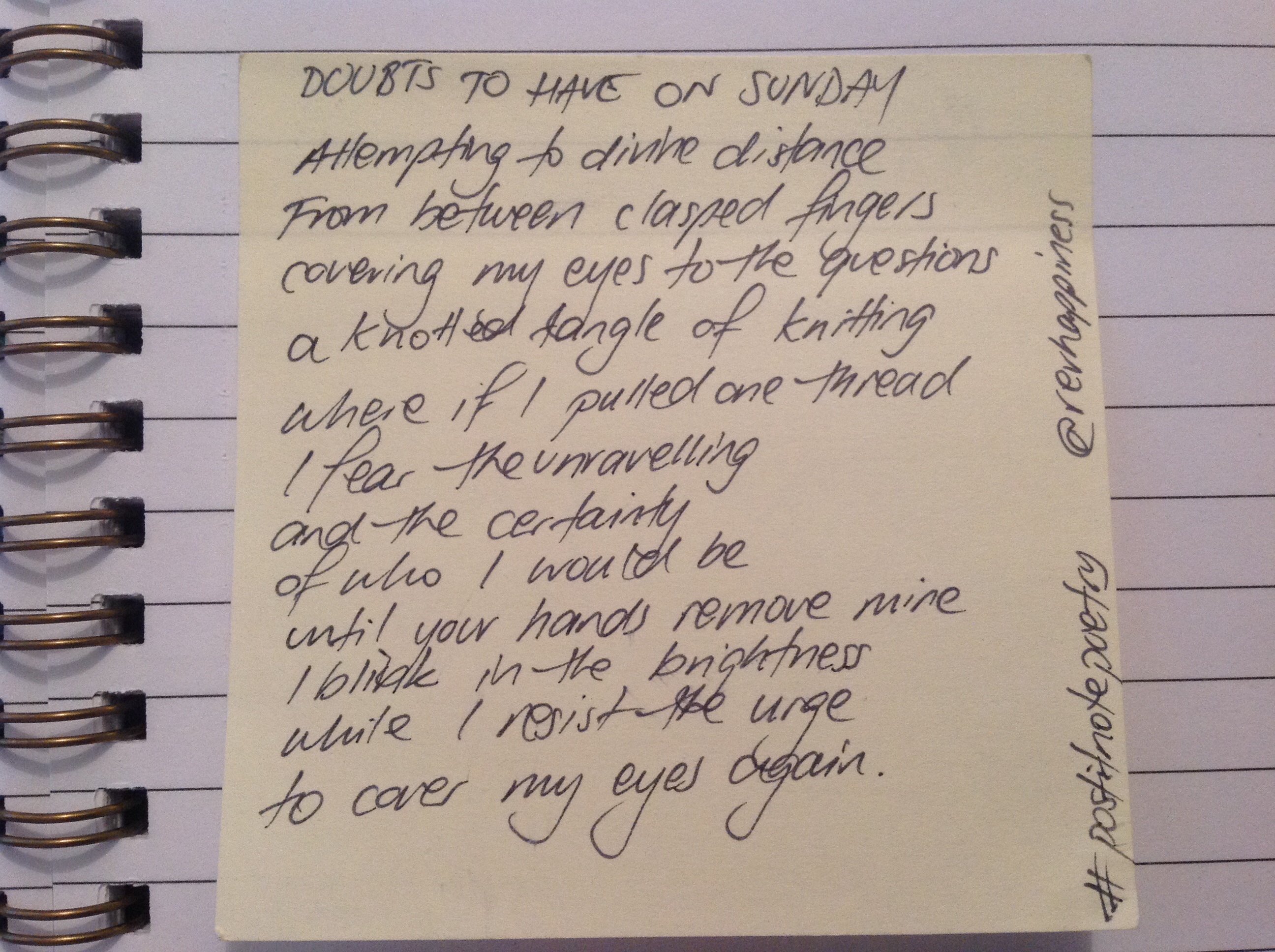
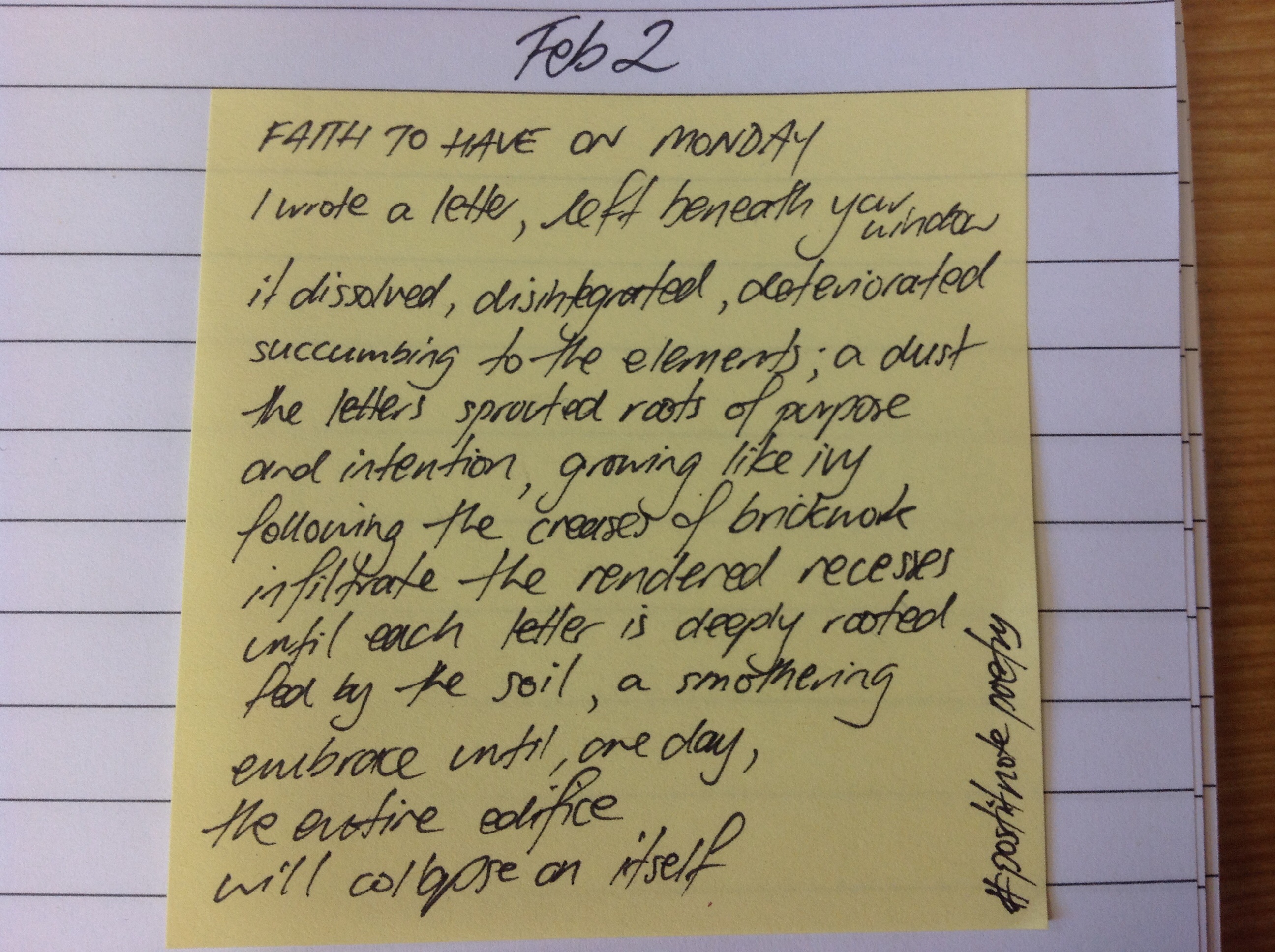
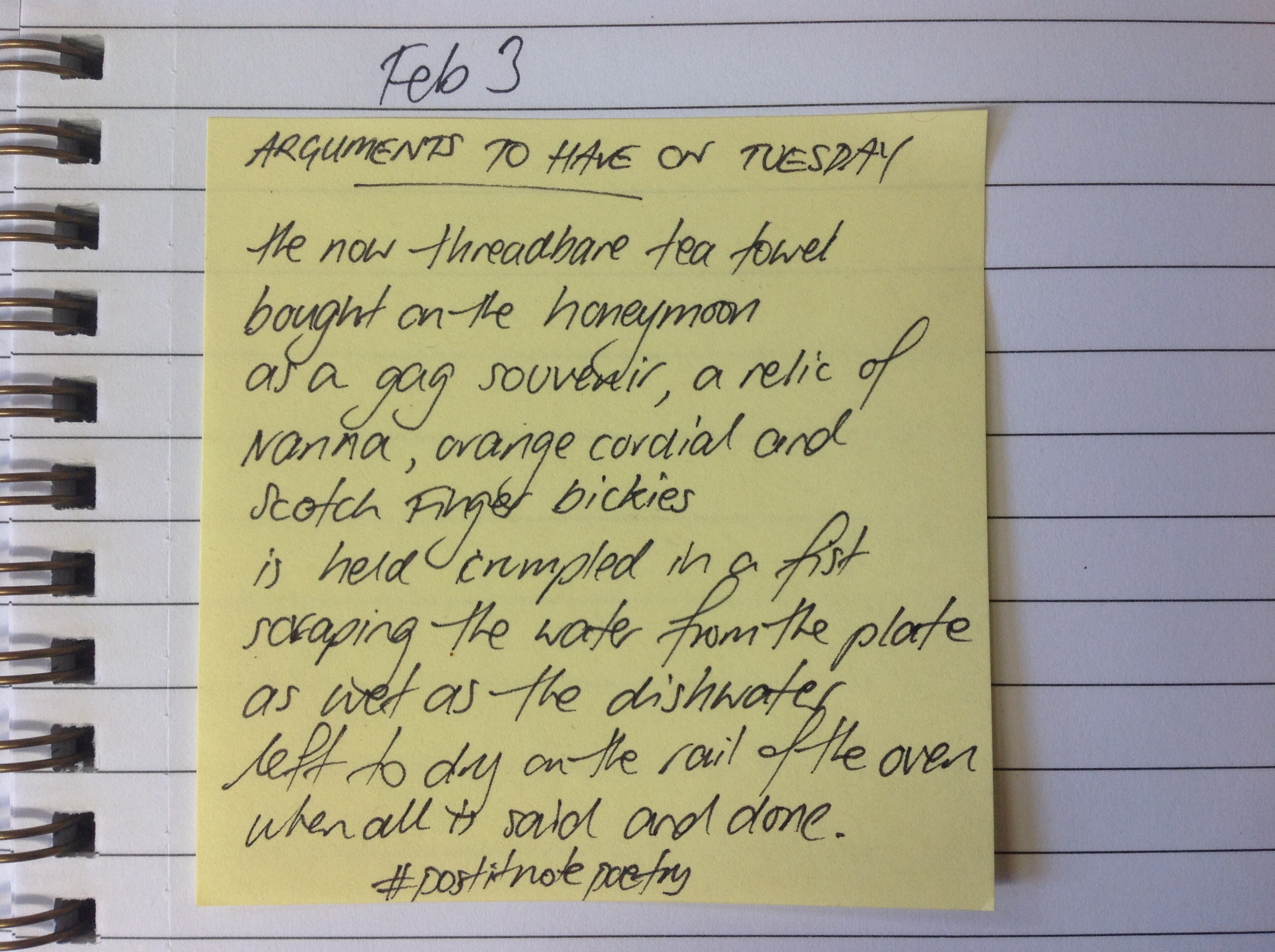
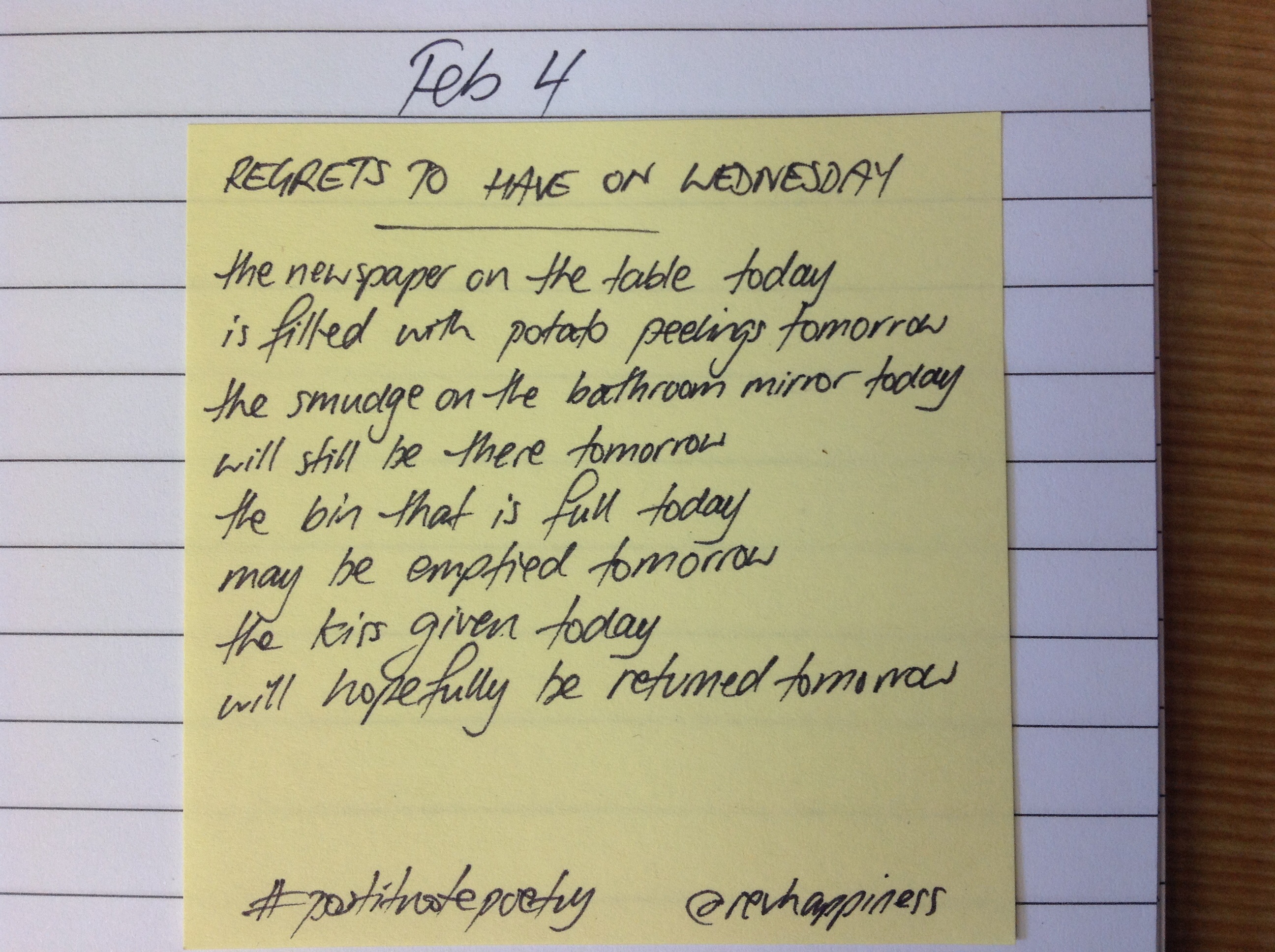
It is the end of the first week of #postitnotepoetry.

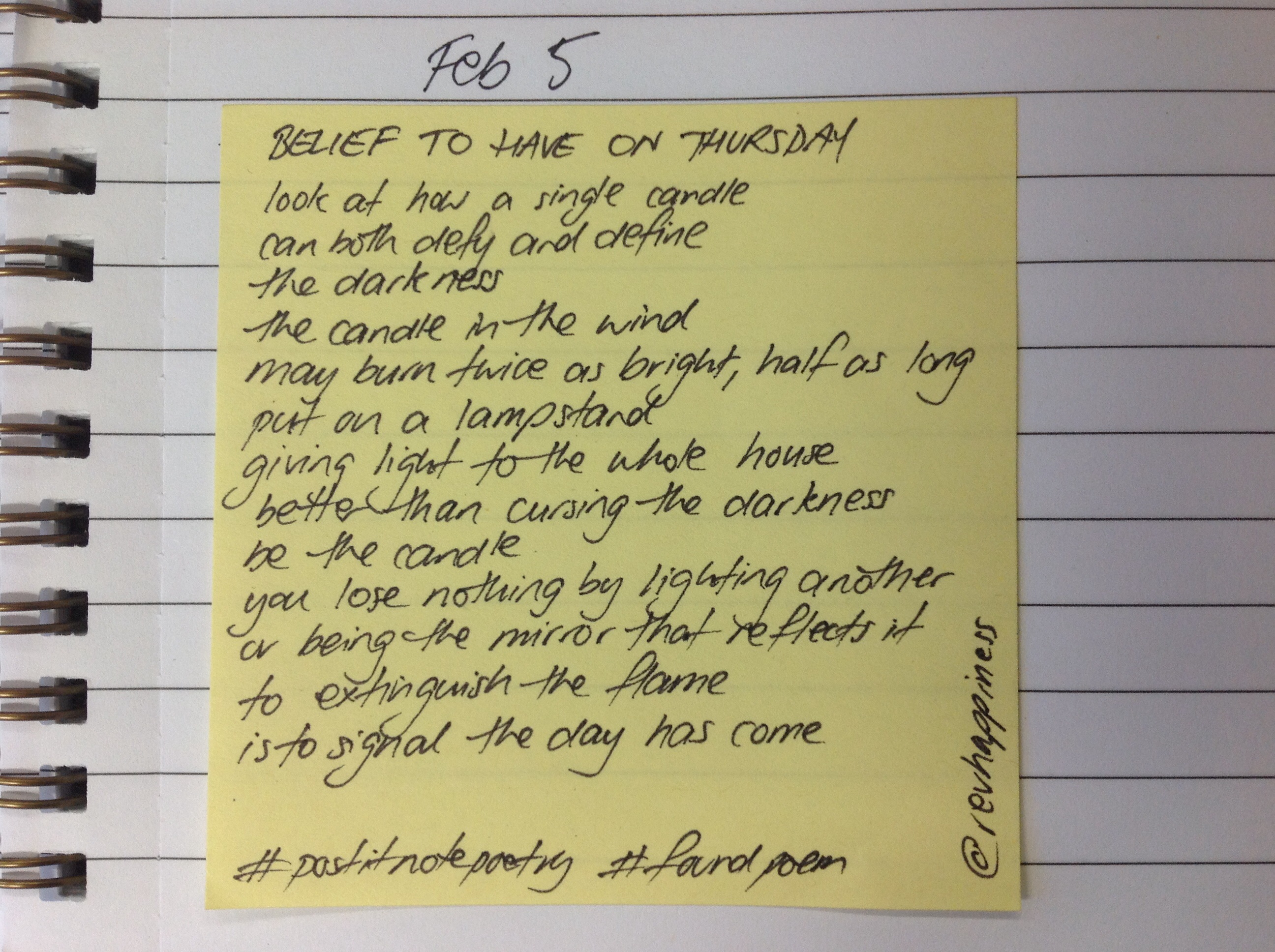
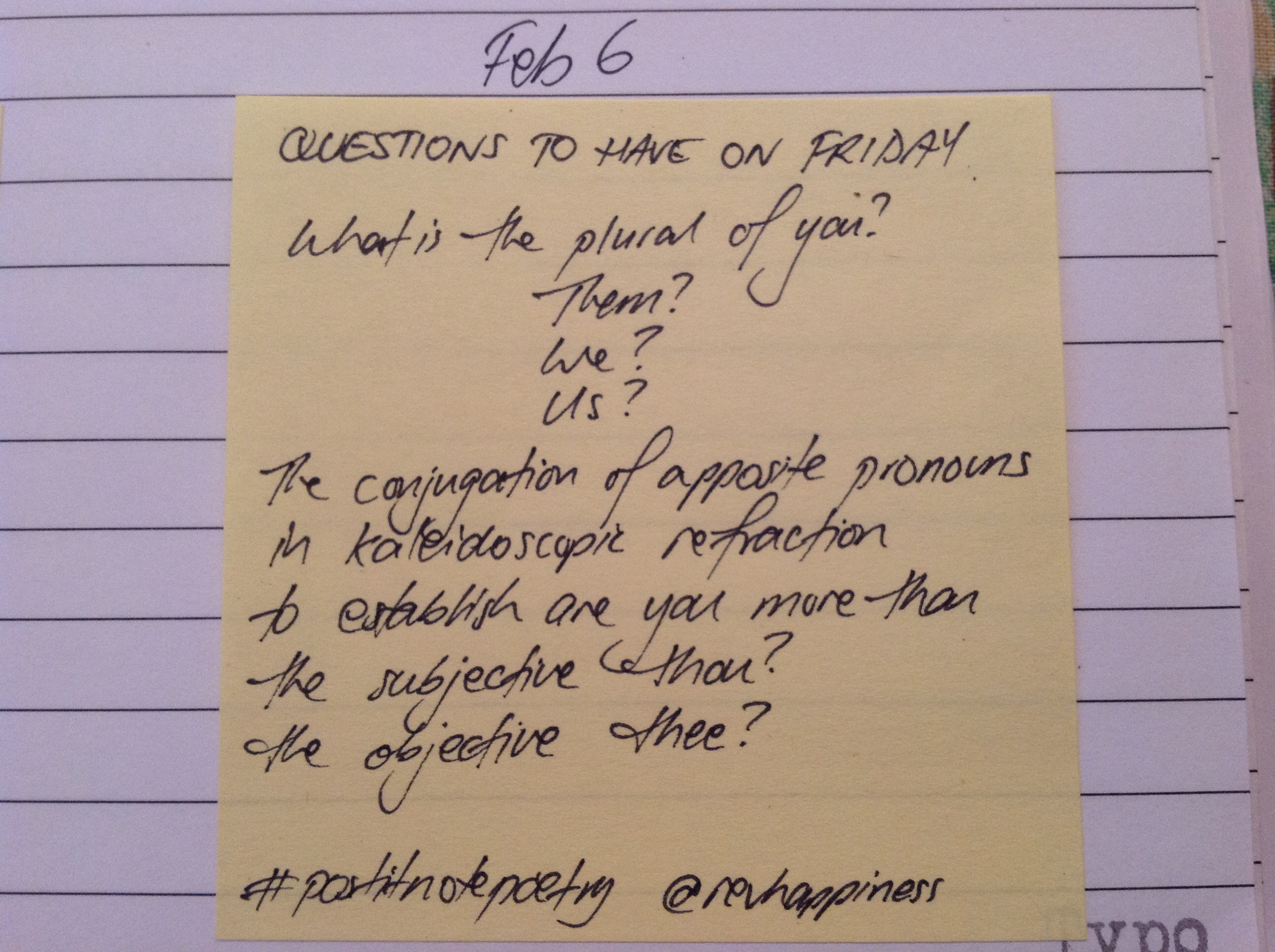
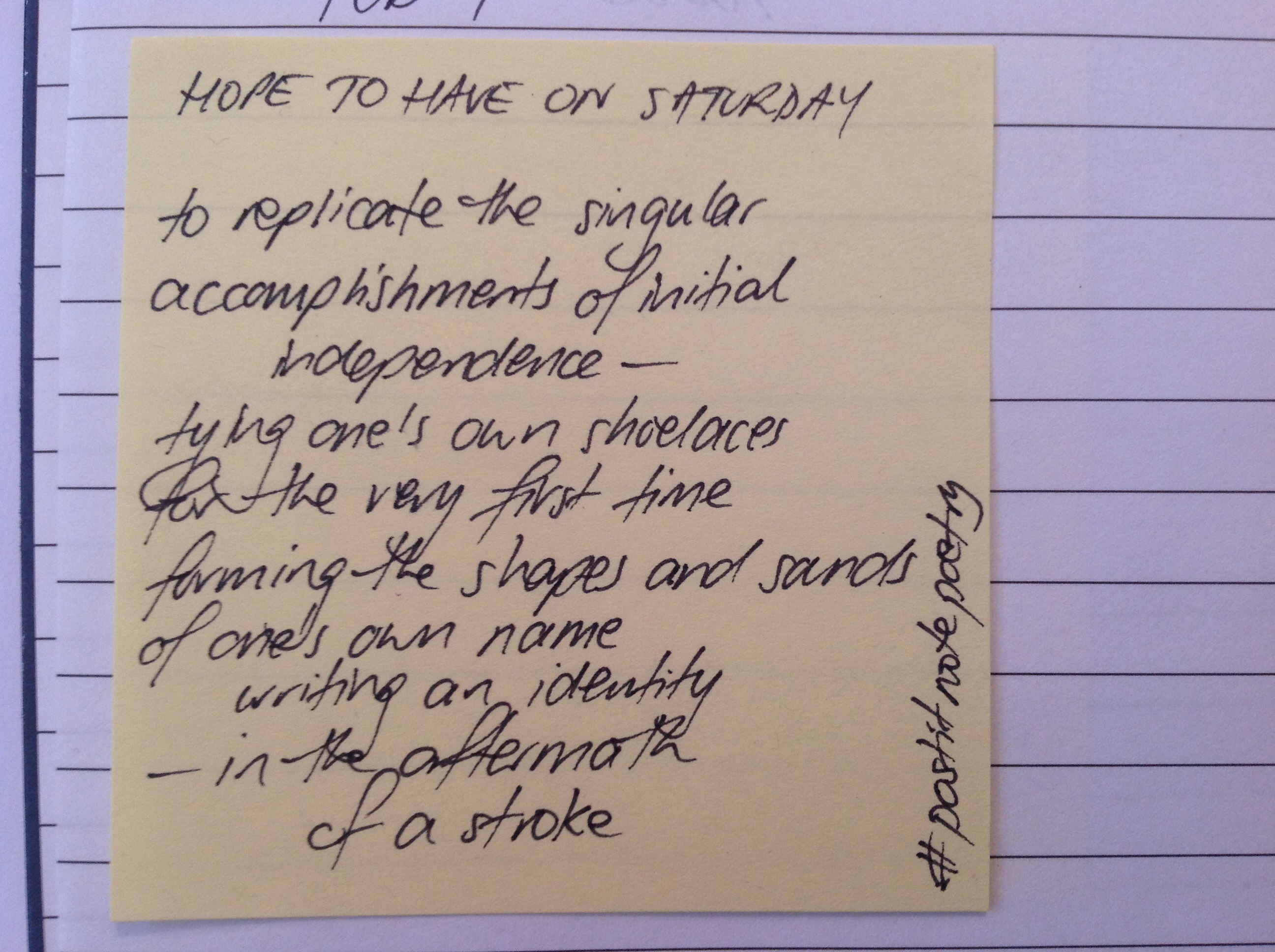
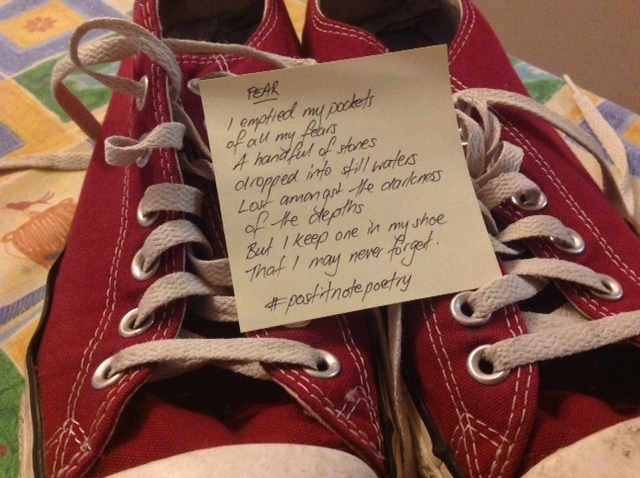
I have collated here the first seven poems. This series of poems began after I heard a song titled, “Things To Do In Winter” and it inspired the idea of a loosely linked thematic suite.

Instead of seasons, I chose days of the week. Each day of the week was prefaced with an idea. In my notebook I hastily scribbled down a list of potential ideas and throughout the course of the week amended, deleted or built upon the idea for the day. 

Some poems were easier to write, others took longer to compost and come to fruition. I was surprised at the thematic darkness of some of the poems as it was not the initial intention; only in the repeated readings did the layers of darker interpretation emerge.

It made me wonder whether I was subconsciously channeling a darker theme, or purging the darkness within. I think that’s another blog post/poem in itself.

image

image

image
image

image
image

image

If you want to join in the fun of #postitnotepoetry, grab a pen, a wad of Post It Notes and write. Take a photo it and upload it to twitter with the hashtag #postitnotepoetry

Drafts and Sketches

I am no visual artist; I draw occasionally or scribble on the whiteboard when I am teaching to illustrate a point. I am in awe of what artists create but I also love seeing the progression of the image.

I like to see the process, the development of an idea from conception to completion. I am in the middle of looking at some ideas to work out some plot structures and it made me think of an artist and its applicability to writing.

The first draft of a new story is like the initial sketch or drawing. The form is laid out but the detail is lacking. 

The novella I am working on (estimating a finished first draft by the end of March) is, right now, a sketch. The outline is there and the more I write, the more the form and detail is taking shape. I know that with subsequent edits and rewrites it will become more clarified and clearer.

With each new draft, with each passing edit, the image is revealed in finer and finer detail; the adding of new thematic colours, the detailing of characterisation with fine lines not broad definitions, the specifics of description in the background to bring it to the foreground, the encapsulation of the vision of the finished picture revealed in the infinite number of keystrokes and brush strokes.

We don’t see the chisel marks on Michaelangelo’s Statue of David or the brush strokes of the Mona Lisa; we marvel at its beauty and wonder at its complexity.

When you read one of my stories or poems, I don’t want you to see the work behind the scenes, I want to engage with you in the language of the text, for you to experience the world as presented, and to learn about yourself along the way.

Adventures of Lego Writer Man

Last year a friend of mine, amongst other people I know, maintained a Thankfulness theme on Facebook. Every day for an entire year, 365 days’ worth, he posted a new thing to be thankful for. It was an encouraging read and made my realise how blessed I am when I consider the breadth and depth of things I can be thankful for.

However, it spurred a new idea: the daily adventures of a Lego figurine, in particular, a Lego figure who was a writer.

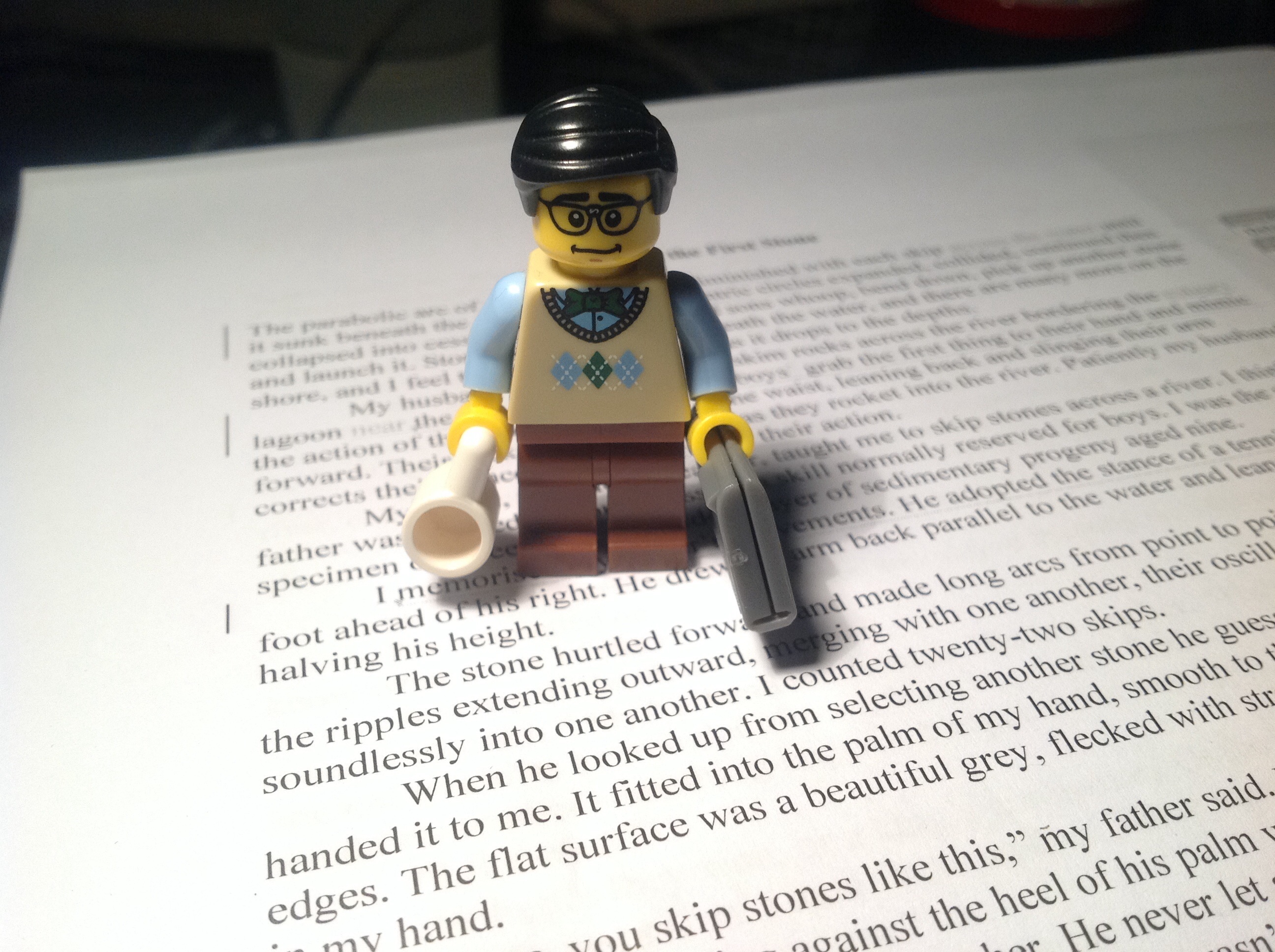
So, Adventures of Lego Writer Man was created. Armed with his cup (for tea) and laptop (to write on), he embarks on a literary journey. Each day I post a photo on Twitter of Lego Writer Man and his adventures. Follow me (@revhappiness) or the hashtag #AofLWM.

image

Post It Note Poetry – Permission To Write (Badly)

February marks the beginning of Post It Note Poetry month. It began 3 years ago as a challenge between myself and my writing partner at the time, Jodi Cleghorn – a month of bad poetry, written on a Post It Note.

You can find my collection of Post It Note Poetry over on tumblr as well as some other poetry including blackout/erasure poetry. 

My first Post It Note poem written on February 1, 2013.

My first Post It Note poem written on February 1, 2013.

I will be posting a new poem daily in February #postitnotepoetry and will also curate the poems here each week.

But here’s the challenge: why don’t you have a go? Grab a packet of Post It Notes (any colour will do) and write a poem each day. Post it to twitter and include the hashtag. Include me too (@revhappiness) so I can see what’s going on.

If you can’t do it every day, no stress. Do what you can. Don’t censor. Write with both heart and mind.

Sunday marks the First of February and a month of writing poetry on Post It Notes. Have at it!

What Will Your Verse Be?

What is the power of creativity to contribute a verse?

This is the ending of one of my favourite films, Dead Poet’s Society, starring Robin Williams. It was a film that defined my generation growing up, along with Ferris Bueller’s Day Off, The Breakfast Club and the like. The phrase, carpe diem, “seize the day,” was synonymous with this film.

But the power of this final scene only emerges with an understanding of a previous one. It was purloined for a recent advertising campaign by a computer company named after a piece of fruit. The ad is a complete piece of onanism but the sentiment is what I want to explore.

“We don’t read and write poetry because it’s cute. We read and write poetry because we are members of the human race. And the human race is filled with passion. Medicine, law, business, engineering, these are noble pursuits, and necessary to sustain life. But poetry, beauty, romance, love, these are what we stay alive for. To quote from Whitman: ‘O me, o life of the questions of these recurring, of the endless trains of the faithless, of cities filled with the foolish. What good amid these, o me, o life?’ Answer: that you are here. That life exists, and identity. That the powerful play goes on, and you may contribute a verse. That the powerful play goes on and you may contribute a verse. What will your verse be?”

How do you contribute a verse?

Grandiose plans to change the world are good and well but I want to look closer to home. 

You contribute a verse by starting small.

Start small by writing a poem in an old notebook.
Start small by writing someone a letter (a friend recently asked for her birthday for people to send her some thing in the mail using the good old fashioned postal service).
Start small by getting out a colouring book and pencils.
Start small by taking a photo a day on your camera (an intentional act of creativity).
Start small by joining a local amateur dramatic or musical society either as a chorus member, backstage crew, admin, promotion, anything. Ask.
Start small by taking an art class or a writing class.
Start small by learning an instrument.
Start small by asking, “What can I do?” to help meet a need.

You need a job to provide a living but you also need a cause to be passionate about, something you believe in. 

Creativity provides that outlet. 

You contribute a verse because you learned to create for yourself first. Then you understand that it can be used to help someone else. And your creativity can contribute to the job you do, the ‘noble pursuits’ mentioned above, that allows you to begin changing the world. 

But you start with one person; you start with yourself. You create, make it a habit, teach others to create, inspire others to pursue their own creative path.

That is how you contribute a verse.

When Ideas Turn to Manure

Over the last few weeks I’ve been plugging away at some older pieces of work, deciding whether to forge on with them or cut them loose.

I had just closed the document of a poem I had been working on after having decided it was not worth pursuing at this time and launched into a quick twitter self-evaluation session.

The conversation I had with myself is below.

Cleared the desk of old projects hanging around. Abandoned some. Others into storage. Time to focus on the new things. And Get Stuff Done.

Come to conclusion some ideas are worth exploring but awareness they are practice, amassing the hours needed to master the craft.

Nothing wrong with that. Some ideas sprout early, look good but produce only weeds. Cut them down, turn them into compost for new ones.

It does seem to contradict “finish what you started” but sometimes the piece will not work no matter how much manure you pour on it.

Commitment to an idea is noble but not at the expense of developing as a writer, artist, creative person. Shelve it. File it. Let it go.

Sometimes ideas just suck. Sometimes they turn into manure. Put it on the compost pile and let it feed new ideas and projects.

Do you ever let something go or do you see it out to the end?


1 Step To Kick Start Your Creativity

Ever wondered how to kick start your creativity?

Besides a swift kick up the bum (which is easy to do by the way. Tie a piece of rope around your right ankle. Bring the rope up and over your shoulder from behind. Pull the rope swiftly and kick yourself in the bum).

There is an easy way to kick start your creativity. 

You start by DOING.

No thinking. No procrastinating. No making a cup of tea first. No checking twitter or Facebook. No worrying. No hesitation. No. No. And no.

To get you started in the DOING phase of kick starting your creativity, there are a list of suggestions. Pick the appropriate category and off you go and DO IT.

For Aspiring Writers

* write 5 very short stories or pieces of description. Each story must be 6 sentences in length and include one sentence of dialogue.

For Curious Poets

* write 5 poems. It doesn’t matter about how bad you think they are, write them. Give yourself 5 minutes to write each poem. Do them all at once or one at time.

For Ingenious Artists

* draw 5 pictures. Draw each picture on a Post It Note.

For Ambitious Photographers

* select one random object from around the house or office and take 5 photographs in different locations.

Which one are you doing? 

If you’ve given it a go why not show the world what you’ve done and link it back here?

Where I Find My Poetry…

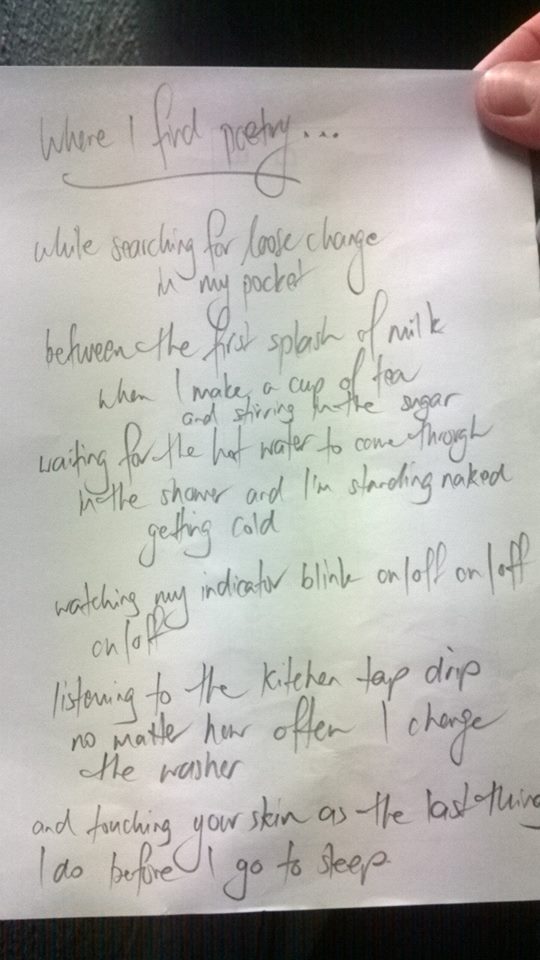
At band rehearsal this week (I play in a covers band for weddings and corporate functions) I scribbled this onto a scrap of paper between songs as the band rehearsed with a drummer who is filling in for me for an upcoming gig.

I’d had the title floating in my head for about a week and an idea of what I wanted to write. Originally I intended it to be a simple blog post about how I, as a writer and poet, find my inspiration and ideas. 

The idea was composting in my head and while I lounged behind the sound desk I scribbled this out.

Where I Find Poetry

Where I Find Poetry

while searching for loose change in my pocket
between the first splash of milk
when I make a cup of tea
and stir in the sugar
waiting for the hot water to come through
in the shower and I’m standing naked
getting cold
watching my indicator blink on/off on/off on/off
listening to the kitchen tap drip
no matter how often I change 
the washer
and touching your skin as the last thing
I do before I go to sleep.

What becomes more interesting is I took a photo and posted it to Facebook, rough and ready as it was. A good creative friend of mine made this comment: “This reminds my (in style) of Leunig, but I do that in praise of such an original piece. This needs to be a poster.” (Leunig is a well known and highly respected Australian cartoonist and writer)

Once it is published it is out of my hands. It is what it is to the reader and viewer. I see its faults and insecurities, the line breaks that don’t quite fit or the meter or rhythm of lines that are inconsistent, the ideas for improvement. 

But the reader and viewer engage with it as it is, seeing it as a finished product for him or her. It either resonates and connects or fails to spark and is ignored. And that’s fine.

It’s also, upon reflection, an accurate understanding of the focus of what I write about. I like the minutiae, ennui and detritus of the day-to-day because these actions, objects or circumstances have significance and meaning to a person. We are inspired and captivated by the videos flowing through social media of spectacular acts of heroism, generosity and compassion but it’s often the short videos of people doing simple, routine acts that bring us to tears because it reminds us we can make a difference. 

The seemingly insignificant has meaning and purpose to the individual and I want to explore what it means for the character and his or her life because it often reveals significant meaning and purpose.

Releasing A Story Is Like Farting In An Elevator

In the midst of my writing journey I am contemplating releasing a collection of Post It Note Poetry and Micropoetry. This is before I have sold a novel, completed a novella or sold more than one short story to a paying market. 

There are a bunch of questions hanging around:
Is it too early? 
Have I progressed as a writer to have confidence in my work?
Is it an act of onanism?
Or is it, as the title of the post alludes to, farting in an elevator. You want to do it because all the comedy films tell you it’s funny. You want to let it go it but unsure if there will be a sound to tell people of your release. Or maybe you want there to be a mighty trumpet.

The reality is, it may simply stink no matter how much you enjoy the release.

A writer never has confidence in his or her own work. I know I doubt what I write. I look back at the early beginnings of what I wrote, as evidenced here on the blog, and cringe, but I see the foundations of my writing. And others also saw the potential in the chaff and offered me opportunities to develop. And yet, I still lack confidence. But I believe in the potential I have.

But here’s the thing. I know I can get the opinions and advice from people I trust, who will tell me if my work is a pile of word vomit or worth putting out. 

Every piece I write will be a reflection of my skill and development as a writer AT THAT POINT. I won’t be embarrassed at the beginnings but understand it is part of the apprenticeship I served to become a writer. I liken it to going through a band’s back catalogue.

So next time I fart in the elevator, I hope you laugh along with me because I’ll be laughing with you if it’s you who farts instead.

The A-Z of Suggestions for Creative People

To misquote Captain Barbossa says, “They’re not so much rules, as guidelines.”

There are multiple permutations of a creative alphabet; your ideas will probably be better than mine. But that’s kinda the point. Listen to the advice, apply it to your work and do it better. Then teach someone else to do it. Pass the knowledge on.

Appreciate new ideas.

Build a body of work.

Collaborate. Cooperate. Coordinate. Critique. Vanilla Ice has wise words when he says, “Stop, collaborate and listen.”

Define your goals as a creative person. Revisit them weekly, monthly, yearly.

Explore what you’re passionate about. And maybe what scares you. You know, for balance.

Foster creative relationships for collaboration, networking and developing the next generation of new artists.

Grow as an artist. Stagnation is for ponds and mosquitoes.

Hunger for the development of your craft and the improvement of your skills.

Inspire others to create because the world needs useless beauty; it is there because it is, and it exists and it is uniquely you.

Jump into new opportunities. But check the depth first.

Kill what distracts you: procrastination, doubt, fear, comparison, jealousy.

Listen at every opportunity. Gather wise counsel and feed your soul.

Meditate on your work, why you do it and write a manifesto.

Network because it’s dangerous to go alone.

Occupy a creative space and protect it.

Publish your work. Whether it’s through your blog when you’re starting out or selling it via Etsy, Ebay or e-commerce.

Query why you are creating. Have you lost sight of your purpose?

Rush a new piece of work and enjoy the frenzy of ideas splashed down like a sudden summer storm.

Spend your time wisely.

Trust in your teachers and mentors.

Understand you are not your creative project; it is an expression of how you see and understand the world.

Vanquish your fears and validate how you feel about what you create.

Welcome feedback, critique, commentary that will help you grow as a creative person.

Xerox another artist’s work to learn how it is created. But show no one else. Learn how to apply it to your own work.

Yoke yourself to an artist further along the road than you. Learn from their guidance that one day you may be yoked to a new artist to teach them.

Zealously demand your need to create; creativity is oxygen to you. Without it you would suffocate.

What would your alphabet of suggestions for creative people be? Write a list, post it to your blog and link back here for everyone to read.