Tag Archives: writers

Post Marked: Piper’s Reach Blog Tour – Paul Anderson

Today sees Paul Anderson, co-foudner of eMergent Publishing, host the second of our blog tour before the release on April 10.

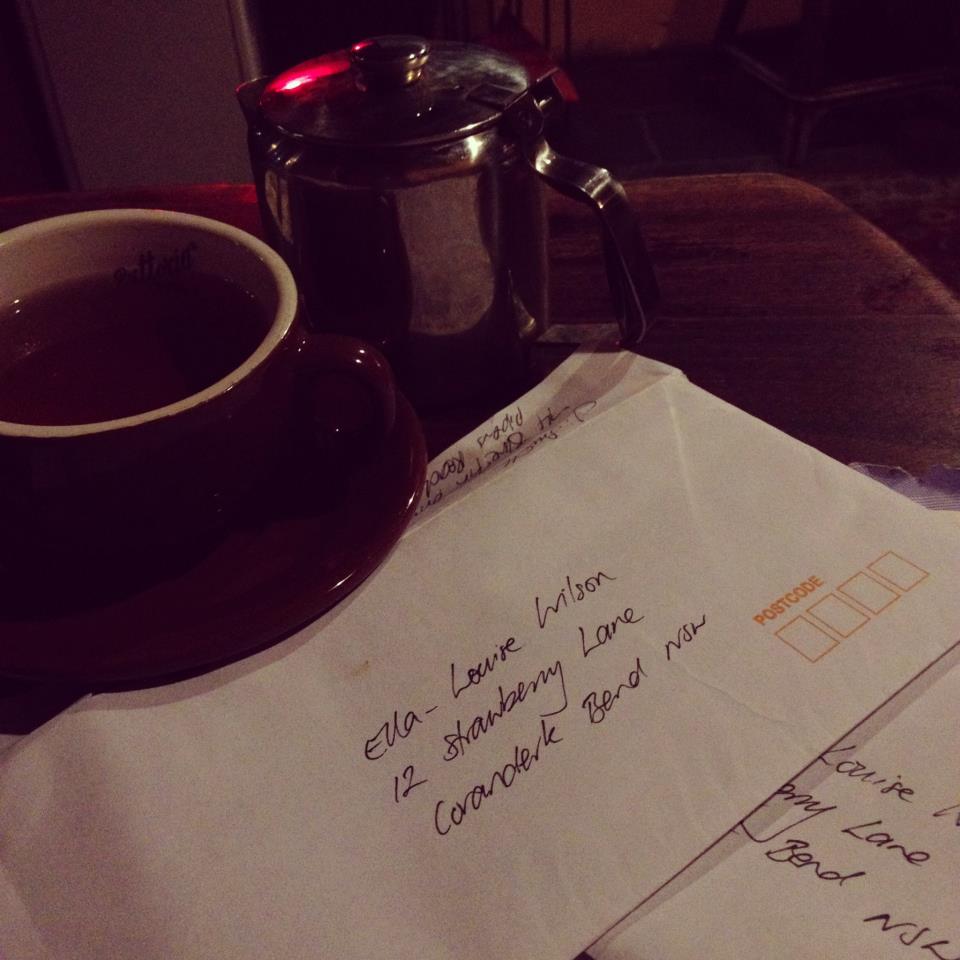
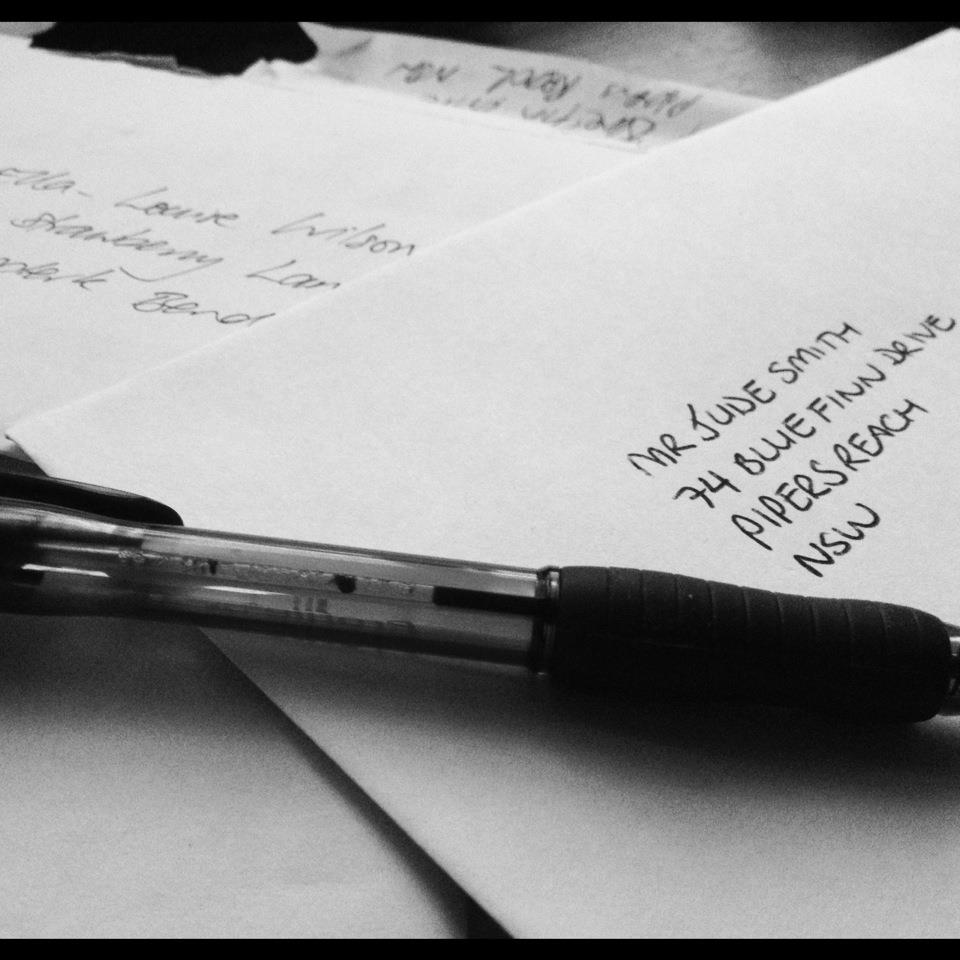
We talk today about the organic nature of our project (and what it means) and the vagaries of handwriting letters. And he taunts us from the sidelines about keeping secrets.

This narrative lives and breathes under its own impetus, in the pause and nuance between what is said and what remains unsaid. – Jodi Cleghorn

…putting forward possible narrative arcs are contrary to the keeping of the organic nature of the story telling. How it all ends, ultimately, is up to Jude and Ella-Louise. – Adam Byatt

You can read the rest of the interview here.

Post Marked: Piper’s Reach Blog Tour – Laura Meyer

The organic, collaborative project has been under wraps since January and we are pleased to announce its launch on April 10.

The wonderful Laura Meyer is the first stop in our blog tour to get you behind the scenes and into our brains of Post Marked: Piper’s Reach.

Jodi and I talk about the project, the challenges of a collaborative project and why we chose letters as our form.

“I was attracted to exploring the relationship of two characters reconnecting from a distance of twenty years while sorting through the carousel of emotional baggage” – Adam

You can read the whole interview here.

Post Marked: Piper’s Reach

POST MARKED: PIPER’S REACH

In December 1992 Ella-Louise Wilson boarded the Greyhound Coach for Sydney leaving behind the small coastal town of Piper’s Reach and her best friend and soulmate, Jude Smith. After twenty years of silence, a letter arrives at Piper’s Reach reopening wounds that never really healed. When the past reaches into the future, is it worth risking a second chance?

Yesterday marked the beginning of the unveiling of #thesecretproject between Jodi Cleghorn and myself.

Post Marked: Piper’s Reach will launch Tuesday 10th April and will roll out one letter a week. Each week one letter will be available on the website (sshhh… it’s still a secret) as a downloadable PDF handwritten letter. See if you can guess whose handwriting it is and who wrote which character.

But we need your help. We’re looking for some lovely friends to invite us over (between Monday 2nd – Monday 9th April) for a cuppa (we’ll bring the scones and jam and cream) and a chat about Post Marked: Piper’s Reach.

To help foster the conversation (because we’ve been keeping it a secret), we’ve assembled a few points of focus so we don’t have rely on religion, sex and politics as conversation starters. If we get really stuck, we can talk about the weather (Piper’s Reach is known for its epic storms and some really lovely scenery).

Break out the fine china (for Jodi) and the tin mug for me.

  • The original Concept/Pitch
  • Creating a location by text message
  • Organic writing process
  • Characters & authors’ emotional involvement in the writing
  • Back story
  • Instantaneous vs delayed gratification in the digital age
  • The music

If you are interested in having us over, please leave a comment. Our minions will talk to your minions and there will be plenty of cake to go around.

The Secret Project

Back in January, Jodi Cleghorn sent me a cryptic text asking if I wrote letters when I was a teenager. I was prolific. A friend once joked she could make an inspirational calendar from my writing.

Jodi fished for a bit more information before telling me she had a pitch, but would give nothing away. I was on a camping holiday a little south of where Jodi lived, in the first week of January, so she dropped in.

We sat in the ocean with our children splashing around us and after finding out we had a similar writing background as teenagers, she pitched an idea. It’s one that traverses an odd path between old and new forms of communication, differing modalities of storytelling and mixed media, all played out in real and suspended time. It incorporates our love of letter writing and music.

A succession of rapid-fire text messages over the next two or three days brainstormed the concept into a feasible project. We established a setting and our characters. I kept scribbling ideas and suggestions in my notebook as we bounced ideas backwards and forwards. My phone bill was ridiculous that month.

Since then our characters have taken on a life of their own and we are constantly surprised at the emotional investment we have given these fictional people.

For months we wrote in private, dropped cryptic notes and photos on twitter and thought about a launch. Now, the launch of #thesecretproject is imminent and we want to spread the word.

Launching on April 10, 2012, is our collaborative project, Post Marked: Piper’s Reach.

Post Marked: Piper's Reach

Post Marked: Piper’s Reach – The Blurb

In December 1992 Ella-Louise Wilson boarded the Greyhound coach for Sydney leaving behind the small coastal town of Piper’s Reach and her best friend and soulmate, Jude Smith. After twenty years of silence, a letter arrives at Piper’s Reach reopening wounds that never really healed. When the past reaches into the future, is it worth risking a second chance?

Before the launch, would you be interested in hosting an interview with Jodi and myself?

If you do, drop some details in the comments box and our minions will talk to your minions and we’ll bring the cupcakes and tea.

What Am I Doing?

Yesterday, in a moment of sheer, blind, unreasoning panic I questioned whether I was doing the right thing. On the eve of taking a long service leave, a 3 month break from my job, I doubted myself.

I am taking leave to write a novel, my first. Every negative idea ran through like the after effects of a bad curry: I can’t do this. You’re a fool to think you can write a novel. What if you get stuck? Will you ever finish it? No one’s going to read it.

This is something I am passionate about and want to succeed in. The journey of a thousand miles might begin with a single step, but it requires a hell of a lot of planning and a large supply of Band Aids for the blisters. In the same way, the finishing of a novel begins with the setting down of a single word. Then another. And another until The End is reached.

I am in this for the long haul. I have a dream to write novels. This time off is the first step to achieving that dream. I have plans in place to help make this dream a reality. I will learn a lot in the time it takes to write my first novel and I can translate this to the next, then the next and so on.

Following a conversation on twitter between Alan Baxter (@AlanBaxter) and Tom Dullemond (@Cacotopus) yielded this gem of thought: Those who maintain their focus and diligence in the face of rejection and disappointment will find it easier to sustain themselves than those who find success comes easily.

I know I have a cheer squad who will shake their virtual pom poms if I get stuck.

Hand me my cardigan and tracky dacks; I have a novel to write.

When There’s Nothing in the Pen


I am about to launch on a new adventure: write my first novel. In a little over 3 weeks, I get to take leave from my work and focus on writing a literary work.

There are two things I think of when it comes to the act of committing to write a novel.

The first comes from Seinfeld.

The other comes courtesy of Family Guy and the conflict between Brian and Stewie.

Each day when I sit down to write, these will be repeated as mantras. Please note the placement of my tongue is stuck firmly in my cheek.

I’ll let you know how it’s all going.


Meditative Domesticity

Meditating. Percolating. Doodling. Chewing things over.

Writers have a plethora of ways to describe the thinking process of their creativity.

I prefer the term ‘composting.’

I remember my grandfather having an old compost heap, as did my father. It was a homemade enclosure of spare bricks stacked to form a small wall, about 4 bricks high. It had three sides with the fourth side open. As kids we would take down the bucket of scraps from the kitchen and dump it onto the pile of other food scraps and grass clippings.

From time to time my grandfather would turn the pile with a four tine garden fork revealing the decomposed layers beneath of nutrient rich soil. Shovelling forkfuls into the wheelbarrow, the compost was deposited around the pumpkin vines, beetroots other vegetables in season, around the citrus trees and under the rose bushes. As kids we would point excitedly and carry on if we saw a worm writhing and wriggling when exposed; a sign of good soil.

I like to ‘compost’ stories and characters in the back of my head, adding layers of ideas, concepts and problems. Sometimes all I get are choko vines (the world’s most bland and inedible vegetable unless used in McDonald’s Apple Pies) and the inevitable tomato plants (I don’t even like tomatoes).

I keep adding layers of scraps and in time, it yields a crop.

And as there are many ways to describe the creative process, there are as many places for a writer to go to spark their creativity or solve a problem with a narrative.

Time to mix my metaphors.

I may be no gardener, but I am a good washer-upperer.

For some reason, the place I best yield a crop of ideas or solve a plot problem is when I am over the kitchen sink, elbow deep in suds and bubbles, scrubbing dried on tomato sauce from plates. It’s meditative domesticity.

It’s a focused but unconscious activity requiring little deep thought and allows my brain to ruminate or compost a story I am working on. Maybe it’s the methodical process I use when washing up (glasses, cutlery, crockery, pots, miscellaneous – can we say OCD?) that allows a story to bubble to the surface and somehow gain a better perspective.

Often I’ve had to step away from the sink, dry my hands and head to the laptop to scribble down a paragraph or lines of dialogue. Maybe I need a dictaphone or speech recognition software so I can operate hands free.

Other writers I know hang out washing, iron clothes, go for walks or work out.

I told my wife that if she saw me washing up when I’m on long service leave I’m probably trying to solve an issue with my novel.

What’s your creative process and thinking space?

The Writer and Fashion: Tracky Dacks

In late April I am taking long service leave from my job as a teacher. I am taking 10 glorious weeks of leave to write a novel or two.

If I am going to sit on my behind for that time, I want to be comfortable.

And the most comfortable accoutrement for that time is a pair of tracky dacks. Tracky dacks is what we in the southern hemisphere and The Antipodes is our term for sweat pants. Think of Sue Sylvester from Glee without the matching top and megaphone. Although, come to think of it, a matching track suit might be the way to go.

But I need your help. I need your corporate sponsorship for this pret-a-porter collection.

Here’s what I am proposing: during my time writing The Next Big Thing In Novels, I will wear your trakky daks and post a photo of me wearing them, accompanied by an update of the day’s progress. Send me your tired, worn out, holey tracky dacks; your pink fluffy numbers with “Juicy” written across the derriere; your forgotten MC Hammer pants.

Emblazon them with your novel, website address, picture of your kitten, band logo.

Free promotion: priceless.

Send me your tracky dacks.

I have even found tracky dacks for the more formal writing times: Dress Pant Tracky Dacks.

They will go lovely with a pair of suit pyjamas. Maybe I could find the Hamish and Andy track-xedo.

And if you could sling me a pair of ugg boots too, that would be glorious.

Addendum. Was thinking that if people really wanted to send me tracky dacks with their own promotional material, I would be more than happy. Then, once I have finished the novel, I can give them away to lucky readers with a copy of the book. (This will depend on how you define ‘lucky’ if you want to receive a pair of worn, but laundered, tracky dacks).

Speak to Me – Does Your Character Talk to You?

How does a character talk to you?

Some writers claim a character comes to them fully formed, knocking politely on the door and waiting to be invited in and offered a cup of tea and a cream biscuit. All the necessary information about the character is formed in their heads.

Others begin with a basic sketch of the character, then develop the character through notebooks of detailed information, from date of birth, clothing, interests and hobbies, music preferences, even food allergies and the character’s belief as to why chocolate should be considered a breakfast food.

When I am writing flash fiction or a short story, I have a strong sense of the character, his/her internal and/or external motivation and decision making process. The need for detailed character development can be dispensed with in a short story or flash fiction. A few broad brush strokes allows the reader to imagine the character and to understand the immediate conflict they are facing.

I do not think of them as “fully formed” characters in the initial writing. By the end of the writing process the character has hints and suggestions of their past and who they are. The reader can extrapolate more of the character’s background and motivation from the story.

As I was writing a new short story recently, the more I wrote, the clearer the character became. It wasn’t the physical description (which I rarely use in short pieces) of the character that became clearer but the internal motivation and the way the character thought and saw the world.

I found it quite a profound experience coming to an understanding of this character and her reasons for her actions and her way of speaking. In reshaping and reworking the narrative, I have a clearer idea of the shape and form of the story because I understand the character better.

Which leads me to a problem…

A current collaborative WIP has me writing from the perspective of a male protagonist. I have the name, a setting, some background and that’s about it. The development of the narrative and the project depends on my understanding of what the character has been doing for the past twenty years as this impacts on the present.

After lots of thinking and mental composting, all I’m getting is choko vines growing over the fence. (The choko is the blandest vegetable on the face of the planet). I needed a chat with my collaborator to help produce a few tomato plants,  a passionfruit vine and a crop of pumpkins. And some lettuce to make the salad (better not labour this metaphor any longer).

After a chat, I sat down some time later to write my first part of the project. I still only had a sketch in my head of the character, but enough to know his internal motivation and how he would respond to the situation. However, as I wrote, the character became more than a phantom of my imagination and more of a ‘real’ person. I understood who he was and the kind of man he is. I am sure over the next few months he will become a defined person, less two dimensional, trope, caricature or stereotype, and someone the audience can understand and relate to.

I am also in the planning stages of another novel where the characters are beginning to form in my head and in my notebook. They are taking shape, no longer formless and void, but they need to become “real” for the audience.

In extending my writing to novels from shorter flash fiction pieces, I am coming to understand the complexity and depth required in knowing a character. A novel requires greater consistency and development in a character. The character needs to act consistent with the parameters of the world of the novel. Sometimes you watch the character through  CCTV and record your observations. Other times, you throw an obstacle in their way to see how they respond. Character affects plot and plot affects character.

In a YA novel I am working on, the characters are fully formed and I understand their internal and external motivations. They didn’t “speak to me” as such, rather, they developed as the novel has progressed.

This is still the beginning of the journey for me. I’ll revisit my thinking on character development after completing these projects.

How do you create characters? Do they come to you fully formed, sitting on the sofa drinking tea, or do you need to dress them like a child and teach them to speak?

2012 – Planning for the End of the World

Should the end of the world not happen later this year (it didn’t happen twice last year, although I get the feeling the toilet paper is approaching the end of the roll), I’ve made a few plans.

I’ve never been one for plans, resolutions, agendas or sticking at one thing for long enough for it to become a habit. The intention was always there, but the execution was lacking.

Therefore I’ve put together a one page table of projects I intend to complete this year. Included in this ingenious piece of planning is predicted dates for completion of drafts, editing, beta reading and “final.”

On that list is 3 novels (two YA and one lit fic), a novella/multimedia project and a handful of short stories. It’ s ambitious; the main focus is on the novels and novella, but I want this to happen. It means cutting back in some writing I like to participate in, like #fridayflash, but in order to achieve my goals, I need to prioritise my writing.

By posting my intentions here, I am declaring publicly what I intend to do. You can prompt me from time to time to see how I am progressing. I’ll keep you updated from time to time.

Now to indulge in my inner Arnold J. Rimmer, crack out the highlighters, and colour-code my projects and timeline.