Tag Archives: writers

The Christmas Rose – A Story by Rus VanWestervelt

A writer I admire, Rus VanWestevelt (@rusvw13) has released a Christmas story, The Christmas Rose

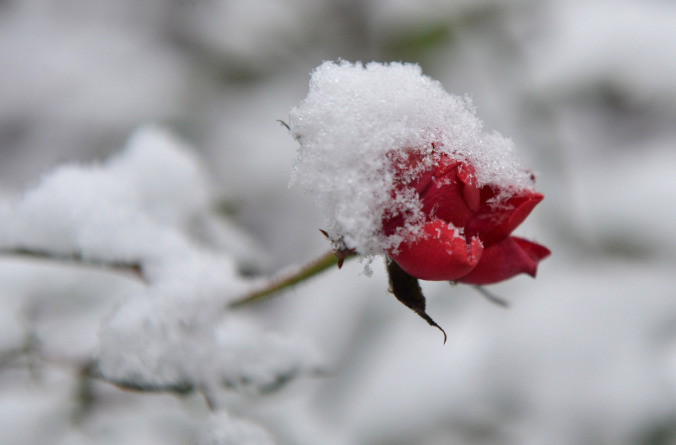
A rose is covered in snow in a garden in Bremen, northwestern Germany. (Carmen Jaspersen/Getty Images)

A rose is covered in snow in a garden in Bremen, northwestern Germany. (Carmen Jaspersen/Getty Images)

It’s free to read, and to download, from his website. You can even read a ‘behind the scenes’ look at the meaning and motivation of the story. 

It’s a beautifully written story, very poignant and has a focus that goes beyond Christmas time. 

Do take the time to read and share the story.

Read the story: The Christmas Rose.

Read ‘behind the scenes:’ The Story Had To Be Told.

A Found Poem

Rifling through this list, 51 Of The Most Beautiful Sentences in Literature (via Buzzfeed) a poem formed in my mind by compiling, editing, amending some of the sentences.

I have come across this form by other writers. It’s an interesting new form in that it is almost a type of plagiarism (except I am acknowledging my sources), to create a new piece of work with words that are not mine. In some ways it is another form of blackout or erasure poetry.

Follow the link above to see which sentences I have borrowed and what I have changed. There are some instances of changing letters for the sake of grammatical accuracy, and I have divided up some of the sentences to link them with specific ideas or imagery.

Untitled
I took a deep breath
and listened to the old brag of my heart;
I am, I am, I am.
Sometimes I can feel my bones straining
under the weight of all the lives I’m not living.
Do I dare
disturb the universe?
What are men to rocks and mountains?
Folks say God crumbles up the old moon into stars.
The pieces I am,
I could see
standing there
leaning on the balcony railing.
How wild it was,
to let it give
them back to me
in all the right order.
an enormous, unmerited gift
given randomly,
stupidly
holding the universe together.
Everything was beautiful
and nothing hurt.
Let me be something
every minute
of every hour
of my life.
Let the wild rumpus start.

When In Doubt, Write Poetry By Erasing Words

Diving back into the classics for more blackout poetry.

You’ll find my first two attempts here (Moby Dick – Herman Melville) and here (Heart of Darkness – Joseph Conrad)

I have taken the first page of a range of texts and used the tone and ideas to create something new.

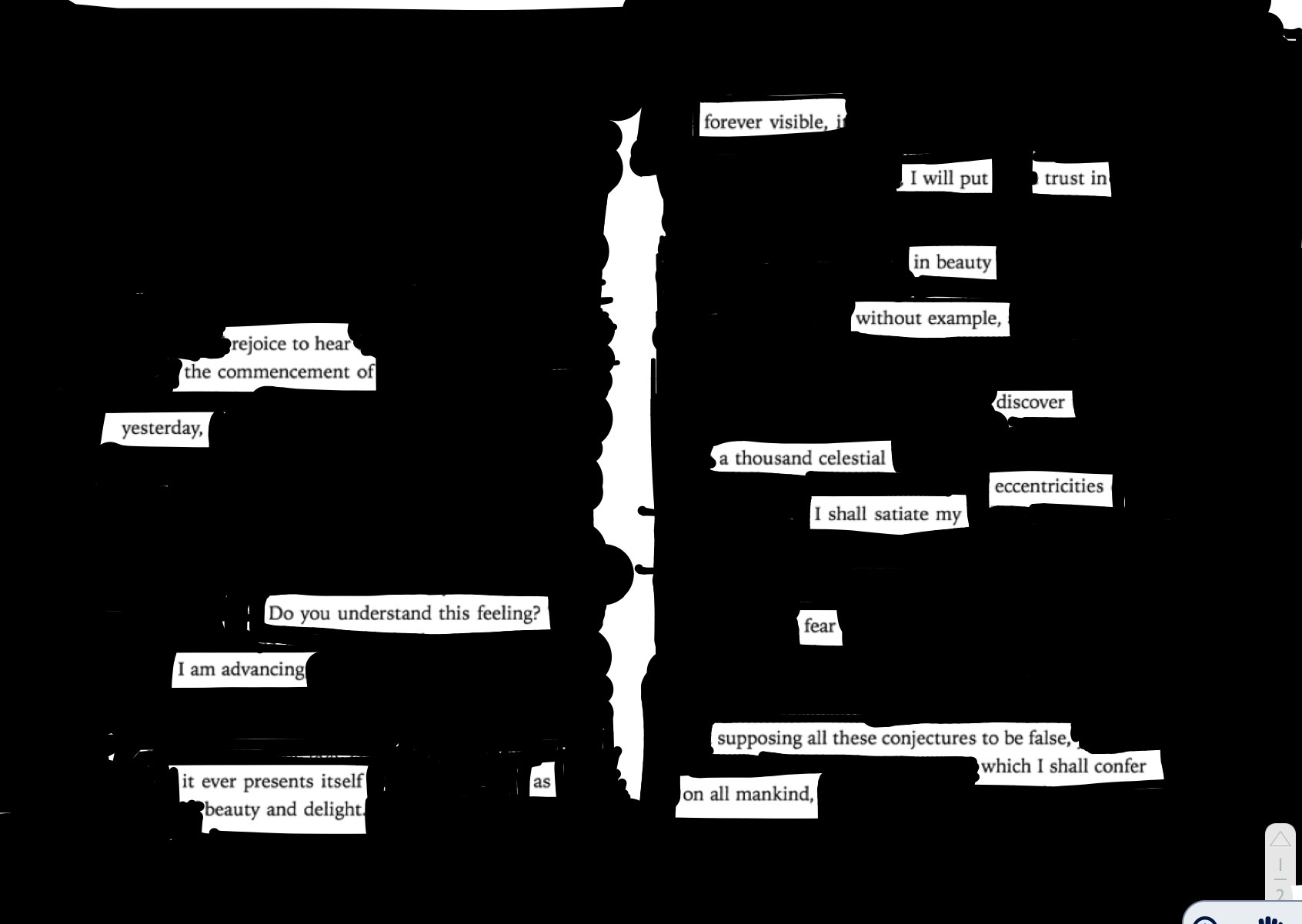
Epistemology

from Frankenstein – Mary Shelley (click image to enlarge)

image

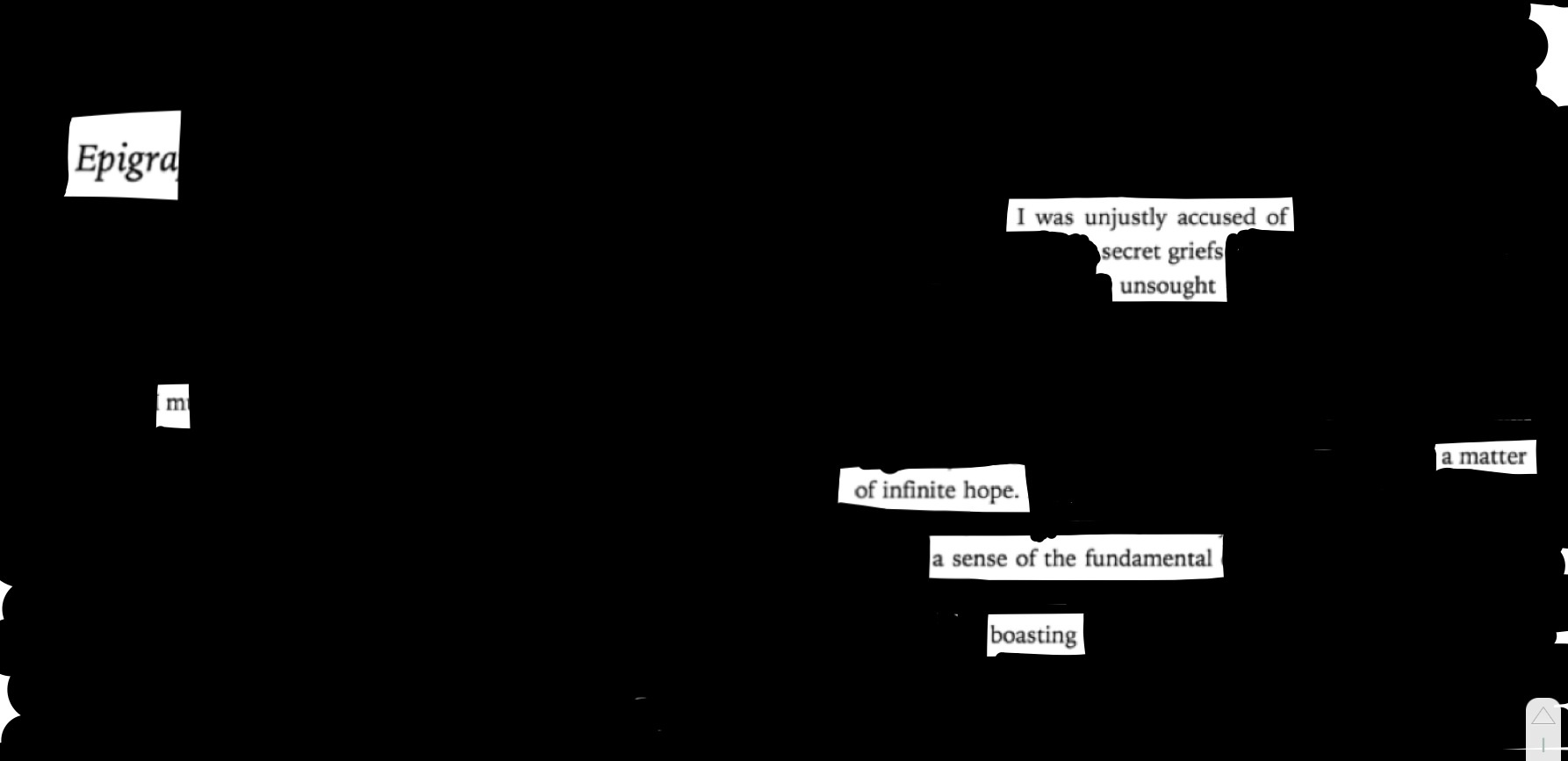
Who I Am

from The Great Gatsby – F. Scott Fitzgerald (click image to enlarge)

image

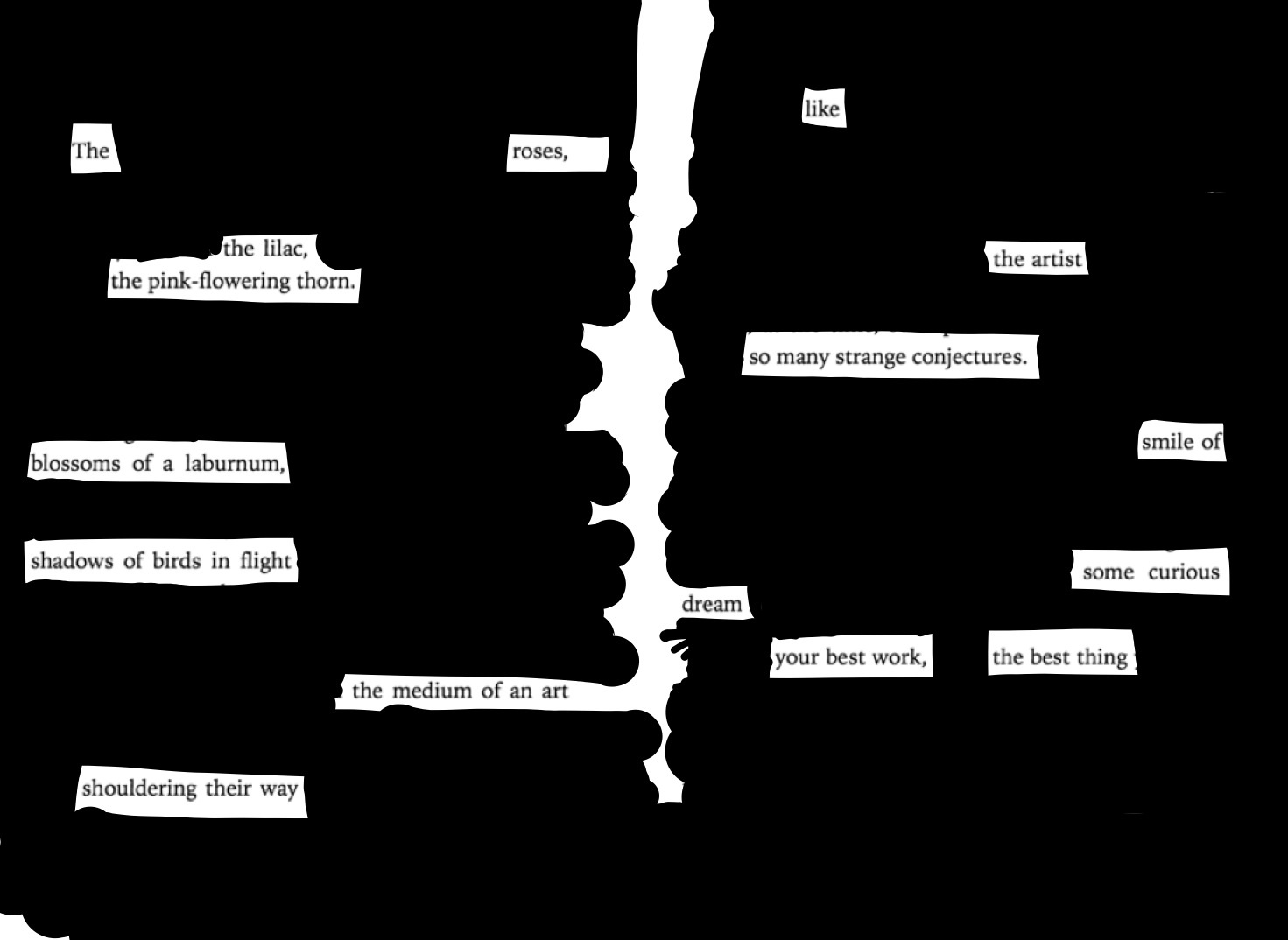
What Your Mind Has Made 

from The Picture of Dorian Grey – Oscar Wilde (click image to enlarge)

image


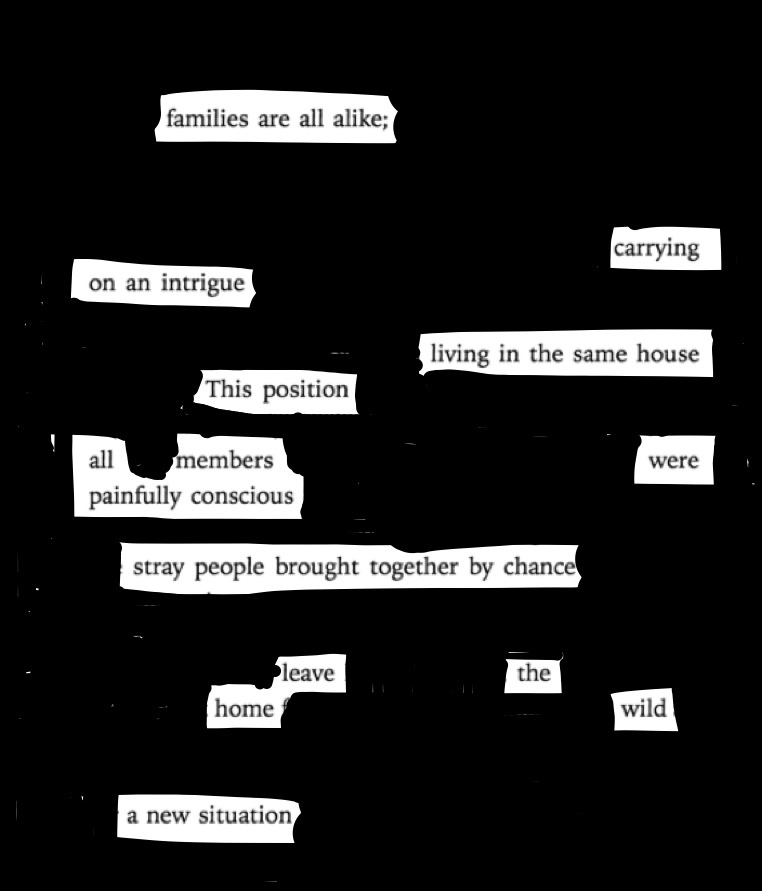
A New Situation for Families

from Anna Karenina – Leo Tolstoy (click image to enlarge)


image


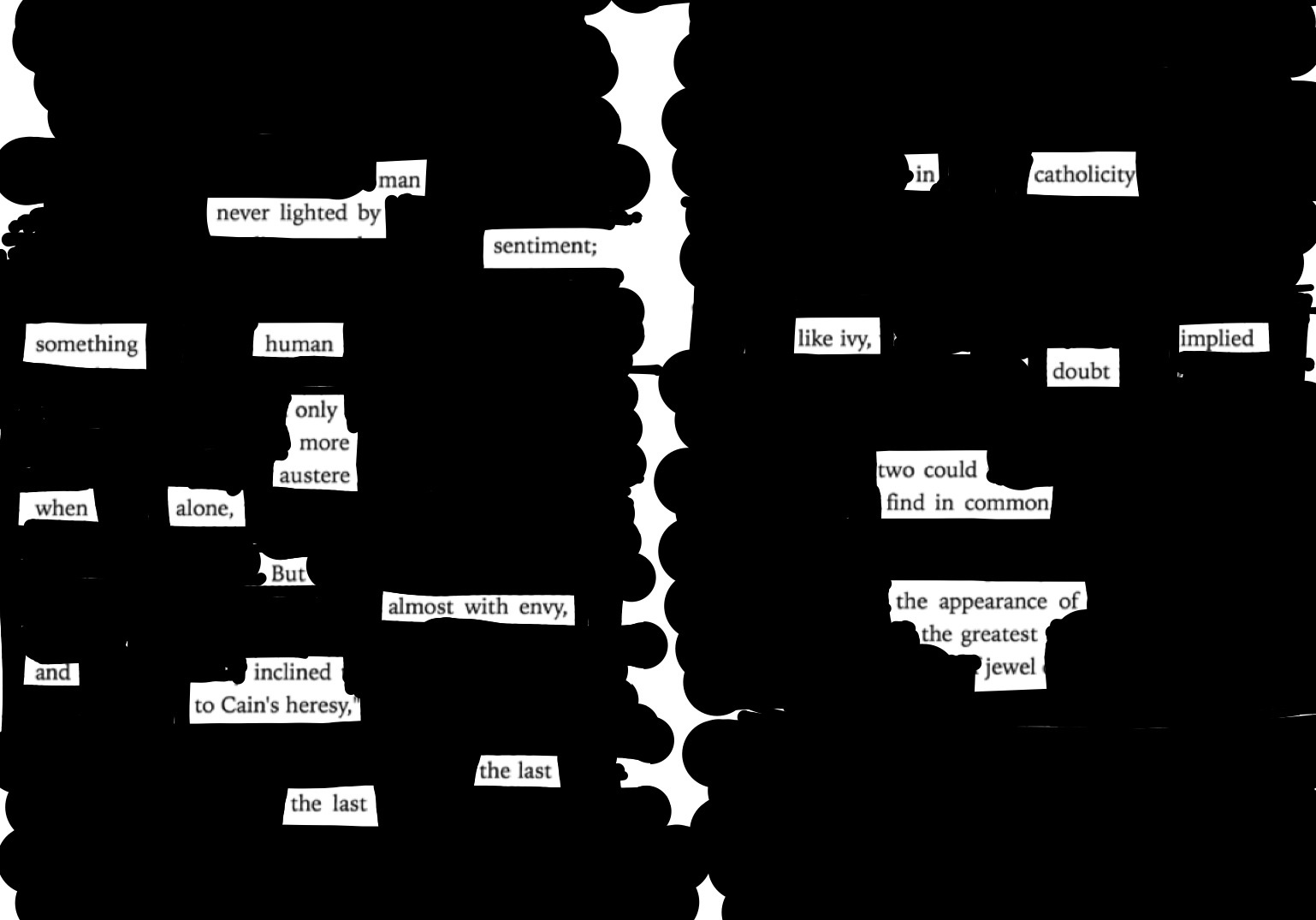
Like Ivy

from The Strange Case of Dr. Jeykll and Mr. Hyde – Robert Louis Stevenson (click image to enlarge)

image

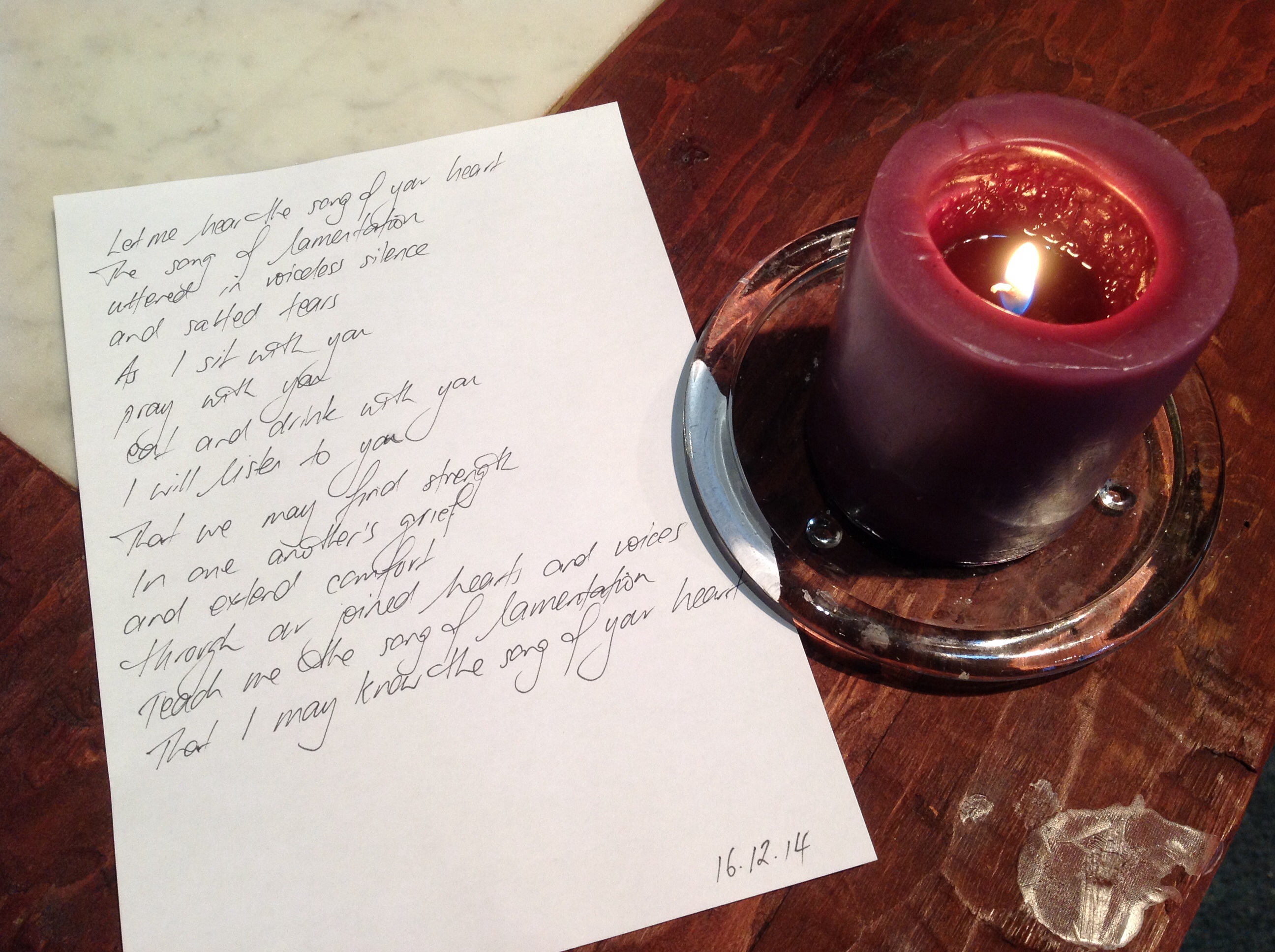
Prayer of Lamentations

In the light of a hostage tragedy in my home city, Sydney, Australia, we joined as a staff in the College chapel to pray. 

image

Last night, in the midst of the uncertainty and doubt, I was inspired by the story of the social media hashtag #IllRideWithYou, where it demonstrated the biblical adage, “Love thy neighbour as yourself.” Despite race, creed, religion, people wanted to stand side-by-side with their fellow commuters and demonstrate their connection with one another. I haven’t been able to find out if it happened, but I hope that there are positive stories to be told.

As a community we prayed for understanding, for strength, to be instruments of peace. And as we joined in silent, contemplative prayer, the lines of a poem began to form in my head.

The biblical narrative contains the Book of Lamentations, a book of sorrow. Read in tandem with the Book of Job I see the power of grief and mourning as a time that should bring us closer together. It is a time to share the burden even when we don’t understand it. To simply be and let the people around us grieve in their own way in their own time. It is a theme I return to in my writing from time to time, and I have returned to it today.

image

Let me hear the song of your heart
The song of lamentation
uttered in voiceless silence
and salted tears.
As I sit with you
pray with you
eat and drink with you
I will listen to you
That we may find strength
In one another’s grief
and extend comfort
through our joined hearts and voices
Teach me the song of lamentation
That I may know the song of your heart


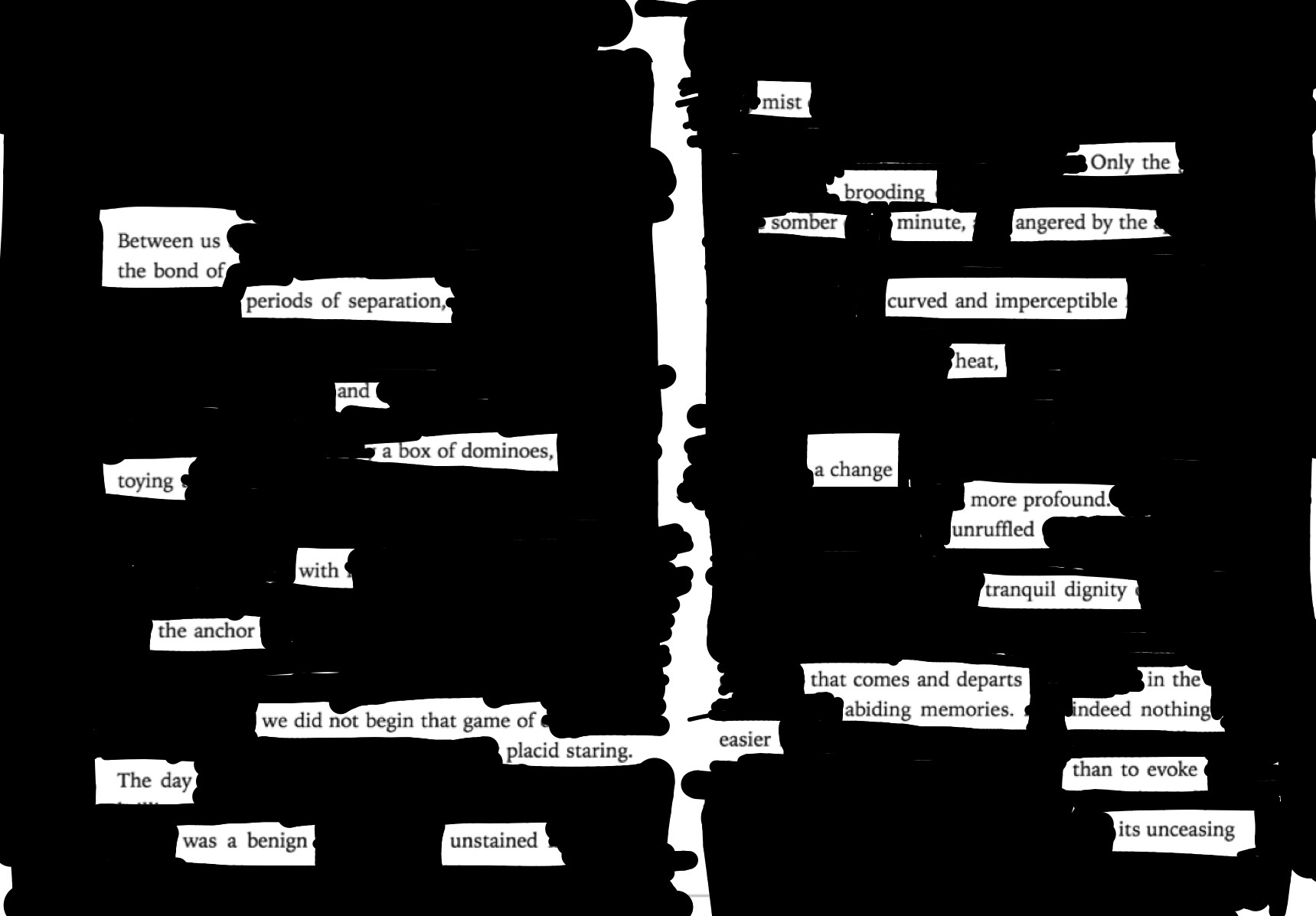
Blackout Poetry – Another Questionable Attempt

image


Between us
the bond of
periods of separation
and
a box of dominoes
toying 
with 
the anchor
we did not begin that game of
placid staring
The day 
was a benign unstained
mist
Only the 
brooding
somber minute
angered by the
curved and imperceptible
heat
a change
more profound
unruffled dignity
that comes and departs in the
abiding memories. Indeed nothing’s
easier
than to evoke
its unceasing

After yesterday’s modicum of success with blackout poetry, I tried my hand at another (need to do something creative at the moment while I get my head back into shape to tackle some significant writing projects in January).

This page comes from Joseph Conrad’s “Heart of Darkness.” I studied this text in high school last century and thoroughly enjoyed it. Admitting at the time I didn’t quite understand the colonialism and inherent racism, it still holds as a powerful metaphor. Tie it with Francis Ford Coppola’s “Apocalypse Now” and you have a teenager’s existential orgasm. 

So, with that in mind, I wanted explored the idea of relationships through the text.

It’s a diversion from writing Post It Note Poetry (and a couple of other major works in progress) but I posit that flogging someone else’s idea to pursue something creative is better than nothing. Blackout, or erasure, poetry makes you look at words, their order and the meaning created. It opens your mind to see other possibilities, limited as it is by the choice of text, to create something new.

I encourage you to try it yourself. Or buy a colouring book and pencils. Do something to stimulate your brain. 

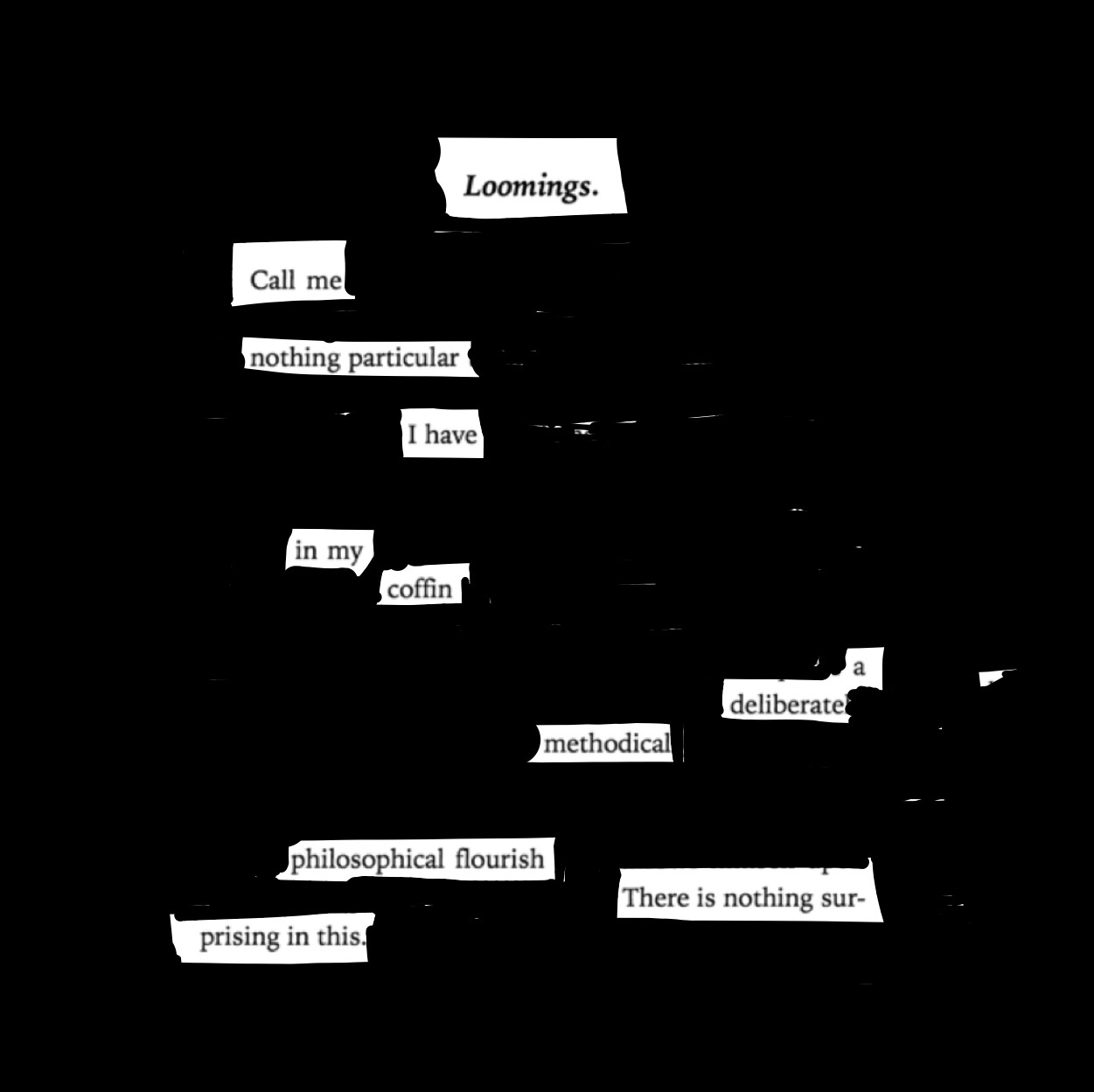
Blackout Poetry – An Attempt of Questionable Merit

image


I have loved Austin Kleon’s work (@austinkleon) and I own his book, Steal Like An Artist (It’s fabulous. Get a copy). I follow his tumblr and love reading his work.

So I decided to give it a go. Armed with my iPad, a digital copy of Moby Dick and Notability, I ripped into the first page of Herman Melville’s tome. 

What does it mean? I. Have. Absolutely. No. Idea. I like how it sounds. And I’ll be adding this to the collection of poems I have on tumblr (even if it’s not a Post It Note).


if:book – Open Changes

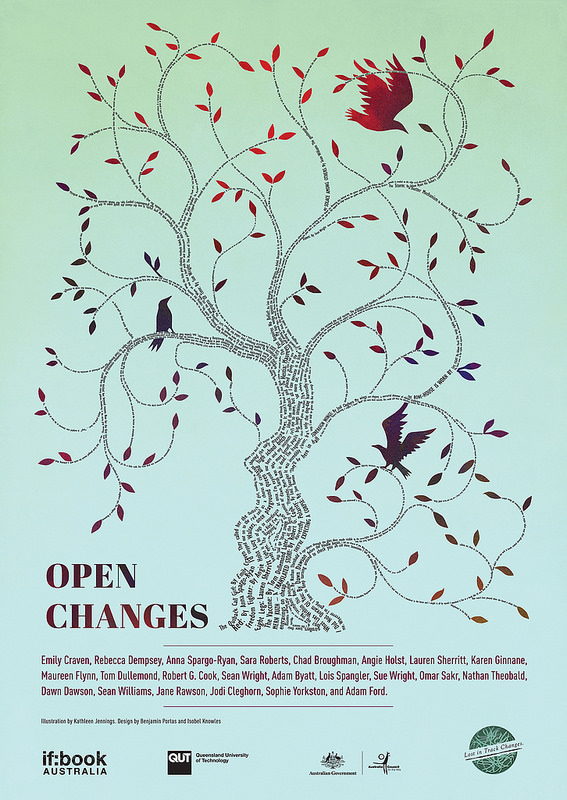
A little while ago I mentioned I had submitted a couple of pieces to the if:book Open Changes project.

I am proud to say I have been included in this project and the artwork for the poster has been released. Included in this wonderful piece of art are a whole bunch of fabulous writers I know.

if:book Open Changes Poster

if:book Open Changes Poster

It is based on the spectacular work of Kathleen Jennings whose art work I seriously adore. Check out her blog and sees the inspiration behind the poster you see above. 

I highly recommend following Kathleen on twitter (@tanaudel) as you will get to see some of her amazing sketches.

I can’t wait for my copy to arrive. I’ll be posting photos.

Small Achievements – Best of Vine Leaves Literary Journal 2014

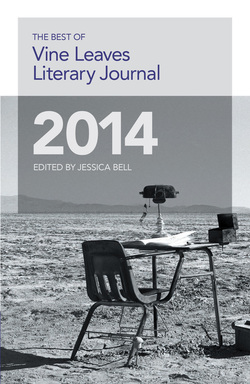
Earlier this year I had a poem, Elihu’s Meditation on Questions Unanswered, published in Vine Leaves Literary Journal.

And now it is being published in the Best of Vine Leaves Literary Journal.

I would encourage you to support small press and publishers as they are pushing boundaries and discovering brilliant new literary voices. This edition is full of remarkable vignettes, poetry and art.

Follow Vine Leaves (@VineLeavesLJ) and its editor-in-chief, Jessica Bell (@MsBessieBell) on Twitter.

Orders can be made directly through the web site. Order HERE. It would make for a wonderful Christmas present for the book lover in your family.

Best of Vine Leaves 2014

New Poem Published in Tincture Journal

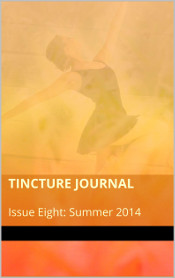
I have the pleasure of announcing a new poem, Folded Peace, will appear in Issue 8 of Tincture Journal (out today), an Australian based literary magazine edited by Daniel Young and Stuart Barnes.

Tincture Journal Issue 8

Table of Contents

  • Editorial, by Daniel Young
  • Inferior Bedrooms, by Meg Henry
  • Crazy Town is a Happy Place, by Deborah Sheldon
  • Post-mortem, by Elizabeth Allen
  • Delicious, by Elizabeth Allen
  • Looking for Links, or: On Imagining What I Would Talk About If I Met Stuart Barnes (Elizabeth Allen, interviewed by Stuart Barnes)
  • Red Flowers of the Exodus, by Amy Ward-Smith
  • Folded Peace, by Adam Byatt
  • One Small Step, by Matt Smith
  • What I Write About When I Write About Dance, by Sophie Pusz
  • Teddy Bears’ Picnic, by Emily Craven
  • Ms Robyne Young requests the pleasure of the company of Ms Janis Ian to dine, by Robyne Young
  • Shepherd Mourning, by SB Wright
  • First to a Hundred, by Jodi Cleghorn
  • Barn Burners, Fire Vans, by Stephen Koster
  • inevitability, by Ashley Capes
  • Simmering, by Katelin Farnsworth
  • On the skin, by Rebecca Howden
  • Bringing Experimental Text to the Mainstream: Kirsten Krauth’s just_a_girl, by Julie Proudfoot
  • The Monologue, by Nicholas Lawrence
  • Live Cam, 42nd Street, Times Square, by Francine Ruben
  • One Bronx Morning, by Patrick Fogarty
  • Hunting With Masai, by Charles Bane, Jr.
  • Knock Knock, by Edoardo Albert
  • A Night Inside, by Kathryn Hummel
  • The House of Little Things, by Grant Tarbard
  • 11 Months in London, by Tony Walton
  • Oh, La, La! by Barbara Donnelly Lane
  • Reply Hazy, Try Again, by Kevin Brown
  • The Moth, by Abhishaike Mahajan

This will be my second appearance in Tincture, following on from my short story, The Cicada Clock, published in Issue 6.

I also have the pleasure of sitting alongside compadres Sean Wright (@SeandBlogonaut), Jodi Cleghorn (@JodiCleghorn) and Emily Craven (@TheMadelineCain).

I am looking forward to reading Emily’s new work, one I have not read before. I am in awe of Sean’s poetry as it embodies the rural aspect of Australian life with a very deft touch of a modern perspective. Jodi’s story, First to a Hundred, made me cry when I read early drafts of it. It is poignant, beautiful and uplifting, especially in the light of the loss of Australian cricketer, Phillip Hughes.

There is lots more to read. Click the links below.

Tincture Journal website | Facebook | Twitter

Buy A Tincture

Daniel Young (editor-in-chief)

Stuart Barnes (poetry editor)

Support small presses and the literary fabric of our culture.

Where I Find My Poetry…

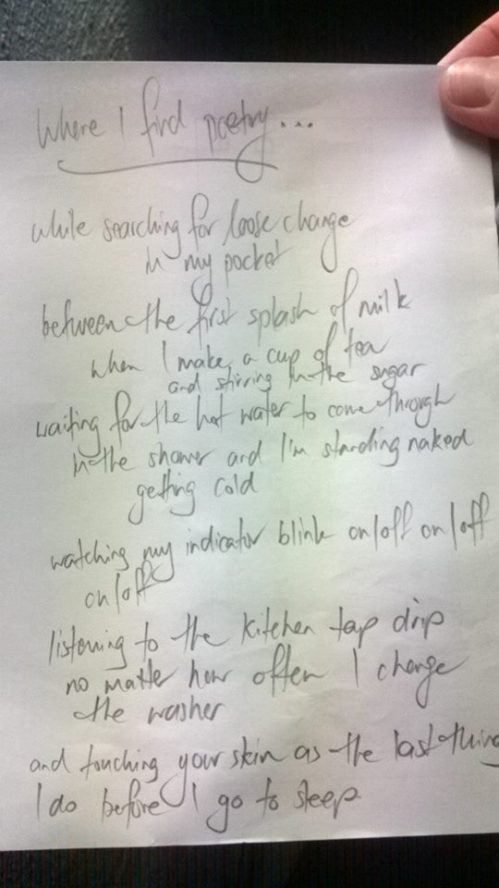
At band rehearsal this week (I play in a covers band for weddings and corporate functions) I scribbled this onto a scrap of paper between songs as the band rehearsed with a drummer who is filling in for me for an upcoming gig.

I’d had the title floating in my head for about a week and an idea of what I wanted to write. Originally I intended it to be a simple blog post about how I, as a writer and poet, find my inspiration and ideas. 

The idea was composting in my head and while I lounged behind the sound desk I scribbled this out.
Where I Find Poetry

Where I Find Poetry

while searching for loose change in my pocket
between the first splash of milk
when I make a cup of tea
and stir in the sugar
waiting for the hot water to come through
in the shower and I’m standing naked
getting cold
watching my indicator blink on/off on/off on/off
listening to the kitchen tap drip
no matter how often I change 
the washer
and touching your skin as the last thing
I do before I go to sleep.

What becomes more interesting is I took a photo and posted it to Facebook, rough and ready as it was. A good creative friend of mine made this comment: “This reminds my (in style) of Leunig, but I do that in praise of such an original piece. This needs to be a poster.” (Leunig is a well known and highly respected Australian cartoonist and writer)

Once it is published it is out of my hands. It is what it is to the reader and viewer. I see its faults and insecurities, the line breaks that don’t quite fit or the meter or rhythm of lines that are inconsistent, the ideas for improvement. 

But the reader and viewer engage with it as it is, seeing it as a finished product for him or her. It either resonates and connects or fails to spark and is ignored. And that’s fine.

It’s also, upon reflection, an accurate understanding of the focus of what I write about. I like the minutiae, ennui and detritus of the day-to-day because these actions, objects or circumstances have significance and meaning to a person. We are inspired and captivated by the videos flowing through social media of spectacular acts of heroism, generosity and compassion but it’s often the short videos of people doing simple, routine acts that bring us to tears because it reminds us we can make a difference. 

The seemingly insignificant has meaning and purpose to the individual and I want to explore what it means for the character and his or her life because it often reveals significant meaning and purpose.