Tag Archives: stupid stuff I like to write

The Texts of a New Generation


With a gentle nod to the advertising of the 80s and 90s in the title of this post I want to explore the idea that during your formative years, especially teens to early 20s, what you consume in terms of culture (music, film, tv, magazines etc) shapes your decision making processes and actions.

It was sparked by a story I read where the music and lyrics of the 70s, in particular Pink Floyd, David Bowie and the Ramones, shaped the zeitgeist of the culture and in turn shaped the decision making and perspective of the main character to the point when he had reached his late 30s that it was almost too late.

This sparked a brief twitter mind dump, collated here for your perusal, about what I watched, listened to, and consumed in my youth, that of the late 80s and early 90s. This in turn made me wonder what my girls (aged 10 and 8) are watching and listening to, and will be watching and listening to (right now my wife and I have influence and decision making over what they watch and listen to but in the years to come they will develop autonomy for their consumption of culture). 
image

image

image

image

I am a child of the 80s and 90s, the last of Generation X. I grew up listening to thrash and speed metal, hard rock, U2. I watched Friends, Mad About You, early Simpsons, The Cosby Show, Family Ties, Seinfeld, X-Files, ET, Raiders of the Lost Ark, Terminator 2 and much more.

These are the cultural products I consumed and in turn have shaped my thinking and decision making. The catch cry of that period was a balance between Gordon Gecko’s mantra, “Greed is good” and the turbulent introspective narcissism of grunge, the highlighting of the individual as greater than the whole and you don’t need nothing but a good time (hair metal of the 80s/90s was priceless).

Where does that leave us now, in the throes of middle age, with children and a mortgage, and perhaps a sense of disillusionment? Have the promises of our youth been fulfilled or is it still a romantic notion that will never be? 

Every cultural touchstone has a family tree, a connection to the past from where it developed its departure point. We wouldn’t have South Park, Family Guy or American Dad if it wasn’t for The Simpsons. 

I see my students consuming the pop of Katy Perry, Rihanna, Kanye; the sexual mores of Sex and The City, Girls, Modern Family. Where will they be in their middle age after feasting on the values of modern pop culture?

Again, I’m not positing a particular point of view or have any clear answers (although there are no doubt cultural commentators and sociologists who study this and have better knowledge; I’m merely brainstorming).

Here’s the takeaway: be a critical consumer; think about the attitudes and values a text is communicating. Do you agree with it or not?

And for creative people, what does that mean for us in terms of what we create?

  • Are we supporting or subverting current values, attitudes and mores?
  • Are we condemning, critiquing or questioning the focus of our culture?
  • Are we aiming to improve or develop our culture, because, yes, art/film/literature has a point.
  • Are we creating for the present or for the future? This is an important question as I think our answers encompass both. We create for the now, a reflection on the where we are at with our thinking, and for the future as a marker of what we wish to become as artists.

No answers. More questions. A starting point for a conversation. Have at it in the comments. 
On Fear and Its Perception

“I write in order that I may travel with my soul into the places I fear and I may have a friend to share the journey.”

I wrote and posted this on Twitter the other day and very soon after clicking the “Tweet” button I questioned and doubted the validity and veracity of my statement.

I have written before about how I believe fear holds me back from exploring the creative life I want. The above statement is in contradiction to my manifesto and vision for why I write.

Or is it?

I have no clear answer; more a series of random reflections which may or may not lead to a clear answer. It’s like cleaning your glasses only to have them dirtier than when you started.

What follows is simply scraps of thoughts about what I wrote and differing perceptions of it. I am not sure I am right; nor am I sure I am wrong. I will contradict myself, provoke myself, push and question myself. And you can have your addition in the comments.

  • Writing is about exploring your own fears; the fears you have of yourself and of the facets of life you find frightening.
  • Fear is lacking an understanding of the unknown, the different, the obtuse, the unfathomable. To understand is to give a name to the fear; to know its place and its where it resides.
  • My reader is the companion on the journey. They travel with me through the words on the page. At some time in their life they may, or may not, have experienced the same fear.
  • What I write may bring comfort to know someone else has experienced the same fear; it may trigger a response; it may have no effect because the experience related in the story is not connected to their own life experiences.
  • The opposite of fear is… what? Hope? Vision? Clarity? Discipline?
  • The same chemical that is the basis for fear, adrenaline, is the same chemical that is the basis for excitement. Is fear the way our bodies tell us something new and exciting is about to happen?
  • Defining fear as it relates specifically to yourself is the first step. What am I afraid of? Is it personal fear, an internal dialogue, or an external fear of something random outside your control? Is there a topic or issue you do not want to explore because of the fear it generates for yourself or fearful of the consequences of exposing it?

So, no answers. Definitely more questions but I know where my thinking is leading me.

If I rewrote my tweet, I would explore another aspect of why I write, another permutation of thinking about creativity and its purposes.

“I write in order that I may travel with my soul into the places I seek to understand and I may have a friend to share the journey.”

“I write in order that I may travel with my soul into the places I find comfort in and I may have a friend to share the journey.”

“I write in order that I may travel with my soul into the places I want to light a flame of light and life and I may have a friend to share the journey.”


What would you say?

Finding The Flaws In Your Writing Practice

I have found a flaw in my writing.

More specifically, I have found a flaw in my writing practice. It is found in the word ‘practice’ because that is the specific aspect that I am NOT doing.

I watch artists Kathleen Jennings (@tanaudel), Terry Whidborne (@Tezzabold) and Eric Orchard (@Inkybat), post their samples and sketches on twitter, or works in progress. I love seeing the behind the scenes look at their art.

But it made me realise what I DON’T do. I don’t practice my writing. I don’t experiment with ideas, words, sentences, phrases, paragraphs, characters. 

I am NOT practicing.

You’ll have to excuse this hack for a moment because he learned something that you all probably already know. I’m hearing the chorus of, “Well, d’uh!” resonate, accompanied by a slow clap. 

I expect to turn up to the page of a current work in progress and produce words of reasonable quality in the initial drafts before tidying them up in revisions.

I’m surprised I didn’t cotton on to this earlier; as a drummer, practice is essential to becoming proficient (but then I don’t practice nearly enough in this area either). I’m a slow learner.

Some might argue that the act of writing the story, the initial phases of writing and editing is practice, and I would agree. However working on a specific project means your focus is on the established parameters. Practice for practice sake means you can attempt new perspectives or styles without the constraint of an existing work.

So, what can I do to improve? Here are a couple of practice strategies.

1. Morning Pages

Morning pages, the downloading of the mental jumble, is a good way to seek clarity and I know of authors who use it to find their focus and clarity before returning to their current WIP. 

2. Copying

Write out a passage from your favourite author. See how and why it works on the page.

3. Sketching

Another is to create sketches, like an artist practicing a certain pose or facial feature. Tumblr is funny for that; seeing artists strike odd poses for reference.

I want to take an idea from my notebook, or a line or poetry and write, free-association, or timed, or thematic, or stylistic.

And then I will leave it. Words without context. Sentences without a plot. Characters without a complication. They will be the equivalent of an artist’s sketches, the woodcarvings of the carpenter, the drills of the athlete, the rudiments and scales of the musician.

All methods have validity. You need to work out what helps your own writing. 

I am going to try Number 3 for a while, in the spare minutes here and there in the day and see how it goes. I will let you know how it goes.

What do you do for practice?

Sowing the Seeds of Creativity

In the Gospel of Matthew is the Parable of the Sower. A farmer goes out and sows the seeds for his future crops.

“Some fell along the path, and the birds came and ate it up. Some fell on rocky places, where it did not have much soil. It sprang up quickly, because the soil was shallow. But when the sun came up, the plants were scorched, and they withered because they had no root. Other seed fell among thorns, which grew up and choked the plants. Still other seed fell on good soil, where it produced a crop—a hundred, sixty or thirty times what was sown.” Chapter 13 Verses 5-8

If I may be so bold to appropriate the parable for another purpose, please follow me.

A frequently asked question of creative people, writers in particular, is “Where do you get your ideas from?” Each writer has their own response.

In truth, I don’t find it difficult to find ideas. I find them anywhere and everywhere.

What I do have difficulty with is knowing which ideas will grow and flourish. I carry around a notebook and pen wherever I go. Into it I record ideas, sentences, lines of poetry, fragments of thoughts, pictures. These are potential stories I want to write. These are my seeds.

Some ideas fall on the path. Some on the rocky ground. Some between the thorns and some fall on the good soil.

New Poems

Two new poem ideas planted. Must add compost.

Will these two ideas grow? I don’t know. I often refer to ‘composting stories;’ leaving stories on the pile and see what sprouts. Sometimes an idea will need more fertiliser, or removal or pruning if it gets too unmanageable.

In terms of ideas that become good stories, the yield (thirty, sixty or a hundred fold) is in the reader and her/his connection to it. 

Have ideas. Have many ideas. Have a notebook so full of ideas so you can give them to other people who need ideas.

But more importantly, plant seeds. To paraphrase (and appropriate) the Gospel of John (12:24), “Unless a seed falls to the ground and dies, it remains only seed. If it dies, it produces much seed.”

Tend the new shoots that come up; don’t leave your ideas neglected. Work on them; experiment with the idea, come back to it every so often and admire it.

Keep sowing.

Asking Permission

IN the light of yesterday’s blog post about Jodi’s mentor program, she followed it up with a post about the fear of asking: Maybe I Was Only Then Becoming.

It is a remarkable insight into the creative mind and what fear can do to you when you’re a creative person. She references Amanda Palmer’s book, The Art of Asking. After reading the blog post, and hearing Amanda’s remarkable TED Talk from a few years ago, I need a copy. I’ll be putting it on my Christmas list and asking Santa nicely.

I can attest to how fear can be debilitating. I have been too afraid.

Too afraid to say ‘Yes.’

Too afraid to try.

Too afraid to fail.

Too afraid to believe.

Too afraid to ask.

Too afraid…

When we fear to ask we stand still, only to watch our shadows grow.

Odds and Sods Behind the Lounge

The last week of the school term is fast approaching, extending to two weeks out of the classroom. In theory, this is free time. In reality, it’s marking, preparation for lessons, planning and sharpening pencils.

What it means for my writing is hopefully a little more time to work on a couple of projects. I have in mind the completion of new drafts for 2 short stories, tidying up a couple of poems, and the completion of the first draft of my verse novel.

It is very ambitious and I’ll be disappointed if I can’t get some of these projects up to speed. Must stay focused and on task. No distractions.

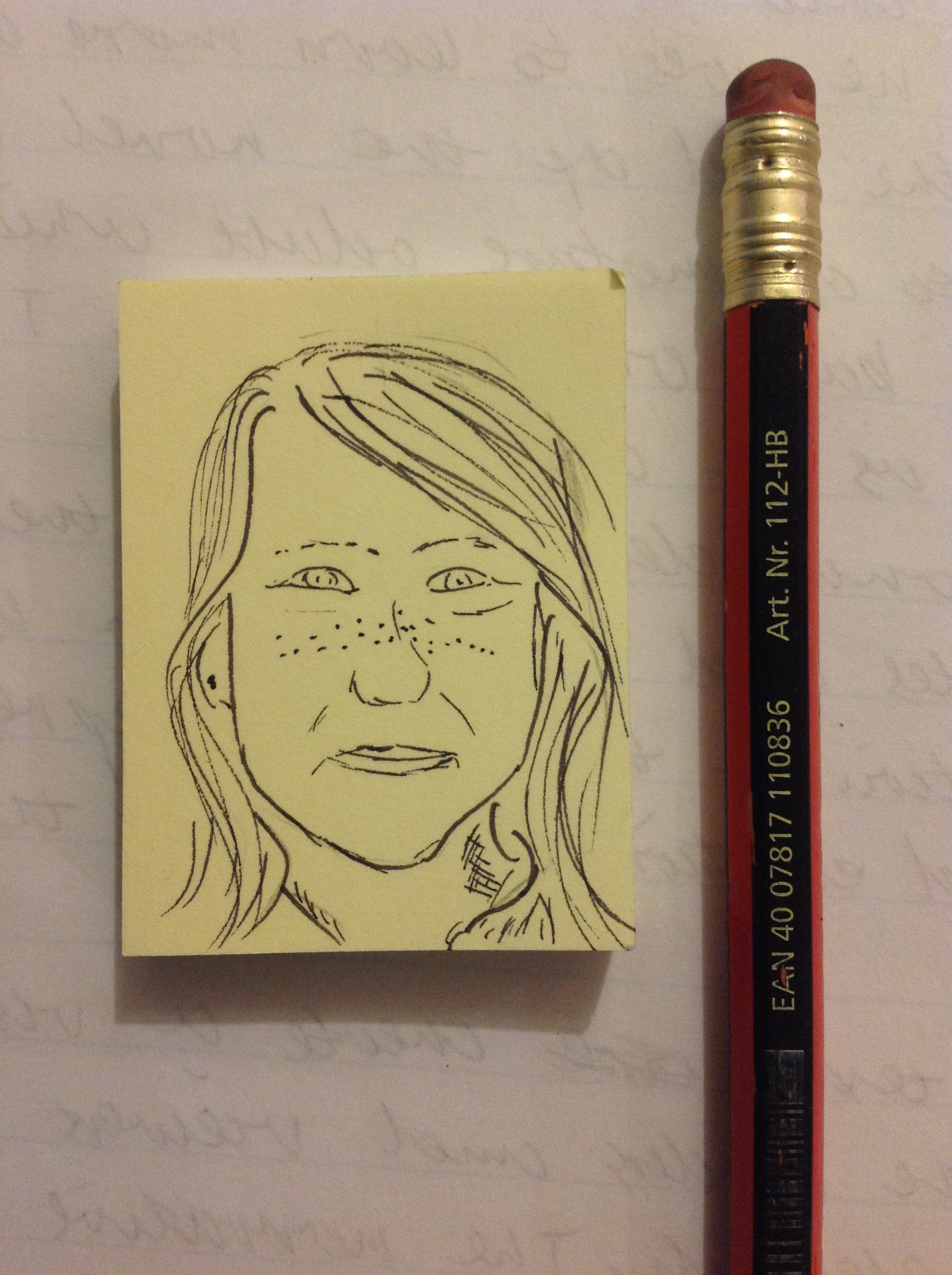
Speaking of distractions, on a whim the other night I opened my iPad, found a picture of my daughter (Miss #2) and attempted to draw it on a tiny Post It Note (the pencil gives you an idea of the scale).

This was the result.

image

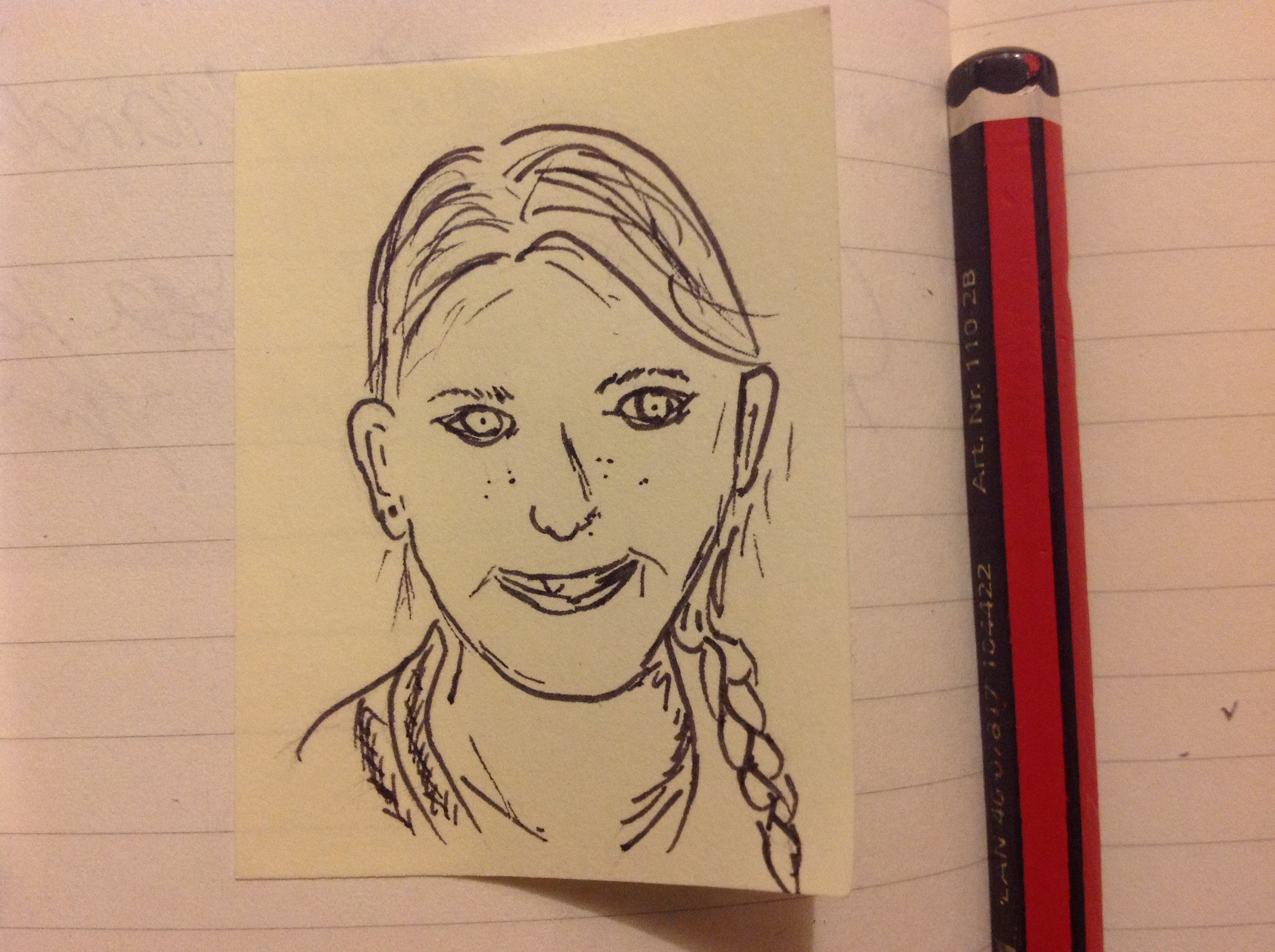
But, what ever you do for one child, you must reciprocate for the other. My attempt at drawing Miss #1 was not as good (it’s the eyes; they’re not right).

image

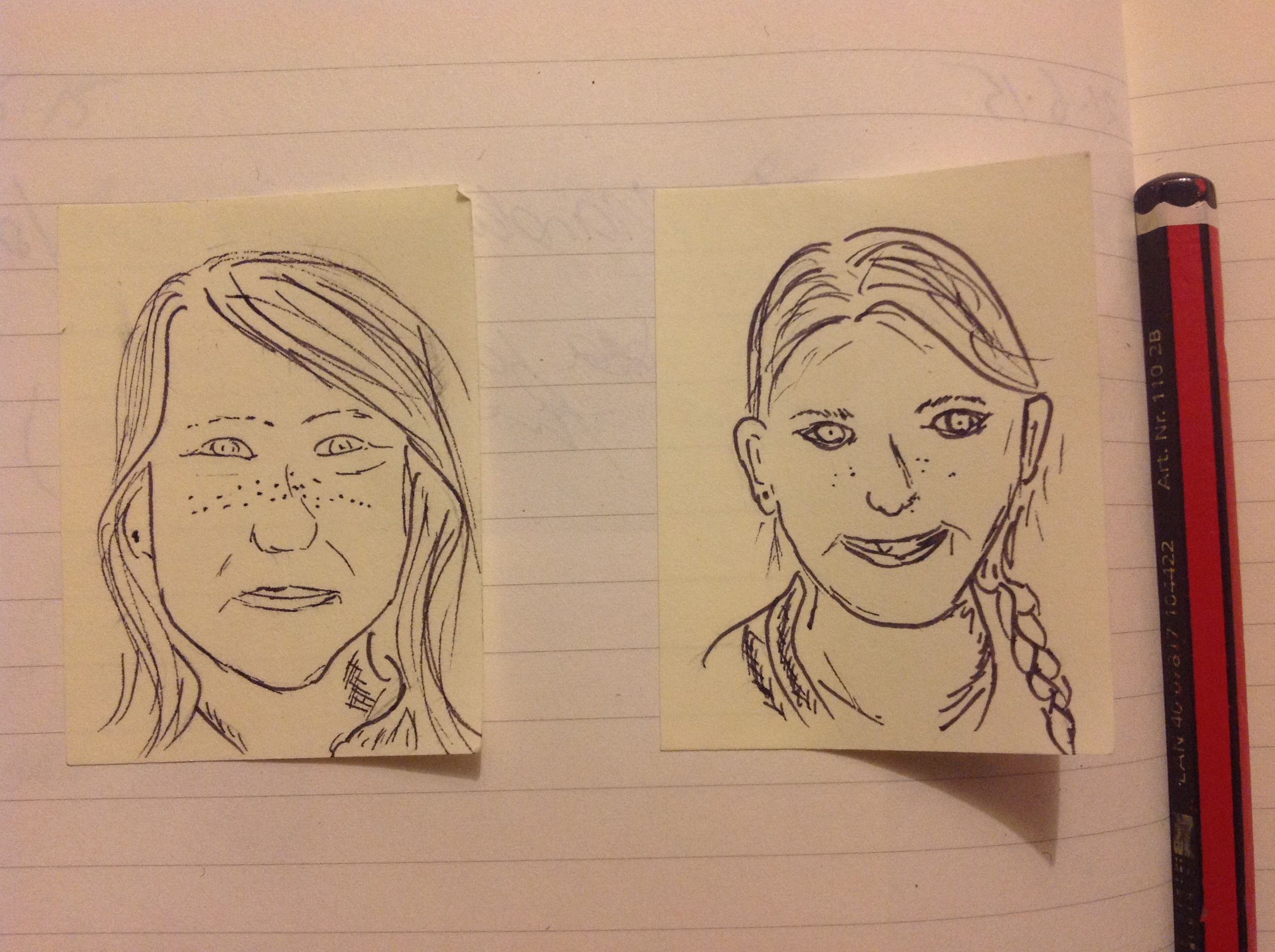
Side by side for comparison; Miss #2 on the left, Miss #1 on the right.

image

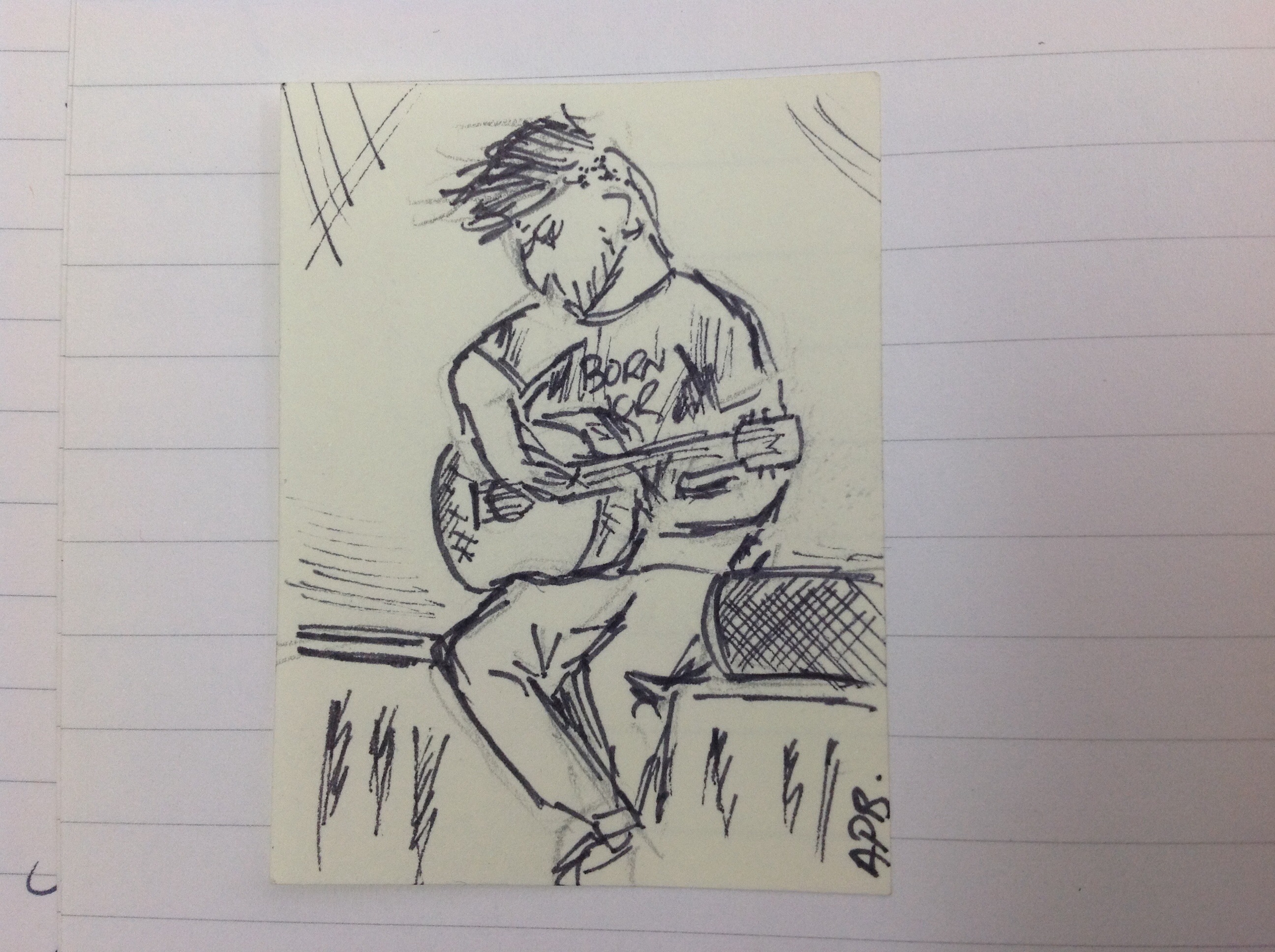
Unperturbed, I took my pencil and pen to band practice and sketched one of the guitarists during set up and sound check. The proportion is wrong, but it’s not bad.

image

Side note: faces are SUCKY to draw. I can never get eyes and noses and lips in the right places.

Learning Experiences (nothing spoils fun like finding out it builds character – Bart Simpson): I am not very good at art but I don’t care.
It’s practice; the development of a skill.
It’s another way of being creative, unlocking the unconscious parts of the brain while it’s distracted learning a new skill like drawing.
I embrace the suckiness and enjoy the process.
And I’m not ashamed to post my early attempts here.

Creativity is about fun and play, and messing about with boats. Hang on, that was Rat. Never mind, move on. Nothing to see here.

Don’t forget to play with your food from time to time and learn Roman numerals. I’m off to draw.

image

Practice Pages – Music To Die By

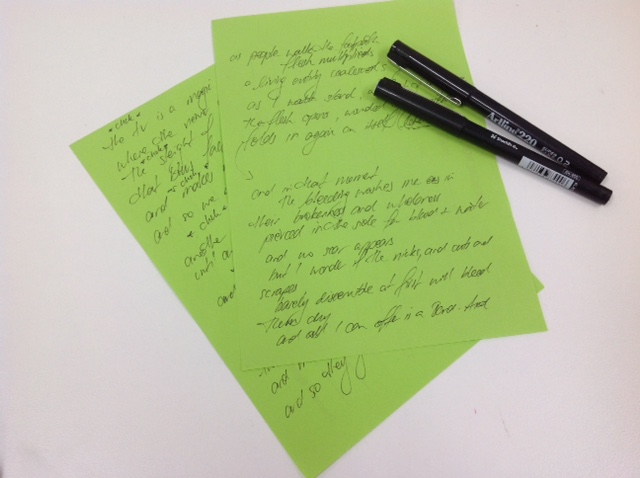
This Practice Page was inspired by a line in a text I was reading (I wish I wrote down what it was – it may have been an article I was reading online). The line that sparked the thought forms the title, Music to Die By.

Oh, it’s all flaws and problems but I like the idea of simply throwing words down on paper to explore an idea; try to excise the cliches and boring prose with something different. I find the same phrases or half-sentences popping up in my writing like dandelions, spreading their seed when I fart and sowing a new crop of half-arsed sentences.

Therefore, the practice pages are a good way to expunge tired expressions from my writing and find new images and constructions. And, yes, this is all just practice and in no way should be considered ‘art.’

Music To Die By

The funeral march, never heard by your own ears, is a cadence of steps bearing the weight of the coffin with you inside it. The missed step and misstep, Perhaps the last thing you heard was the shufflely slap of slippers in the hallway, the click of the bathroom light and stop/start splash of urination.

You have a set list of songs you’d like played at your funeral; even one or two put on there as an ‘up yours’ to certain family members. But if there was one song to play, that best encapsulated who you are, and who you were, what would it be? The sentiment of a song, meaningless to everyone else but you, and you can’t hear it.

While mulling it over, there are playbacks of other songs: the frenetic two-beat of punk, a stuttering motorcycle of attempted rebellion until the motor smooths out and rebellion is understood as a revolution of the mind, not the clothing.

Or the rushed climax of lovers as the radio plays some innocuous pop song in the background, a soundtrack gouged in wax and on each subsequent listen the memory replaces the physical engagement until the only thing left is chemical memory and the desire of what it represented.

This then, is the purest music: the silence between heartbeats until at last, the needle of the record lifts, pauses, returns to the carriage and with the final click, the revolutions cease.

Moving Forward When You’re Stuck Looking Behind You

How do you move forward creatively when you feel like you’re stuck looking back?

In the last couple of weeks I have been re-reading the collaborative epistolary novel, Post Marked: Piper’s Reach, I wrote with Jodi Cleghorn between January 2012 and April 2013. 

The novel has been thoroughly edited and we are now at the place of writing the synopsis. Late last year we began the process but due to a range of metaphysical circumstances it had been put on hold. 

For me, because I cannot speak on behalf of Jodi, the latter half of last year burned me out creatively. The pressure of my job (high school English teacher) and other external pressures saw me roll into January hoping for a recovery. But it never happened.

Putting this out there and waving it around with abandon: Writing a synopsis sucks.

It’s the Pit Of Despair from The Princess Bride coupled with the Pit of the Almighty Sarlac from Star Wars topped off by The Buzz Cut from Wayne’s World (Boy, it really does suck). As we wrote it, we felt the summary sucking the life away from the narrative we had created.

On top of the synopsis situation, other projects lay scattered like discarded underpants and it was killing me that they were unfinished. My sense of self in regard to my creativity and writing had disintegrated. I doubted my writing skills and wondered if it was worth continuing. Doubt is insidious, and lethal, to a creative life. 

But I am not one to go quietly into the night for a bag of doughnuts and never return. I used February and Post It Note Poetry to begin the rebuilding process. I gave myself permission to put projects on hold, think them through again.

Now that it is March, I returned to the first project on the list: the Post Marked: Piper’s Reach synopsis. I opened up the final document and began reading, familiarising myself with the story again. It was nice to come at it again with new and fresh eyes, delving into other aspects of the characters again and their development, marking up plot points and knowing I’ll probably cry at the end. Again. (And, yes, I did cry).

While doing this I went back to other pieces written in the Piper’s Reach world. The stories precede the events of the novel in that they are about the lives of Jude and Ella-Louise in their youth and in their adult life. They were done as an indulgent exploration of our characters from different perspectives (letters have a very limited frame of reference when writing).

The first is the Christmas Special Jodi and I wrote at the end of 2012. It recounts the events of the Surf Club Christmas party (mentioned in the novel) when Jude and Ella-Louise were in Year 11 (their second last year of high school). It introduces the main characters from a different perspective as each character had the opportunity to speak in their own voice, not limited to the first person recounting of Jude or Ella-Louise. You can read the Christmas Special here.

The second story is from Jodi. “What I Left To Forget” tells the story of Charlotte MacKay and Jake de Britto and is told from the 3rd person, a departure from the narrow focus of a personal letter.

I wrote a companion piece to it, which precedes it chronologically, but was written after a comment I left on Jodi’s blog where I riffed an idea. Jodi dared me to write a romance from the perspective of Jake. The resultant piece was The Photographer’s Concerto.

Any of the pieces can be read without knowledge of Piper’s Reach, and you can read the first letter from Ella-Louise here.

How did this help me move forward? 

Up until the reread, I doubted I could write well again. I hated what scrawl occupied my notebooks. Even when writing Post It Note poetry I felt hesitant and uncertain.

By going back into the past, I could see the progression of my writing skills. What I wrote 3 years ago is still good. Sometimes I wonder if it was really me who wrote the passage. It has been an encouragement to see that I can write. I am proud of those stories, the world that was created. Yes, it’s hard work, but rewarding when you see readers gain a connection. That was one of the most rewarding aspects of writing “Piper’s Reach” and releasing a letter a week to our small, but faithful, following who shared their love of the series and the characters.

Taking pause to reflect has allowed me to refocus my creativity and move forward.

If you’re stuck, unsure of the direction, pause, reflect, give yourself permission to stop for a time and look back as a way of seeing progression. It may help you move forward. 

Are you stuck? Feeling like momentum has stopped? Would looking back work for you to help you move forward?

Failure Is Always An Option

Why is failure a negative response?

Well, yes, failing attempts at flying, playing with power points, or gaining your friends’ attention with the exclamation, “Hey, check this out!” can have negative consequences resulting in death, bloody maiming or a great story to tell.

Failure is couched in terms of shame, of disappointment, of not being successful, of letting people down, of not living up to a set of standards, morals or values. To fail, therefore, is to be less than, to be inferior, to be forgettable and forgotten. 

So when it comes to beginning a creative project, or learning a new creative art, skill or craft, we are programmed to think of our early efforts as failures. They do not meet up to our expectations of what it should be (and yes, there is a disconnect between what we create and produce, and the expectations we have set for ourselves in the production of our work but that’s another blog post). 

But as creative people, failure should not be considered a negative response to a project.

Failure does not define who we are as creative people.

Failure is not a measure of our worth.

Failure is a part of the creative learning process.

Every creative project we start is an experiment. It may or may not work. But that’s the beauty. When I am beginning a new story I am unsure if it will work. I write the first draft, let it sit, return to it and look for what needs to be improved (often, a lot of things). Whether it’s point of view, too florid in expression, characterisation or character development, dialogue or imagery.

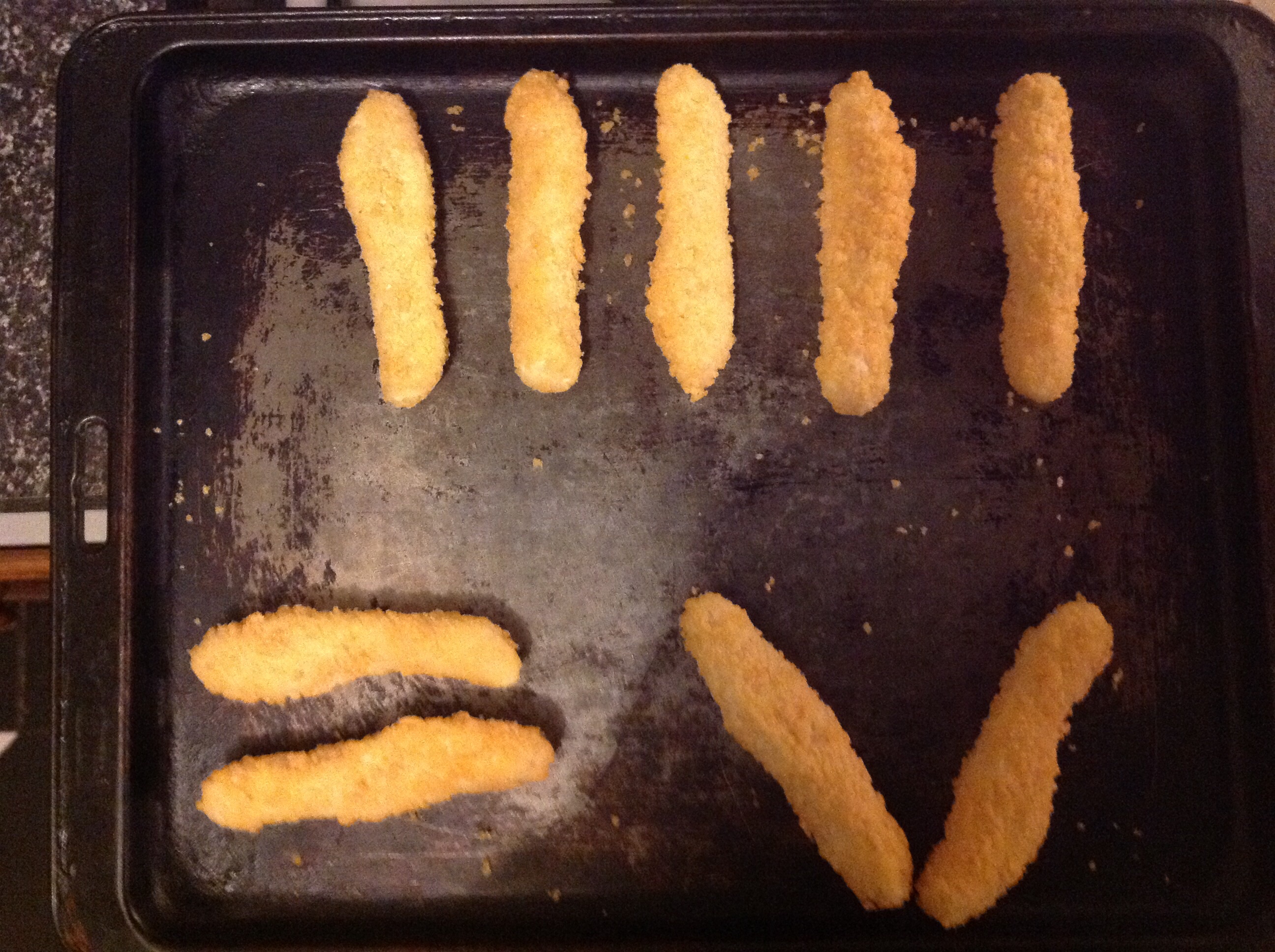
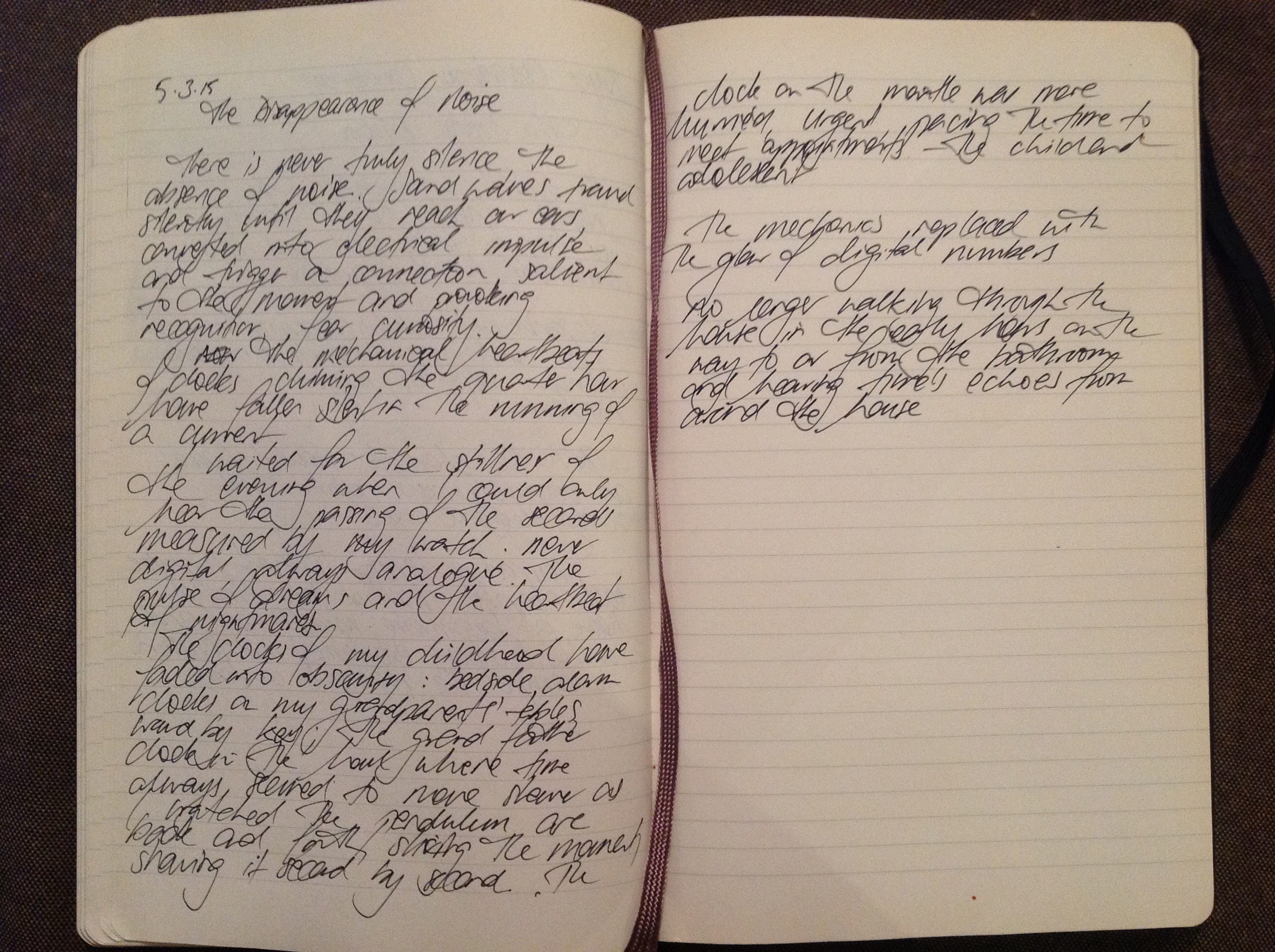
A recent idea in its genesis. Pure unadulterated nonsense.

A recent idea taken from my notebook in its genesis of pure unadulterated nonsense. It’s all part of the failure.

Don’t be afraid to put in the hours of practice required. I think it’s where a lot of fledgling creatives stumble. They want the accolades but haven’t put in the necessary hours. The Mythbusters make it a part of their show: failure is always an option. It shows you one way it didn’t work. Repeat the experiment until you find the solution.

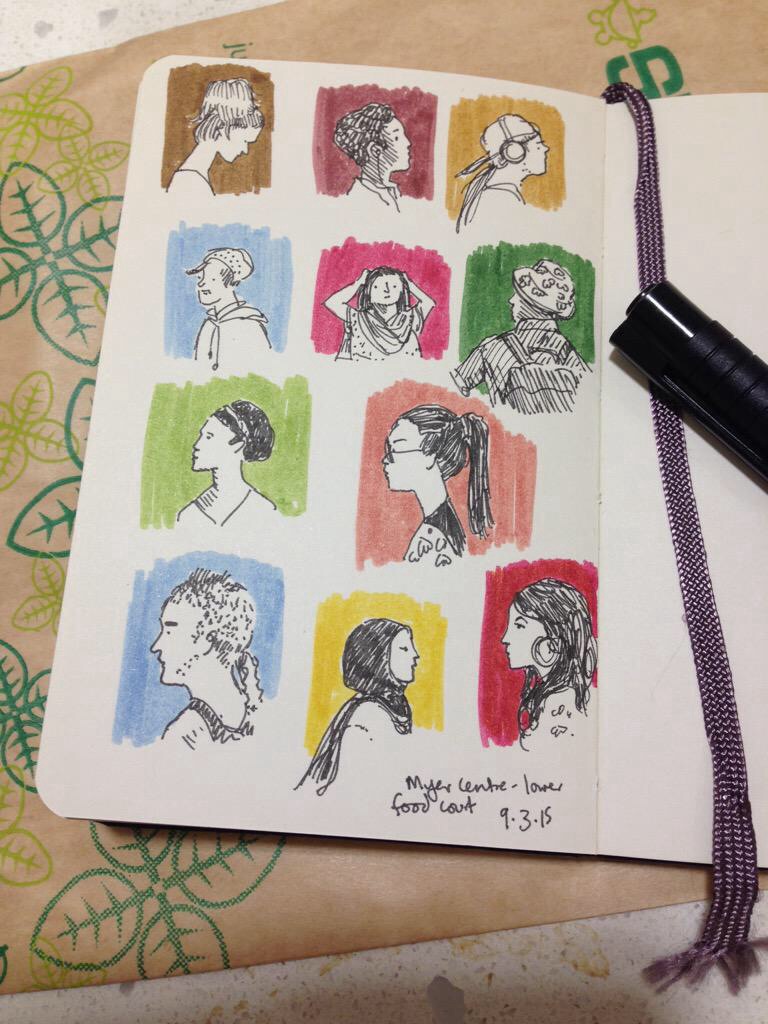
I love seeing Kathleen Jennings (@tanaudel) put up images of her sketch books, her practice pages, on twitter. She sits in public transport terminals, shopping centres, food courts and sketches people. Please check out her awesome work via her blog: Tanaudel.

I am very grateful for her permission to reproduce one of her images. I love how the colour frames a distinct individual. She had this to say about her process.

“They are part of my practice. I’m fairly timid drawing naturally. So I made myself use markers, limited colours, and draw people as they walked past. It made me commit, be bold, be confident and develop a visual shorthand.”

image

(c) Kathleen Jennings @tanaudel Used with permission.

Practice. Practice. Practice. 

I know I have not spent enough time behind my drum kit practicing rudiments, beats, fills. I have not practiced enough. The same applies to my writing; I need to spend more time with pen and paper scratching out paragraphs, lines, half sentences.

I have many documents of half started stories, poems, scripts and the like sitting on my computer hard drive as well as in multiple notebooks. This is the practice time spent conditioning my mind and perspective like an athlete to achieve the goals I have set.

Practice is repetitive. 

Practice is boring.

Practice develops a discipline.

Practice is extending the boundaries of your skills, extending the place of your tent (to borrow a biblical phrase).

And, yes, there will be failures. Days when you feel like you’ve been given a fork to eat a bowl of clear soup. Days when you feel like there’s a hole in your shoe (and it’s raining), sit in gum, forget your lunch and suffer the ignominy of a nasty paper cut.

This is failure. And it sucks. 

Keep practicing.

Write a paragraph a day. Sketch on the back of a shopping receipt. Doodle in the margin of the newspaper. Practice rudiments or scales for 5 minutes a day.

Keep failing.

Failure is always an option because it is a learning opportunity. Failure is necessary to grow and develop in our chosen creative field.

The path behind you is not littered with the carcasses of failed projects but the evidence that you have trained and practiced.


Adventures of Lego Writer Man

Last year a friend of mine, amongst other people I know, maintained a Thankfulness theme on Facebook. Every day for an entire year, 365 days’ worth, he posted a new thing to be thankful for. It was an encouraging read and made my realise how blessed I am when I consider the breadth and depth of things I can be thankful for.

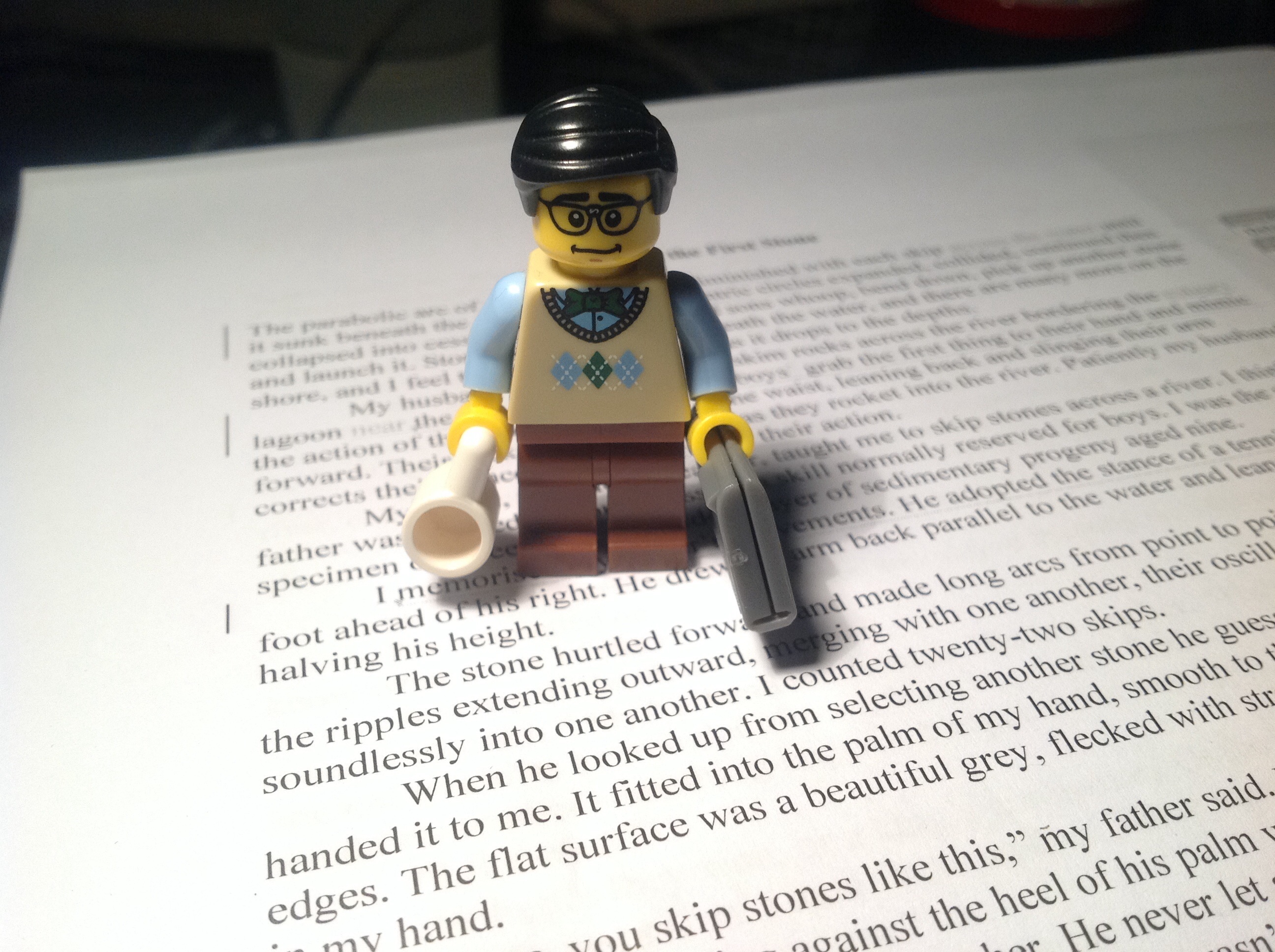
However, it spurred a new idea: the daily adventures of a Lego figurine, in particular, a Lego figure who was a writer.

So, Adventures of Lego Writer Man was created. Armed with his cup (for tea) and laptop (to write on), he embarks on a literary journey. Each day I post a photo on Twitter of Lego Writer Man and his adventures. Follow me (@revhappiness) or the hashtag #AofLWM.

image