Teaching Your Children To Be Creative
Creativity is an intuitive skill developed at an early age. Watch a group of children playing and they will demonstrate the intuitive skill of MacGyver with a pencil, a piece of paper, a tub of glue and some glitter.
Creativity is also a learned skill. There are those who have an innate ability to be creative, and it leaves some parents wondering where on earth it came from considering the raw material they came from.
Yet creativity is replaced with logical, analytical skills once they reach school and creative skills are sidelined. Children, and adults, need both in equal measure.
In the modern age, the creative division of parent and child is separated because we have lost the idea from the ancient world (and in the adage) that it takes a village to raise a child.
Children learned alongside their parents, were taught consciously and unconsciously in the field or the workshop, around the table or by the fire. It was taught through example and illustration, through demonstration and practical experience, through metaphor and parable, through song, dance and music.
The learning experiences between father and son, mother and daughter, father and daughter, mother and son have been broken or weakened, lessened and devalued. The interaction of parent and child is a bond to be nurtured and developed. It is a fragile bond that needs careful attention.
We must embrace new opportunities for engaging in meaningful learning and creative experiences with our children. Therefore we must teach our children to be creative.
Teaching Creativity is an Inheritance.
Proverbs 13:22 A good man leaves an inheritance for his children’s children.
Teaching your child to be creative means they have a broader skills set, balanced between the logical, analytical skills of the maths and sciences, and the creative skills of writing, art, music and dance.
It is a responsibility for the continuing holistic approach to the life of your child. The importance of developing a creative culture in the family cannot be emphasised enough.
Children need to see learning, knowledge and education are not compartmentalised aspects of life. They gain this understanding through the regimented program of school. Children find it difficult to make the links between information and subjects; it needs to be made explicit.
An essential understanding is the connection within and between subjects for creative and analytical skills. Therefore creativity is not limited to subjects such as English, Art, Music, Design and Technology (woodwork, metalwork etc) but also an essential skill in Science and Mathematics.
Encouraging creativity in all areas of your child’s life gives them a life long inheritance, regardless of natural ability and talent in sport, academic pursuit, and traditional artistic and creative endeavours.
Teaching Creativity is Active
Listen, my son (and my daughter), to your father’s instruction and do not forsake your mother’s teaching. (Proverbs 1:8)
Teaching creativity is an active experience. The most important aspect is also having your child see you being creative and involving your children whenever possible.
Take time to be with your child. Sit alongside them and do it with them, especially when they are younger when creativity is encouraged at all times.
If you are unsure what to do, here are some suggestions:
- Draw half a picture and have your child finish it
- Write half a paragraph and have them write the end
- Write a story together
- Build Lego
- Garden with them
- Colour in beside them
- Participate in your son or daughter’s tea party
- Make a map for your child to follow and be a real life Dora the Explorer
- Wear a cape and be a superhero (superheroes are superheroes for either gender. Don’t discriminate.)
- Work with them when doing Maths and Science homework
- Build a cubby house from sheets and cushions
- Make cars from cardboard boxes and race around the house
Teaching Creativity is Continual
My son (and my daughter), do not forget my teaching, but keep my commands in your heart (Proverbs 3: 1)
Teaching creativity is a continual process. You model creativity by doing it with them present.
Invite your child to be a part of your creativity. Can they contribute to what is being done? Ask for their input to make them feel included.
- Encourage them to try what you are doing or whatever they’re interested in. Encourage failure because knowing how and why a project didn’t work is a great learning tool
- Teach them how to do it
- Display their work on the fridge, on a special art wall, digitise it and display it on the computer
- Write a blog with your child
- Praise their involvement
- Show an interest
Teaching creativity is continual when boys and girls participate and learn to be creative alongside their fathers and mothers.
Teaching Creativity is Commitment
Hold on to instruction, do not let it go; guard it well, for it is your life. (Proverbs 4: 13)
Teaching creativity involves a dedicated commitment from you to your children. For it to be an inheritance, it must be active, continual and committed.
Even when it is a drain on your time and energy; when it occurs at an inconvenient time; when it is frustrating and repetitive, commit to educating your child on the importance of creativity.
When they are in high school, help them choose a creative subject as a balance to the academic subjects.
Teach a child to be creative and you unlock their imagination in everything they do.
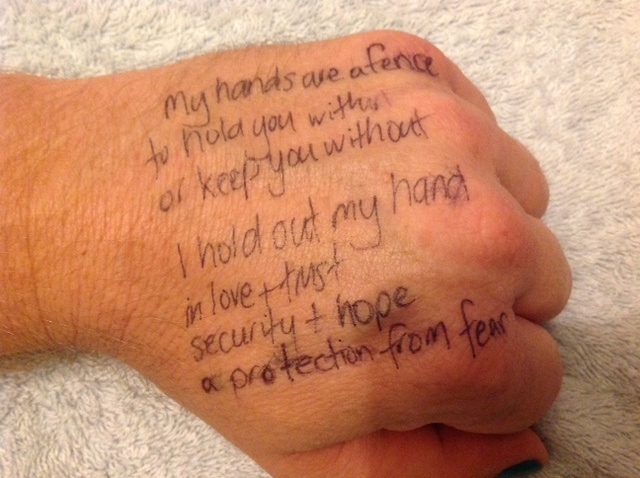
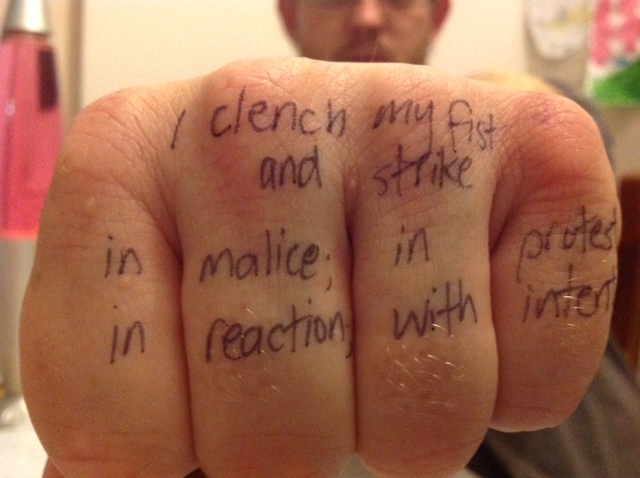
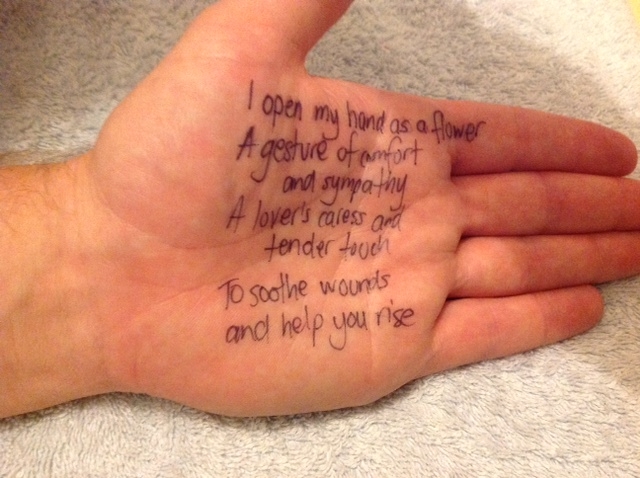
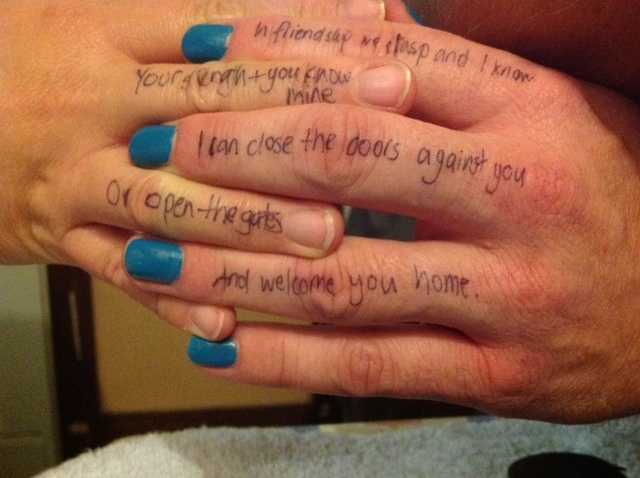
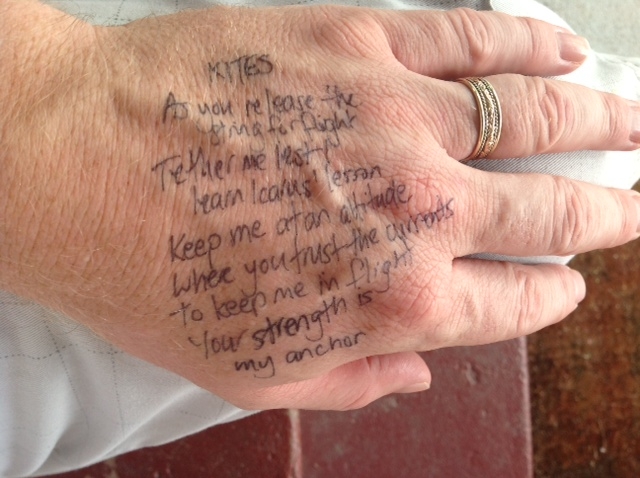
A texta is a dangerous creative tool in the hands of the inexperienced. They might just discover their own genius.


 A Fullness in Brevity - Adam Byatt