Tag Archives: short story

The Christmas Rose – A Story by Rus VanWestervelt

A writer I admire, Rus VanWestevelt (@rusvw13) has released a Christmas story, The Christmas Rose

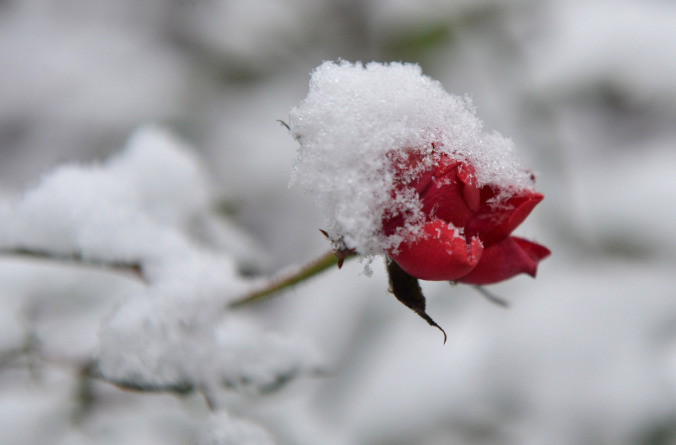
A rose is covered in snow in a garden in Bremen, northwestern Germany. (Carmen Jaspersen/Getty Images)

A rose is covered in snow in a garden in Bremen, northwestern Germany. (Carmen Jaspersen/Getty Images)

It’s free to read, and to download, from his website. You can even read a ‘behind the scenes’ look at the meaning and motivation of the story. 

It’s a beautifully written story, very poignant and has a focus that goes beyond Christmas time. 

Do take the time to read and share the story.

Read the story: The Christmas Rose.

Read ‘behind the scenes:’ The Story Had To Be Told.

Small Achievements – Best of Vine Leaves Literary Journal 2014

Earlier this year I had a poem, Elihu’s Meditation on Questions Unanswered, published in Vine Leaves Literary Journal.

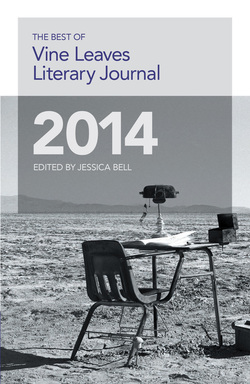
And now it is being published in the Best of Vine Leaves Literary Journal.

I would encourage you to support small press and publishers as they are pushing boundaries and discovering brilliant new literary voices. This edition is full of remarkable vignettes, poetry and art.

Follow Vine Leaves (@VineLeavesLJ) and its editor-in-chief, Jessica Bell (@MsBessieBell) on Twitter.

Orders can be made directly through the web site. Order HERE. It would make for a wonderful Christmas present for the book lover in your family.

Best of Vine Leaves 2014

Remixing Is The New Creating

if:books Australia is running a remix challenge, Future of the Book.

Each week, 4 or 5 very short pieces (all sub-200 words) are posted and you get to use a paragraph or line or word and remix it in whatever way you choose.

You can write a poem, submit a drawing or photograph or write a short piece of fiction.

This week, one of my pieces is up for a remix.

Here’s the link:  Future of the Book

Have at it!

Tincture Journal Winter Edition #6 The Cicada Clock

Today I have a new story published in Issue #6 of Tincture Journal: The Cicada Clock.

Tincture Journal (@TinctureJournal) is a relatively new Australian-based literary magazine, edited by Daniel Young (@jazir1979), Stuart Barnes (@StuartABarnes) and Jessica Hoadley (@JessicaHoadley)

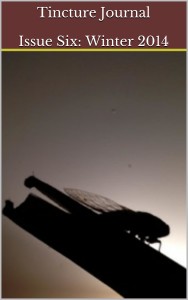
My story, The Cicada Clock also seems to have inspired the front cover.

Tincture Issue 6 Cover

Image copyright of Stuart Barnes

I also get to share the Table of Contents with Brisbane-based authors I know, Stacey Larner and Tiggy Johnson.

From the Tincture Journal website:

Issue Six of Tincture Journal is available now. To celebrate the launch of this issue, an interview between Stuart Barnes and poet Stu Hatton is now freely available on our website along with the rest of our interview series. Inside the issue you can also find Stuart’s interview with Nathanael O’Reilly. Both of these poets have new books being released this year and we are very excited to be featuring their poetry and the accompanying interviews.

Table of Contents

  • Editorial, by Daniel Young
  • Inferior Bedrooms, Part Six, by Meg Henry
  • The Horror of the Body, by Sam van Zweden
  • Waiting, by Tiggy Johnson
  • The Interesting People of Mount Kiliminjaro, by Stephen Koster
  • Christian Girls, by Nathanael O’Reilly
  • I Was Not Like the Other Kids, by Nathanael O’Reilly
  • Nathanael O’Reilly interviewed by Stuart Barnes
  • The Cicada Clock, by Adam Byatt
  • Spash, by Les Wicks
  • Carnival, by Beau Boudreaux
  • Rain of Ashes, by Rhys Timson
  • It’s a Marilyn Free-For-All, by John Grey
  • The Man Who Killed James Dean, by Sam Ferree
  • Back to Front, by Nathan Hondros
  • Memory, by Andrew Hutchinson
  • hail the goer, by Stu Hatton
  • i sit unfinished    in breath-, by Stu Hatton
  • A Look of Revelation, by Deborah Guzzi
  • The Favour, by Annette Siketa
  • Circles, by w.m.lewis
  • Only After School, by Anna Ryan-Punch
  • Mrs Fernandez, by Su-May Tan
  • The Happy Mule, by Frank Scozzari
  • Proximity, by S. G. Larner
  • White Noise, by Eleanor Talbot
  • It’s An Adventure If You Want It To Be, by Calista Fung

I hope to post a review of the issue next week; I’ve already read a few pieces and there is some amazing work.

Can I please encourage you, if you are a reader, to support small literary magazines whenever you can as they are vital in building our literary culture. A copy will only set you back $8 (and back issues are only $5). There is a wealth of reading material in a superb range of short stories, poetry and interviews.

But a bit of background to the story (and no spoilers).

I wrote the story in January when on holidays on the beach in Brunswick Heads, just north of Byron Bay in New South Wales, Australia.

I forget which book I was reading (I was working through three) but it had  a line about cicadas and the image stuck. I began the story on my iPad, throwing down scenes and ideas about two childhood friends in their final year of primary school, prior to starting “big school” the following year. It is set in the late 80s, a time of nostalgia for me (but it’s not autobiographical).

It took a while to find the focus of the story, utilising the cicada as a metaphor of adolescent metamorphosis, framed by school as the awkward ground of burgeoning adolescence and puberty, mixed with the innocent acceptance of life as it is and a burgeoning awareness of sexuality.

I made the conscious decision to write this story in a different style; to forgo my usual poetic, flowery prose and instead strip it back to bare, almost minimalistic sentences. I have a tendency to use imagery prolifically in my stories; here I pared it back to single images or none at all. Instead I wanted the action and dialogue to create the characters, setting, thematic focus and subtext of the narrative. It was to mimic the headspace of the pre-teen protagonists, letting the story unfold through their eyes.

I hope I can encourage you to purchase Issue Six of Tincture Journal, support literary magazines and enjoy the literary delights.

10 Fingers To Understand Silence Is Not An Absolute – Twitfic

10 Fingers To Understand Silence Is Not An Absolute

I.
He lived without a singular sense. His hands felt sounds at his throat, resonating in his head; a voice muted because it had no comparison.

II.
He voiced his language, clumsy at first, in the intricate dance of his fingers. Frustration was best countered with an upright middle finger.

III.
He smiled at her fingers speaking like a 3 year old: focused, exaggerated movements and incorrect spelling. No need to shout, he jokingly chided.

IV.
A text flickered on her screen.
“Take me to a concert. Bring me some ear plugs?”
Between the speaker and sub-woofer he found the sweet spot.

V.
The argument gesticulated angrily. She turned her back to silence. His hand reached to her shoulder, cold as it was, to apologise.

VI.
He uncrumpled the letter, like peeling a mandarin, to devour the words written he had spat out the night before. A hand to speak words when no voice attended.

VII.
Silence has layers, nuances, light and shadow, he said. It’s not an absolute.
Why are you silent with me? she asked. Will you listen?
She leaned in and kissed him.

Over the time I’ve been writing twitter fiction, I have come to appreciate the brevity of the form, limited as it is to 140 characters. It is, in essence, to capture a breath of moment, holding it for a little while and expecting the release and exhalation.

I like the number seven, echoing The Seven Ages of Man by Jacques in Shakespeare’s “As You Like It.” Thus my collections of twitfic are anthologies focused on a theme or have a narrative thread.

Playing with form allows me to link these brief pieces into something resembling a music video. Quick, short edits, compiled into a unified whole to tell a bigger picture. 

Coupled with Post It Note Poetry, another short form of writing I enjoy, I can post these experimental works here while I work on my current novella and put my novel through final edits.

I have considered compiling my Twitfic collections into a singular text, as well as collating my Post It Note Poetry into an anthology. Would anyone be interested?

Light My Way – 7 Very Short Stories

Creativity is a significant part of my life, and I hope to encourage others to pursue creativity in their own way (there are lots of posts here on the site to read about the creative life). 

My creative life is focused on writing: novels, novella, short stories, bad poetry, and twitfic. Currently I have had to put my WIPs: a collaborative epistolary novel (edits almost complete) and a novella (first 4K is down), on hold due to work commitments.

But I can spare brief moments to compose short pieces of twitter fiction to keep my creative well filled and enjoy playing with language. 

These seven pieces of twit fic were inspired by a radio interview where the interviewee, an actor, talked about the presence of cameras and flashes. I wanted to explore different ways of seeing light, from the whimsical and playful to existential and reflective but based on my focus on the ennui and minutiae of life as the basis for my stories. See if you can spot the Star Wars reference (it’s pretty obvious). The last piece is a nod to my collaborative epistolary novel, Post Marked: Piper’s Reach.

There is no narrative thread here, unlike other twitfic series Polaroid Memories and A Thought’s Reliquary (I like the number 7 as  a form, like Jacques speech from “As You Like It”). They are lights strung in a sequence like lights on a Christmas tree.

I hope you enjoy it.

Light My Way

I.

“Let there be light,” he said flicking the switch.

“Daaaad,” was the groaned reply.

The Christmas tree exploded in colour, their groans silenced.

II.

As the camera flashed she closed her eyes.

“Stop ruining the photo,” yelled Mum.

She wondered how many pieces of her soul remained.

III.

The dust motes floated in the tractor-beam like shaft of light on the desk. She splayed her fingers and wished, “Teleport me off this rock.”

IV.

Beside the pillar of empty milk crates, he studied the shadow’s patterns; his own stained glass windows. He went inside the milk bar to worship.

V.

His first digital watch enthralled him but it was the ability to see the numbers in the dark kept him awake at night. It deterred the monsters.

VI.

Each boy shone his torch through the smoke of the bonfire.

“Light sabres!” one yelled.

The melee started, dying with the fading smoke.

VII.

He held the mirror fragment and reflected the beam from the lighthouse across the bay onto the notepad on his knees.

“I will light your way.”

Have You Read A Very Short Story Today? Part 4

A smorgasbord of twitfic from the past couple of days, and a bonus poem. The content ranges from absurdist romance, existential contemplation and a nod to childhood games and Indiana Jones.

On Friday I will post a bonus themed set of twitfic based on the idea of light.

Today’s Menu

I.

He pegged his clothes in semaphore, glancing over the fence to see if the neighbour responded. The following day her own code answered.

II.

He patted the black dog sprawled like a blanket over his feet making it hard to get up. “I think it’s time to go, Old Yella,” he said.

III.

The handwritten note taped to his bedroom door read, “Teh floor iz lava.” “This will make getting to bed a bit tricky,” he said.

IV.

The thin shaft of light from the curtains divided the lounge room in half. He prepared to cross, wondering if there were poison arrows.

V.

“It’s a matter of perspective. Are you coming or going?” he asked.

“From there to here or here to there?”

“Wherever your feet lead.”

VI.

Their connection sparked as they reached for toilet paper. But he knew it wouldn’t work; she reached for 2-ply while he grasped 3-ply.

VII.

Koi circled over, under; a universe expanding, contracting as their tails flowed like comets and mouths as black holes consumed food.

And today’s bonus poem.

While I sit on my bike
At the level crossing
The bells sound ding-da-ding
Red and white arms crossed
Then open and beckon
A thousand paths

Have You Read A Very Short Story Today? Part 2

Whether or not you subscribe to the idea that you can write a complete story in 140 characters, there is a challenge to compose a piece of writing that can be loosely termed a “story,” something that has a beginning, a middle and an end.

I see Twitter fiction (twitfic) as capturing a moment, a breath, a held thought, but one that has movement and momentum both forward and backwards.

The power of the story relies on the choice of imagery and sentence structure by the writer to paint the broadest picture with the fewest brush strokes.

It does rely on you, the reader, to fill in the gaps and create the character, using your knowledge and understanding of story to join the dots and create your own meaning to the story.

Here is my latest collection of twitfic.

The coins gratefully absorbed the warmth of her hands. Placed on his eyelids they tried to give back warmth where there was no life.


I.

He stood watching the town’s first set of traffic lights order the comings and goings. After the third set of changes he went on green.

II.

He played every game show, answered every question, took home fabulous prizes but his biggest regret was losing Monopoly to his nephews.

III.

He collects the whispers like butterflies; pinned to mounting board and labelled. When he has sufficient they burn and float as ghosts.

IV.

She replaced every mirror in the house with a funhouse version to imitate the reality she saw. One day someone offered her a hammer.

V.

Fold, crease, fold again as the water lily took form in paper. She dropped it into the gutter’s surge and wished as it sailed away.

Do you have a particular favourite? Which one and why?

The Power of Creativity to Tell Your Story

The Power of Creativity to Tell Your Story

“What’s your story, boy?”

“I haven’t got a story.”

“Everyone’s got a story.”

The Saint of Fort Washington


I believe everyone has a story.

I believe everyone needs to tell their story.

Why tell stories?

Stories help you make sense of the world.

Stories help you imagine the possibilities.

Stories help you map the path you’ve forged or taken or destroyed.

Stories help you understand and question your own humanity.

Stories help you celebrate the good events of life.

Stories help you learn from the dumb mistakes you’ve made.

Stories help you question humanity when they do dumb things.

Stories help you to have courage, overcome fear and pursue goals.

Your story gives someone the knowledge that they are not alone in their experience.

What is your story?

When I meet you for the first time, I ask for your name.

I am asking for more than nomenclature. I am asking for the identity and meaning of who you are.

I am asking, “What is your story?”

Everyone’s story is valuable and interesting.

The collected snapshots on your phone are specific, potted memories that make for an opening conversation about who you are.

The chain around your neck is symbolic of your story.

The tattoo on your shoulder has a story behind it too.

Tell me who you are.

Tell me how you see the world.

You do not have to tell me the minute details of your life; I want to understand how you see and perceive the world.

How do you tell your story?

I choose to use words. But I will not be writing a memoir or autobiography.

I will write stories because they tell you how I see and perceive the world.

You may choose some other symbolic visual representation.

Your story can be represented:

  • linguistically (story, memoir, diary, poetry)
  • visually (photographs, film and video, painting, sculpture, art and craft)
  • verbally (song, performance poetry, recorded oral history, speeches)
  • physically (dance, theatre)

But it is your story. You choose the message. You choose the medium.

Your story doesn’t have to be a public document. It may simply be recorded in a journal for you and you alone.

You can choose to blog your story, give it away for others to read and learn from.


Find your voice to tell your story.

How you tell your story is up to you.

A Thought’s Reliquary

A Thought’s Reliquary

Friday Flash 19 July, 2013


I.

He opened the notebook, the creak of cracking cardboard a writer’s melody.
“I see you have yourself a reliquary,” said Grandfather.

“Amen.”


II.

Proofs of holy writ, held within the ink of the pen, waited for the opening incantation. He paused and found no words. Was he a heretic?


III.

The first words were important and they rushed from the pen; not so much writing as scribbling random thoughts in search of a repository.


IV.

Shuffled sheets in a lectionary of unrequited (or unsent) love letters, parables of adolescent anxiety and beatitudes of pop song lyricists,


V.

Scratched sonnets and ambling discourses with a hip-hop feel competed for space between the lines. An epistolary apocryphal gospel at best.


VI.

He rested the pen between the pages in the crook of the hymnal’s spine, a genuflection, as the last sentence dried in the valley’s shadows.


VII.

As the cover of the notebook closed it murmured, sighed through paper exhalations, as one who held their breath waiting for the benediction.