Tag Archives: reflection

My Enemy – A Poem

The genesis of these lines started last night and take on greater significance in the light of today’s events.

In fact, every day is a day to #lovethyneighbour

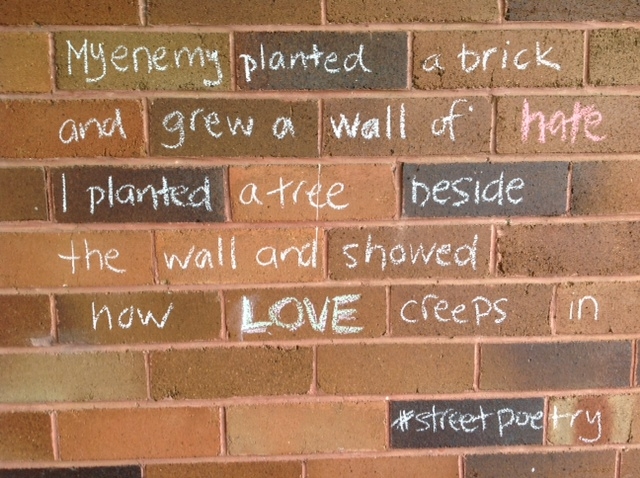
My enemy planted a brick
and grew a wall of hate
I planted a tree beside
the wall and showed
how love creeps in

My Enemy

What If I Don’t “Make It?”

What if I don’t make it?

This is a question that confronts every new and emerging writer. 

I am a new and emerging writer and I have confronted it.

Armed with a new pen, a Moleskine notebook and a dream, you set out to become a writer. But at some point the blind ambition comes face to face with the reality of the publishing industry.

It’s like having an experience with a face hugger from the movie Alien; you know at some point a xenomorph will burst out of your chest, killing you and then feed on the remnants of your dream of being a writer.

Despite every scrap of determination, every skerrick of aptitude, every committed moment of diligence, every hour of writing spent honing your craft, every fortune cookie predicting an ambiguous uncertainty of guaranteed success, there is no guarantee of you “making it” as a writer.

Alan Baxter recently hosted a blog series, The Ongoing Angst of Successful Writers, with six authors, all of whom still carry the fear of “What if I’m not good enough?”

Even though they have “made it,” based on their own standards, there is still a fear. Go and read the conclusions then work your way through the different authors. You will cheer and weep and know you’re not alone.

So what chances do I have as a new and emerging writer to “make it?”

The same chance they did.

How will I define if I have “made it?”

I see on social media reports of authors who carved out a successful blogging career and turned it into fiction or non-fiction book deal and have gone on to financially successful careers.

And they make it sound SO EASY! “I wrote a book, it was picked up by an agent and sold to the highest bidder. And I’ve sold 1,000,000 copies and now have a three book advance deal.”

I have had two short stories published in anthologies, had a vignette published, and have three stories offered for free on Ether Books app (see the Publications page). Nothing to rock the world, but it’s a start.

“Making it” implies financial success, selling stories, novellas and/or novels, whatever literary form you care to think of.

“Making it” implies critical acclaim and public praise.

And, yes, I want these things. I want to be financially successful and have critical acclaim and public praise.

But…

  • I have never made a sale for a short story.
  • I have not won a respected or prestigious competition (or even a disreputable one).
  • I have not finished writing my first novel.

Not a great start. Yet there are more fears lurking.

  • What if I never finish a novel? And assuming I finish a novel, what if I never sell it?
  • Will I write a second novel? A third? A fourth? What if they don’t sell either?
  • What if I NEVER sell a short story, a novella or a novel?
  • What if I never *fill in the blank here*?

Trying to answer the question of “Have I ‘made it’?” is akin to trying to catch a fart in a cyclone.

I want to make it. I want to sell short stories, and just like known authors, experience rejection.

I am committed to improving my craft, developing my art and telling good stories. I will have tried my hardest. I will have written to the best of my aptitude and skill; learned what I can from whomever and wherever to ensure my work is the best it can be to have every chance to be considered.

I’m going to make damn sure I give it everything I am to have a crack at “making it.”

But if I don’t make it, I don’t mind.

Because…

Despite everything looking like a failure, I will continue to write.

This is how I know I will have ‘made it.’ I will have continued despite the “failure.”

When I’ve “made it” financially or critically, I’ll let you know.

If I don’t make it, I’m ok with that.

I won’t be ok if I have failed to continue writing.

The Paradigm of Permission, Or You’re Allowed to Suck

The Paradigm of Permission,

or You Are Allowed to Suck

You are allowed to suck.

You are allowed to write drivel.

You are allowed to write dog-awful poetry.

You are allowed to paint with your fingers.

You are allowed to draw random doodles in the margins of the novel you’re reading.

You are allowed to create something fit to line the bottom of the budgie cage.

You are allowed to chuck it out.

In fact, you are encouraged to suck.

You are allowed to suck because you have permission to create.

The permission to write; to draw; to paint; to film. Whatever you want to create.

When you have permission to write, or draw or paint or take photos, you do not need to fear.

Fear of failure often inhibits you from starting.

What if my drawing is bad?

What if my writing is awful?

What if no one likes it?

Who cares?

Here’s a new way of thinking.

It’s a new paradigm.

It’s a paradigm of permission.

  • You have permission to try something new.
  • You have permission to suck at it. And suck spectacularly.

Don’t worry if people tell you that you’re colouring outside the lines.

Don’t worry if people say that what you’re doing is wrong.

You don’t have to show anyone anything.

Permission To Suck Allows You to Experiment

Creativity is about experimenting and having fun with new ideas. For the month of February I took on the creative challenge to write a poem on a Post It note every day. You can see the results here: Post It Note Poetry.

I am not a poet; I write fiction. I gave myself permission to write Vogon poetry; to write badly. And I was willing to share it. (You don’t have to share with anyone if you don’t want to.)

But we gave ourselves permission to suck. None of us are regular poets so we revelled in our sucky efforts and experimentation.

Permission To Suck Allows You To Learn and Improve

When #postitnotepoetry started up, it gathered a small group of like minded individuals. We shared it via twitter, on our blogs and we clustered around a Facebook page and shared our daily scribbles of poetry. It was accepting and challenging and supportive. We asked for feedback; we critiqued when asked. We learned and improved because we didn’t care if our work sucked.

When you want to start a new creative endeavour, give yourself permission to suck.

Post It Note Poetry Wrap Up

The Post It Note Poetry Challenge was initially a frivolous idea I threw out to my collaborative writing partner, Jodi Cleghorn (@JodiCleghorn).

28 days.

28 poems.

Written on a Post It Note.

Post It Note Poetry Feb 1

I was returning to school (I’m a teacher) and the beginning of the term is a dearth for creativity and continuing with longer projects. It was something to keep the creative wheels turning while the busyness of school consumed time and effort, allowing me to return to other projects when things settled down.

I haven’t written much poetry, although I teach the mechanics of poetry deconstruction (and poetry appreciation) in my English classes. I understood rhyme, rhythm, meter, onomatopoeia, metaphor, simile but did not have the practical experience. I usually write short fiction and I wanted to explore the intricacies of poetry, albeit in a short form, constricted by the physical boundaries of a square of paper.

The initial idea was launched on February 1, 2013 on twitter with the hashtag #postitnotepoetry. And it suddenly took off. People we knew loved the idea and began writing their own poetry, posting it to twitter and/or their blog.

Jodi’s spectacular cat-wrangling skills herded the participants towards a facebook page where it became a salon of sorts. People shared their poetry, commented, critiqued, deconstructed and analysed, in a collegial and supportive community.

The power of writers to connect and form a community is a special thing. We might write in isolation but the strength of community and the connections made between writers means we are never alone.

Therefore, in

28 days.

I wrote

28 poems totalling

1,128 words (this last point is somewhat irrelevant except I am keeping a tally of my writing output this year across all forms of fiction and non-fiction).

You can read the collection of poems are here.

What I Learned Along the Way

  • Creativity is habit forming.

28 days of writing poetry became an obsession. For all but the last 3 days, I had a poem written, photographed and scheduled to be posted. Yet the routine developed. Scraps of lines and ideas were hastily written in my notebook for later observation. I have a few ideas leftover I intend to use for a later project. I cannot imagine maintaining it for a longer period of time but it develop the concept of doing something creative on a regular basis.

  • It sparked new ideas for creative concepts.

Yesterday I had a flurry of new ideas for creative endeavours while in a conversation with Sean Wright (@SeanBlogonaut). Maintaining the alliterative form I threw these out (and some of them have creative potential. Feel free to take the idea and run with it).

#fableflyers, #serviettesermons, #placematproverbs, #amphoraaphorisms, #postitnoteplatitudes, #paddlepopstickpoetry

They are mostly frivolous ideas but what’s to say one of these can’t be turned into an ongoing creative outlet? Austin Kleon started Black Out Poetry using a newspaper and a black marker to create something unique.

  • Creativity fuels others.

The strength of the writing community to engage with ostensibly a trivial and frivolous concept, and to participate with enthusiasm and pride is a joyful thing. It lead to a core group of writers championing each other’s work, providing a supportive and trusting environment. The flow on effect to this is having a new group of people to call upon for feedback, critique, advice and encouragement.

I wrote a last post on the group’s Facebook page yesterday, thanking everyone for their time and effort, their participation in the journey, and for me to be able to accompany them for such a short time.

Creativity finds its strength first in the creator, then finds its purpose when shared with an audience. For when you draw crisp, clean water from the well of creativity, you slake your own needs first, then you can offer it to those around you.

  • Poetry is hard.

I have always maintained when I become Prime Minister of Australia, no child shall be permitted to write poetry until they have reached the age of 18 and completed a one year intensive poetry course.

While somewhat facetious, there is some truth. Writing poetry is hard. I was amazed at the skill some poets had to wrangle rhythm, meter and rhyme in their work. The adage to be a writer, you need to read, is applicable to poetry. I do not read enough poetry to be conversant with styles, techniques and forms.

I wrote one poem in cinquain form; everything else was free verse. I didn’t use rhyme but was conscious of rhythm; the years of drumming give me a good feel for it.

  • My poetry is really rather prosaic.

People have commented that my short stories have a poetic, lyrical feel to them. This is not surprising considering my influences. Therefore my poetry has more of a narrative feel to it, setting up ideas and emotions through the structure of the line and words, rather than letting the words speak for themselves to create the emotional resonance and atmosphere.

  • Humour is hard.

To write humourous or frivolous poetry is not an easy. It takes a skilled comedian time to craft the lines and delivery of their routine and poetry is no different. Jodi commented my default (for any of my writing) is “deep” (although she typed it as “depp” in conversation and the malapropism has stuck). I do write humour but it is not my first focus.

  • Creativity is fun.

There were times when I struggled for ideas or words or line length or structure, but it was never a chore or burden. As I said before, it is not something I want to maintain or prolong beyond the initial parameters.

And it was fun because I was doing it with a great group of people. We wrote, photographed, posted, commented and critiqued in a collegial and positive environment.

Even if there was not the group support, I would have enjoyed it anyway.

Post It Note Poetry Feb 20

If you dropped in to read the poems, left a comment or a “like,” THANK YOU. I hope it encourages you to continue with your own creative projects or sparks you to try something for the first time.

Next February, who knows what the challenge will be. But I’m looking forward to it. Hopefully you’ll join me.

Resurrection – When To Shut Down a Creative Life (And When To Resurrect It)

Welcome to Part 2 of Reflection, Resurrection and Recreation.

Friday’s post, Reflection, asked why we gave up a creative life and encouraged us to live creatively again.

Part 2 is about death: the need to shut down a creative life, and resurrection: when it take it up again.

As creative people, the idea of shutting down our creative life is akin to hacking a limb off or stopping breathing. While it might appear to be the opposite thing to do, it may in fact be apposite.

Every so often you need to evaluate your creative life, check the map for where you are compared to where you are headed and work out whether you are lost in the Pit of Despair or frolicking in the ball pit at Ikea.

If your creativity is not in the place you want it to be, you need some serious self-reflection.

Do you need to shut down your creative life?

Ask yourself the following questions:

Have You Lost the Passion?

Being creative is hard work. Every creative person will proclaim it loudly from the toilet cubicle (better resonance). We enjoy being creative because we are passionate about it. The passion drives us to continue, to persevere, to work through the tough periods. There is great joy in creating.

But without passion, you are continually giving of yourself and not feeding your own needs. There is more going out than what is coming in. The reasons for the lack of passion are numerous, both internal and external; you will know what has taken away your love for creativity.

Without passion, your creative work will suck you dry and spit out your withered carcass.

To find your passion again, shut down your creative life.

Are You Grieving A Loss?

The loss of a creative project or the completion of something you have invested yourself heavily into can be like a death in the family.

You have to grieve what you have lost; remember what you have accomplished and celebrate the achievements.

It is natural to grieve after a loss. In order to deal with the grief and loss, shut down your creative life.

Does Your Work Suck?

This is tricky. If you are not developing and improving in your chosen creative field, you have to ask someone to objectively and critically evaluate your work. You need to ask the hard question, “Does my work suck?”

If the overwhelming consensus is your work sucks, you have two choices. Firstly, improve your skills. Enrol in a course, find a mentor, workshop your project, seek advice. Or secondly, shut it down. Focus your creative energies elsewhere if what you are doing is truly not what you want to do. Experiment with a few areas to see where your skills are best suited.

Have You Moved Away From Your Core Values?

It can be too easy to seek out the latest trend, jump aboard the bandwagon and ride shotgun. All the while you are moving further away from your original intentions and purpose.

Are you in the wrong creative field?

Are you writing short stories when you should be producing short films?

Are you painting when you should be writing?

Who are you and what do you want to be doing?

Are you doing it?

Why not?

There is nothing wrong with diversifying and experimenting, trying out new creative mediums, but if it takes you away from the core of who you are and what you do, it is time to shut it down.

Has Your Creative Life Crossed Boundaries?

Creative people can be obsessive and focused or ethereal and unreliable as they pursue a creative life. If your creativity is taking over your life and interfering with relationships, if it is taking away from family and friends, it may be time to shut it down.

Creativity involves a sacrifice of time and effort, but not at the expense of you being a selfish pillock. Communicate what you want, negotiate the boundaries so that all involved have a clear understanding of what is required. It may require the drawing up of an agreement, stuck to the fridge as a constant reminder of each person’s responsibilities.

Focus and dedication are important to the life of a creative individual, but if it crosses boundaries, shut it down.

Has The Well Run Dry?

Creative people speak of the “well of ideas,” a place to draw inspiration. Reading a book, watching a movie, visiting art galleries or taking a walk with the rabbit on a leash can fill the well of ideas. A project needs time to develop, consciously, unconsciously and subconsciously. Ideas generate ideas.

Sometimes the creative well is dry because the plug has been pulled out. The draining of ideas may have its source in a range of things: your own emotional state, external situations and circumstances, demands and pressures on your time, or relationships.

You need to refill the well by putting the plug back in and letting it refill in its own time from a trickle to a torrent. Feed yourself on good things like art and music, books and films. Fall in love with simple pleasures again. Leave the tools on your desk and have no regrets in leaving them alone.

If you are dry, shut down your creative life.

Death and Resurrection

But how long should your creative life be shut down?

If you shut down your creative life, will it be resurrected?

Will it become a derelict building, boarded up, dilapidated, falling into ruin and fit for demolition? The shutting down of a creative life may be an individual’s choice or the result of external circumstances and situations, or a combination of both. Some may choose to leave the creative life altogether and never return. This is a shame because I believe creativity should be a part of everyone’s life.

If the shutting down is a voluntary choice, you are giving yourself permission to step aside from a creative life. When you make that decision, embrace it. Grieve your loss and mourn the death.

Set a period of time for your creative life to be dormant: days, weeks, months, or even years.

During that time clear your space; throw out what is not needed; purge the unwanted and irrelevant.

Then set a specific date to resurrect your creative life.

Focus on a project; set achievable goals. Have a project ready to pick up and finish or a project to start afresh.

The creative life is one that is inherently a part of you and brings benefit, but you need to return to the thing you fell in love with. It’s like a relationship: you have to work at it.

Grieve when you need to grieve. Always find ways to improve your work. Reclaim what you are passionate about and establish the core values of who you are. Establish the boundaries of your creative life and keep the well full of ideas.

Only then will you live a creative life to the full.

Do you need to shut down your creative life and resurrect it?

* this is an edited version of a post that originally appeared at Write Anything.

Intentional Art

Watching this TED talk by Hannah Brencher, a single thought struck me: letter writing is an intentional art form.

Hannah Brencher TED Talk The World Needs More Love Letters

I have paraphrased some of what she said below and added in my own thoughts.

In the midst of writing Post Marked: Piper’s Reach, at a point where the story has taken a sharp turn, the concept resonated.

When I sit down to write as my character Jude to Ella-Louise (Jodi’s character), there is an intention and a focus. All other distractions must be put aside to write a letter.

As a teenager I wrote long, lengthy missives to friends near and far. Sad to say, the development of the internet has changed that.

Letter writing is not about efficiency, creating pithy comments in 140 characters or less. We are a generation that has learned to become paperless where the best conversations happen on a screen.

In the modern world, pace and superficiality have taken the place of reflection and communion.

I love the conversations I can have with people in real time around the world, regardless of geography or time. Yet I want more.

Letter writing is intentional. It is focused on the recipient. It helps if all other distractions that “demand” our attention are removed: the open browser, the phone pinging with messages.

A letter gives you a reason to wait by the mailbox. It communicates your worth to someone because a person has intentionally and deliberately focused their attention on you.

From this brief five minute talk I picked out 3 important lessons about creativity and art.

1. Art is intentional and deliberate

With intention comes focus and an awareness of your audience. And more importantly, ANYONE can do it.

You don’t need to call yourself an artist to be intentional and deliberate.

Write a letter. Draw a sketch. Take a photo. Record a piece of music.

But do it for someone else. Give it to them or leave it for someone to find.

Check out Lucas Jatoba. In 2011, on his 30th birthday he gave 30 gifts to 30 strangers in recognition of the blessings he has received. Read the news article and see the video here. Makes me tear up every time.

2. Intentional art has a ripple effect

A church minister I know stands at the back of church and shakes people’s hands as they walk out, connecting with them for a brief moment. One reason he does it is the belief that a simple action of a handshake may be the only positive physical interaction they receive all week.

In the same way I make a point of ending my classes with “Have a great day” regardless of the behaviour that lesson. I aim to speak positively into their lives.

In the same way, what effect will your art have on someone? Will it inspire them to reciprocate? Or model your actions and replicate the deliberate intention?

Creativity joins people together in the same way sport brings people together to cheer and applaud.

Our world is broken and we need people to believe in the power of intentional and deliberate acts to heal.

3. With intention comes impact.

Your art may reach one person. It may reach five people. It may ripple out and reach 50, 100, 500 or 1,000. What if it reached one million?

The point is to impact on someone. Even if it’s just ONE person, it has significance and meaning.

I am merely a storyteller. I write fiction and I blog about writing and creativity. My intention is for you to find a way to be creative and bless others.

It is more blessed to give than to receive.

Write someone a letter, today.

What Am I Doing?

Yesterday, in a moment of sheer, blind, unreasoning panic I questioned whether I was doing the right thing. On the eve of taking a long service leave, a 3 month break from my job, I doubted myself.

I am taking leave to write a novel, my first. Every negative idea ran through like the after effects of a bad curry: I can’t do this. You’re a fool to think you can write a novel. What if you get stuck? Will you ever finish it? No one’s going to read it.

This is something I am passionate about and want to succeed in. The journey of a thousand miles might begin with a single step, but it requires a hell of a lot of planning and a large supply of Band Aids for the blisters. In the same way, the finishing of a novel begins with the setting down of a single word. Then another. And another until The End is reached.

I am in this for the long haul. I have a dream to write novels. This time off is the first step to achieving that dream. I have plans in place to help make this dream a reality. I will learn a lot in the time it takes to write my first novel and I can translate this to the next, then the next and so on.

Following a conversation on twitter between Alan Baxter (@AlanBaxter) and Tom Dullemond (@Cacotopus) yielded this gem of thought: Those who maintain their focus and diligence in the face of rejection and disappointment will find it easier to sustain themselves than those who find success comes easily.

I know I have a cheer squad who will shake their virtual pom poms if I get stuck.

Hand me my cardigan and tracky dacks; I have a novel to write.

Polaroid Memories

 I

He waved the Polaroid like a fan, an invocation to the camera gods. Greys and whites morphed into a toothy smile, pigtails and brown eyes.

 II

He remembers the pinhole camera made in science class and his first over exposed photo of his gangly best mate with a pudding bowl haircut.

 III

A thousand images plastered to his folder, replicating an editor’s cutting room floor, yet shaped by a teenage boy’s view of the world.

IV

Spooling rolls of film into an old fashioned camera, he searched for her soul through the viewfinder. The weaving of two lives printed onto paper.

V

Breathe in. Breathe out. Push. A held breath as the doctor delivered a little girl. A memory imprinted into his mind like a photograph.

VI

He turned the pages of albums, sheets of acetate and leaves of paper crinkling like autumn drifts pushed and pulled by the winds of memory.

VII

“Make a wish.” Grasping the dandelion in pudgy hands she blew a mix of air and spit, watching the tiny blossoms parachute to the ground.

2012 Anti-Resolutions

I am not one for New Year’s Resolutions. I simply lack the required discipline.

Therefore, here are 10 things I will not be doing in 2012. They are not hard and fast rules. Rather, consider them more as guidelines or suggestions.

1. I will not let grammatical travesties go unedited. I will be there with chalk, pencil, pen, permanent marker to rid this world of apostrophe abuse. Time to form the Punktuation Squad with my English Department.

2. I will not always be wearing pants.

3. I will not give up strawberry-iced doughnuts, strawberry milkshakes and caffeine-enhanced, temperature-decreased beverages. Elvis would be proud. I will, however, cut back. Sort of.

4. I will not let popular culture and the media reduce my level of intellect to that of a cesspool of mediocrity. I will tell stories of worth and intellectual depth. However, I will also include the occasional fart joke.

5. I will not forsake my faith. To others it may appear to be an opiate or a crutch, but it is my anchor, hope and love.

6. I will not believe that a cardigan is a fashion faux pas. I intend to purchase one from a second hand store for when I am writing. I have made every effort to ensure the wearing of a waistcoat, pocket watch and a hat are all in for a fashion resurgence.

7. I will not tell Year 7 their music choices are rubbish. I will lead by example and have them listen to the great music. They will come to know why it is great. I will also not spend the first 40 minutes of their music lesson playing a drum solo. But it would be pretty cool.

8. I will not forsake the company of good friends (and tell them they are loved and cherished), good books and good music. All three are integral to make this writer happy. Especially when combined with a cup of tea.

9. I will not let social media dominate my life. I’ll be right with you after I check my email, update my facebook, check twitter, comment on a few blog posts and browse Google+.

10. I will not measure my success against what others are achieving. Nor will I compare myself to what others have achieved or completed. I will measure my success by the goals I have established.

The Year That Was. The Year That Will Be.

We have reached the end of 2011.

Time's Running Out

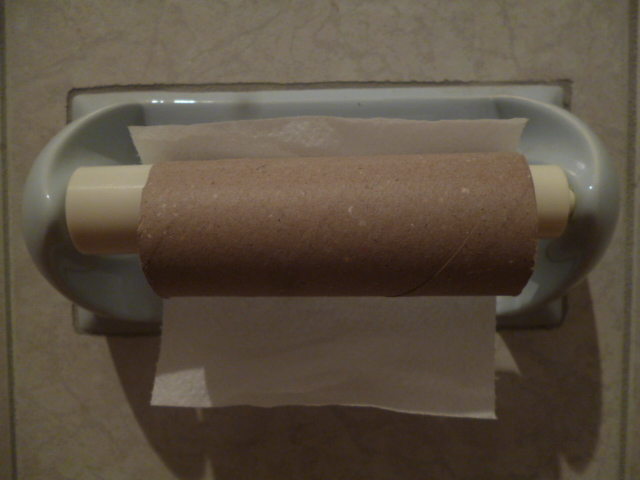
The year is like a roll of toilet paper; the closer you get to the end, the faster it goes.

It is a handy time to pause and reflect, stare with focused gaze into one’s navel, pick out the lint and be careful you don’t stick your head too far up your bum and turn inside out.

THe year that was

I began writing in late 2009. I designated 2010 as my Practice Year. 2011 was to be the Year of Submission. Have I achieved it? No. Not in the way that I wanted because I didn’t create a plan.

By the end of the year I had three stories published: Headlines and Post-It Notes and Ashes to Ashes in eMergent Publishing’s Literary Mix Tapes’ anthologies “Nothing But Flowers” and “89.” I also had a piece of flash fiction, The Knight’s Defence published in the December edition of efiction magazine.

The first two came from associations and friendships formed via Write Anything. I am grateful for the wonderful opportunity to contribute, to be trusted as an unknown writer. Having The Knight’s Defence published makes me believe I have the potential to sell more.

the year that will be

A new year is a time to gird loins and make a list of No-No’s and Thou Shalt Not’s. Lists mean nothing unless there is a plan to back it up.

But I don’t do lists. I’ve decided on goals.

The problem is, I’ve never been much of a goal setting type of person. I’ve wanted to be one of those focused young things, changing the world before they’re twenty-five. Those years are a little behind me.

In the latter half of this year I set about designing and implementing writing goals. Lo and behold, I was able to reach them. Who’d a thunk it? I still need to revise the process, but it’s movement forward.

2012 is the Year of the Novel. I have never written a novel, although I’ve written enough words in the last year or so equivalent to a novel. And frankly, a pair of dark coloured underpants would be a useful to hide the fear I’m feeling.

But…

I am putting into place goals and plans to make this dream a reality. A key word to keep me going is “momentum.” I will set the marble rolling down the hill.

I will not measure myself against others. I will measure my success by the goals I have established.