Tag Archives: reflection

New Poem Published In Vine Leaves Literary Journal

Today sees the publication of one of my poems, ELIHU’S MEDITATION ON QUESTIONS UNANSWERED in Vine Leaves Literary Journal.

—“beautiful agony”—

Elihu was one of characters who came and sat with Job in the Old Testament Book Of Job. He said nothing while his companions lectured Job after his loss and suffering.

The origin of the poem came about during a staff retreat where I work. The focus of the day was on suffering and a colleague shared her remarkable journey of the last few years. It was heartbreaking yet imbibed with a sense of joy.

It made me think why we don’t simply sit with our friends when we are suffering; instead we try to offer platitudes and trite condolences. We are afraid of silence, afraid of our own suffering, or the threat of suffering. We conveniently limit suffering to news excerpts on television, subjects we can listen to and then forget about when the segment is over. It doesn’t bring about change in ourselves.

Suffering, when focused on the ones we love, is a time for mourning and contemplation. It is a time for identifying with their pain and suffering. It is a time to act, to comfort, to listen, to be silent, to make a meal, mow their lawn, fold their washing, buy them a coffee.

Sometimes it is the hardest thing to remain silent when everyone else is speaking.

You can read more in Issue 10 and a wealth of stirring poetry, vignettes and art.

Follow Vine Leaves Literary Journal on twitter (@VineLeavesLJ) and Facebook.

Narrowing the Focus – What I Won’t Be Doing In 2014

It is easy to dream big, throw all the ideas into the air and see what catches on the breeze.

It is easy to create a list of things so you can tick them off one by one.

It is easy to outline what you want to achieve in a given time frame.

Over the years I have become adept at having clear goals and foci for the year (with a little bit of flexibility for frivolity), but often lacking in the execution to complete them.

Amongst all the “Do’s” is one important thing that creative people forget.

It’s NOT doing something.

There is something I WON’T be doing in 2014.

I won’t be faffing about, stuffing around, wasting time or procrastinating.

A writer (and any other creative type of person) requires discipline and diligence to achieve her or his goals.

And I suck at it.

But I’m getting better. I need people around me who will, in the most loving way possible, kick me in the bum with a pair of steel-capped boots.

I may even take to tying a piece of rope around my ankle, bring it over my shoulder and pull quickly to kick myself in the bum. Self-discipline at its finest.

In order to achieve my established goals and projects for the year I won’t be procrastinating or wasting time or faffing around.

To conceptualise it further, and concentrate it like undiluted red cordial: DISCIPLINE.

What I will be doing in 2014 is GETTING SH*T DONE (I’m not normally a sweary person, but there’s something satisfying in this phrase).

In order to move towards our set goals and targets, we have to let things go, abandon projects or say “No” to opportunities if they are not bringing us closer to our dreams and visions.

I saw my early years as a form of writing apprenticeship. I read blogs, articles on story structure and craft. I wrote flash fiction almost every week (and the results are here on the blog – you, too, can read my beginning efforts and laugh at it). I wrote for a website about writing. I soaked up any experience I could get my hands on, including learning how to edit by being edited ruthlessly.

I am at a place where I think my apprenticeship is completed. I have not finished learning; learning is continual. I have the tools to write and I will still read blogs on the craft of writing to sharpen those tools. Even if they are often thrown higgledy-piggley into a bag, and I understand what each one does, it is now my responsibility to become a master of the tools. Which will mean taking better care and organising them correctly.

And I am learning what NOT to do.

I am no longer posting flash fiction to the blog. In the early stages, I posted my first attempts here and I spent time reading other people’s stories. I enjoyed it and I learned. But I am focused on becoming a novelist; I am reserving fiction for sale. I am writing to be published.

The writing I do post here is the practical application of my posts about living a creative life. Hence, Post It Note Poetry and Post It Note Philosophy, micropoetry and twitfic are examples of living a creative life.

I won’t be wasting time in 2014 so I can get sh*t done.

What will you NOT be doing this year?

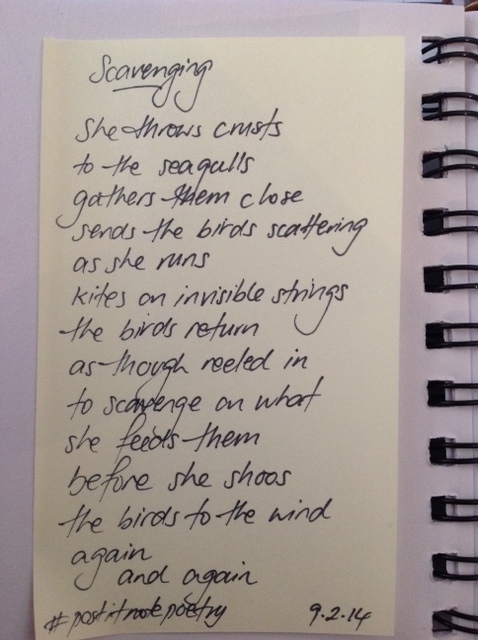
Post It Note Poetry #9 – Scavenging

PINP 9

Scavenging

She throws crusts

to the seagulls

gathers them close

sends the birds scattering

as she runs

kites on invisible strings

the birds return

as though reeled in

to scavenge on what

she feeds them

before she shoos

the birds to the wind

again

     and again

Post It Note Philosophy #22

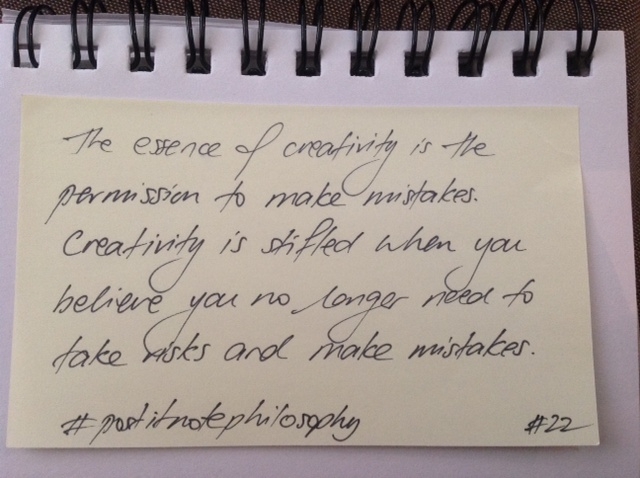
PINPY 22The essence of creativity is the permission to make mistakes.

Creativity is stifled when you believe you no longer need to take risks and make mistakes.

Adult Scars – Micropoetry

adult scars run deep
prone to reopening
when picked at until
festering scabs form
habits from childhood
where we wish to return

7 Reasons to Abandon The Myth of the Muse

I’m calling it now.

I’m calling shenanigans on the whole Muse thing.

The anthropomorphic representation of the creative inspiration is a romantic notion, used as a mythologising factor of and for the creative life. The Ancient Greeks had 9 anthropomorphised Muses (Epic poetry, History, Lyric poetry, Elegiac poetry, Hymns, Tragedy, Comedy, Astronomy and Dance) so you can appeal to any number of them. Heaven help you if you want to write YA or Gothic romance.

There have been a fair number of creative people over the years, be they writers, artists, painters, who sprouted the notion they cannot create with the inspiration of their Muse (who was probably a prostitute or mistress or as a result of drug and/or alcohol abuse, or all of the above).

And yes, they have produced some brilliant works of art in literature, painting, music or film. But if we didn’t tacitly approve of their illegal and/or immoral mores, would we look on their work any different? Or do we say they were screwed in the head and needed a good paddling? Perhaps they could have produced the same work of genius WITHOUT the chemical alterations?

All that aside *sweeps table clean*

I think the concept of a Muse is a load of rubbishy bollocks.

 I believe we can all be creative to some degree. It can be as simple as taking a photo a day on your phone and whacking it on Instagram (Note: food and selfies are long gone; try combining the two for something different) or writing a piece of bad poetry to fit on twitter or doodling in the margins of the newspaper on the way to work.

IT DOESN’T MATTER WHAT YOU DO, AS LONG AS YOU ARE DOING SOMETHING CREATIVE.

Make a cake, sew a quilt, tend a garden, write a story, learn an instrument, paint a picture.

FOR THE LOVE OF ALL THINGS HOLY, CREATE SOMETHING. AND CREATE REGULARLY.

Then we can get to this finnicky point about having a Muse. You do not require the assistance of an anthropmorphised idea to create, or to inspire you to create, or to keep you creating.

Here are 7 reasons why I don’t believe in the Muse an an anthropomorphised notion to inspire, or be the main reason for, your creativity.

1. I don’t believe in the Muse as inspiration because it’s an excuse

“I didn’t feel the presence of the Muse today.”

“I’m waiting for the Muse to inspire me.”

“My Muse hasn’t shown up today.”

“My Muse abandoned me in the middle of my writing session.”

No, no, no and just to be different, NO.

There are many, many different reasons why you are not creating but if it is not due to the presence or absence of a Muse, it’s an EXCUSE.

When you’re procrastinating from creating, know WHY. Are you being lazy? Too easily distracted? Emotionally unbalanced by something unrelated? Life happens and disrupts your creative flow: work stress, family stress, tired from being so busy. And the list could go on.

No more excuses!

2. I don’t believe in the Muse as inspiration because it undermines a positive work ethic.

If you are continually waiting for the (non-existent) Muse to arrive, you will NEVER get anything done. You wouldn’t show up to a professional level sport match and expect to play without the prerequisite years of training and discipline.

Neither should you turn up to your creative life without having done the background work.

If you’re a creative person you turn up each time prepared to work. You invest time and energy into what you do; you sacrifice time with friends, family, leisure to pursue what you are passionate about.

You don’t write a best selling novel on your very first attempt. Before you have ever set down the first word you have spent time preparing yourself for it. I have heard many authors speak of “practice novels” sitting in the bottom drawer of their desk or filed away on their computer. They put in the hours of work to write it but learned along the way of what worked and what did not.

Don’t wait. Do the work.

3. I don’t believe in the Muse as inspiration because instantaneous rewards does not bring long term benefit

Instant success can be a curse as it artificially inflates your sense of achievement. It is of greater benefit to spend time slogging it out in obscurity, honing your craft, developing the skills you need to master your choice of creative pursuit.

I have spent four years serving a writing apprenticeship so I can have the basic skills required to produce good art. And I still have a long way to go. I am nowhere near the end of my writing apprenticeship, but I have learned enough to feel confident to write a novel.

I spent a couple of years writing flash fiction and short pieces to understand story craft and structure. I read blogs, articles, received feedback on my own stories to learn more.

I will always be a learner of the craft.

Commit to the long term.

4. I don’t believe in the Muse as inspiration because it negates personal responsibility

As a teacher I see students who have not learned what it means to put in the time and effort on a piece of work. They would rather do nothing and fail, than to try and put some effort and possibly fail. And their parents often bail them out of trouble when their student is challenged on his/her lack of performance.

The percentage of people who say they want to write a novel is significant (somewhere around the 80% mark) but how many of them will actually start (not many), and how many of them will actually finish (even fewer)?

If you want to be creative, you have to do the work. No ‘ifs.’ No ‘buts.’ No excuses.

Take responsibility. If you want to create, CREATE. You cannot wait for someone else to get you to do it.

5. I don’t believe in the Muse as inspiration because it romanticises a short cut process, not a long term commitment

As a creative person, you’re in this for the long haul, not as a short fad or craze (think how fast the Harlem Shake or twerking or MC Hammer pants died out).

You create through all the cycles of life because it gives you meaning. You create when you’re happy. You create when you’re sad. When you’re curious, adventurous, melancholic, introspective, cautious, rebellious. Not because you’re at the whim of a capricious Muse who doles out ideas like rewards if you’ve been extra special today.

6. I don’t believe in the Muse as inspiration because creativity will not be handed to you without some work

The more you create, the more you look for ideas and inspiration, the more you find them. The Muse is not hoarding a treasure trove of delicious and vision-inspiring ideas, waiting for the most opportune (or inopportune) time to leave them like a trail of bread crumbs in the forest.

There are times when ideas are rare; you’re looking for canned unicorn and all you get is Spam. But to reinforce a previous note above, ask what’s going on in your life that make be cutting into your creativity? Tiredness, laziness, stress from work or family, bereavement, financial worries, commitments to family and friends.

Do the work. It will happen. Write ideas down and let them sit in the back of your mind (I call it composting – you can call it gestating, stewing over, masticating, growing flowers in the attic). Inertia and apathy are the greatest killers to your creativity.

Do the work. Read books. Watch films. Visit art galleries. Walk outside. Exercise. Talk to other creative people and brainstorm.

Feed your mind so you have ideas to draw on.

7. I don’t believe in the Muse as inspiration because you need to understand your own creative cycles

When do you work best? Is it in the early hours of the morning before everyone else wakes up? During the afternoon? In the evening? In the later hours of night after everyone else has gone to bed?

How often do you want or need to be creative? Once a week? Every third day? Every day?

You need to know how you work best to achieve maximum achievement from your effort.

Also know when you are creatively dry and in need of refilling your creative well. To quote a breakfast cereal commercial, “You only get out what you put in.”

When you know how you work, and when it is best to work, you are not at the beck and call of the Muse to create. I know someone who works best in focused, manic cycles of creativity, producing a fair amount of work in a short period of time, be it weeks or months. Conversely, there is an almost equivalent down time when work is not being produced.

Other people prefer to work in small, consistent pieces of time and produce work on a regular basis.

Is your creative locus internal or external? Where do you find your best ideas? From working alone or working with other people?

Give yourself permission to stop if you need to because life is chaotic and you need some rest but give yourself a specific date when you will return to it.

Know your creative cycle.

Final Thoughts.

I believe inspiration and creativity are two different aspects. Inspiration feeds into the creative process, but you cannot wait for inspiration. Creativity is a continual thought process. Inspiration taps into areas of thinking in order to create.

Sacrifice the idea of the Muse as archaic and unhelpful. Call shenanigans on it and do the work. Turn up when you’ve said you’ll turn up. Put your bum in the chair and create.

We Fear to Dream – Micropoetry

We fear to dream lest

Our dreams reveal our

Fears

Until declaration

Makes our dreams sacred

And our

Love casts out our fears

Post It Note Philosophy #20

image

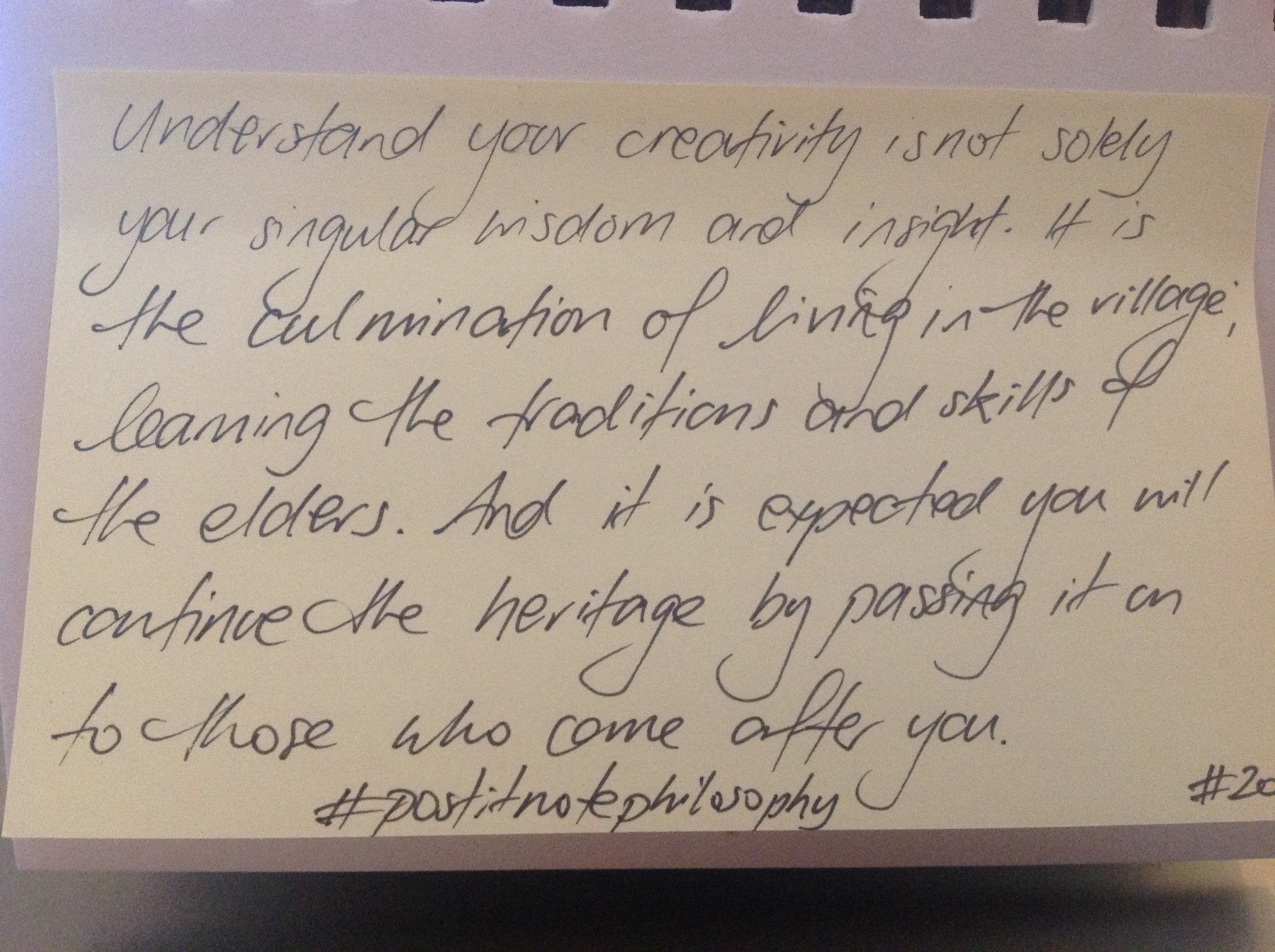
Understand your creativity is not solely your singular wisdom and insight. It is the culmination of living in the village; learning the traditions and skills of the elders. And it is expected you will continue the heritage by passing it on to those who come after you.

Reaching the End of the Toilet Roll and Hoping There’s Another

Time's Running Out

Time’s Running Out

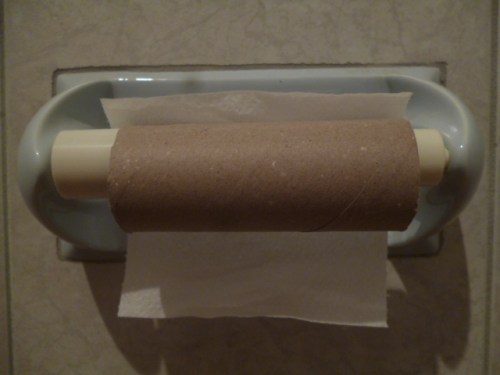
Another year is about to come to an end like a toilet roll. Before we curse the fool who didn’t micro-manage their use of the toilet paper and replace it for you, we take a moment to pause and think about the year that was, which is currently floating in the bowl beneath our bum.

Two years ago I wrote about the beginning of my writing journey and the need to plan not for lists, but for goals.

At the beginning of this year I wrote down three words to help me focus on my goals: Disciplined, Dedication, Purposeful.

A quick reflection shows I haven’t met my goals, nor have I utilised the power of the three words I choose to help keep me on track.

I haven’t finished a number of projects I had on my goal list: I didn’t submit any short stories for publication; I haven’t finished editing my collaborative novel (there are 40 pages of edits to complete); I haven’t finished a multimedia short story; I haven’t finished my novella even though I set out to write a minimum of 100 words a day, five days a week (that came to a grinding halt at the 5K mark).

Which means what, exactly? Nothing really. The world didn’t end. My pen didn’t run out of ink and I judicially used the end of the roll of toilet paper.

There is always a story behind why something did or didn’t happen. My story is simple: my job (I am a high school English teacher) demanded a lot of my time this year, especially at certain points; I was mentally and emotionally exhausted by the end of the year. I was ill-disciplined and mastered the art of procrastination at times. I didn’t focus on my goals and set specific time frames to achieve things. I aimed to achieve too much in the year. I compared myself to others who were writing copiously and submitting regularly or churning out huge words counts in short, concentrated bursts.

Stuff happened. It just does. That’s how the toilet roll comes to an end.

Everyone has their own reasons for why they didn’t get something done.

But what have I done? I wrote. 

I finished my collaborative novel and we began the editing process. I began writing my novella. I dragged out the file of my multimedia short story. I wrote a month of Post It Note Poetry. I wrote a series, and continue to write, Post It Note Philosophy on creativity. I wrote the occasional poem. I blogged about creativity. I wrote a series of twitfic to keep me writing when I couldn’t commit to long periods of concentrated time to write. I used what time I had to think about projects, make notes, scribble sentences. 

The end of each year provides a moment to reflect, reevaluate and redefine what we want to achieve in the following year. I am trying to build momentum in my writing career.

Here’s what I will be doing:

  • I will find three new words for 2014.
  • I will establish my project goals for the year.
  • I will set up time lines for my projects.
  • I will allow life to happen.
  • I will continue to write (in whatever form it may be)

What do you do about it?

  • Tick off the things you have done (always look for the positives)
  • Rewrite your goals/project list (and be reasonable about what you can achieve)
  • Specify when and how you are going to go about completing your goals/projects
  • Give yourself permission to stop when you need to and give yourself a date when you will restart.

Now if you’ll excuse me, I need to see a man about changing a toilet roll.

Merry Christmas 2011

Merry Christmas 2013


Post It Note Philosophy #18

image

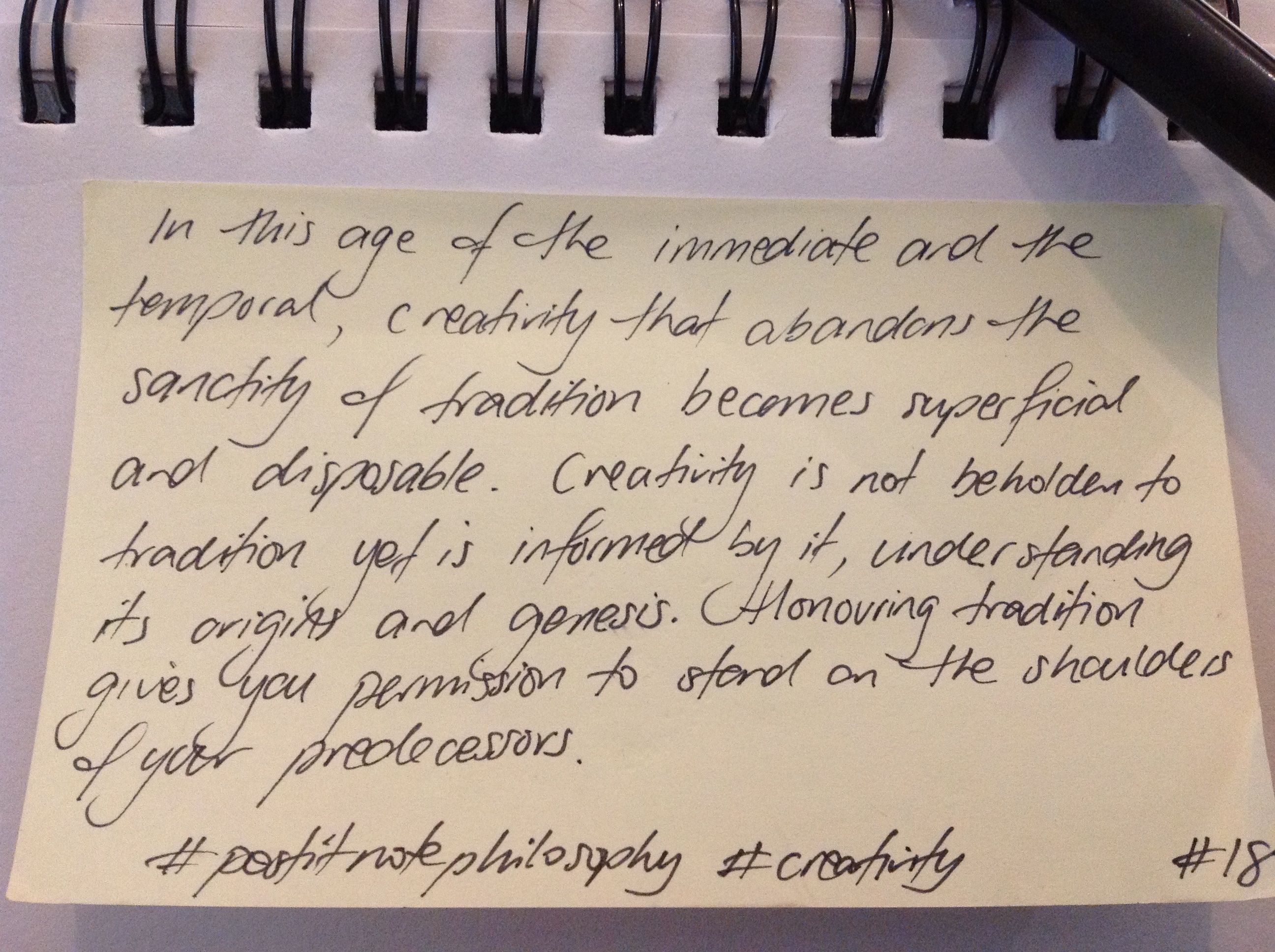
In this age of the immediate and the temporal, creativity that abandons the sanctity of tradition becomes superficial and disposable. Creativity is not beholden to tradition yet is informed by it, understanding its origins and genesis. Honouring tradition gives you permission to stand on the shoulders of your predecessors.