Tag Archives: reflection

Sowing the Seeds of Creativity

In the Gospel of Matthew is the Parable of the Sower. A farmer goes out and sows the seeds for his future crops.

“Some fell along the path, and the birds came and ate it up. Some fell on rocky places, where it did not have much soil. It sprang up quickly, because the soil was shallow. But when the sun came up, the plants were scorched, and they withered because they had no root. Other seed fell among thorns, which grew up and choked the plants. Still other seed fell on good soil, where it produced a crop—a hundred, sixty or thirty times what was sown.” Chapter 13 Verses 5-8

If I may be so bold to appropriate the parable for another purpose, please follow me.

A frequently asked question of creative people, writers in particular, is “Where do you get your ideas from?” Each writer has their own response.

In truth, I don’t find it difficult to find ideas. I find them anywhere and everywhere.

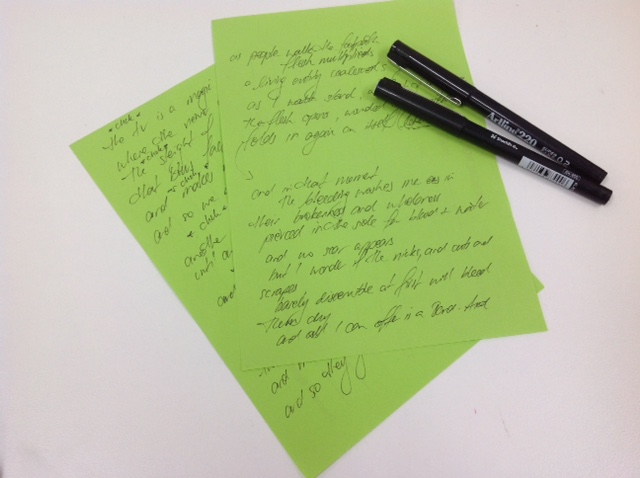
What I do have difficulty with is knowing which ideas will grow and flourish. I carry around a notebook and pen wherever I go. Into it I record ideas, sentences, lines of poetry, fragments of thoughts, pictures. These are potential stories I want to write. These are my seeds.

Some ideas fall on the path. Some on the rocky ground. Some between the thorns and some fall on the good soil.

New Poems

Two new poem ideas planted. Must add compost.

Will these two ideas grow? I don’t know. I often refer to ‘composting stories;’ leaving stories on the pile and see what sprouts. Sometimes an idea will need more fertiliser, or removal or pruning if it gets too unmanageable.

In terms of ideas that become good stories, the yield (thirty, sixty or a hundred fold) is in the reader and her/his connection to it. 

Have ideas. Have many ideas. Have a notebook so full of ideas so you can give them to other people who need ideas.

But more importantly, plant seeds. To paraphrase (and appropriate) the Gospel of John (12:24), “Unless a seed falls to the ground and dies, it remains only seed. If it dies, it produces much seed.”

Tend the new shoots that come up; don’t leave your ideas neglected. Work on them; experiment with the idea, come back to it every so often and admire it.

Keep sowing.

Asking Permission

IN the light of yesterday’s blog post about Jodi’s mentor program, she followed it up with a post about the fear of asking: Maybe I Was Only Then Becoming.

It is a remarkable insight into the creative mind and what fear can do to you when you’re a creative person. She references Amanda Palmer’s book, The Art of Asking. After reading the blog post, and hearing Amanda’s remarkable TED Talk from a few years ago, I need a copy. I’ll be putting it on my Christmas list and asking Santa nicely.

I can attest to how fear can be debilitating. I have been too afraid.

Too afraid to say ‘Yes.’

Too afraid to try.

Too afraid to fail.

Too afraid to believe.

Too afraid to ask.

Too afraid…

When we fear to ask we stand still, only to watch our shadows grow.

Untranslatable – Poem

Sometimes you come across a phrase, a sentence, a line or two of poetry that resonate with power; a demonstration that words are remarkable.

Recently I came across Felicity Plunkett (@FelicPlunkett) via a tweet. It was only a few lines of poetry but the strength of them moved me.

“I want both that you find me
and that my disappearance
                    is untranslatable”

from Lost Sea Voices

It was the word “untranslatable” that piqued my mind; it’s use is unpredictable, causes you to stop and pause, contemplate the word choice and see that no other word fits so perfectly.

I wrote this in response when I retweeted it: “When you want to dress yourself in another’s words as they’re so beautiful, play dressups & pretend you’re this good.” (And this in itself is composting for a new poem)

It pushed me to thinking, to explore the idea, because I couldn’t shake it.

But all of this has a further backstory.

It all began with an image from Stuart Barnes, and its caption “the moon gathers its lamps”.

Stuart Barnes Image

I knocked out the following lines in a brief 3-minute window of opportunity

the moon gathers its lamps
arranges them in lines
along the tide of evening
like footsteps, to watch
them fade at dawn

It was favourited by Felicity. And as you do, you find out who is the person behind the favourite who is not following you (promise I’m not a stalker, but now a definite fanboi). She is a poet, a critic and poetry editor and recently long listed for the Montreal Poetry Prize. This is someone who knows poetry far better than me.  

Of course I followed her on twitter. Reciprocation and then conversation. I sent a copy of the poem to Felicity before I posted it; I didn’t want it to be rubbish and sour the reputation of a wonderful poet.

She approved *smug mode engaged* had some positive comments to say (will be feeding my ego for some time to come).

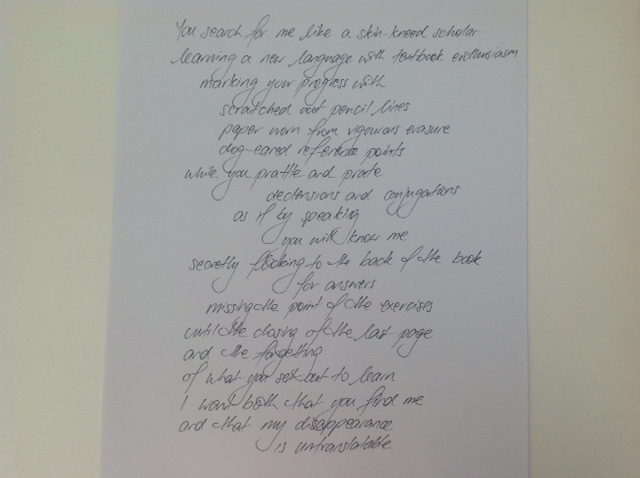
This is the poem, “Untranslatable”.

You search for me like a skin-kneed scholar
learning a new language with textbook enthusiasm
     marking your progress with
          scratched out pencil lines
          paper worn from vigorous erasure
          dog-eared reference points
while you prattle and prate
                    declensions and conjugations
          as if by speaking
                    you will know me
secretly flicking to the back of the book
                    for answers
     missing the point of the exercises
until the closing of the last page
and the forgetting
of what you set out to learn
I want both that you find me
and that my disappearance 
                    is untranslatable

Untranslatable

Odds and Sods Behind the Lounge

The last week of the school term is fast approaching, extending to two weeks out of the classroom. In theory, this is free time. In reality, it’s marking, preparation for lessons, planning and sharpening pencils.

What it means for my writing is hopefully a little more time to work on a couple of projects. I have in mind the completion of new drafts for 2 short stories, tidying up a couple of poems, and the completion of the first draft of my verse novel.

It is very ambitious and I’ll be disappointed if I can’t get some of these projects up to speed. Must stay focused and on task. No distractions.

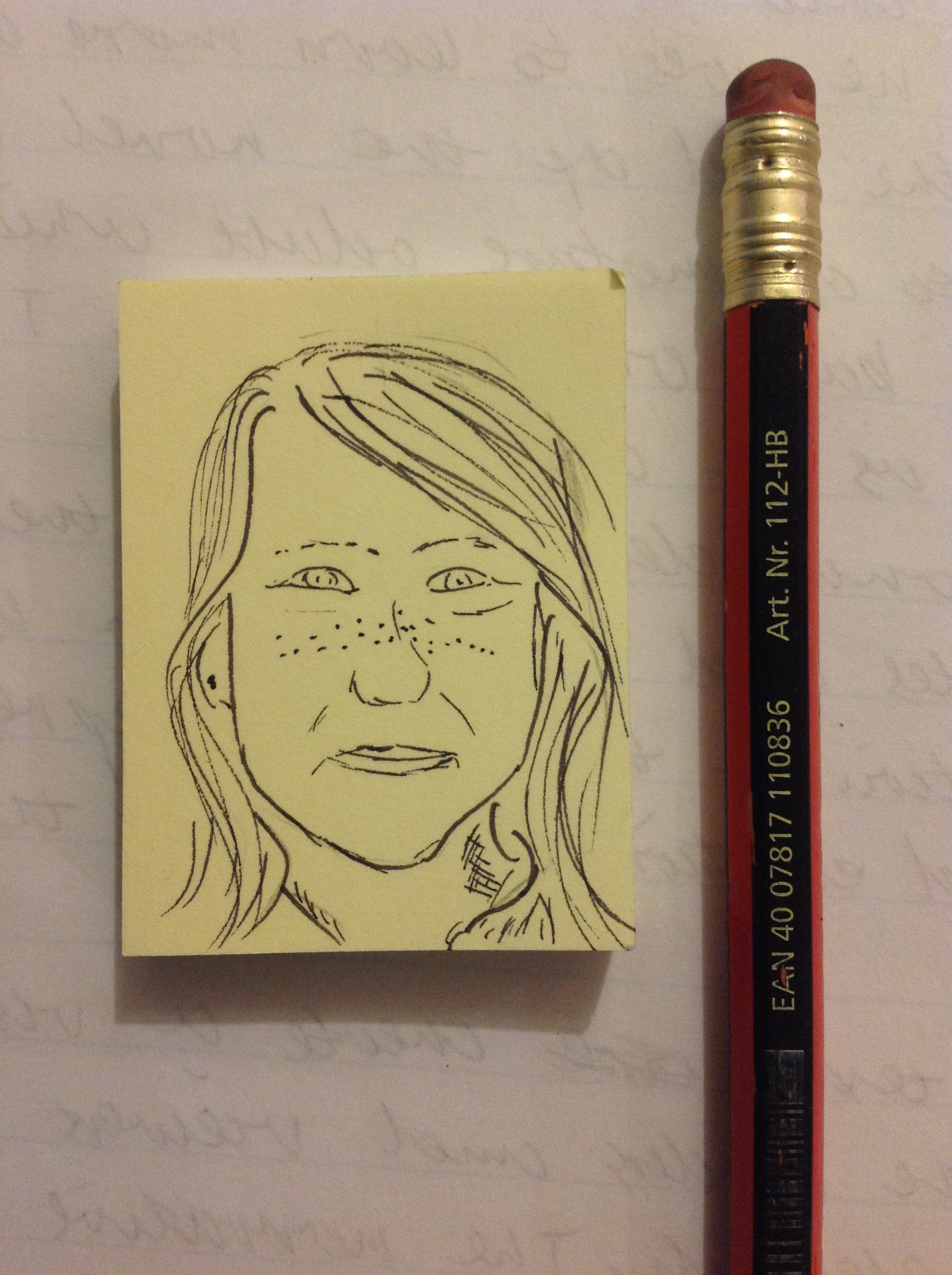
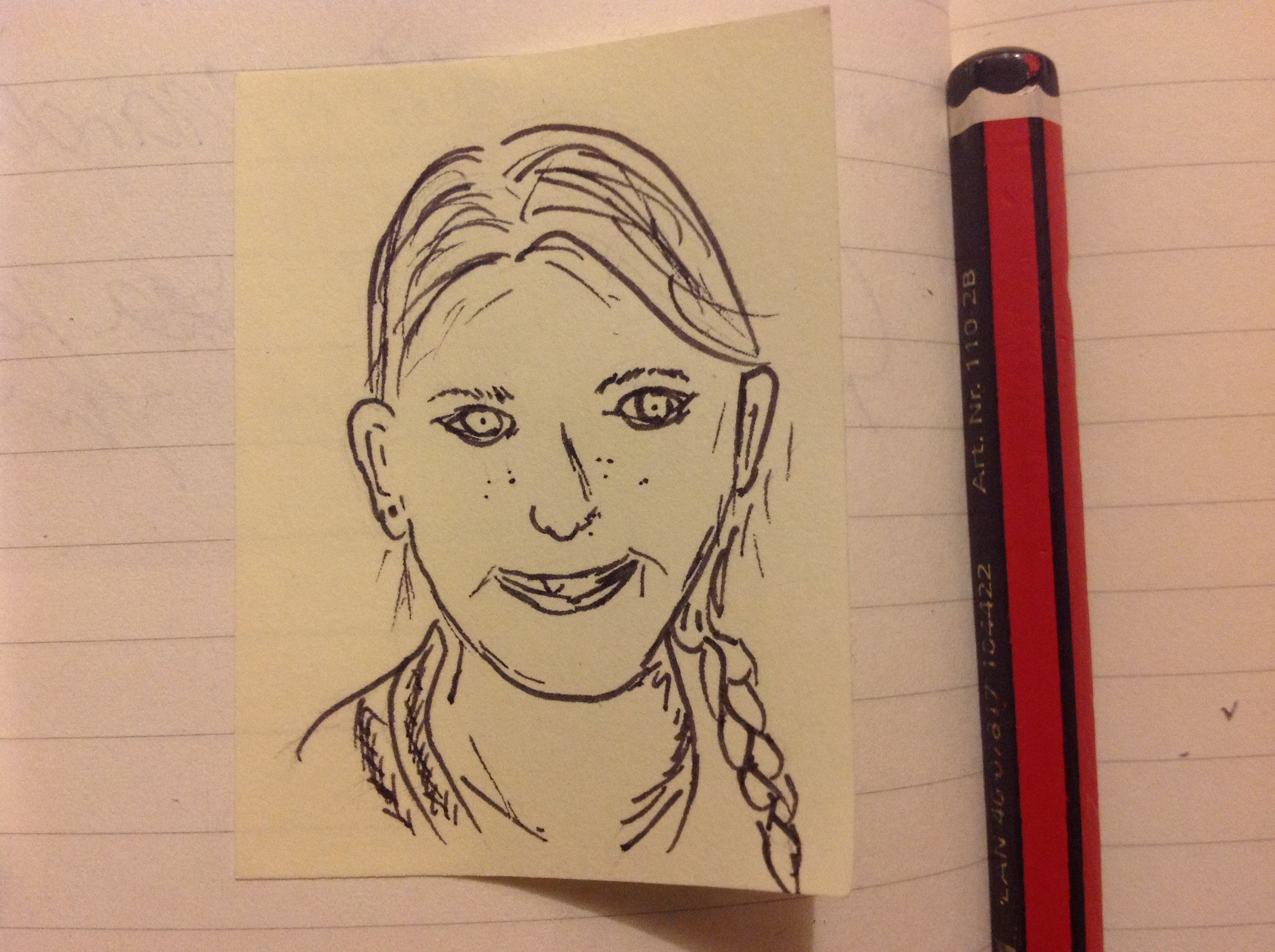
Speaking of distractions, on a whim the other night I opened my iPad, found a picture of my daughter (Miss #2) and attempted to draw it on a tiny Post It Note (the pencil gives you an idea of the scale).

This was the result.

image

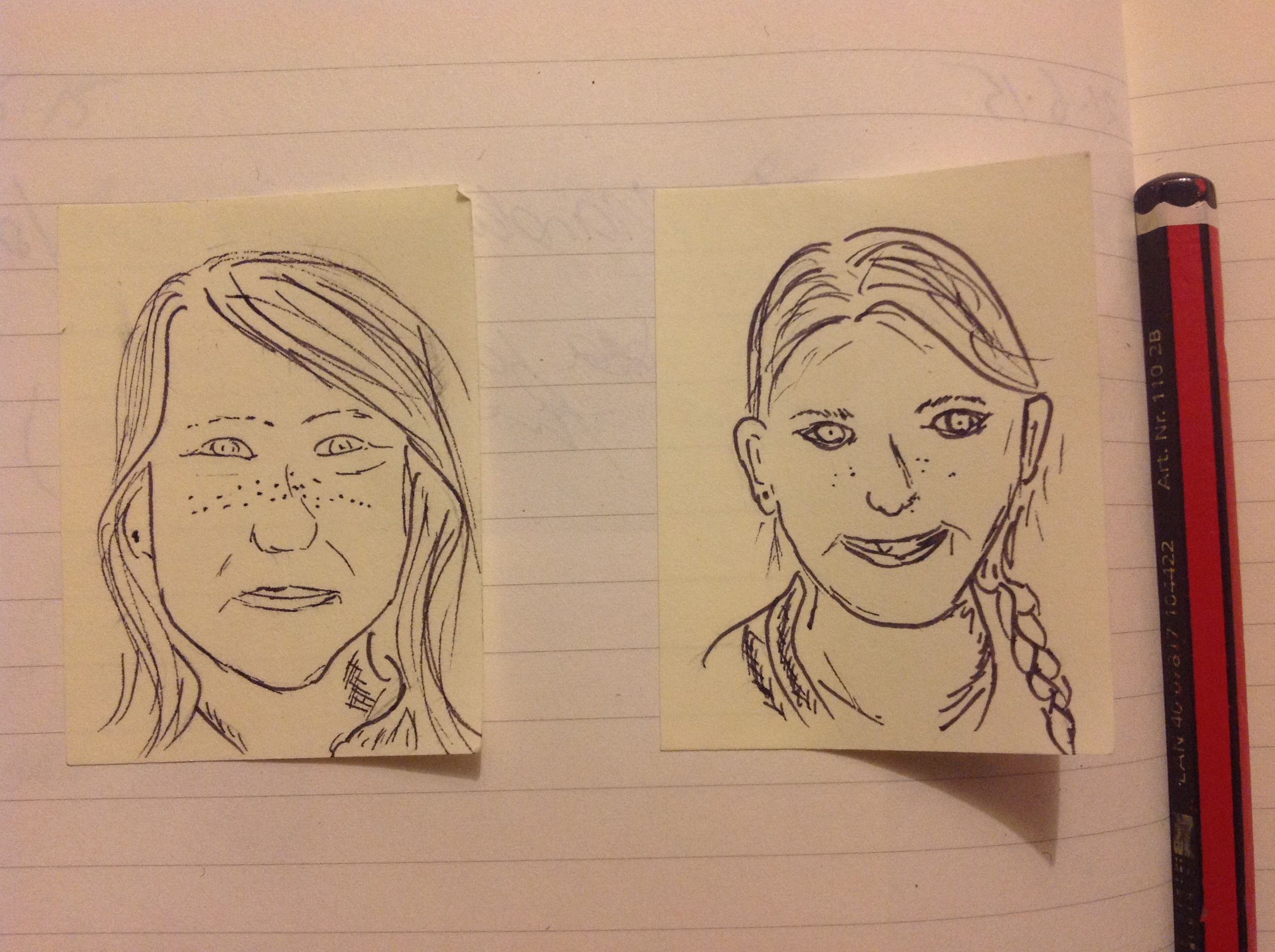
But, what ever you do for one child, you must reciprocate for the other. My attempt at drawing Miss #1 was not as good (it’s the eyes; they’re not right).

image

Side by side for comparison; Miss #2 on the left, Miss #1 on the right.

image

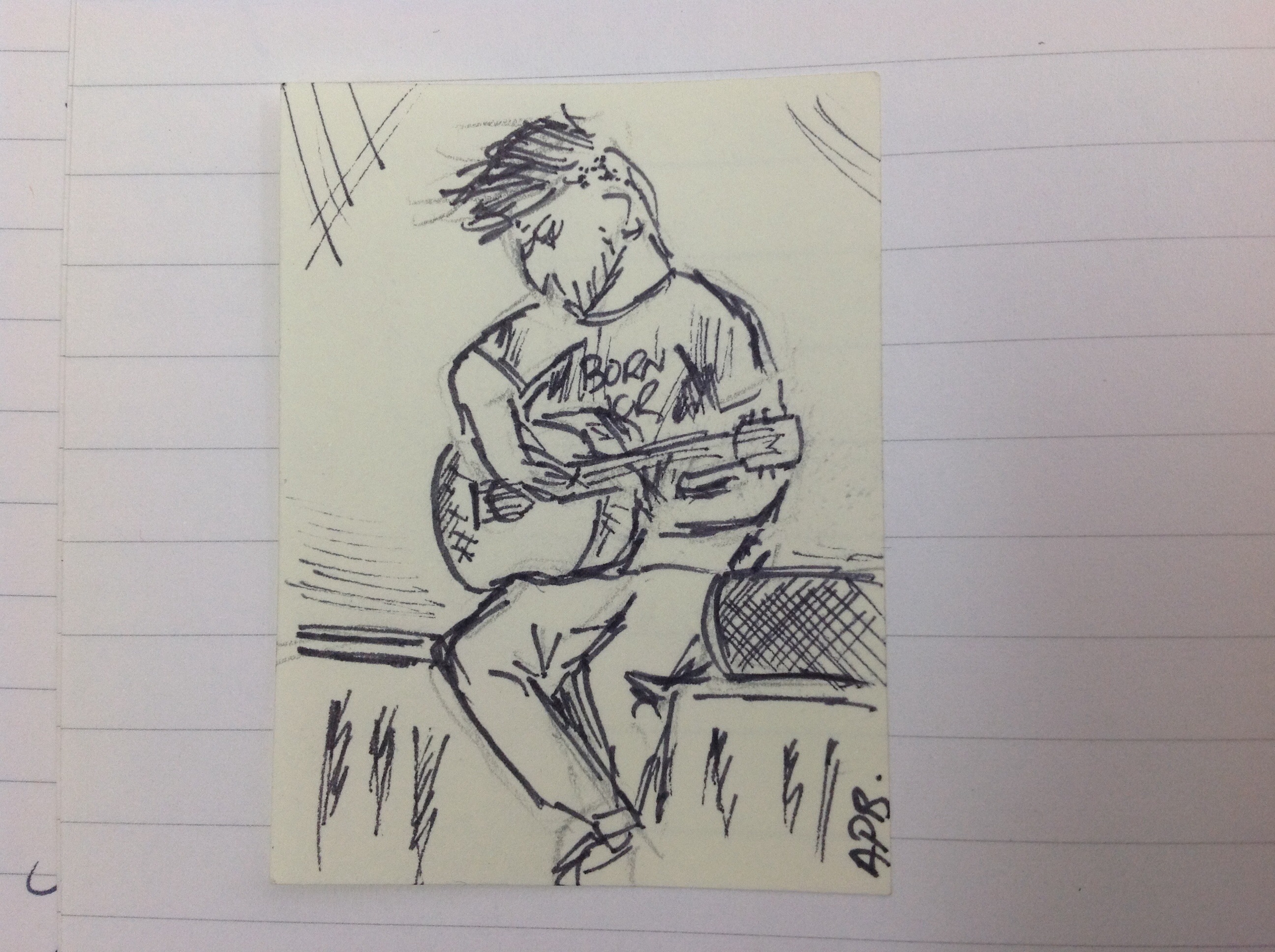
Unperturbed, I took my pencil and pen to band practice and sketched one of the guitarists during set up and sound check. The proportion is wrong, but it’s not bad.

image

Side note: faces are SUCKY to draw. I can never get eyes and noses and lips in the right places.

Learning Experiences (nothing spoils fun like finding out it builds character – Bart Simpson): I am not very good at art but I don’t care.
It’s practice; the development of a skill.
It’s another way of being creative, unlocking the unconscious parts of the brain while it’s distracted learning a new skill like drawing.
I embrace the suckiness and enjoy the process.
And I’m not ashamed to post my early attempts here.

Creativity is about fun and play, and messing about with boats. Hang on, that was Rat. Never mind, move on. Nothing to see here.

Don’t forget to play with your food from time to time and learn Roman numerals. I’m off to draw.

image

Hopes and Fears – A Poem and Deconstruction

As I am wont to do, I write poetry on twitter to explore, experiment and elucidate. 

This is today’s poem

Hopes and Fears

we are scared of our dreams;
not that our worst fears
will come to life
but the fulfilment of our hopes
will be the end of who we are

But I also have a good group of writing friends who are happy to pile on critique and feedback. Rob C suggested this: “This is great: simple-yet-complex, hugely poignant, heavily true. If you’ll allow a suggestion – ‘afraid’ instead of ‘scared’, for the softer sound, the more thoughtful intonation to match the philosophical backbone of the poem, and to match the ‘f’ sounds that run throughout.”

My response was this: It’s a little more philosophical than I am used to writing; there is no concrete imagery to ground the idea (my writing modus operandi), relying more on the intellectual to make it function.

Rob felt he may have overstepped the mark. He hadn’t. I said to him, “Nope; I like the feedback. Helps to see new things. It was written on the spur of the moment, as is most of my twitter poetry so refinement is not a part of the process. Some editing is involved but without depth. Comments help refine and edit, with the hope of putting it into an anthology in the near future.”

Writing is never a solitary act; it’s collaborative. I may write in isolation but my writing tribe helps me refine and improve my work. 

So a simple suggestion, the replacement of a single word, has made the poem stronger. 

we are afraid of our dreams;
not that our worst fears
will come to life
but the fulfilment of our hopes
will be the end of who we are

Finally, there is the reader who is involved in the construction of meaning. That’s you. What meaning do you make?

Creative Boundaries

A comment made on one of my recent posts made me consider how I consider the idea of boundaries.

The theme of boundaries has been pushing my creative buttons… I have been thinking about all kinds of boundaries and barriers from the physical to the psychological and emotional. Are they a challenge to be met and breached, or a restriction to prevent us from moving on?

How do people define boundaries? The common thinking is, I believe, that boundaries are restrictive and a construction to keep people held in certain behaviours or status. In the words of Talking Heads, “Don’t fence me in.” Hence the need to express freedom, to rebel, to become an individual. Which makes me think of Monty Python.

“You’re all individuals,” says Brian.

“Yes, we’re all individuals,” parrots the crowd.

“I’m not,” says one intelligent individual.

Or in the epitome of 1950s rebellious expression, “Rebel Without A Cause.”

“What are you rebelling against?”

“What have you got?” says James Dean.

In regards to boundaries I’ve never thought of them as an either/or proposition. For me they are both a restriction and as a challenge to be met.

Boundaries act as a restriction, a defining marker point. Think of the fence that delineates your property from the neighbour’s. Therefore boundaries in this sense serve as a means of knowing the limitations and confinements of who we are. They provide a definition, a discipline, providing a sense of safety and comfort.

Boundaries also act as a challenge to be met. Once we understand why the boundaries are put in place, and how we operate within them, can we transgress or expand them. We can push the limits, positively and negatively, to expand on our own sense of self.

The creative person needs both sets of boundaries.

Boundaries are the ways we learn, learning and knowing the rules, history and traditions of our chosen creative field. Only then can the boundaries be transgressed, challenged and extended. 

The boundaries imposed upon us (physical, psychological, emotional, mental, spiritual) and the boundaries we impose upon ourselves are the topic for another post.

Boundaries define who we are, what characteristics we want to keep as permanent territorial markers in our lives and ones we want to challenge and extend.

In the words or Inigo Montoya, “Let me explain. No, there is too much. Let me sum up.”

1. Boundaries give us defined parameters when we first learn a creative art.

2. Those boundaries are a means of helping us learn and define our craft, to begin to excel at it, to find our voice.

3. When we are comfortable we can begin to push and extend the boundaries, comfortable in our sense of self and our art.

What are your thoughts? Are boundaries a help or a hindrance to your developing creativity?

Creativity is a Team Sport

I like when ideas about creativity surprise me from random sources; when an idea is sparked by an non-fiction article, paragraph of fiction, line of poetry, a photograph, an emotion ignited by the news or the delicious consumption of a six-pack of doughnuts.

Recently I was reading an article, “5 Practices We Need Back In Our Lives,” and one section on mutual encouragement stood out. Here is the relevant section (my emphases):

Mutual Encouragement

As a kid, I played a lot of sports. Although I enjoyed the competition, I mostly loved being on a team and working toward a larger purpose. In that context, every teammate becomes a cheerleader. There’s nothing quite like the energy created by mutual encouragement. It lifts spirits and helps everyone perform at their highest level.

Why, I wonder, does this type of encouragement fade as we grow older? Instead of cheerleaders, we become critics of one another. Perhaps it’s because we’re no longer on a team—at least that’s how we choose to see it. Instead, it’s us versus the world.

It’s time to begin encouraging those around us—family, friends, even co-workers. God calls us to “spur one another on toward love and good deeds” (Hebrews 10:24). Practicing this won’t merely lift others’ spirits and improve their performance, it will leave everyone feeling as though they’re on the same team, working toward a common purpose.

So often as creative people we think we are working in isolation (every man is an island when it comes to creative work), disconnected and removed from other creative people. This is especially true of the mythology of writers (of which I am one), that we spend our time locked away in a distant castle/apartment/coffee shop/ball pit at IKEA, removed from the smothering cloying atmosphere of people, suffering for our art.

What are we to do?

A past student of mine was a long distance marathon swimmer. He become the youngest male to swim the English Channel. While it was him in the water for many many hours, he spoke of the team around him who lifted his spirits when he was exhausted, dejected, and wanting to give up.

I feel there has been a shift in thinking and in culture regarding the isolated creator. We are moving towards a group consciousness and collectivisation in support of one another.

Whether this is groups that meet in real life or virtually in online groups and forums, the mutual encouragement gained shows that we are a team working towards a common goal and purpose.

Personally I’d like to see collectives grow organically, places where creatives of all pursuits and passions can meet to create, discuss, encourage, critique, edit, beta, inspire.

Imagine a salon of poets, writers, musicians, artists, dancers, sculptors, IT gamers, apps developers, philosophers, mathematicians, scientists, any type of creative person. A cultural think tank, brains trust, hot house, backyard barbecue  where we all bring a plate of food to share (a very Australian idiom) and get to enjoy each others’ company, ideas and encouragement (sorry to mix metaphors).

At its most basic, creativity is a team sport. We might work in isolation but our success depends on our community and relationships.

Here’s my game plan:

  • Join a team.
  • Create community.
  • Foster relationships.
  • Encourage and equip others.

Moving Forward When You’re Stuck Looking Behind You

How do you move forward creatively when you feel like you’re stuck looking back?

In the last couple of weeks I have been re-reading the collaborative epistolary novel, Post Marked: Piper’s Reach, I wrote with Jodi Cleghorn between January 2012 and April 2013. 

The novel has been thoroughly edited and we are now at the place of writing the synopsis. Late last year we began the process but due to a range of metaphysical circumstances it had been put on hold. 

For me, because I cannot speak on behalf of Jodi, the latter half of last year burned me out creatively. The pressure of my job (high school English teacher) and other external pressures saw me roll into January hoping for a recovery. But it never happened.

Putting this out there and waving it around with abandon: Writing a synopsis sucks.

It’s the Pit Of Despair from The Princess Bride coupled with the Pit of the Almighty Sarlac from Star Wars topped off by The Buzz Cut from Wayne’s World (Boy, it really does suck). As we wrote it, we felt the summary sucking the life away from the narrative we had created.

On top of the synopsis situation, other projects lay scattered like discarded underpants and it was killing me that they were unfinished. My sense of self in regard to my creativity and writing had disintegrated. I doubted my writing skills and wondered if it was worth continuing. Doubt is insidious, and lethal, to a creative life. 

But I am not one to go quietly into the night for a bag of doughnuts and never return. I used February and Post It Note Poetry to begin the rebuilding process. I gave myself permission to put projects on hold, think them through again.

Now that it is March, I returned to the first project on the list: the Post Marked: Piper’s Reach synopsis. I opened up the final document and began reading, familiarising myself with the story again. It was nice to come at it again with new and fresh eyes, delving into other aspects of the characters again and their development, marking up plot points and knowing I’ll probably cry at the end. Again. (And, yes, I did cry).

While doing this I went back to other pieces written in the Piper’s Reach world. The stories precede the events of the novel in that they are about the lives of Jude and Ella-Louise in their youth and in their adult life. They were done as an indulgent exploration of our characters from different perspectives (letters have a very limited frame of reference when writing).

The first is the Christmas Special Jodi and I wrote at the end of 2012. It recounts the events of the Surf Club Christmas party (mentioned in the novel) when Jude and Ella-Louise were in Year 11 (their second last year of high school). It introduces the main characters from a different perspective as each character had the opportunity to speak in their own voice, not limited to the first person recounting of Jude or Ella-Louise. You can read the Christmas Special here.

The second story is from Jodi. “What I Left To Forget” tells the story of Charlotte MacKay and Jake de Britto and is told from the 3rd person, a departure from the narrow focus of a personal letter.

I wrote a companion piece to it, which precedes it chronologically, but was written after a comment I left on Jodi’s blog where I riffed an idea. Jodi dared me to write a romance from the perspective of Jake. The resultant piece was The Photographer’s Concerto.

Any of the pieces can be read without knowledge of Piper’s Reach, and you can read the first letter from Ella-Louise here.

How did this help me move forward? 

Up until the reread, I doubted I could write well again. I hated what scrawl occupied my notebooks. Even when writing Post It Note poetry I felt hesitant and uncertain.

By going back into the past, I could see the progression of my writing skills. What I wrote 3 years ago is still good. Sometimes I wonder if it was really me who wrote the passage. It has been an encouragement to see that I can write. I am proud of those stories, the world that was created. Yes, it’s hard work, but rewarding when you see readers gain a connection. That was one of the most rewarding aspects of writing “Piper’s Reach” and releasing a letter a week to our small, but faithful, following who shared their love of the series and the characters.

Taking pause to reflect has allowed me to refocus my creativity and move forward.

If you’re stuck, unsure of the direction, pause, reflect, give yourself permission to stop for a time and look back as a way of seeing progression. It may help you move forward. 

Are you stuck? Feeling like momentum has stopped? Would looking back work for you to help you move forward?

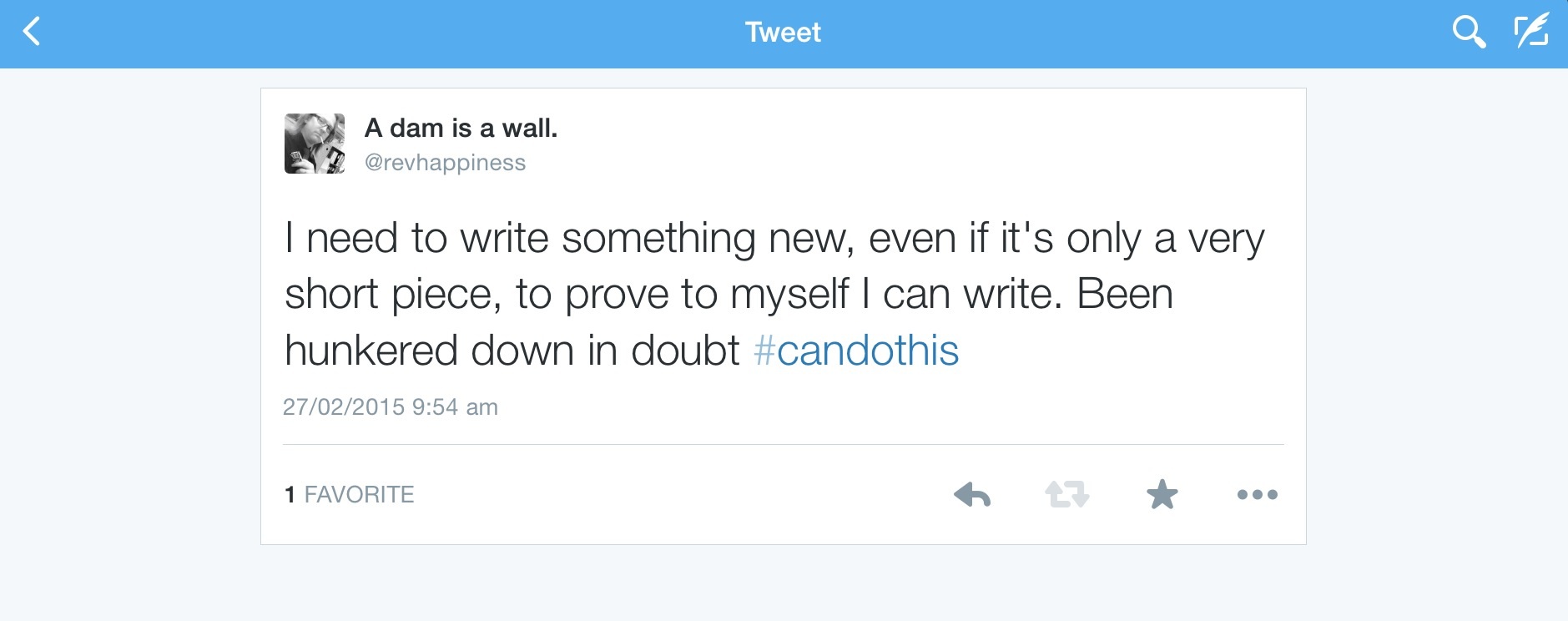
What To Do When You Doubt Your Creativity

image

I wrote this last week as Post It Note Poetry was coming to a close. For the month of February I was writing something new every day on the spur of the moment with very little editing or development. Dedicated crafting and revision is not the point of Post It Note Poetry.

Side Note: Post It Note Poetry presents its own set of creative issues and problems. I’ve reflected on them at the end of the month in 2013 (Post It Note Poetry Wrap Up) and 2014 (Lessons Learned from Post It Note Poetry). There is no need to revisit them again.

It has been a long while since I have written something new as I’ve been trying to complete the first drafts on some longer pieces (one of which is the stupid novella I’ve been saying I’ll write for the past 2 years). I have another short story (approx. 3.5K) that still needs work and has been revised and reworked numerous times.

What it all means is the process from idea to first draft, then edits, more drafts and finally, completion, is time consuming.

It’s the long drag between first draft and end of first draft (when you know the work has potential but it’s not yet realised) that makes me doubt. Even the short story mentioned above has been languishing for almost 12 months as I sort through various drafts, comments and plot issues.

Similarly, my novella and verse novel need some serious reworking in terms of plot. I started the novella with an outline but have realised it needs further revision. The verse novel started without an outline (trying different methodologies) and it needs a clear direction and focus. 

On top of that, the latter half of last year was a creative wasteland in some respects. Work demands were a high priority and a creative sink hole as I worked through marking papers, editing students’ major works and completed edits on a friend’s 104K sci-fi novel.

It meant I approached January as a time to rebuild myself creatively. But it didn’t happen. Everything I returned to felt like drinking a cup of sand. It was exhausting. And I seriously contemplated bailing on Post It Note Poetry as I doubted myself and my creative abilities.

What to do, then, if you are beginning to doubt your creativity? I have 2 solutions.

1. Stick with your creative community.

Your creative community is your most valuable asset. I have a group of people I can rely on to listen when I vent, whinge, complain, throw a tantrum, doubt, despair, consider chucking it all in.

They were there either via text or Facebook or messaging. Most of the time they simply listened. Occasionally they offered advice or encouragement. I have a creative colleague at school and we have our “Mea Cuppa” sessions, talking through ideas or talking rubbish while having cups of tea.

If you’re not part of a community, seek one out either in real life or online.

2. Keep turning up to the page as persistence pays off.

Deciding to complete Post It Note Poetry meant I had to turn up to the page Every. Single. Day. to complete a poem. Some poems came easier than others but I was compelled to keep going.

Even if you think you are creating rubbish, it is all about priming and preparing yourself for the next project whether it’s something new or returning to complete something older. It’s like training is for an athlete. Do the practice, complete the exercises in readiness for the main event.

For me, March (and the coming months) brings new vision and clarity for the projects I want to complete and the new ones on the horizon. For right now, I’ll keep turning up to the page and pressing on.

How do you keep your creativity flowing when you have doubts? Leave your ideas in the comments.

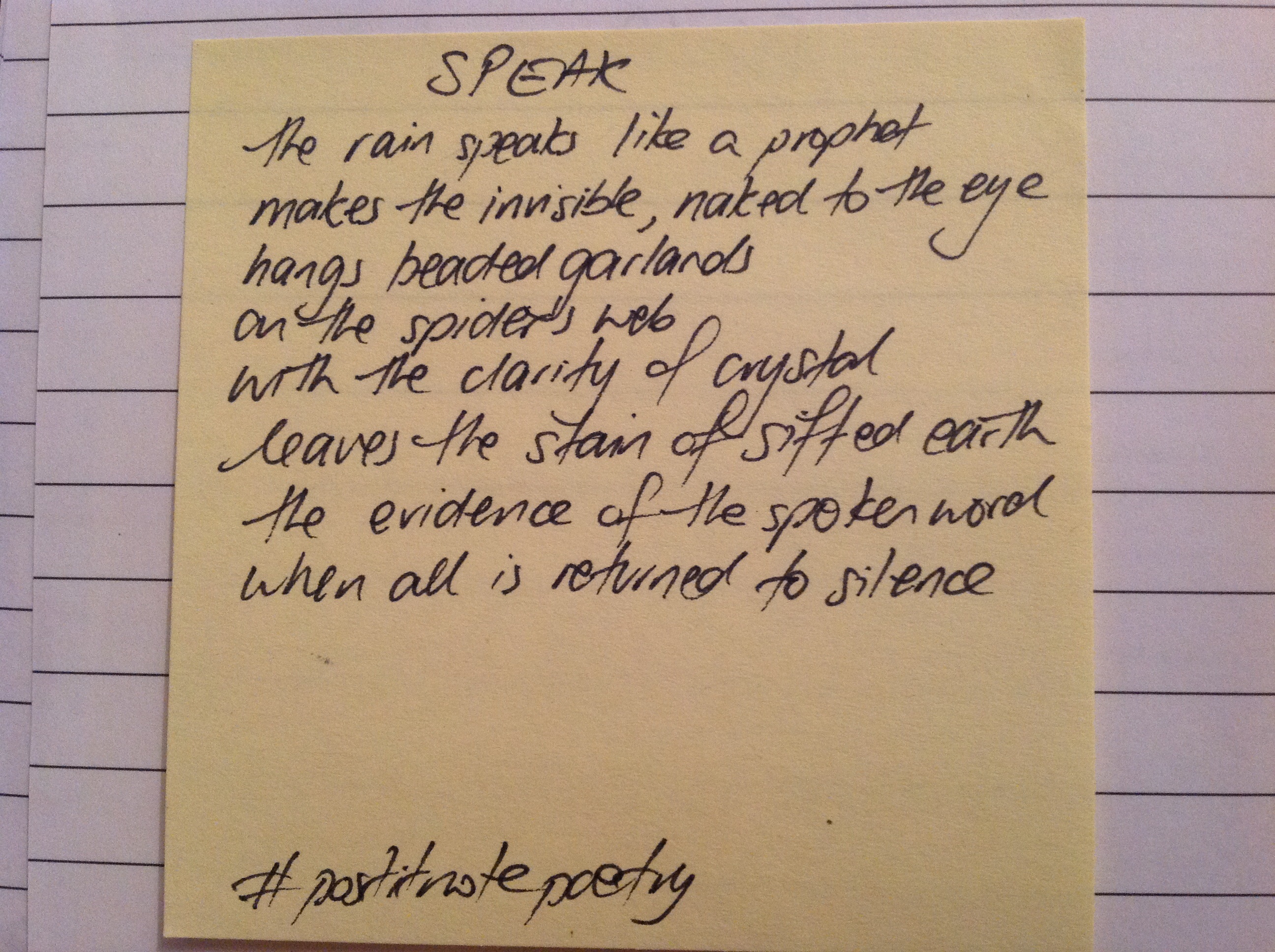
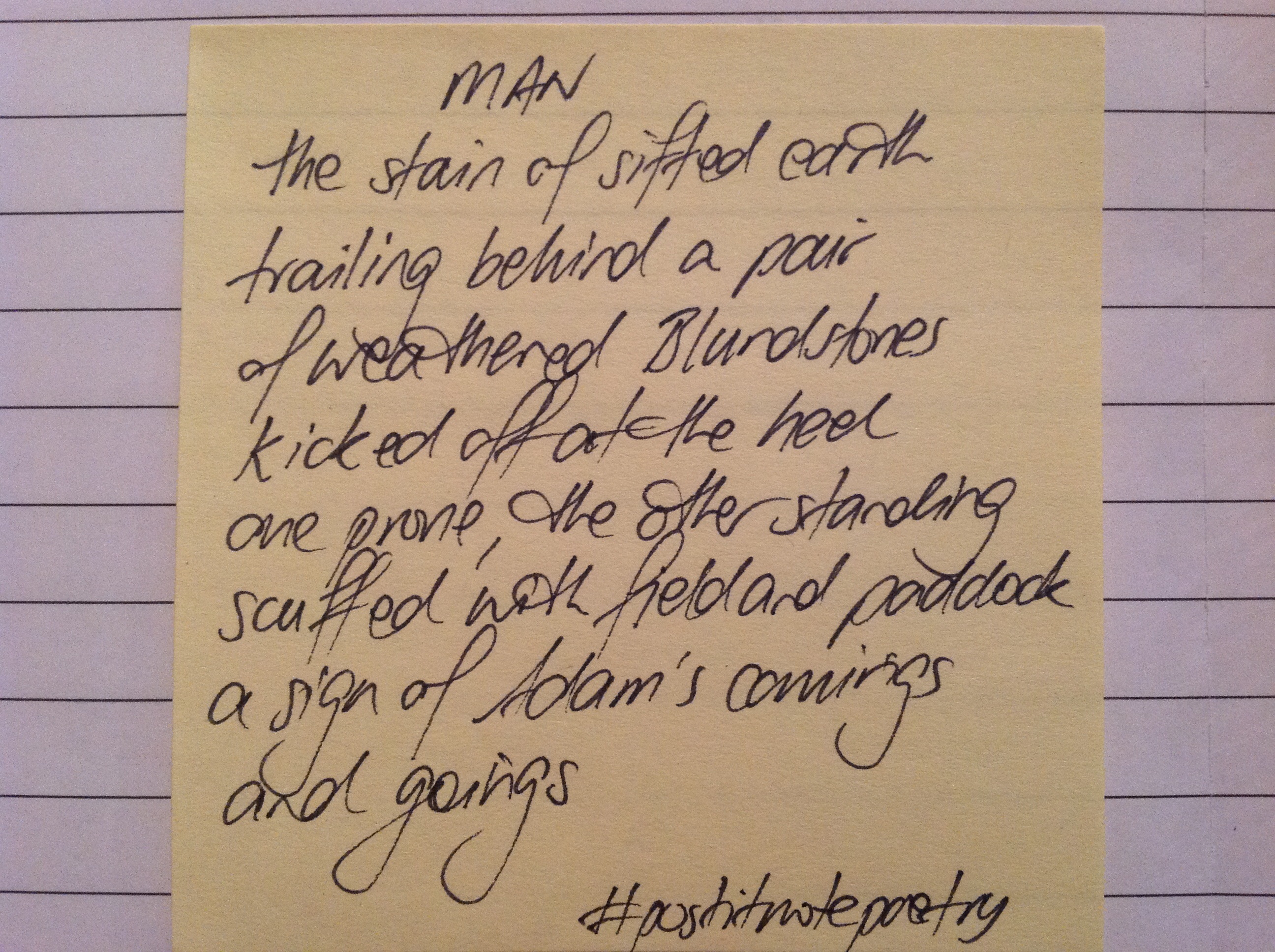
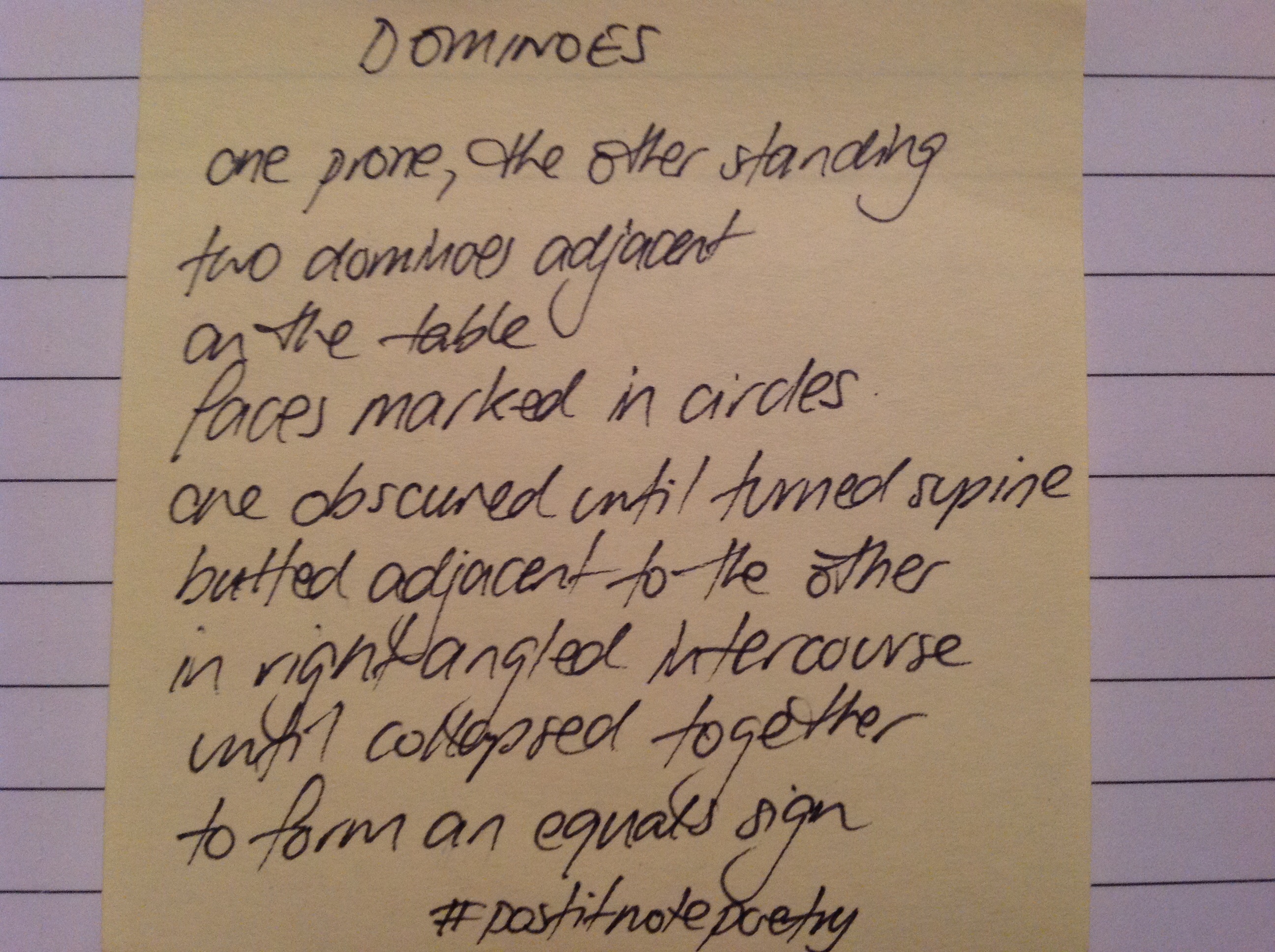
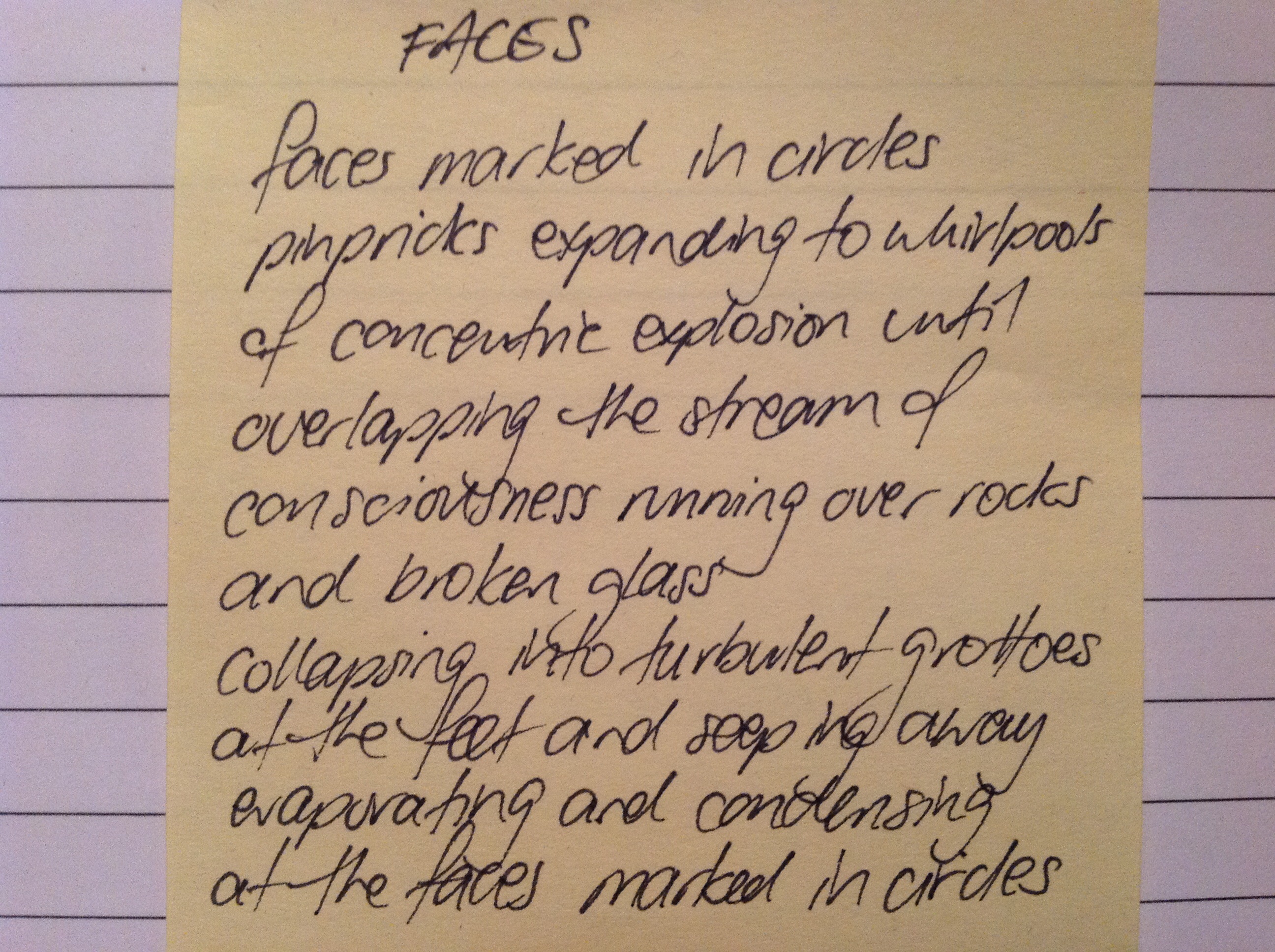
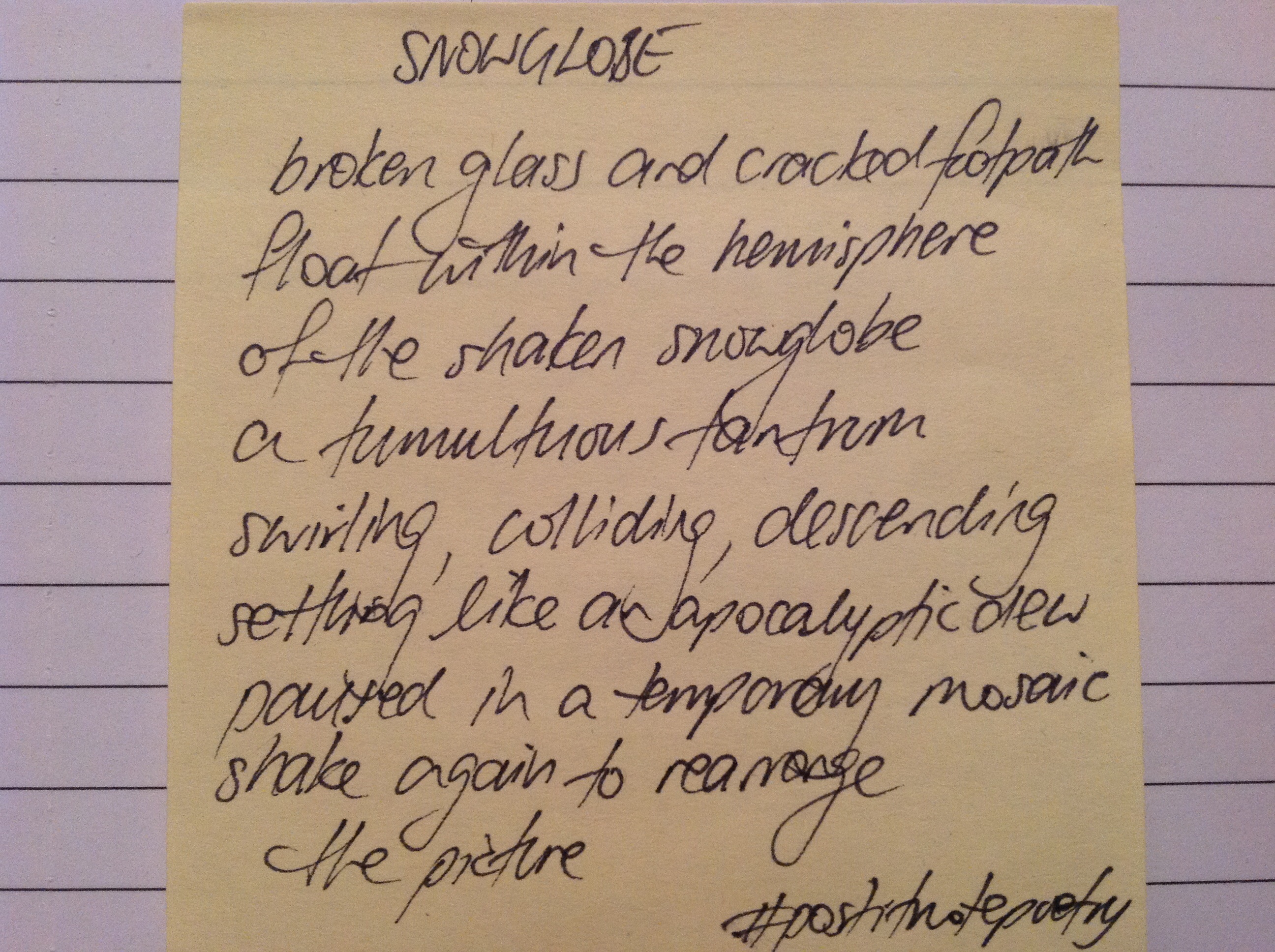
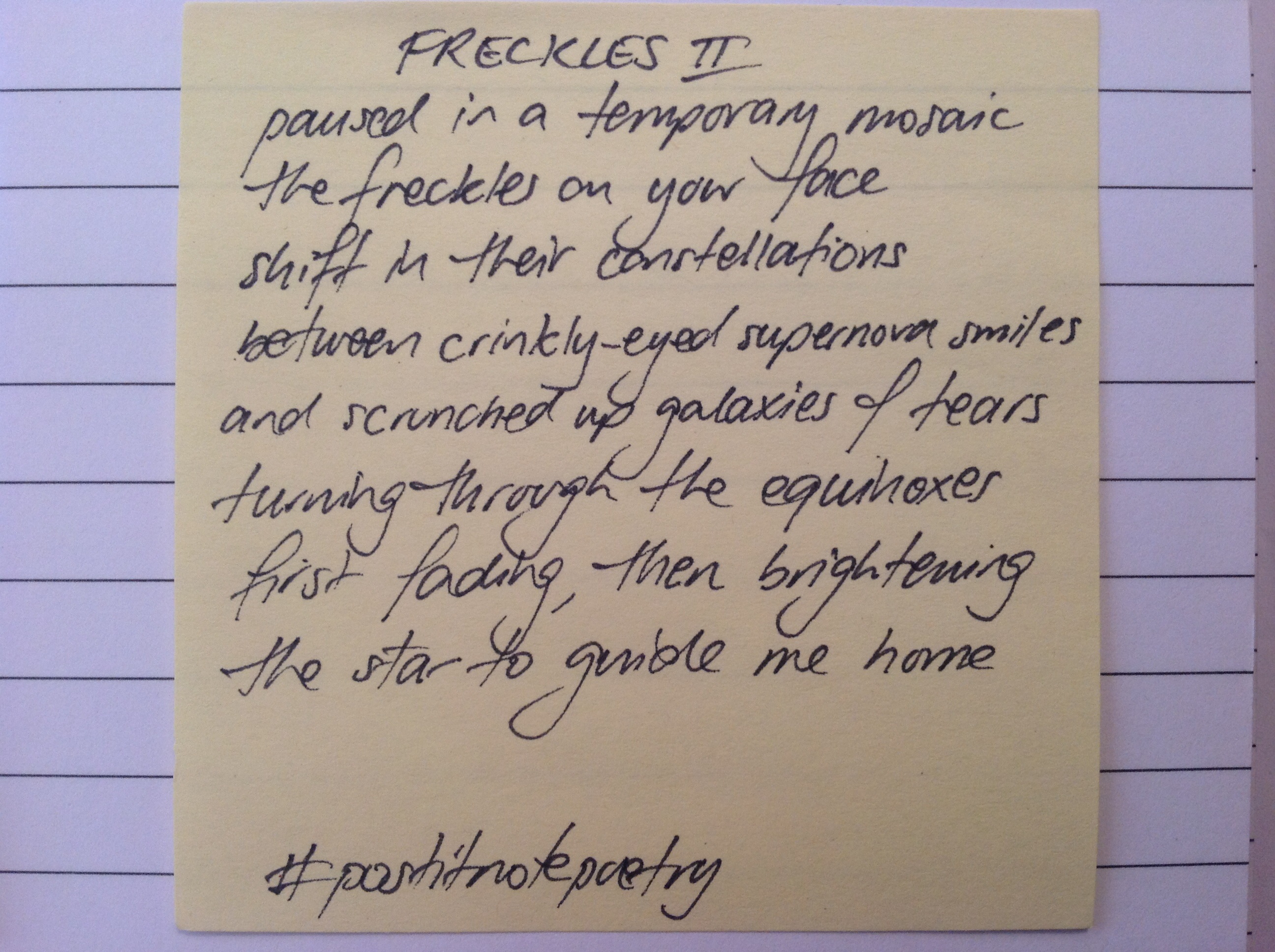
Post It Note Poetry Recap Week 4 – The End

Welcome to the end of the official month of Post It Note Poetry (don’t stop writing Post It Note Poetry; I won’t be stopping, only slowing down the production) but its time has come to an end for this year.

28 days of poetry. 28 poems. 1099 words (of questionable merit). In reviewing the poems I wrote, I am proud of many of them. Others have the potential to be developed or refined further. Some should be consigned to the rubbish bin. However, the point of this month was to simply write, and with permission to write badly, so I wrote. 

And now we have come to the last weekly recap. You can find the other weekly recaps here:

Post It Note Poetry Recap Week 1
Post It Note Poetry Recap Week 2
Post It Note Poetry Recap Week 3

At the end of last week’s recap I set myself a challenge to remix my own poems for the final week of Post It Note Poetry. I would take a single line from the poem and use it as the opening line of a new poem. Perhaps not so much a remix as an inspiration. Consequently it has opened up new ideas for next year with found poetry, other remixes and collaborations.

I found myself censoring lines, or thinking which lines might be good for the next day. It was a distraction from the poem at hand but I found the “OFF” switch to allow me to finish the poem. It may be easier to take the line from someone else’s poem because there is not the built in expectation of having to write something worthwhile. Maybe next year I’ll have another remix week where I borrow from other participants’ poems.

The poems are presented here in chronological order so you can see the progression, unlike previous weeks where they have been posted in reverse chronological order.

image

image

image

image

image

image

Thanks for coming along for the ride of Post It Note Poetry. It will be back again next year. I will be writing more Post It Notes poems from time to time. Be sure to check my tumblr, Post It Notes and Poetry, for posts and poetry updates.

Do you have any favourites? Leave yours in the comments.