Tag Archives: poetry

Two New Poems for Old Acquaintances

At the end of last year, two of my colleagues left. One retired and one was returning home to another state before heading off travelling.

In a sudden moment of ideas, I composed a poem for each. I couldn’t read them aloud myself because I hate farewells and ended up a blubbering mess in the corner while other colleagues read them for me. Wuss that I am.

I will share them with you, even though you don’t have the context of the people I know because I like them as stand alone poems.


Athena’s Owl

The light is extinguished at day’s end
the filament fades from white to orange to yellow to black
                                                              to signal slumber’s rest
          shadows encroach where light once reached

Athena’s owl ruffles her feathers for one last flight
          preens from quill to tip and one soft downy feather
          falls like a summer cloud
          rides the drafts and settles in the corner

In the silent moment before flight
          she takes one final glance
launches on soundless wings
          the warrior of the night.

We wake at morning’s first touch and
                               find the roost empty

Our hearts turn to sorrow and mourning
for wisdom’s presence is no longer amongst us
we run our fingers along the perch, the grooved indentations
of claws leave furrowed rows of knowledge

The wind reaches into the corner
                              lifts the single feather
the movement catches our eye; we reach down
                              hold the quill between thumb and forefinger
                              our extant memory
a reminder of wisdom’s presence,
                              her integrity and compassion
We are made the wiser because of her.

Diaspora

The wind asked,
“How now, spirit? Whither wander you?”
Wherever you may take me
But I will not be driven like the autumn leaves
Aimless, directionless, at your capricious mercy.
I will set my sails and use your strength
To take me to foreign lands.

The wind said,
“You have not moved.”
I have travelled the length and breadth
Of my imagination; my feet are not weary.
I will choose when to tie my laces
shoulder my pack and
Cross the threshold of my volition.

The wind asked,
“When will you find a home?”
I find a home where there is a bed for rest
a cup of tea
a book to read
a pen to write with
a nook for study
a place where my heart is at peace.

And the wind was silent.
The Earthen Man

This was an attempt at a spoken word poem whose genesis was at school where a group of Year 10 students were being introduced to slam poetry.

I took one of the prompts and explored the origins of my name. It is rough but a fun activity to explore. Hope you enjoy it.

The Earthen Man
When I heard the minister pronounce the benediction

At my grandfather’s funeral
“Ashes to ashes, dust to dust”
the recitation of symbolic circulation
I hear echoes of my name

Adam

accent the first letter with exhalation of breath, “Ah”

“Ah-dam”

a whisper of life escaping.
Count those breaths, man of earth, keep a record, keep a tally.
Know its origins lie in ancient roots and ancient lands
your genesis is found in holy writ
the clay, the breath, the man created
the Play-Dough of God’s creative work

“Ah-dam”

a synonym of man and earth
a story deposited and poured from one jar of clay to the next
through eternity’s hourglass until the dust and ashes settle
inverted and another life begins

“Ah-dam”

this life begins as the conjugation of my father’s seed, my mother’s soil
the banker and the occupational therapist
the handy man and the artist
and I look at the dirt beneath my fingernails
see it is more my father than me
but I have mown my fair share of lawns, dug holes and shifted topsoil
I am more likely to find ink beneath my nails
from pens where words seep out like
the sap from a tree I never planted but I am learning to climb
now I garden with words
planting syllable seedlings in the the dust accumulating on the windowsill
in notebooks and diaries and journals
whose pages I imagine falling out like the petals of the cherry blossom
in my parents’ backyard, a delicate cascade of vowels and consonants

“Ah-dam”

in retrospect, memory is an archaeological examination of a past
digging through layers of soil
stratified artefacts poured through a sieve of inconsistency

“Ah-dam”

while the root system seeks out good soil
the surface is choked by weeds and caged by thorns
the fruits of labour harvested
a meagre handful, barely a morsel
a portion for one
let alone enough to feed a family
or the overflow to lay out a feast for friends
and strangers
I would be wise to reap the harvest
plant new seed at season’s turn

“Ah-dam”

the late starter to a race
trying to peg his pace with the front runners
rather than running his own marathon
the rhythm of a heartbeat
I have not kept time with
a pulse I lag behind most often
while trying to rush ahead

“Ah-dam”

Feet of clay baked over many summers
Running barefoot through the streets
Dodging bindies, stones and once, a rusty nail
Embedded into the sole of my foot
A fissure that now lets the water in
disintegrating in the tides
of people

“Ah-dam”

are we more than bags and bags of soil or fertiliser
stacked on shelves in mausoleums of DIY self-aggrandisement?
let me remove the speck of dirt from my eye
form the rain around this granule of dirt
and I will water the ground
from which I came

Create Even When You Have To Use Someone Else’s Tools

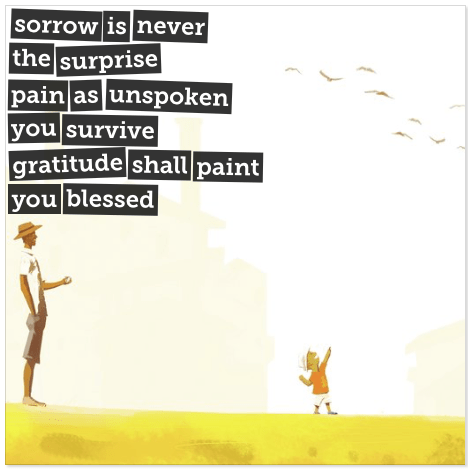
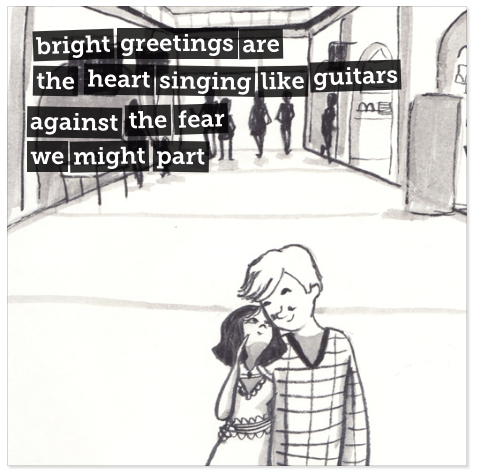
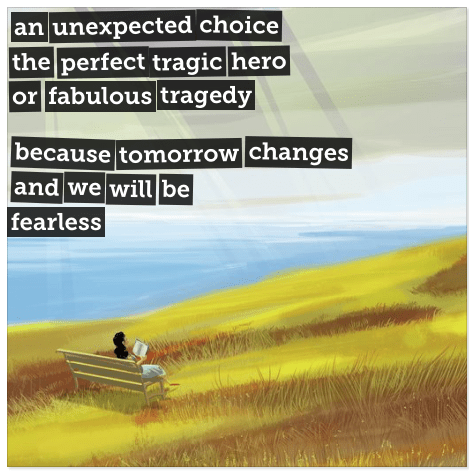
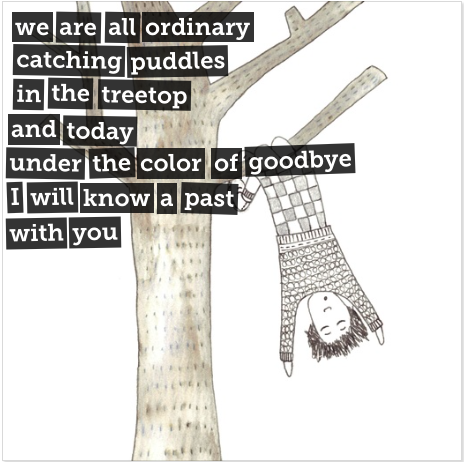
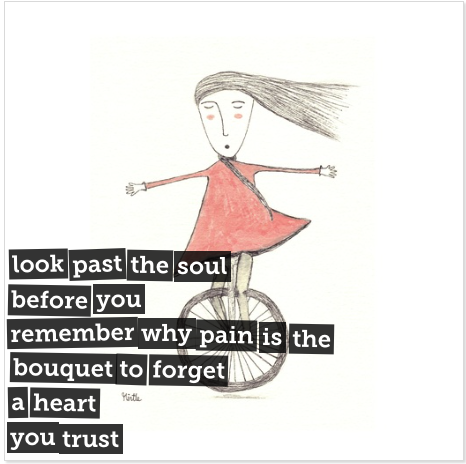
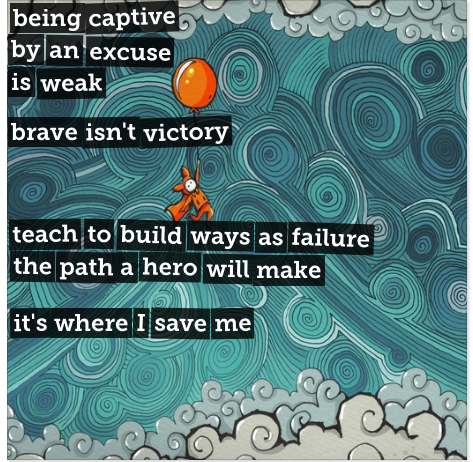
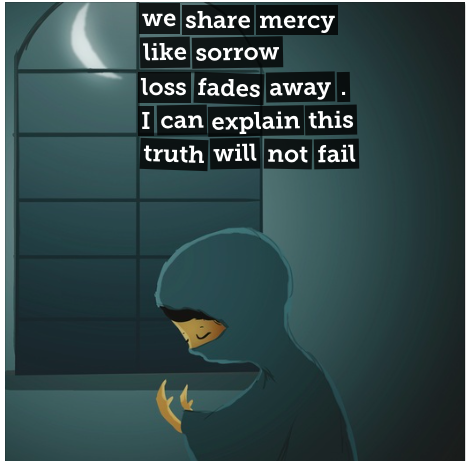
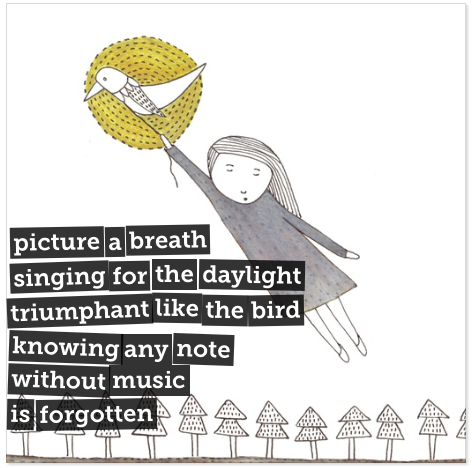
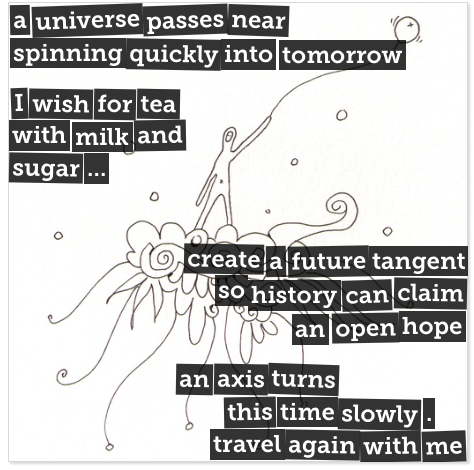
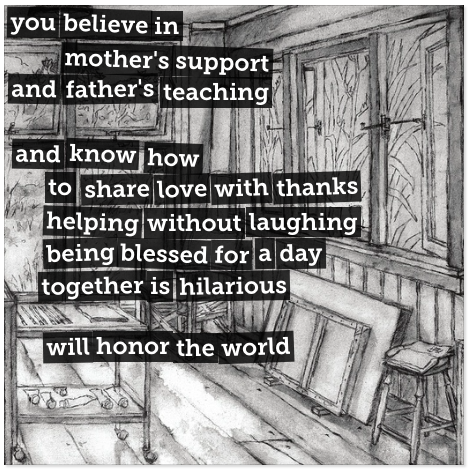
Late last year I came across Storybird. I posted about it here and here.

Normally during the month of February I engage and indulge in Post It Note Poetry (follow the hashtag #pinp16 on Twitter). This year I am not doing it. Things are chaotic with work right now so the opportunity to use someone else’s tools to create is a shortcut to keeping my creativity on the boil. 

Simply select an image, you are given some random words and go forth and create. This is the genius of it. It’s someone else’s tools to use and make them work for you.

Here are some recent additions.

A different take on Post It Note Poetry this year.

Screen Shot 2016-02-16 at 7.28.26 AM Screen Shot 2016-02-16 at 7.28.36 AM Screen Shot 2016-02-16 at 7.28.42 AM Screen Shot 2016-02-16 at 9.10.48 AM

The After Analysis Is Fading – A Blackout/Mashup Poem

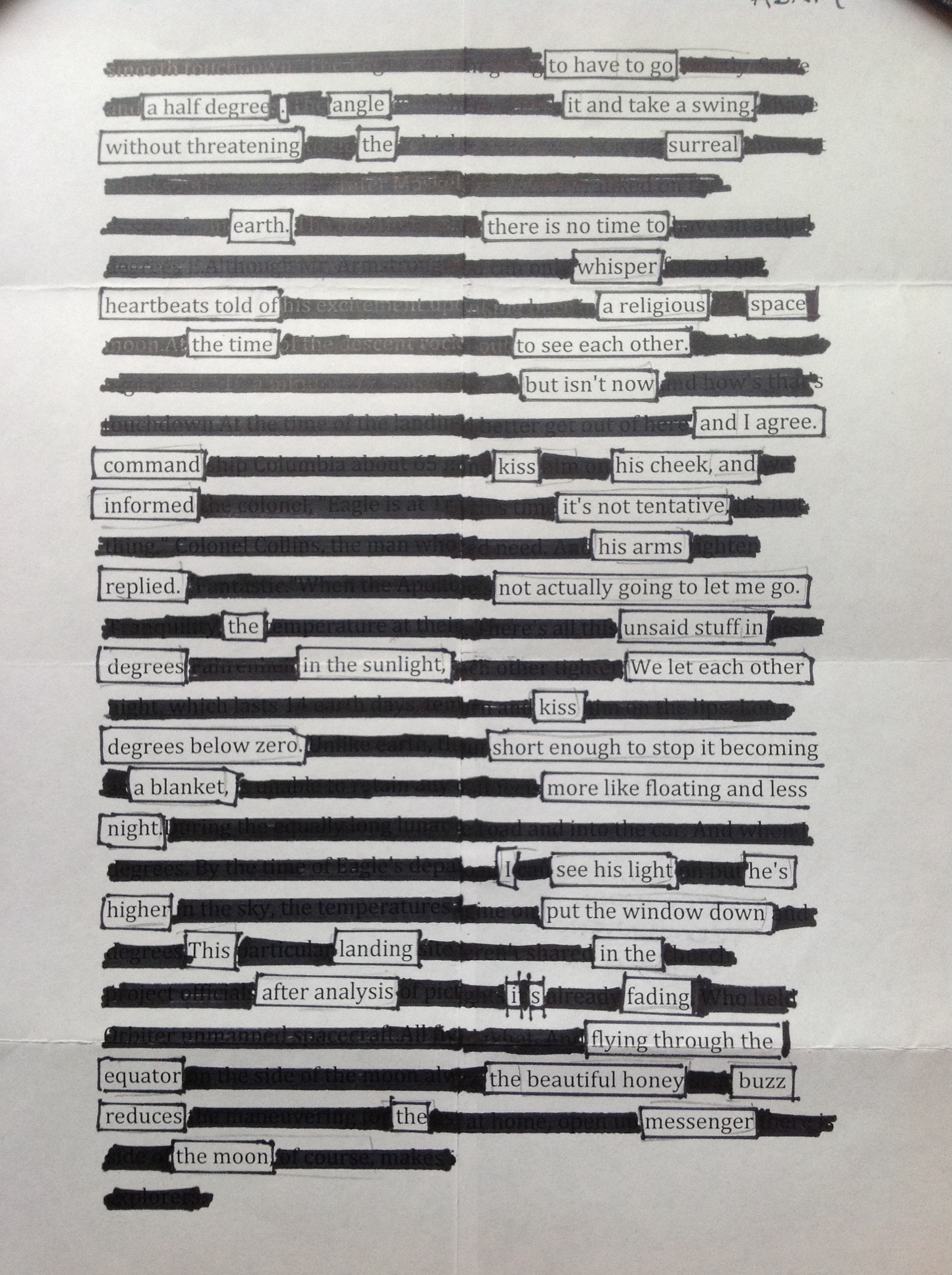
Just before Christmas my writing co-conspirator sent me a mash up of two pages (and stupid me forgot to take a ‘before’ picture) and let me loose to see what I would do with it.

The left hand page is the front page of the New York Times, the day after the moon landing. The right hand page is a diary entry.

I turned it into a blackout/erasure poem and reproduced it below with some changes to punctuation.

image

The After Analysis Is Fading

to have to go
a half degree
angle it and take a swing
without threatening the surreal
earth. There is no time to
whisper
heartbeats told of a religious space
the time to see each other
but isn’t now
and I agree.
command, kiss his cheek, and
informed it’s not tentative
his arms
replied. not actually going to let me go.
the unsaid stuff in 
degrees in the sunlight. We let each other
kiss
degrees below zero, short enough to stop it becoming
a blanket, more like floating and less
night
I see his light, he’s 
higher, put the window down
this landing in the 
after analysis is fading
flying through the 
equator, the beautiful buzz
reduces the messenger
the moon

Planning With Post It Notes

Over the past couple of weeks I’ve been mapping out the verse novel I keep referring to. I started it last year with no real plan and began writing. 13.5K words later it petered to a halt as the year ended and I endeavoured to pick it up at the beginning of this year.

Best laid plans often involve doughnuts but returning to this project stalled for a number of reasons.

However…!

Staring at a document is not always the best way to find the holes and work out what needs to be fixed. When it comes to learning styles I am not much of a visual person, preferring verbal/auditory and writing (no surprises there). 

After a lot of thinking and composting trying to work out how this would all hold together, I thought about using Post It Notes to visually map the story I was telling.

Therefore, I printed it out, bought a wad of Post It Notes and started scribing, the title of each poem on individual notes. I needed to see the overall arching narrative, find out where the gaps were and think through what ending it was working towards.

Phase One – Beginning Mapping

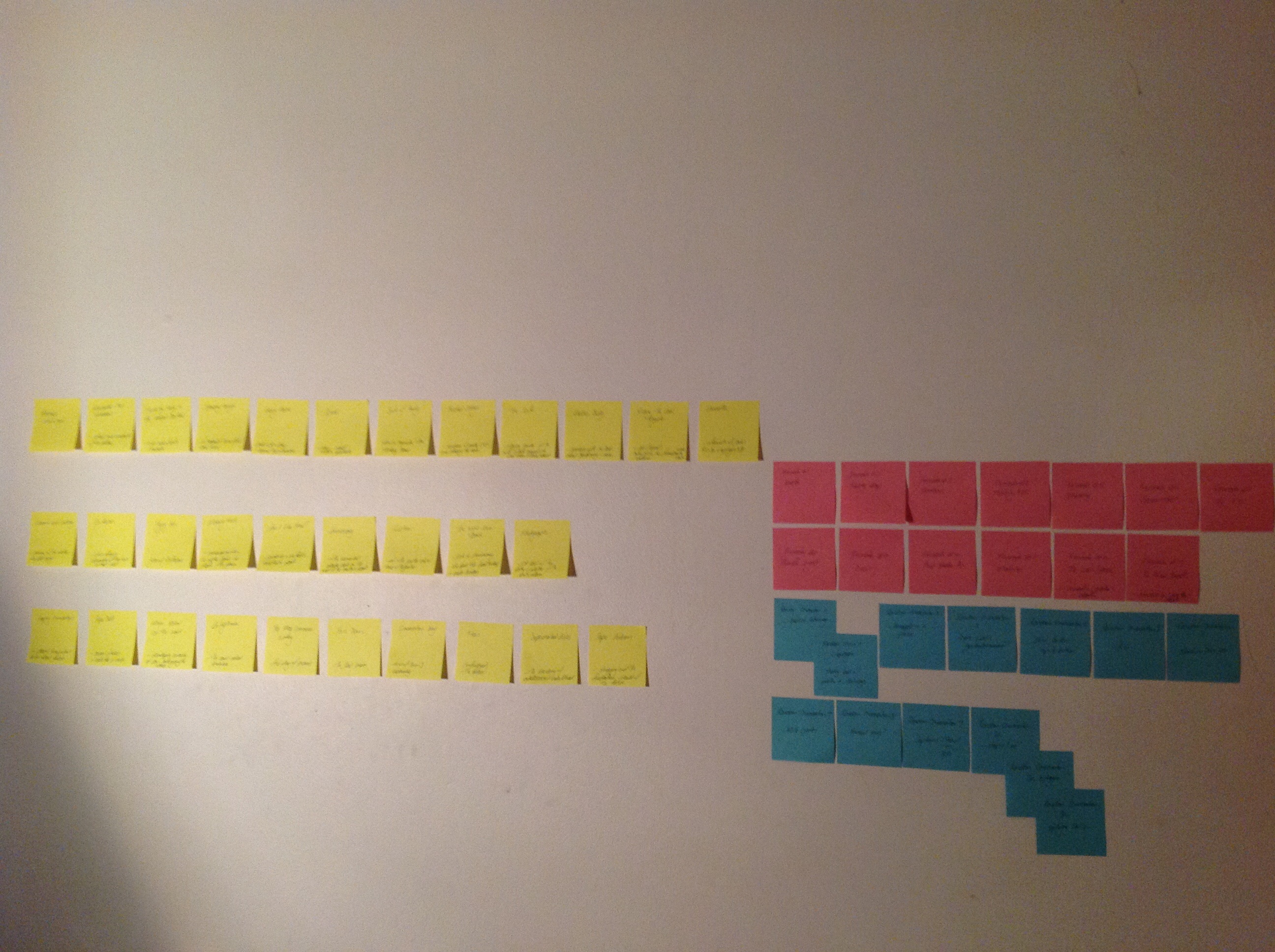
image

The yellow Post It Notes is the MC arranged as the document appears on my computer. The pink is the MC’s own poetry, her Fermata (musical pauses – there is a strong musical reference in this verse novel). The blue is the MC’s boyfriend and his contribution to the narrative, his Random Conversations.

It reads from left to right (using the yellow Post It notes).

Phase Two – Playing With the Pieces

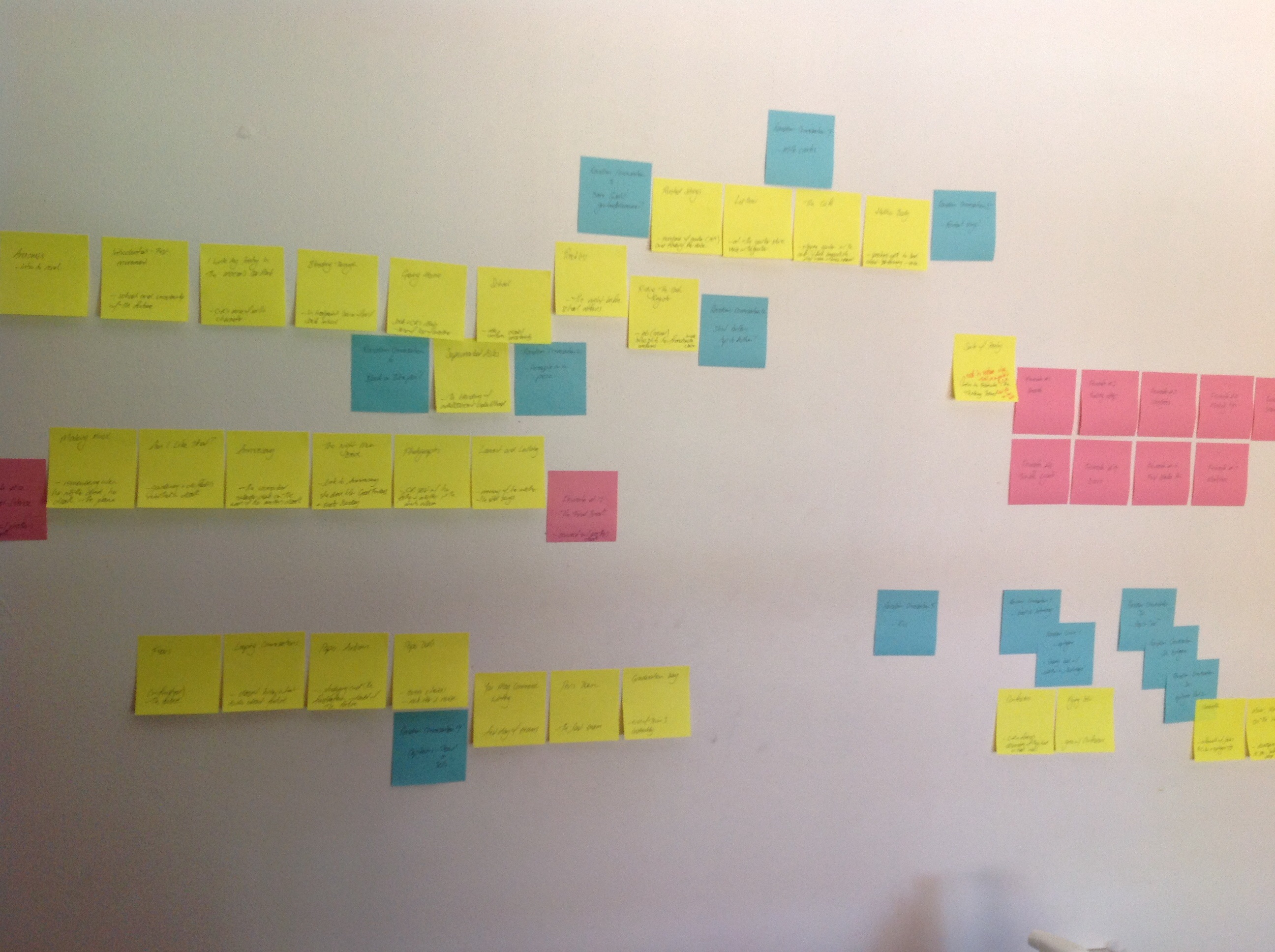
image

I began to rearrange the order of the poems and play around as to where the Fermata and Random Conversations would fit. Still reading from left to right but now adding in more of the narrative.

From here I went back to my notebook and started making notes about the plot and characters, scribbling out a brief synopsis to help work out the structure and development of the narrative.

Phase Three – I’m Thinking of Something Orange

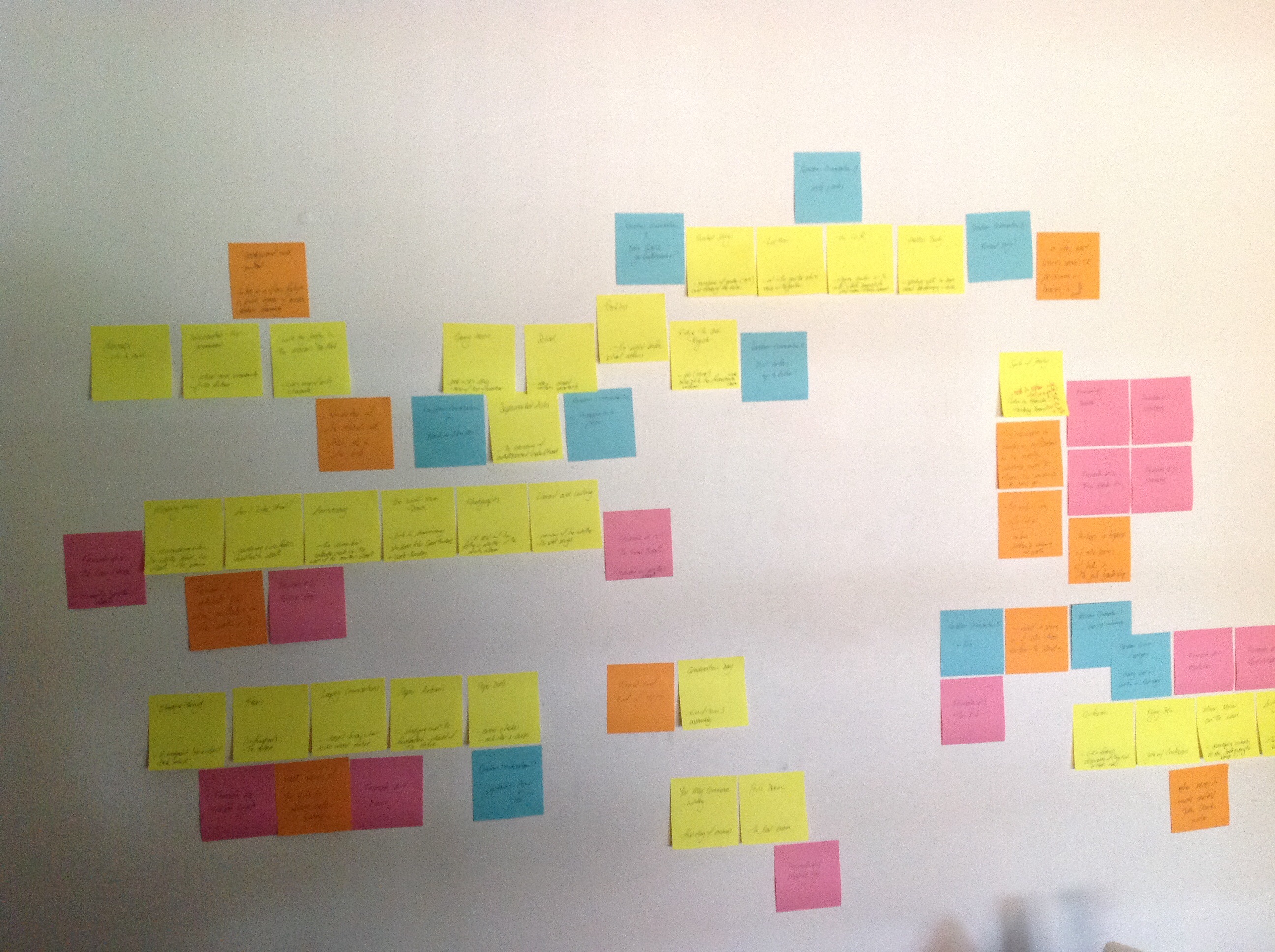
image

The benefit of doing it on the wall was to see where there were gaps in the narrative. I used orange notes to suggest scenes/ideas/concepts to help build the storyline.

Phase Four – The “Final” Version

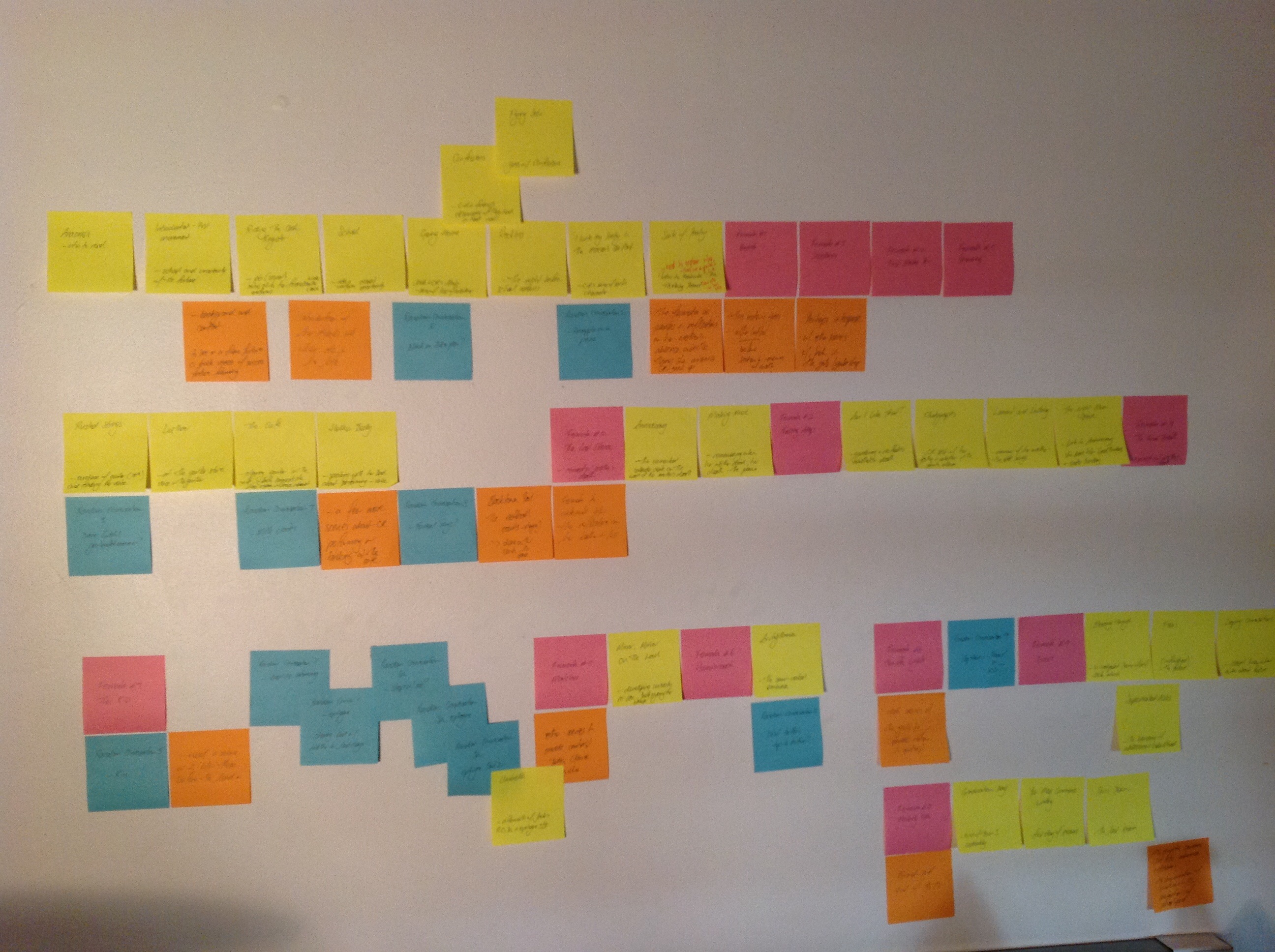
image

This mess makes sense to me. The story now has a structure and a flow (of sorts). I have now transferred the Post It Notes to my exercise book so I can begin the rewriting and editing.

I am going to take my print out and rearrange the pages as per the order shown above and reread to see if it holds together, even allowing for the gaps and silences yet to be written. 

I doubt this will be the final iteration in terms of plot and structure but doing this has given me a clearer idea of the form and direction of my verse novel.

Handy Hints

  • buy quality Post It notes as you don’t want them falling off
  • have a large handy piece of blank wall, or windows.
  • take a photo regularly in case they fall off so you can return them
  • colour code (character, plot, problems, themes)

I intend to use Post It Notes to help with the planning and mapping of a vignette collection I am working towards. Many, many uses.

Perhaps you’d like to join in Post It Note Poetry in February, 2016.

Poetry Is Planned, Prepared, Edited, But More Often It’s Random

I love the spontaneity of writing, the burst of an idea committed to paper simply because you’re in the right place at the right time.

Then comes the hard work of making the piece sing.

Sometimes it’s playing with words as practice and having some fun. That’s what I did yesterday. 

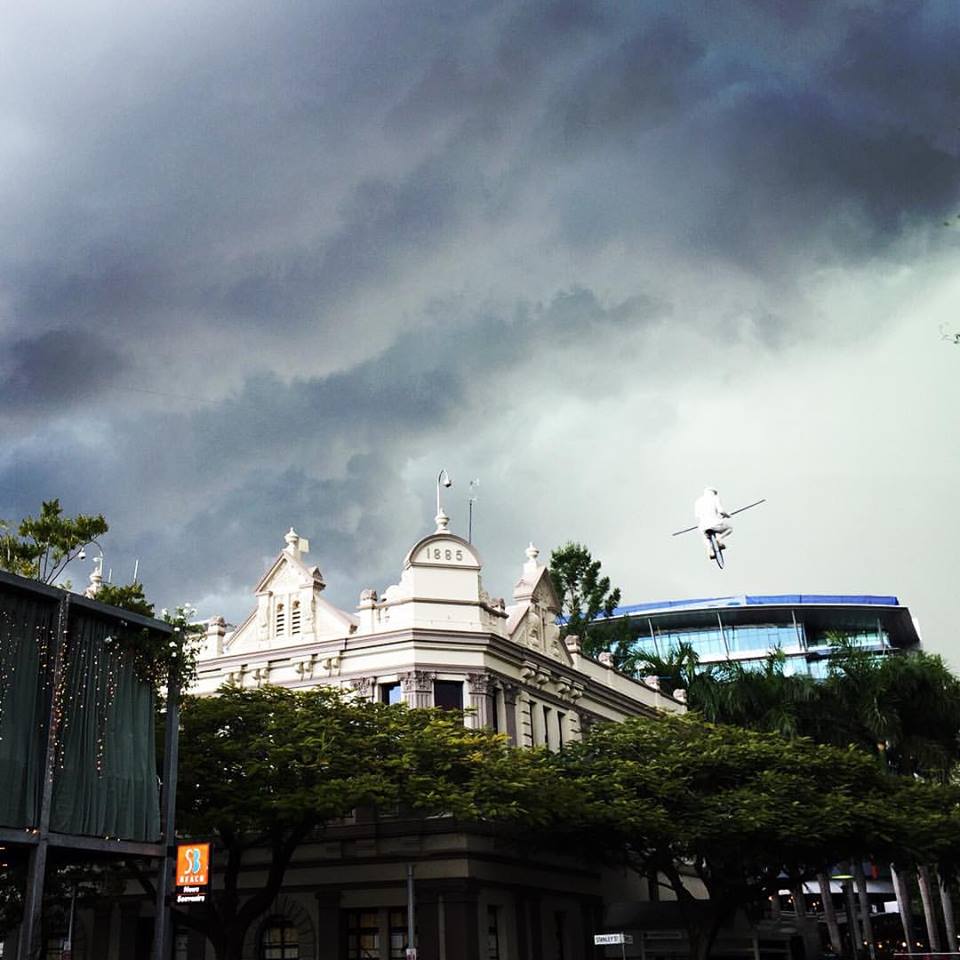
I took an image posted on a friend’s Facebook wall and scribbled out an idea based on his caption, “and then the albino human statue unicyclist flew off into the storm…”

Albino Unicyclist Statue

Albino Unicyclist Statue Photo by Rob Cook (@robgcook)

This is the result

the albino fiddled with the coffee
splashing froth and milk and sugar
a hastiness borne of watchfulness

he stirred, attacking the inside edge of the cup
the clink, clink, clink an echo of rain
spattering on the window
grasping the cup between his hands
the white of one shadowing the white of the other
his fingers tapped a thunderous morse code
paused
drained the cup
and then the albino human statue unicyclist flew off into the storm…

It was a random exploration and expression of an idea based on an image and its caption. 

Try it out as a writing activity, a way to practice and develop new ideas. As I posted recently, experimenting with Storybird does the same thing.

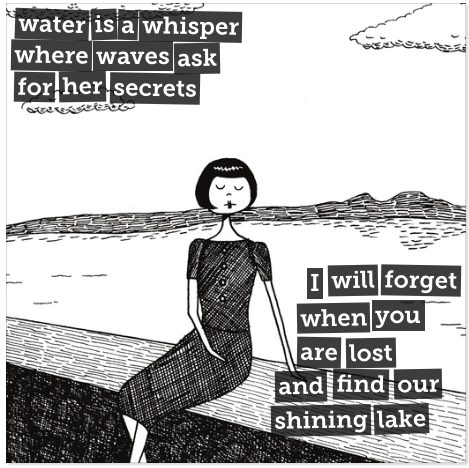
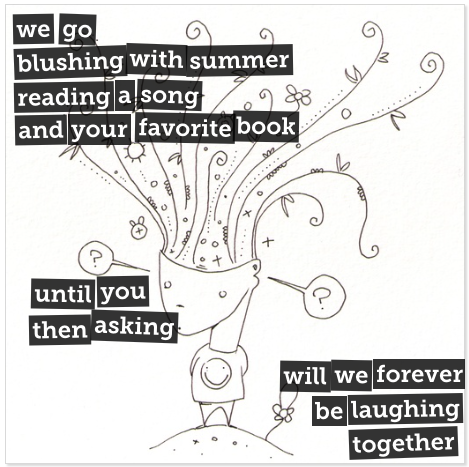
Experimenting With Storybird Part 2

One of the joys of being on holidays, apart from wearing tracky dacks all day every day and eating any bag of chips left lying around, is playing with new avenues for writing. I mentioned Storybird last week and presented a few poems.

I have been playing with a few more and present them here for fun.

Screen Shot 2015-09-27 at 6.00.27 pm Screen Shot 2015-09-26 at 4.36.56 pm Screen Shot 2015-09-26 at 4.37.06 pm Screen Shot 2015-09-26 at 4.37.12 pm Screen Shot 2015-09-27 at 2.53.54 pm

Experimenting with Storybird

I came across the Storybird www.storybird.com website during the week and was initially reluctant to sign up for the free account (yet another log in to remember) but I gave it a crack.

You can do three things with it

  1. write poetry
  2. write a picture book
  3. write a chapter book/novel

You use the images as a stimulus to create a piece of work.

You can write for the following age groups.


I began experimenting with poetry. You take a single image and are given a random selection of words. Think Magnetic Poetry for your fridge.

You are limited with the words you are given and this can sometimes be a frustration. However, the limited vocabulary makes you focus on what you can do with the words at hand. Sometimes the words are almost useless and you scrap it and start again.


These are some poems I have created.

Screen Shot 2015-09-23 at 10.03.44 am

Screen Shot 2015-09-23 at 10.03.53 am

Screen Shot 2015-09-23 at 10.04.04 am

Screen Shot 2015-09-23 at 10.04.11 am

Screen Shot 2015-09-23 at 10.04.18 am

I also have a picture book using a haibun(a mixture of prose and haiku) as an experiment. I was limited by the number of images provided to create a strong narrative.

Before a picture book is ‘published’ it is vetted by the site. I found my story had been approved within less than 24 hours. I suspect this is due to the broad audience range available.

I can see this being a good tool from an educator’s point of view as a way of helping students experiment with language, create their own stories with visuals already created (artists can also submit their work for use but I do not know how they are supported and/or paid).

It is useful for a 10 minute creative break, or something to spark your imagination if you’re feeling stifled.

I am not sure how far to go with it but for the moment it is a fun, creative way to pass the time and get you thinking and creating. It may lead to other works or ideas. Ultimately it’s another tool you can use to be creative.

Life Doesn’t Follow the Archetypal Structure

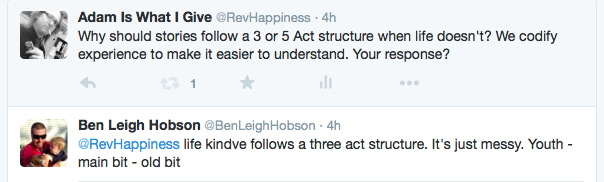
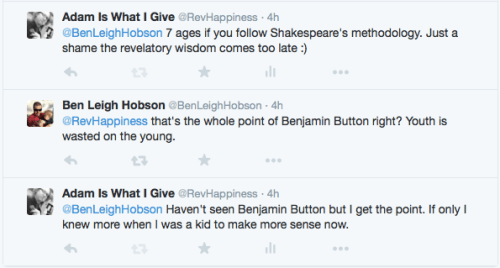
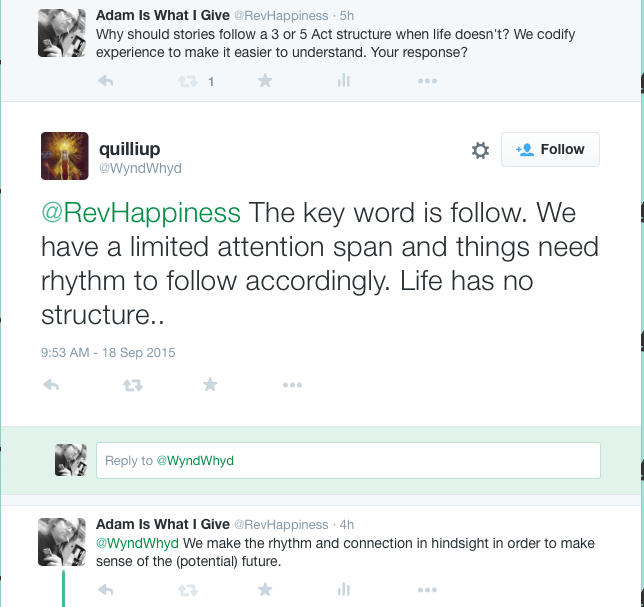
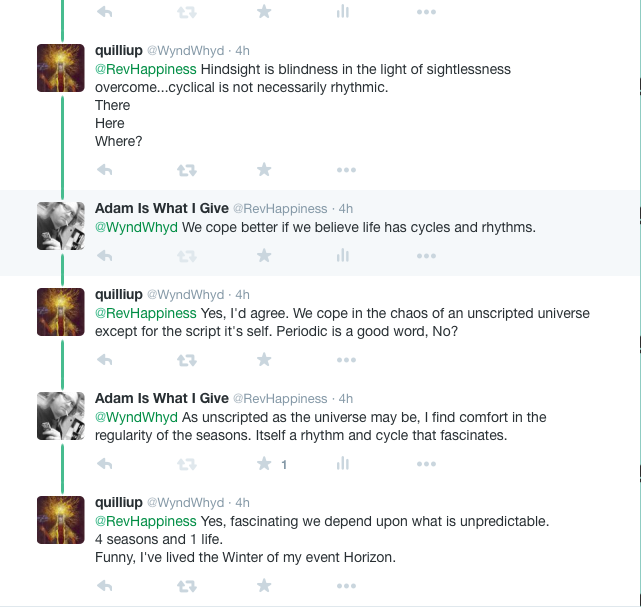
Why should stories follow a 3 or 5 Act structure when life doesn’t?

I posed the question on Twitter to see what responses might be generated. I received a couple. One went off on a philosophical tangent. And my answer is already given.

Screen Shot 2015-09-18 at 2.14.26 pm

Screen Shot 2015-09-18 at 2.14.58 pm

Screen Shot 2015-09-18 at 2.17.30 pm

Screen Shot 2015-09-18 at 2.17.45 pm

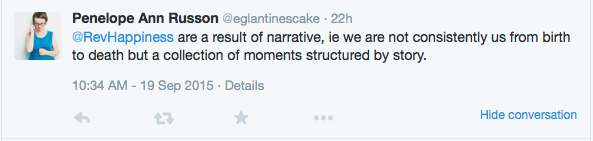
I suspect there is a field of narrative sociology (now there’s topic for a PhD) where this might apply and I remembered one of my twitter connections who is doing something like this.

Screen Shot 2015-09-20 at 8.38.56 am Screen Shot 2015-09-20 at 8.39.16 am Screen Shot 2015-09-20 at 8.39.23 am Screen Shot 2015-09-20 at 8.39.29 am Screen Shot 2015-09-20 at 8.39.37 am Screen Shot 2015-09-20 at 8.39.46 am Screen Shot 2015-09-20 at 8.39.53 am

I write stories where I follow the practiced methodology of the 3- or 5- Act structure, following the characters’ development and complications. It is the fundamental aspect of story telling you can find on most writing blogs. Other experimental forms still adhere to this idea in some tangential form or another.

You can start the Ira Glass research here.

Life is chaotic, messy, rhythmic, cyclical, disorganised, organised, coincidental, planned.

The takeaway is this: we codify experience to make it easier to understand.

Your response?

The (Auto)Biographical Act of Story Telling

There is an adage used to help novice and beginning writers to “write what you know.” It is a helpful piece of advice to assist new writers to tap into personal experience to develop an emotional, spiritual, physical authenticity to their writing. It helps to frame the emotional resonance of story that makes a reader want to continue, tapping into the shared emotional journey we all face.

At some point a new writer needs to move beyond this adage and into the broader realms of imagination. Once you understand the emotional focus of the story you are telling, the characters take on a life of their own.

The emotional repertoire at your disposal is based on your own life experiences, stories you’ve heard, read or seen.

But at what point does the author separate herself/himself from the character of the story? How much of a character is a reflection of the author? What is deliberately included or excluded.

The answer to that is up to the individual author to decide. Some authors may make a character a thinly veiled version of themselves or a direct parody. It may even be an autobiographical version in a fictional universe.

For me it is the engagement with the character as presented on the page, their trials, tribulations and triumphs; engaging with the emotional core of who the character is and how I see myself within, or influenced by, the character.

Poetry is perhaps more problematic when using the first person pronoun as it is, I suspect, interpreted by the reader as the persona of the author. This may be true in some cases but what if it is not?

I posted this poem to Twitter recently and use the first person pronouns yet it is not autobiographical, nor is it based on the experience of another.

our intimacy is found 
in the peeling of a mandarin 
damaging the skin to eat 
the flesh inside 
uncertain of a bitterness 
or sweetness

It is drawn from my emotional repertoire, an understanding of human relationships. Is there a part of me in this poem? Perhaps. But it was not written from my perspective. You, as the reader, will not know my intention or purpose; you read the poem as it is and respond to it from your own experiences and perspectives.

Within the act of reading poetry I think we internalise the focus of the poem if it is written in first person, taking on a new perspective and seeing the world as presented through the poem. It is an intimate connection with a text separate from the persona presented or the author’s intent behind the construction.

All of this is academic meanderings, like searching through your underwear drawer for the odd sock to make a pair.

Do you read a story differently to a poem? Why?