Tag Archives: life in general

Photo A Day In January – Part 2

Here is the second collection of images from the Photo A Day in January challenge.

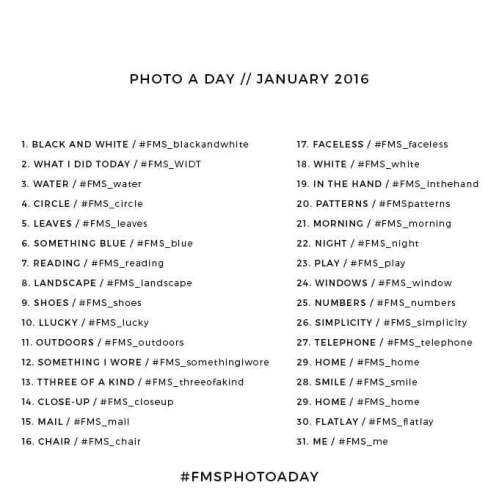
A reminder of what this looks like:

FB_IMG_1451775280415

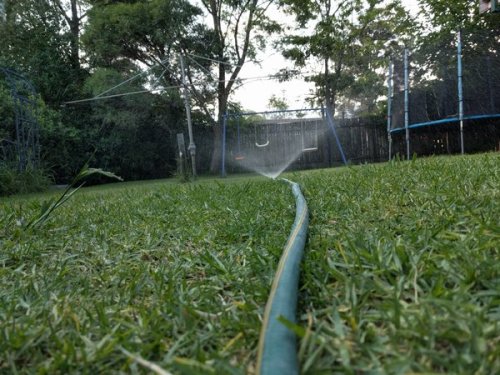
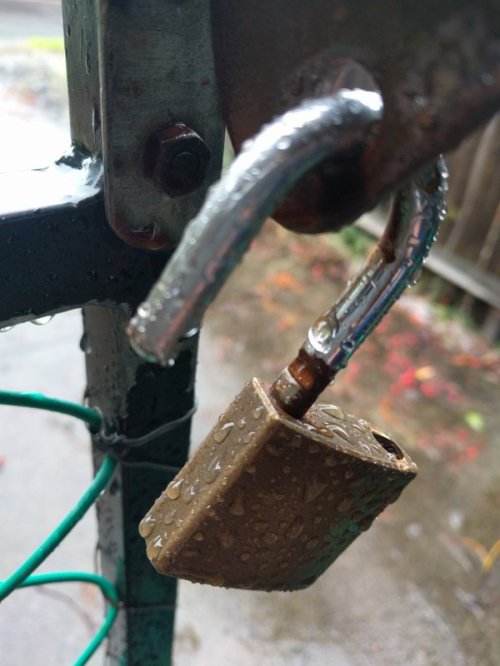
Day 11 – Outdoors

CYbFbQtUkAAMpUx

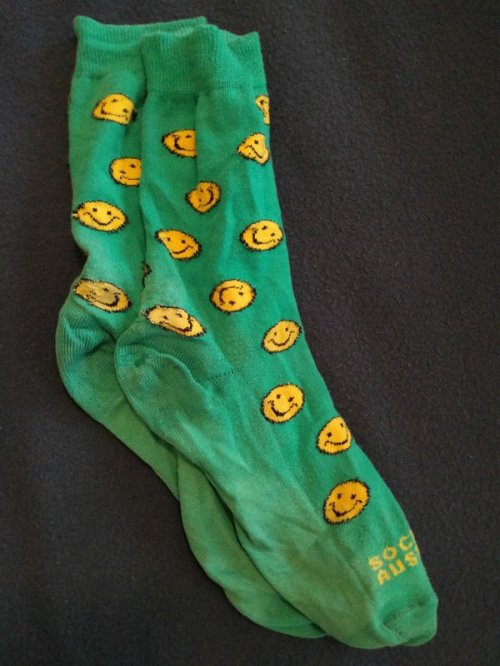
Day 12 – Something I Wore

I wore these for a friend's wedding almost 20 years ago. They have held up really well. Still wear them from time to time.

I wore these for a friend’s wedding almost 20 years ago. They have held up really well. Still wear them from time to time.

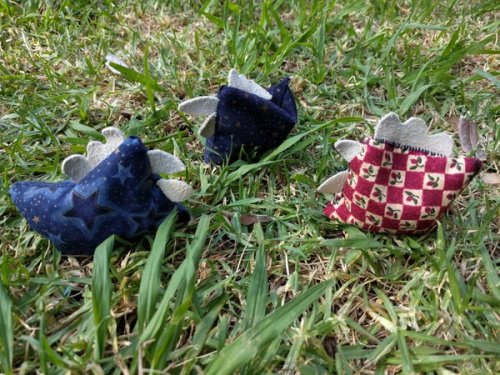
Day 13 – Three of a Kind

Tiny beanbag chickens

Tiny beanbag chickens

Day 14 – Close-Up

CYtZP4UUMAE8lNc

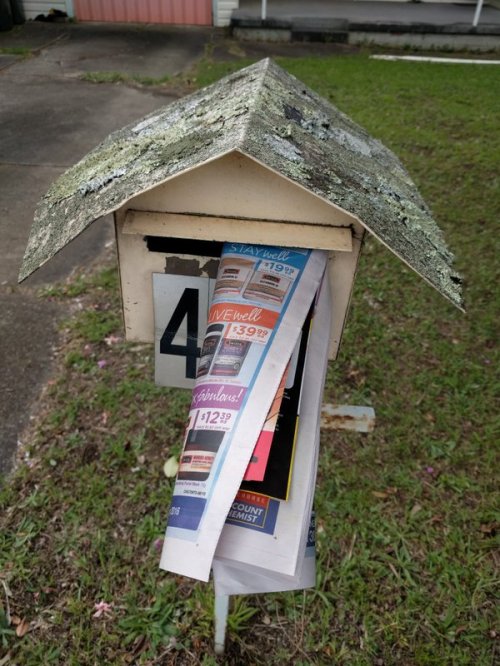
Day 15 – Mail

CY0gYRgVAAADY_p

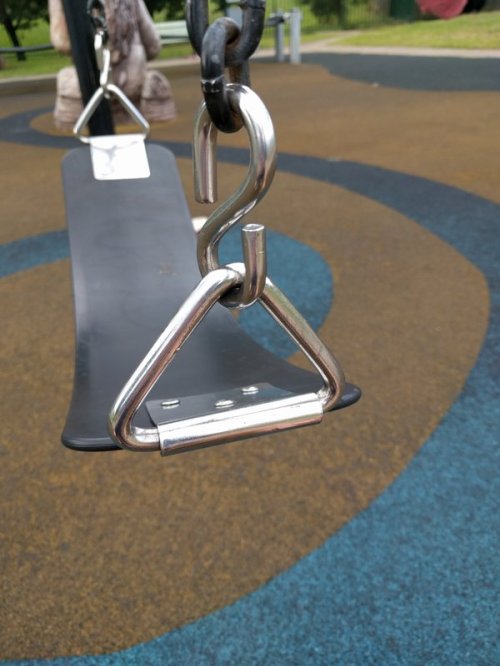
Day 16 – Chair

CY0g2kwUEAIqILa

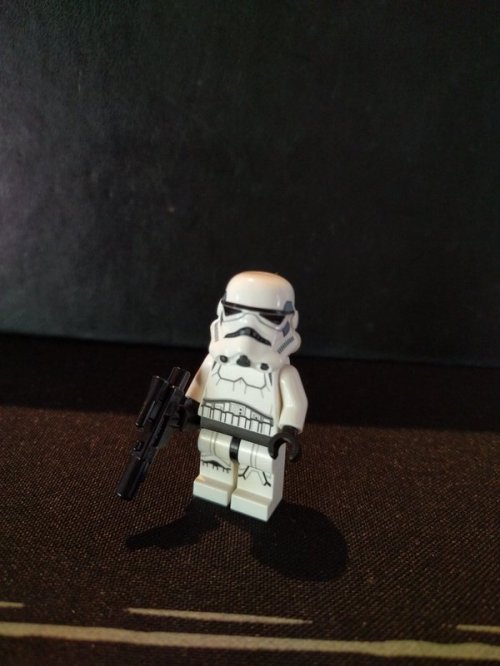
Day 17  – Faceless

CY9MTgkVAAIa9a-

Day 18 – White

CZDe2EEUMAEvVsB

Day 19 – In the Hand

CZH10hWUAAA3tiI

Day 20 – Patterns

CZNquK4WIAE-plb

A New Year’s Writing and Reading Reflection

I had a little twitter brain explosion one afternoon when I was thinking about the editing I was planning for later that evening on a short piece of flash fiction. Think of this as a series of brain farts, a Macbeth if you will, “a tale told by an idiot, full of sound and fury, signifying nothing” (one of my favourite lines from Shakespeare).

Why do I love to write? Because I love to read. The interplay of language to describe, emote, challenge, question, intrigue & entertain.

As readers we have favourite sentences or passages that capture the essence of our emotive response, better than our own words.

Passages w/ rhythm, illogical allusions that resonate, visceral gut punch, emotional core of who we are erupts as a volcano

These are the sentences we use as mantra, prayer, statement of intent, flirtation with a lover, standard of character.

E.g. ‘To be or not to be’ or ‘The Lord is my shepherd,’ almost cliche yet strike at our heart’s vortex & echo with symbolism. 

This is why I read and write, and why I believe reading is so important, so necessary, so vital to our humanity.

The Year That Was; The Year That Will Be

The end of a calendar year often marks a moment of reflection, contemplation and wondering why the toilet paper runs out at the most inopportune time.

And so it is with me. 

Side note: I know someone who uses the Chinese New Year as their starting point for a creative year. I’m seriously considering using the New Financial Year (June 30/July 1) as  my starting point. That way, if I stuff up the first half of the year I can reboot in the second half. Win.

In terms of reflection here’s the tl;dr version – I achieved nothing of substance and note. No progress on synopsis, novella, verse novel, short stories. Many half started efforts, scribbled poems, half-baked ideas. Nothing finished.

I could list a rather long inventory of excuses, reasons, happenstance or circumstance for it all.

Four Takeaways from This Year

  1. It’s virtually impossible to rebuild when you’re burnt out. Even doing small, seemingly achievable pieces can be a chore and have no significance.  
  2. Indecision and lack of focus are detrimental to making progress
  3. Without setting realistic goals and targets you will get nowhere.
  4. I didn’t read enough.

Four Steps to Making Progress Next Year

  1. Read more frequently – feed the soul and fill the well. This includes more drumming practice (too often neglected as a way of refilling the well).
  2. Set realistic goals and targets. I received a Pilot Press diary this year to keep track of my goals and targets. I have already set up my goals for January.
  3. Take care of my mental health to avoid burn out. Learn when to say “No,” when to say “Yes,” and work out what is important. Prioritise.
  4. Get Stuff Done. This is my mantra for 2016. 

May your 2016 be a productive year. 

Community Over Competition

Screen Shot 2015-09-30 at 8.56.43 pm


I posted this yesterday and it was what I believe in.

I want to develop creative communities for amateurs and professionals where they can meet in real life and online to support and encourage, critique and develop, brainstorm and collaborate.

Gathering artists, musicians, writers from different creative fields to be a support network. We all tend to congregate with like minded artists (for me it’s writers) but how much more would we gain if we also met with other creatives to expand our thinking?

Creativity is about developing and championing community and the individuals within them. 

Who will you champion in your community?

Life Doesn’t Follow the Archetypal Structure

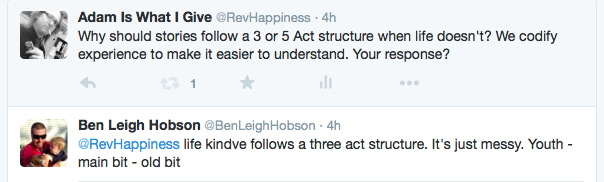
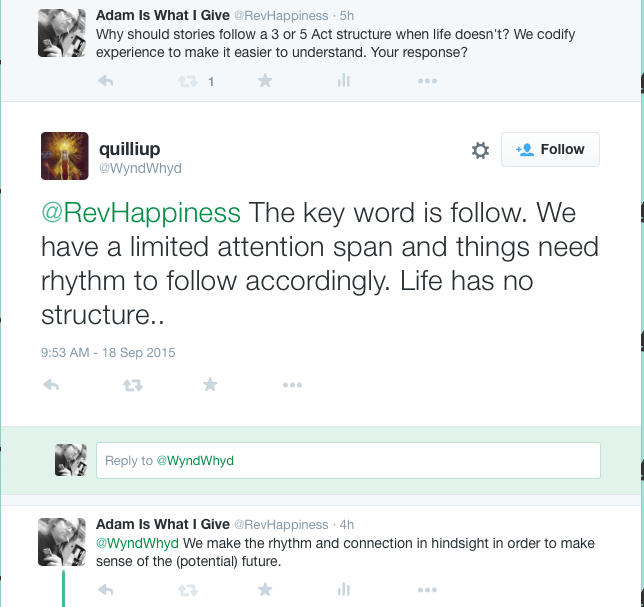
Why should stories follow a 3 or 5 Act structure when life doesn’t?

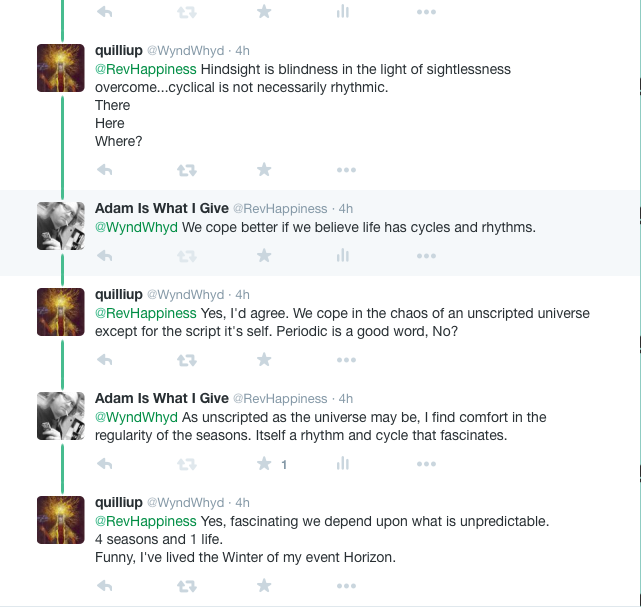
I posed the question on Twitter to see what responses might be generated. I received a couple. One went off on a philosophical tangent. And my answer is already given.

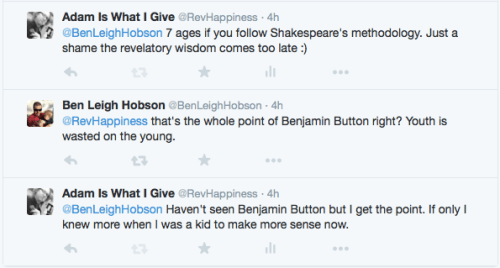
Screen Shot 2015-09-18 at 2.14.26 pm

Screen Shot 2015-09-18 at 2.14.58 pm

Screen Shot 2015-09-18 at 2.17.30 pm

Screen Shot 2015-09-18 at 2.17.45 pm

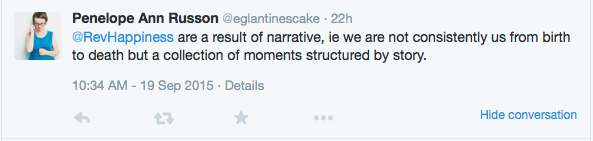
I suspect there is a field of narrative sociology (now there’s topic for a PhD) where this might apply and I remembered one of my twitter connections who is doing something like this.

Screen Shot 2015-09-20 at 8.38.56 am Screen Shot 2015-09-20 at 8.39.16 am Screen Shot 2015-09-20 at 8.39.23 am Screen Shot 2015-09-20 at 8.39.29 am Screen Shot 2015-09-20 at 8.39.37 am Screen Shot 2015-09-20 at 8.39.46 am Screen Shot 2015-09-20 at 8.39.53 am

I write stories where I follow the practiced methodology of the 3- or 5- Act structure, following the characters’ development and complications. It is the fundamental aspect of story telling you can find on most writing blogs. Other experimental forms still adhere to this idea in some tangential form or another.

You can start the Ira Glass research here.

Life is chaotic, messy, rhythmic, cyclical, disorganised, organised, coincidental, planned.

The takeaway is this: we codify experience to make it easier to understand.

Your response?

The (Auto)Biographical Act of Story Telling

There is an adage used to help novice and beginning writers to “write what you know.” It is a helpful piece of advice to assist new writers to tap into personal experience to develop an emotional, spiritual, physical authenticity to their writing. It helps to frame the emotional resonance of story that makes a reader want to continue, tapping into the shared emotional journey we all face.

At some point a new writer needs to move beyond this adage and into the broader realms of imagination. Once you understand the emotional focus of the story you are telling, the characters take on a life of their own.

The emotional repertoire at your disposal is based on your own life experiences, stories you’ve heard, read or seen.

But at what point does the author separate herself/himself from the character of the story? How much of a character is a reflection of the author? What is deliberately included or excluded.

The answer to that is up to the individual author to decide. Some authors may make a character a thinly veiled version of themselves or a direct parody. It may even be an autobiographical version in a fictional universe.

For me it is the engagement with the character as presented on the page, their trials, tribulations and triumphs; engaging with the emotional core of who the character is and how I see myself within, or influenced by, the character.

Poetry is perhaps more problematic when using the first person pronoun as it is, I suspect, interpreted by the reader as the persona of the author. This may be true in some cases but what if it is not?

I posted this poem to Twitter recently and use the first person pronouns yet it is not autobiographical, nor is it based on the experience of another.

our intimacy is found 
in the peeling of a mandarin 
damaging the skin to eat 
the flesh inside 
uncertain of a bitterness 
or sweetness

It is drawn from my emotional repertoire, an understanding of human relationships. Is there a part of me in this poem? Perhaps. But it was not written from my perspective. You, as the reader, will not know my intention or purpose; you read the poem as it is and respond to it from your own experiences and perspectives.

Within the act of reading poetry I think we internalise the focus of the poem if it is written in first person, taking on a new perspective and seeing the world as presented through the poem. It is an intimate connection with a text separate from the persona presented or the author’s intent behind the construction.

All of this is academic meanderings, like searching through your underwear drawer for the odd sock to make a pair.

Do you read a story differently to a poem? Why?

The Texts of a New Generation


With a gentle nod to the advertising of the 80s and 90s in the title of this post I want to explore the idea that during your formative years, especially teens to early 20s, what you consume in terms of culture (music, film, tv, magazines etc) shapes your decision making processes and actions.

It was sparked by a story I read where the music and lyrics of the 70s, in particular Pink Floyd, David Bowie and the Ramones, shaped the zeitgeist of the culture and in turn shaped the decision making and perspective of the main character to the point when he had reached his late 30s that it was almost too late.

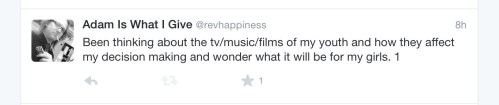
This sparked a brief twitter mind dump, collated here for your perusal, about what I watched, listened to, and consumed in my youth, that of the late 80s and early 90s. This in turn made me wonder what my girls (aged 10 and 8) are watching and listening to, and will be watching and listening to (right now my wife and I have influence and decision making over what they watch and listen to but in the years to come they will develop autonomy for their consumption of culture). 
image

image

image

image

I am a child of the 80s and 90s, the last of Generation X. I grew up listening to thrash and speed metal, hard rock, U2. I watched Friends, Mad About You, early Simpsons, The Cosby Show, Family Ties, Seinfeld, X-Files, ET, Raiders of the Lost Ark, Terminator 2 and much more.

These are the cultural products I consumed and in turn have shaped my thinking and decision making. The catch cry of that period was a balance between Gordon Gecko’s mantra, “Greed is good” and the turbulent introspective narcissism of grunge, the highlighting of the individual as greater than the whole and you don’t need nothing but a good time (hair metal of the 80s/90s was priceless).

Where does that leave us now, in the throes of middle age, with children and a mortgage, and perhaps a sense of disillusionment? Have the promises of our youth been fulfilled or is it still a romantic notion that will never be? 

Every cultural touchstone has a family tree, a connection to the past from where it developed its departure point. We wouldn’t have South Park, Family Guy or American Dad if it wasn’t for The Simpsons. 

I see my students consuming the pop of Katy Perry, Rihanna, Kanye; the sexual mores of Sex and The City, Girls, Modern Family. Where will they be in their middle age after feasting on the values of modern pop culture?

Again, I’m not positing a particular point of view or have any clear answers (although there are no doubt cultural commentators and sociologists who study this and have better knowledge; I’m merely brainstorming).

Here’s the takeaway: be a critical consumer; think about the attitudes and values a text is communicating. Do you agree with it or not?

And for creative people, what does that mean for us in terms of what we create?

  • Are we supporting or subverting current values, attitudes and mores?
  • Are we condemning, critiquing or questioning the focus of our culture?
  • Are we aiming to improve or develop our culture, because, yes, art/film/literature has a point.
  • Are we creating for the present or for the future? This is an important question as I think our answers encompass both. We create for the now, a reflection on the where we are at with our thinking, and for the future as a marker of what we wish to become as artists.

No answers. More questions. A starting point for a conversation. Have at it in the comments. 

Why Do You Write? A Revision

Almost four years ago I wrote this post, The Reasons Why. It lead to Light My Way – A Creative Manifesto. It was first and foremost an exploration of why I write. It also examined why others write. 

This is my manifesto:

I write because I want to tell a story, but not just any story.

I write because I want to tell the story of those who are not heard.

I write because I want to tell the story of those who cannot speak.

I write because I want to tell the story of those who are disempowered.

I write because I want to tell the story for those who cannot.

I write because I believe that telling a person’s story is integral in understanding who they are.

I create art to speak into the darkness, that I may be a light for others to ignite their own flame and walk clearly.

The other night I was talking with my collaborator, Jodi, via Skype and she was discussing her social media sabbatical. Part of the sabbatical involved a three-week camping trip to the middle of nowhere in Central Queensland, without phone reception. It allowed her time to revisit the fundamental question of “Why do I write?” 

For her, the stripped back existence allowed her to return to what it was about writing that inspired and motivated her.

Every so often we need to pause where we are and revisit why we write and see if it still aligns with the vision we had. It may need a revision, a realignment, a reappraisal, a reworking.

If you’ve moved away from the core reason for writing, you’ve lost vision.

I returned to my creative manifesto and asked if these were still the reasons I wrote. I am pleased to respond in the affirmative. It’s a good check, perhaps once every six months or once a year, to reevaluate why you write to ensure you are aiming to produce the best work you can.

Why do you write? Have you made a revision of your purpose?

Odds and Sods Behind the Lounge

The last week of the school term is fast approaching, extending to two weeks out of the classroom. In theory, this is free time. In reality, it’s marking, preparation for lessons, planning and sharpening pencils.

What it means for my writing is hopefully a little more time to work on a couple of projects. I have in mind the completion of new drafts for 2 short stories, tidying up a couple of poems, and the completion of the first draft of my verse novel.

It is very ambitious and I’ll be disappointed if I can’t get some of these projects up to speed. Must stay focused and on task. No distractions.

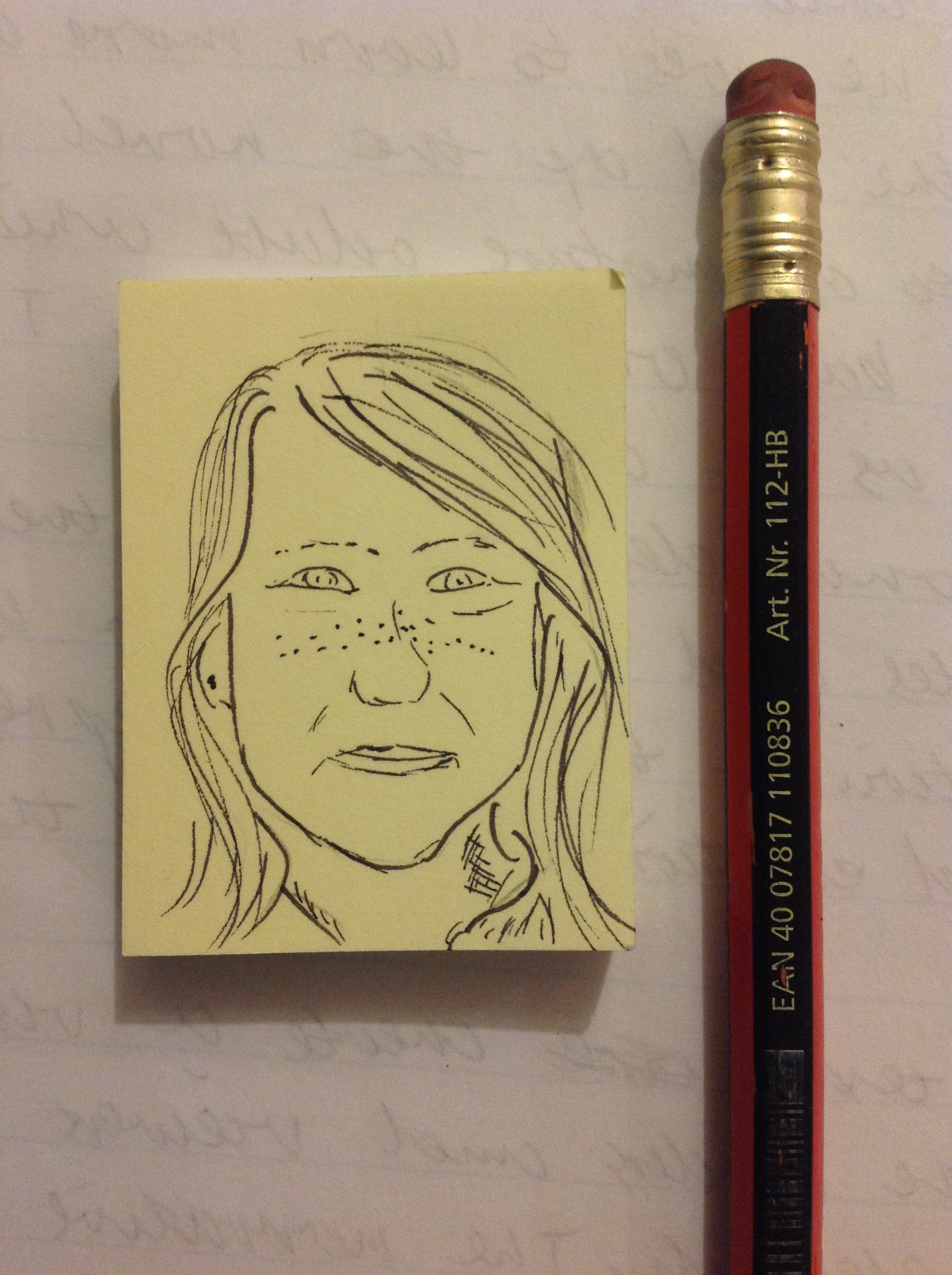
Speaking of distractions, on a whim the other night I opened my iPad, found a picture of my daughter (Miss #2) and attempted to draw it on a tiny Post It Note (the pencil gives you an idea of the scale).

This was the result.

image

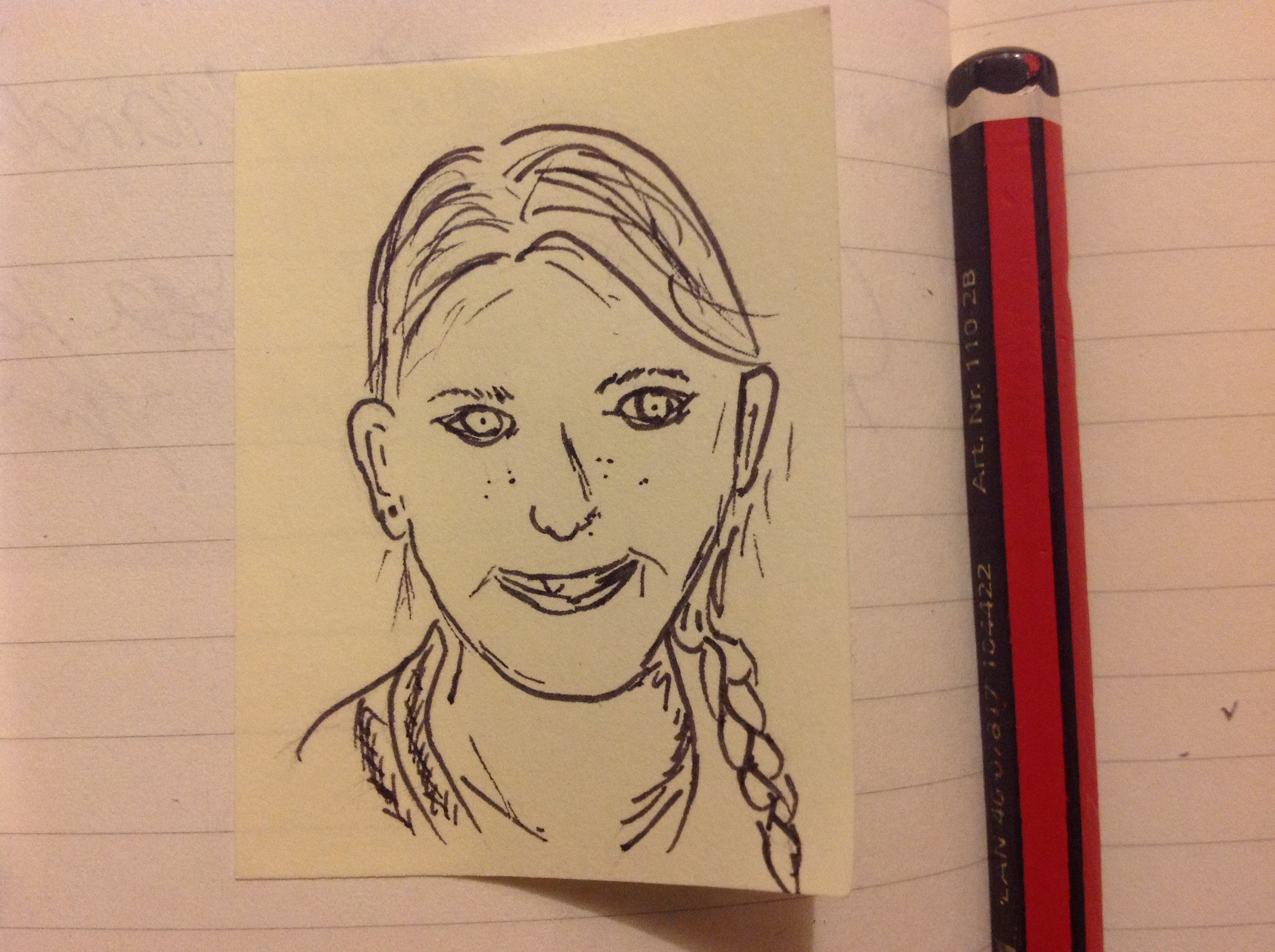
But, what ever you do for one child, you must reciprocate for the other. My attempt at drawing Miss #1 was not as good (it’s the eyes; they’re not right).

image

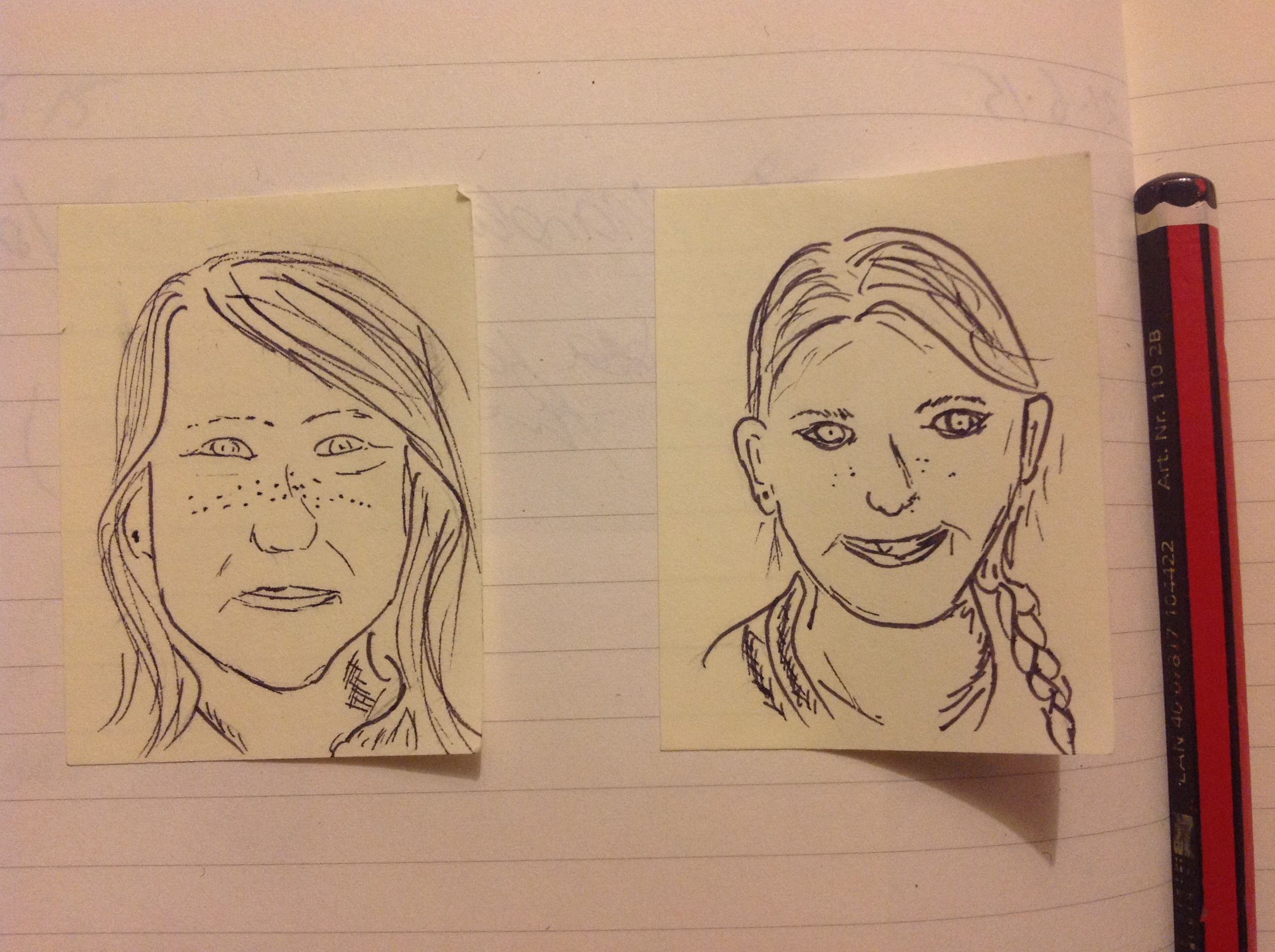
Side by side for comparison; Miss #2 on the left, Miss #1 on the right.

image

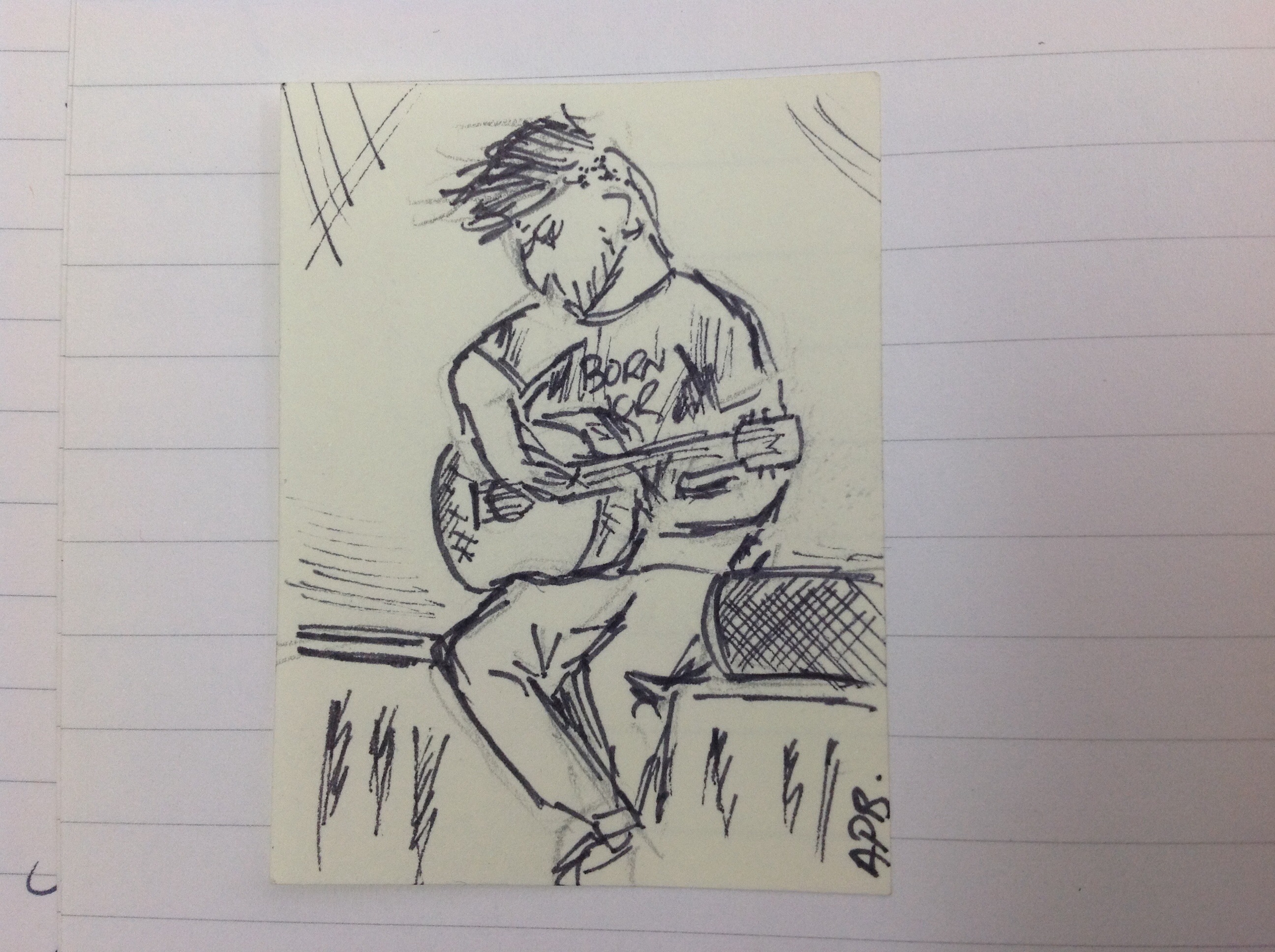
Unperturbed, I took my pencil and pen to band practice and sketched one of the guitarists during set up and sound check. The proportion is wrong, but it’s not bad.

image

Side note: faces are SUCKY to draw. I can never get eyes and noses and lips in the right places.

Learning Experiences (nothing spoils fun like finding out it builds character – Bart Simpson): I am not very good at art but I don’t care.
It’s practice; the development of a skill.
It’s another way of being creative, unlocking the unconscious parts of the brain while it’s distracted learning a new skill like drawing.
I embrace the suckiness and enjoy the process.
And I’m not ashamed to post my early attempts here.

Creativity is about fun and play, and messing about with boats. Hang on, that was Rat. Never mind, move on. Nothing to see here.

Don’t forget to play with your food from time to time and learn Roman numerals. I’m off to draw.

image

Those Who Can, Do AND Teach

There is a saying: “Those who can, do. Those who can’t, teach.”

What a load of bollocks.

It’s said as an insult; a derogatory, snide remark to elevate one person and denigrate another.

As a teacher, it’s particularly insulting because it’s my profession, my career, my calling. To teach is to pass on knowledge, information, insight, technique, skills, habits.

To say those who can’t, teach, is to abrogate responsibility of all people to teach one another. 

Fundamentally, every interaction is teaching. We give it different names or titles like coach, mentor, professor, guru, but the interaction is the dissemination of knowledge and the acquiring of skills.

Teaching is an aspect of our relationships with one another. As parents we teach our children right from wrong, good from bad. We teach them to tie shoelaces, ride bikes, make sandwiches, treat people with dignity and respect, how to make friends. We should also teach them to create. Never let a child feel like creativity is a waste of time.

There are skilled and gifted teachers in every creative endeavour and every profession. While they may not receive the praise and accolades of some of their peers at the higher echelons, or their names are not well known, their work is far more significant. They allow the next generation to stand on their shoulders and see further. In turn, they pass on their skills and knowledge to the next generation, hoist them onto their shoulders and help them see further still.

To teach is to create. It creates interest, passion, wonder, curiosity, desire, engagement, questions. It creates a learner.

A student is never greater than the master. No, a master should ensure that the student IS greater than the master. This is creativity. This is teaching. Equip the student with the necessary skills and understandings to excel.

Explore the “family tree” of an artist in whatever medium. See where they came from, who they learned under, what ideas they developed and passed on. Know the origins of your art. 

Understand you can teach someone. It doesn’t require a degree, time in a classroom. Teaching is done in the quiet moments of conversation, time shared over tea and doughnuts.

Those who can, do AND teach.