Tag Archives: just because of thoughtfulness

Handwritten Pages #2

The second instalment of Handwritten Pages. This one was inspired while reading Amanda Palmer’s book, “The Art of Asking.”

I cannot recommend her book highly enough if you are a creative person. It is a heartfelt and affirming read; quite challenging to accept her premise sometimes but as a creative person there is such a wealth of ideas to gain from it. If time is of the essence, listen to her TED Talk.

IMG_20160511_211904

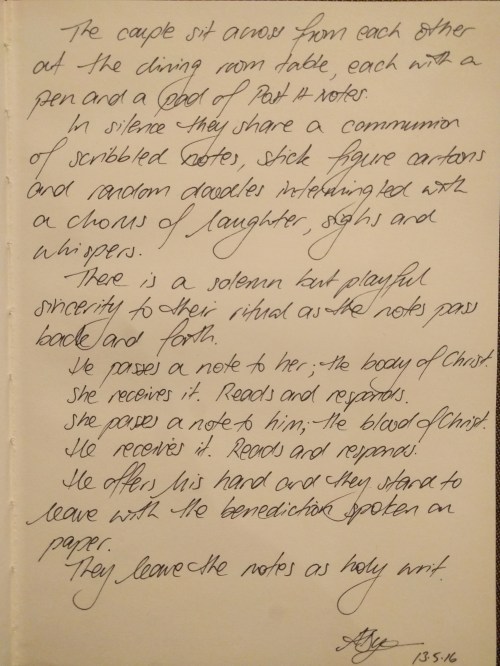
The couple sit across from each other at the dining room table, each with a pen and a pad of Post It Notes.
In silence they share a communion of scribbled notes, stick figure cartoons and random doodles intermingled wiht a chorus of laughter, sighs and whispers.
There is a solemn but playful sincerity to their ritual as the notes pass back and forth.
He passes a note to her; the body of Christ.
She receives it. Reads and responds.
She passes a note to him; the blood of Christ.
He receives it. Reads and responds.
He offers his hand and they stand to leave with the benediction spoken on paper.
They leave the notes as holy writ.

Handwritten Pages

What I don’t do enough of is write by hand, letting the pen and paper become an exploration. Yesterday I was inspired by a blog post on calligraphy to use my notebooks more effectively.

I know writers who use Julia Cameron’s (The Artist’s Way) technique of morning pages. The idea is you free write first thing in the morning as it clears the head and channels a creative flow. Mornings don’t work for me but the concept of free writing association can be done at any time. 

I want to use a specific notebook of mine for this exercise as it is unlined meaning I can use the space on the page to convey meaning as much as the words do. I can alter my handwriting style, use colour, draw shapes or doodle images. Over the coming months I will share more handwritten explorations.

Below is the first attempt at using a notebook for handwritten explorations. Nothing fancy. Just text. 

IMG_20160506_070148~2

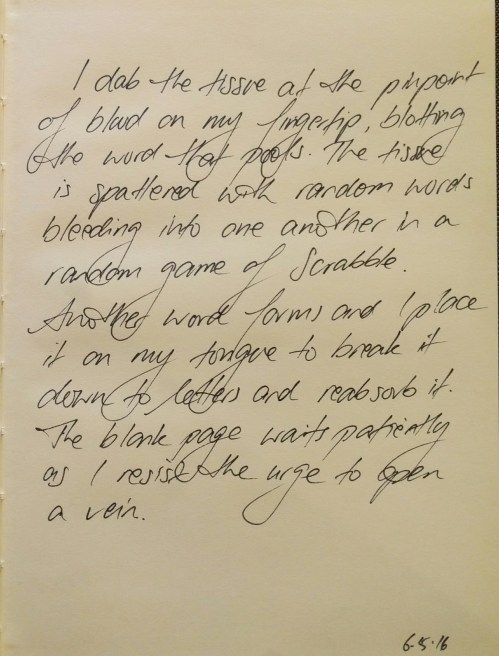
“I dab the tissue at the pinpoint of blood on my fingertip, blotting the word that pools. The tissue is spattered with random words bleeding into one another in a random game of Scrabble. Another word forms and I place it on my tongue to break it down to letters and reabsorb it. The blank page waits patiently as I resist the urge to open a vein.”

Book Versus Movie Part 2

A little while back I argued in Book Versus Movie that there is much to gain from seeing film as a different language of art. 

But I’ve been thinking about it some more and watching The Book Thief on tv recently crystallised another aspect of the book versus movie debate. I didn’t watch the entirety of the movie (I will watch it in full one day) for one reason that  I hadn’t thought of: voice.

I love The Book Thief. It is a magnificently written book and one of my favourites. Death narrates the story and it is this voice, and the voice of the author, that makes it such a stirring novel for me. While watching the film, I didn’t have the same sense of voice. The film looks superb, the characters well defined, but it was the lack of authorial voice that I was expecting that made me turn off. 

Similarly, my viewing of The Lord of The Rings is informed by my reading of the novels. There are parts that I love and adore in the film, and others that are just downright cheesy and lacking the right voice to give the scene its proper gravitas or humour. The voice of LOTR is sometimes as dry as mortuary dust but that is what gives the novel is authenticity and pathos and humour.

Voice is one of those almost intangible aspects of writing; you know what voice you like, those you do not, those that sound mellifluous, those that sound like a Year 9 class on Friday afternoon. I think voice works for cinema too but it is more a chorus.

The “book was better than the movie” debate is too simplistic and we need to unpack it to understand why it is said, and whether we believe it or not. Both are art forms, with different voices and different modes of production, and should be treated as such. To simply divide is to denigrate one art form, extol the other and the division is not helpful. 

Appreciation and understanding is the aim.

One Image, Two Conclusions

Last Friday I had a shocker of a day at work; the end of a long and tiring week which meant that I did not shower myself in glorious brilliance. And, as they say, the hits kept on coming.

It was nothing earth-shattering and it didn’t affect me directly but a piece of news that hit me at my weakest in terms of creativity and my own writing progress because over the past few months my writing time has suffered due to work commitments, and the ability to find the mental and emotional energy was sorely lacking. And it manifested itself in frustration and, if I am at all honest, jealousy.

I hit up a creative friend and simply vented in private. In the words of John Farnham, to “take the pressure down.” And it felt better to whinge about my own predicament and celebrate the success of others.

Over Saturday I was playing around with my phone, a new notebook and my fountain pen, to take a photo.

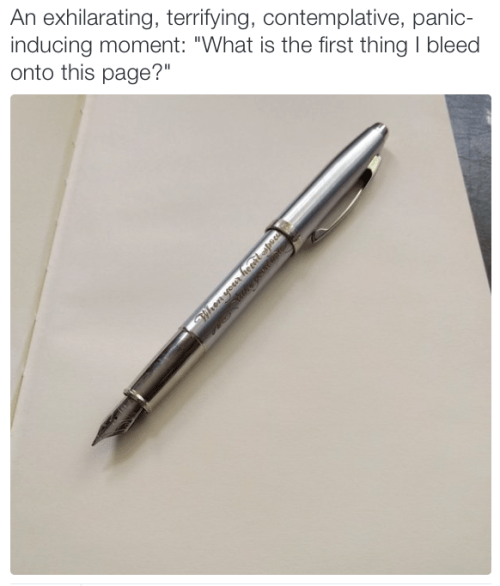
The first result was this:

Screen Shot 2016-03-05 at 10.03.38 PM

Aside: The fountain pen was a gift from my colleagues for my 40th birthday a couple of years back and the inscription reads, “When your heart speaks, take good notes.”

And every writer knows this feeling. However, in my current feral state of mind about getting stuff done, it was a challenge, an affront, a curse, a mockery.

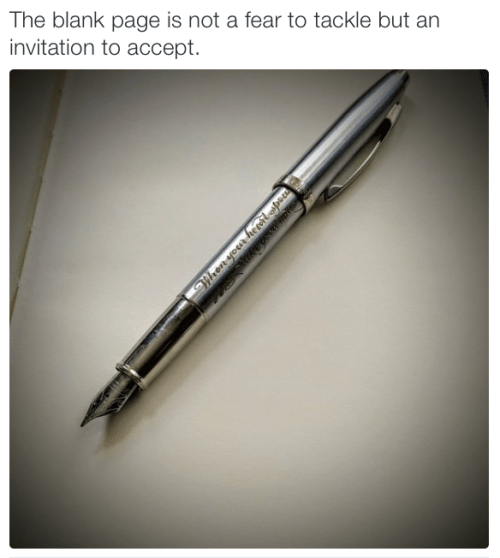
But, shaking off the negativity, I changed the photo to this:

Screen Shot 2016-03-05 at 10.03.18 PM

Comparing yourself to others is a sure road to bitter disaster. Pursuit of your own goals and dreams is the correct path. 

Photo A Day In January – Part 2

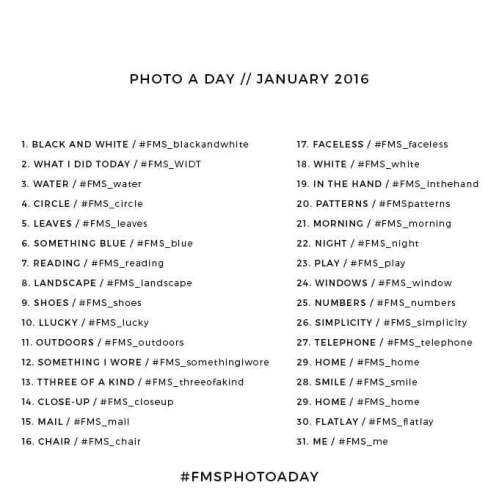
Here is the second collection of images from the Photo A Day in January challenge.

A reminder of what this looks like:

FB_IMG_1451775280415

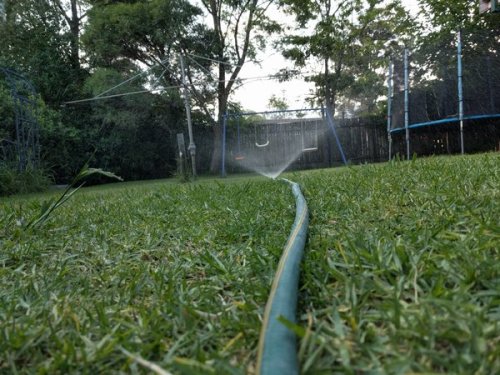
Day 11 – Outdoors

CYbFbQtUkAAMpUx

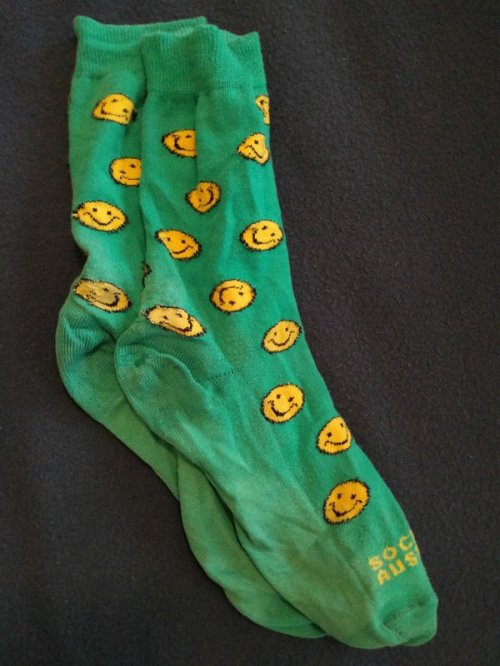
Day 12 – Something I Wore

I wore these for a friend's wedding almost 20 years ago. They have held up really well. Still wear them from time to time.

I wore these for a friend’s wedding almost 20 years ago. They have held up really well. Still wear them from time to time.

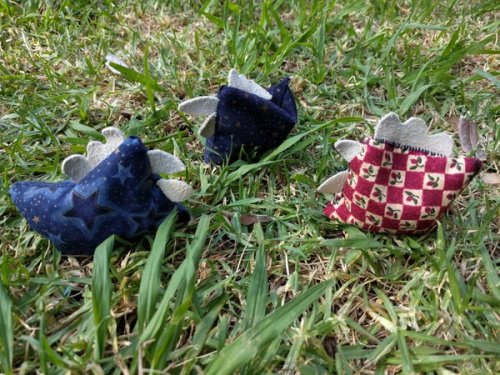
Day 13 – Three of a Kind

Tiny beanbag chickens

Tiny beanbag chickens

Day 14 – Close-Up

CYtZP4UUMAE8lNc

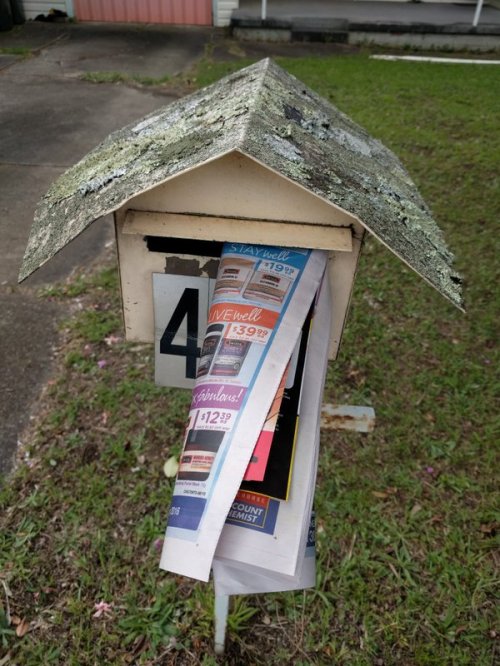
Day 15 – Mail

CY0gYRgVAAADY_p

Day 16 – Chair

CY0g2kwUEAIqILa

Day 17  – Faceless

CY9MTgkVAAIa9a-

Day 18 – White

CZDe2EEUMAEvVsB

Day 19 – In the Hand

CZH10hWUAAA3tiI

Day 20 – Patterns

CZNquK4WIAE-plb

A New Year’s Writing and Reading Reflection

I had a little twitter brain explosion one afternoon when I was thinking about the editing I was planning for later that evening on a short piece of flash fiction. Think of this as a series of brain farts, a Macbeth if you will, “a tale told by an idiot, full of sound and fury, signifying nothing” (one of my favourite lines from Shakespeare).

Why do I love to write? Because I love to read. The interplay of language to describe, emote, challenge, question, intrigue & entertain.

As readers we have favourite sentences or passages that capture the essence of our emotive response, better than our own words.

Passages w/ rhythm, illogical allusions that resonate, visceral gut punch, emotional core of who we are erupts as a volcano

These are the sentences we use as mantra, prayer, statement of intent, flirtation with a lover, standard of character.

E.g. ‘To be or not to be’ or ‘The Lord is my shepherd,’ almost cliche yet strike at our heart’s vortex & echo with symbolism. 

This is why I read and write, and why I believe reading is so important, so necessary, so vital to our humanity.

The Year That Was; The Year That Will Be

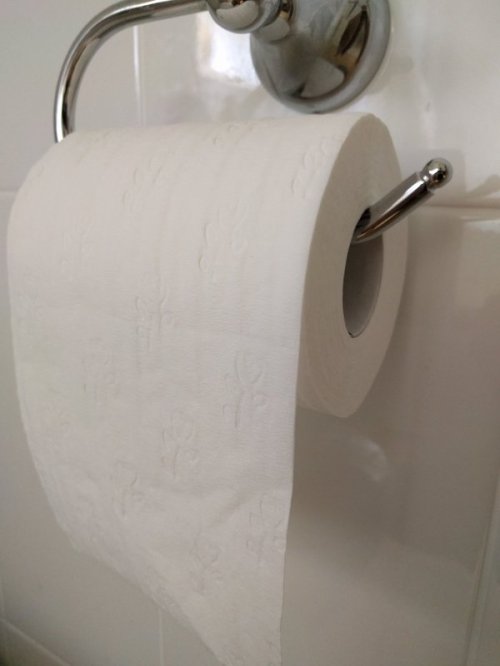
The end of a calendar year often marks a moment of reflection, contemplation and wondering why the toilet paper runs out at the most inopportune time.

And so it is with me. 

Side note: I know someone who uses the Chinese New Year as their starting point for a creative year. I’m seriously considering using the New Financial Year (June 30/July 1) as  my starting point. That way, if I stuff up the first half of the year I can reboot in the second half. Win.

In terms of reflection here’s the tl;dr version – I achieved nothing of substance and note. No progress on synopsis, novella, verse novel, short stories. Many half started efforts, scribbled poems, half-baked ideas. Nothing finished.

I could list a rather long inventory of excuses, reasons, happenstance or circumstance for it all.

Four Takeaways from This Year

  1. It’s virtually impossible to rebuild when you’re burnt out. Even doing small, seemingly achievable pieces can be a chore and have no significance.  
  2. Indecision and lack of focus are detrimental to making progress
  3. Without setting realistic goals and targets you will get nowhere.
  4. I didn’t read enough.

Four Steps to Making Progress Next Year

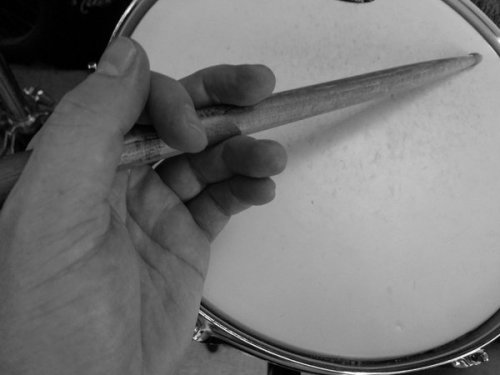
  1. Read more frequently – feed the soul and fill the well. This includes more drumming practice (too often neglected as a way of refilling the well).
  2. Set realistic goals and targets. I received a Pilot Press diary this year to keep track of my goals and targets. I have already set up my goals for January.
  3. Take care of my mental health to avoid burn out. Learn when to say “No,” when to say “Yes,” and work out what is important. Prioritise.
  4. Get Stuff Done. This is my mantra for 2016. 

May your 2016 be a productive year. 

Practice Pages – Peeling Fruit

I haven’t had much time to write lately and the lack of practice is an area I want to correct so I can maintain discipline. It was the focus of a recent blog post, Finding the Flaws in Your Writing. As I noted, I am a slow learner.

Therefore I gave myself 10 – 15 minutes to write a paragraph with no care of editing, purpose, structure. No other agenda except to explore an idea pulled from my note book.

I pulled the following idea from my notebook to form the starting point:

The peeling of a mandarin; the damage to the skin to eat the flesh inside.

In my hands I hold the mandarin you picked from the fruit bowl. I wasn’t particularly hungry but you were and wanted me to peel it for you. A child-like invocation of trust and acceptance. You are seated across from me, hands clasped together, waiting.

“Can I have some?” I asked.

A nod. Acquiescence to share.

The autumnal grace of peeling a mandarin, stripping the skin from the flesh and piling it on the table like a tree sheds its leaves, is undermined by the viciousness of its action. My thumb pushes in to the knobbed skin on top, an outward belly button you called it, breaks through and the spray of citric acid spits. It is caught in the summer afternoon light, hovers, reflects, dissipates. The freshness of the scent makes you rub your nose as if it tickled the very tip.

I catch you smiling and my eyes drop to the line of your singlet top. Your breasts move as you raise your hand to tuck a loose strand of hair behind your ear. 

There is a question, which, if asked, will change everything between us.

The skin forms a pile, broken pieces of a puzzle it would be impossible to solve. I could lay out the pieces, align them from where they came but without the flesh there is no substance to hold it. In the act of consuming I have destroyed.

You fidget, wanting to bite into the segments, held up by me until the entirety of the mandarin is peeled. I pull away a few segments for myself and hand the remainder over. As I pull away the fibrous strings, flensing the flesh even further, you rip two segments and bite into them. A stream of juice spouts onto the table as more dribbles down your chin. With the back of your hand you wipe your chin then the table smearing the juice further.

“I’ll clean it later,” you say with a mouth full of flesh before spitting the pips into your hand, reaching across the table and dumping them onto the torn skins as discarded bones. 

Our intimacy is bound in the question I want to ask for it will strip our skin like peeling a mandarin that we may eat the flesh inside.

Community Over Competition

Screen Shot 2015-09-30 at 8.56.43 pm


I posted this yesterday and it was what I believe in.

I want to develop creative communities for amateurs and professionals where they can meet in real life and online to support and encourage, critique and develop, brainstorm and collaborate.

Gathering artists, musicians, writers from different creative fields to be a support network. We all tend to congregate with like minded artists (for me it’s writers) but how much more would we gain if we also met with other creatives to expand our thinking?

Creativity is about developing and championing community and the individuals within them. 

Who will you champion in your community?

Life Doesn’t Follow the Archetypal Structure

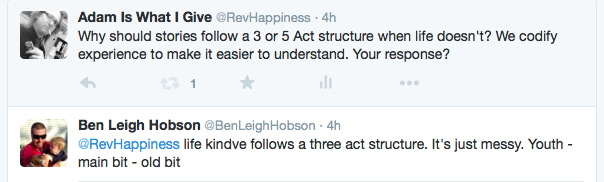
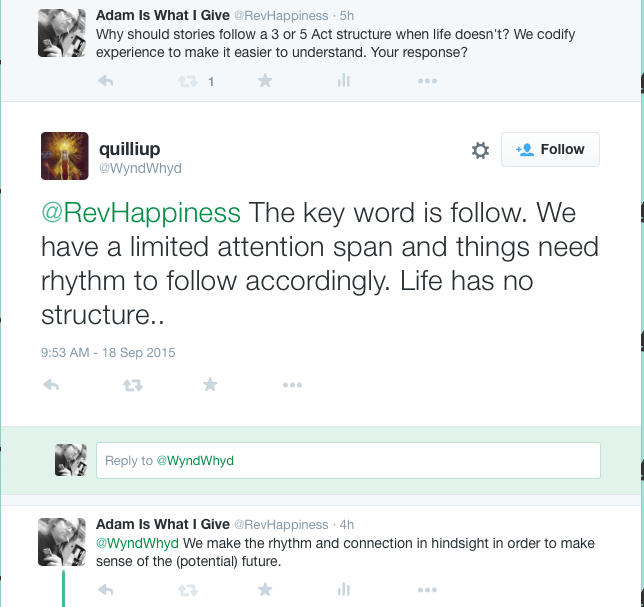
Why should stories follow a 3 or 5 Act structure when life doesn’t?

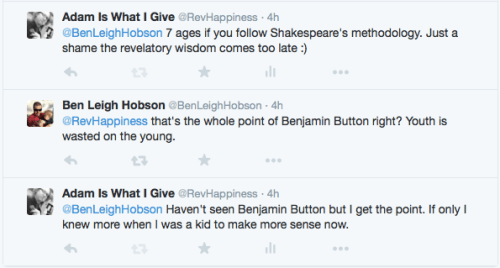
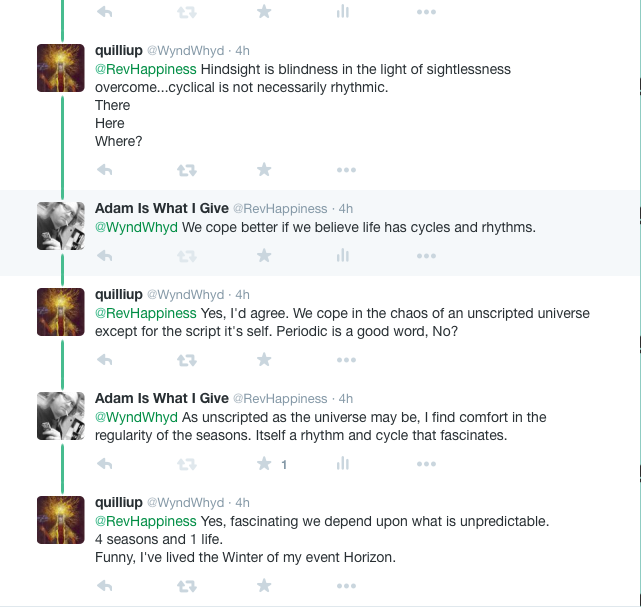
I posed the question on Twitter to see what responses might be generated. I received a couple. One went off on a philosophical tangent. And my answer is already given.

Screen Shot 2015-09-18 at 2.14.26 pm

Screen Shot 2015-09-18 at 2.14.58 pm

Screen Shot 2015-09-18 at 2.17.30 pm

Screen Shot 2015-09-18 at 2.17.45 pm

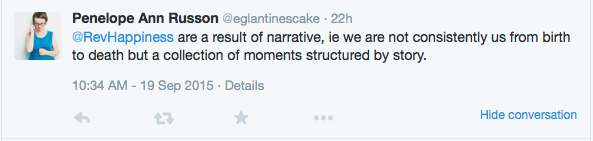
I suspect there is a field of narrative sociology (now there’s topic for a PhD) where this might apply and I remembered one of my twitter connections who is doing something like this.

Screen Shot 2015-09-20 at 8.38.56 am Screen Shot 2015-09-20 at 8.39.16 am Screen Shot 2015-09-20 at 8.39.23 am Screen Shot 2015-09-20 at 8.39.29 am Screen Shot 2015-09-20 at 8.39.37 am Screen Shot 2015-09-20 at 8.39.46 am Screen Shot 2015-09-20 at 8.39.53 am

I write stories where I follow the practiced methodology of the 3- or 5- Act structure, following the characters’ development and complications. It is the fundamental aspect of story telling you can find on most writing blogs. Other experimental forms still adhere to this idea in some tangential form or another.

You can start the Ira Glass research here.

Life is chaotic, messy, rhythmic, cyclical, disorganised, organised, coincidental, planned.

The takeaway is this: we codify experience to make it easier to understand.

Your response?