Tag Archives: friday fiction

Friday Fiction – Memento Mori

Memento Mori
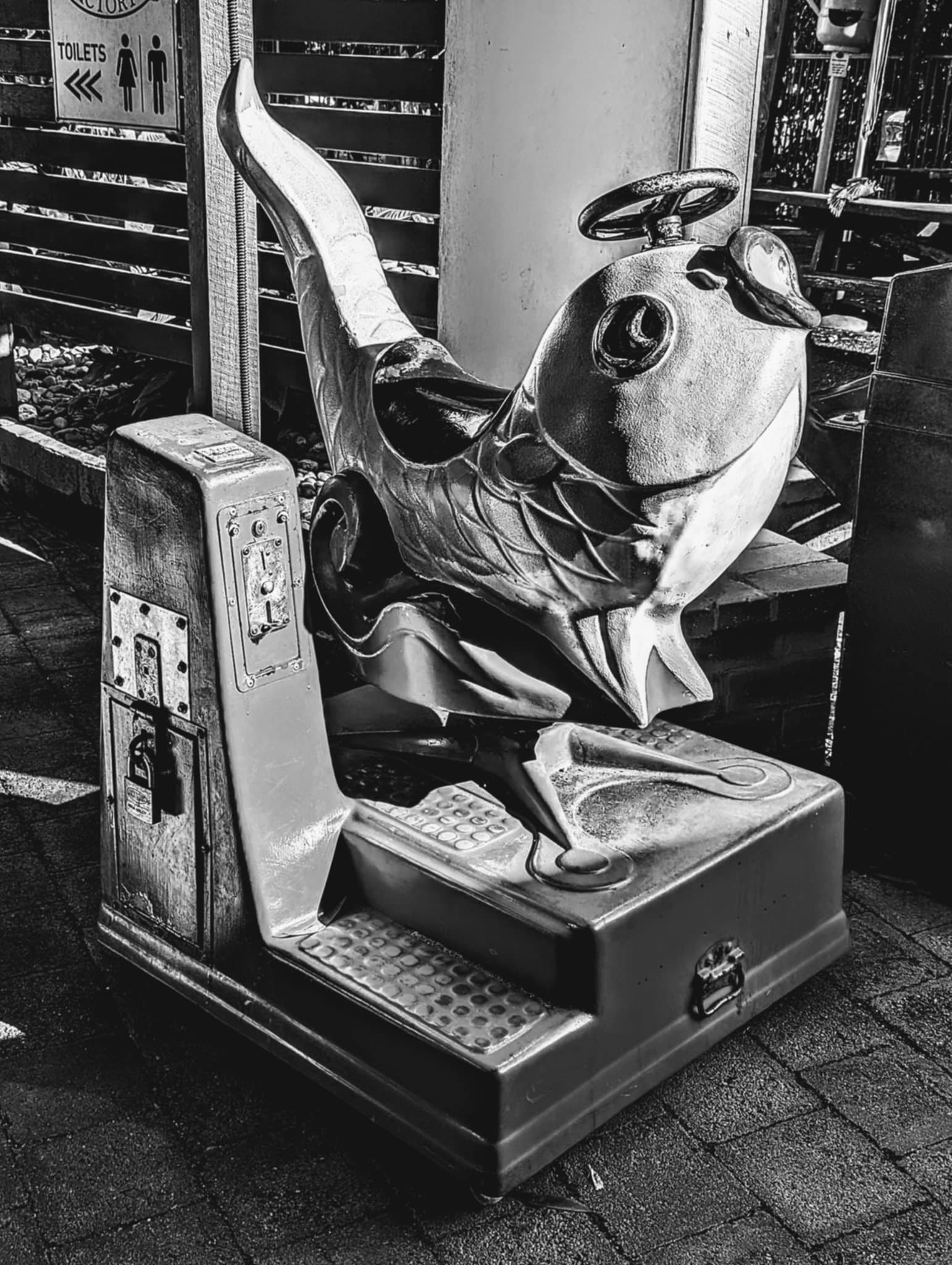
There’s a children’s amusement ride outside the café. It’s presence is unquestioned. It is ever present. The paint is flaking to reveal layers of previous representations. The coin slot is slightly rusted and still runs on twenty cent pieces. Grandparents forage for coins when babysitting when cajoled by the youngster. Each coin deposited is for the ferryman; the clink of coins is the price of the soul. For a minute the child is gently rocked back and forth as the mechanism hums an earthen lullaby. The child does not know it but the grandparent does. This is memento mori. Ashes to ashes. Dust to dust. A return to finishing a cup of coffee and the last of a meal of chips and nuggets.

Fiction Friday – A Beatitude


A Beatitude
Each evening he sits down to the mandala of meat and three vegetables. Tonight is sausages. Last night was rissoles. He’s planning for tomorrow night to be chicken. He hasn’t had lamb cutlets in a while. Next time he passes by the butcher’s he will see if they’re on special. Mashed potato, peas, corn and carrots are the basis of this meditation. He sprinkles a little salt and pepper over his food. The table is set with knife and fork, and a spoon for dessert. Custard with tinned fruit is the staple. His family has all grown up, his wife long past. This is his time to reflect, to remember, to reminisce. This is holy communion.

Fiction Friday – Sunsets

Sunsets

As appealing as sunsets are for their beauty, there is greater resilience found when the light acquiesces to the darkness and you don’t know how long the night will last. You try to shape the shadows with your hands into recognisable forms so you are less afraid of the velvet blackness and it tests your stability when you cannot see where the attack comes from. You feel the impact in your bones and in your spirit. Wounds are hard to manage in the darkness, therefore, find what little light you can. Even that smallest firefly of light dispels enough of the darkness to tend to your injuries and help you see the next step forward. Borrow light if you have to.

Fiction Friday – Parentheses

Parentheses It wasn’t much of a cut; a nick of the knife cutting potatoes for dinner. He sucked his finger and grabbed some paper towel, allowing for the moment when the body looks for other abrasions as evidence of mortality. This scratching of the surface to determine the strength, if any, that lies beneath the fragile surface of skin as a counterpoint to the idea that our will and mind is as strong as steel, noticing the flaws of the human body as miraculous. He inhales the iron-infused scent of the wound and knows the memory of Dettol is in its smell, that acrid odour breathed in like an hallucinogen that reminds the lungs how much they love the taste of air. Scrounging in the medicine box he pulled out the box of Band Aids and settled into the parentheses of healing as the blood soaked into the pad.

Fiction Friday – Kindling

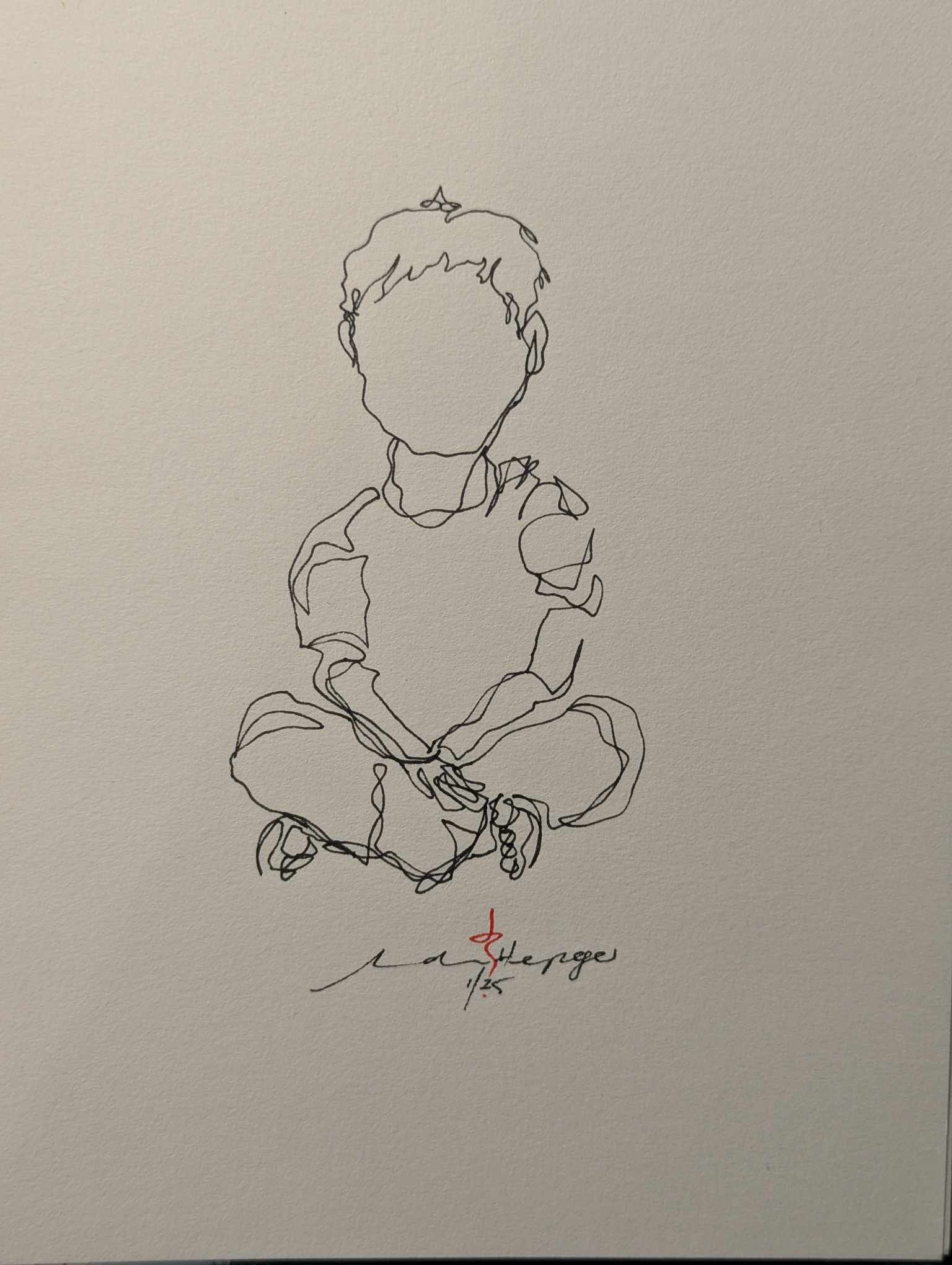
I was about seven years old, sitting cross-legged in the loungeroom, as I watched my father light the fire. He had pushed me back to a safe distance, but also out of his way. He struck the match and it flared, brightened, retracted. Kept alive by my father’s hand as he tilted the flame to consume more of the matchstick. He reached into the kindling and touched the flame to the shredded newspaper within. I watched in fascination as the newspaper burned, licking around the edges of the kindling, tapering down. Having enough energy to ignite the small twigs and thinner strips of cut down fence palings. Kept an eye on my father as he monitored the flame, having the knack to know when to add more fuel to keep the fire alight. It was years later I understood that starting an argument is the same as starting a fire: you introduce friction. Years of accumulated kindling would burn for decades.

A Walk in the Black Forest

[Fiction] Friday

Friday 19th March
Your character doesn’t make impulse purchases, but one day at the market they felt compelled to buy… what?

Geoff followed in the slipstream of his girlfriend around the flea market as she moved from stall to stall like a bee after nectar.  She took in racks of oddment clothing, holding them against her and asking if he liked the colour, but didn’t usually wait for an answer.  This was followed by handmade knick knacks and jewellery, pot plants and the requisite doner kebab stand.

He didn’t mind the day out with Miranda, but what really got him was her impulsiveness.  Everything she bought was a bargain, she claimed, and Geoff nodded assent and observed the cacophony of the senses abused by the toothless, dreadlocked, bearded and heavily tattooed busker whose guitar seemed to be missing a number of strings.  At the moment Miranda was poring over a trestle table of dye tied cloths.

Geoff took the moment to glance around and settled his eye on the stall behind to his right.  Amongst the dream catchers and shamanic artefacts were blankets.  At least that’s what Geoff thought they were.  On closer inspection he saw that they were in fact bear pelts with their heads drooping over the edge of the table.

The woman behind the stall stepped up to the bench and said, “Do you like them?”

Geoff looked up, literally, into the sapphire eyes of a Germanic looking woman with broad shoulders, ample bosom and flaxen hair shot through with silver tied into a plait the thickness of a ship’s rope.

“You don’t see these all too often,” said Geoff.

“They belonged to my great-great grandmother back in the motherland and she brought them out with her many moons ago.”

“What’s the history behind them?”

“It’s a family of European brown bears; father, mother and cub who were menacing a village near the Black Forest.”

“Wonder if Goldilocks met them?” quipped Geoff.

“Fairy tales have a strange way of being somewhat true, no matter what Disney does to them.”

Beside the pelts was an array of knives, plain and ornate.  Geoff spotted one with a horse head handle with an ivory inlay.

“My great-great grandmother was good with a knife.  Or so the legends say.  This is apparently the one she used on these three,” the woman said indicating the pelts.

“How much?”

“Thirty dollars.”

Geoff opened his wallet and handed over the money.  Taking his purchase from the Germanic woman with the ample bosom he went over to catch up with Miranda.

“Oh you bought something.  That is so unlike you.  You’ll have to show me later.  Come on, let’s get something to eat.”

The afternoon clouds interrupted with sudden peals of thunder and spits of rain.  As the crowd dispersed to find shelter and stall holders quickly covered their wares, Geoff took a final glance at the stall.

The woman grabbed a stole and cast it around her shoulders.  It was a burnished red and the hood resembled a wolf’s head like a Roman centurion.  She disappeared as the rain formed a curtain between them.

Cinnamon Doughnuts and a Neenish Tart

“Good morning, Mr. Robertson.  It’s good to see you.  Would you like your regular order?”

“Good morning, Angela.  It is good to see you, too.  As fond as I am of the cinnamon doughnuts, I shall have a neenish tart in honour of Mrs. Robertson.”

“I am sure she would have approved.  How long has it been?”

“Just going on two years, my dear.”

Angela finished scribbling down the order, uncertain of what to say, but slipped back into her business manner, “Take a seat and I’ll bring your order out.”

Mr Robertson took a seat near the window of the coffee shop and carefully placed his trilby on the left hand corner of the table.  Drawing his pocket watch from his waistcoat he checked the time against the Town Hall clock.

Angela placed her hand lightly on his shoulder as not to startle him, letting it pause before placing the tray in front of him.

“I added something a little extra,” she said indicating the second paper bag.  “I’m sure Mrs Robertson wouldn’t mind.”

Mr Robertson chuckled gently as he caught the aroma of freshly cooked cinnamon doughnuts and watched the oil leave its fingerprints.  He began arranging the silver tea pot, milk jug and sugar bowl with a measured deliberateness and shaky hands.

Finishing his tea and tart, Mr Robertson prepared to leave.  He checked the time on his watch before donning his hat.  Reaching for the bag of cinnamon doughnuts to fold the top he noticed a slip of paper.  It was the stub of a receipt from the café and it simply said, “Sorry.”  He folded the note and slid it into his pocket beside his watch.

On his way passed the front counter, he doffed his hat to Angela, “Thank you.”

Chocolate

[Fiction] Friday Challenge #144 for 26th February, 2010

The bag was empty except for a smudged, slip of paper which said, “Sorry.”

Josh scooped up his mobile from his bedside and scrawled through the text messages from the night before.  He stopped at the one that read, “Thnx 4 talking last nite.  C U at skool on Mon.  Katie.”  His heart skipped a beat.  He remembered her black hair pulled back into a single roped plait that hung over her shoulder and the sapphire earrings that dangled when she laughed.  They had spent most of the night at the edge of the party, caught up in each other’s company.

He spent the morning catching up on homework and headed downstairs for lunch.  His younger sister Caitlin was diving into a peanut butter sandwich while his Dad read the paper.

“How was last night?” his mother asked from the bench.  “Would you like a sandwich?”

“Yes please.  Cheese thanks.  Last night was good.  Had fun.”

“Didn’t hear you come in.  Were you late?”

“Nah, I was home by curfew.”

Caitlin popped her thirteen year old nose into the conversation, “I know something you don’t know.  Josh spent all night talking to a girl.  Emma’s sister was at the party and told her all about it and Emma told me.”

“Oh, that’s nice dear.  What’s her name?”

“No one in particular,” mumbled Josh.

“Mum, Katie Byrne isn’t just anybody,” chimed Caitlin.

“Shut up, Caitlin,” Josh hissed as his face reddened.

“She’s lovely,” his mum said.

His father kept reading but threw his son a wink over the paper.

Josh took his sandwich and excused himself, saying he had more homework to complete.  He was having a hard enough time getting through Year 12 studies without having his sister point out his fledgling love life to his parents.

Sitting in his room, Josh looked again at Katie’s text and began to devise a plan to find another way to talk to her again on Monday.  He needed something tangible to help him open the conversation.  He had no idea how the two of them got talking in the first place.  The thought of approaching Katie made him nervous but he needed to speak with her again.

Scooting through the myriad movie clichés in his mind, he narrowed it down to chocolate.  A reconnaissance of the kitchen yielded the last two Tim Tams in the packet.  He carefully wrapped them in plastic film and hid them in a paper bag.  His plan was formed.  He wanted the courage of Marty McFly’s dad to approach the object of his desire; he just didn’t want to come out sounding like an idiot.

“You are my density,” he mimicked.

The buzz on the train to school the next morning was all about the party and Josh and Katie’s liaison had not gone unnoticed.  Josh skimmed his timetable and was thankful Katie was not in his morning classes.  Recess would be his opportunity, although when it came, his stomach felt more like a writhing pile of snakes.

He rummaged through his school bag looking for his present.  Nothing.  Gone.  Disappeared.  Vanished.  At the bottom he found the crumpled paper bag that had held his treasure.  No matter how much he looked in the bag, it did not contain the two wrapped Tim Tams.   The bag was empty except for a smudged slip of paper which said, “Sorry.”  Josh was dumbfounded but it gave way to fury when he saw the smiley face scrawled in pink highlighter.  Caitlin.

“What’s up?” Derek asked.

“My sneak of a sister flogged my biscuits and left me a note just to rub it in.”

Josh felt deflated; his plan amounting to nothing but crumbs and an empty bag.  He felt gutted and flopped down against the wall.

“Have you lost something?”  Even dressed in the sack of a school uniform Katie was appealing.

“I was wondering if you would like to share a choc chip biscuit,” she said offering her hand forward.

The Museum

[Fiction] Friday Challenge #139 for Jan 22nd, 2010
A woman revisits the neighbourhood where she grew up to find that her childhood home has been condemned.

Flicking through the sheets on her clipboard, Evelyn double checked the address with the mismatched numbers on the letterbox.  Its mouth was a rusty, gaping grin like it had lost its dentures.  Her stomach tightened and her mouth became dry as she glanced over the house and yard.  Gathering courage she grabbed her handbag, clipboard and stepped out into the afternoon sun.

There was a row of four houses squashed between new developments of high rise apartments.  In her job on the city planning committee, she approved the condemnation and construction of the future skyline of the city.  She stepped up to the letterbox with mismatched numbers and patted it affectionately, remembering the years she had spent as a child within this yard and within the walls of the house.

The house squatted on its haunches, simpering like an old dog, hiding behind curtains of grass and weeds.  The roses that lined the front verandah had been her mother’s surrogate children, taking their place at the centre of the dining room table in vibrant array.  Now they were merely skeletal sticks.

Evelyn remembered with fondness sitting on the top step of the verandah with her brother, seeing who could spit the watermelon seeds the furthest.  As she walked up the path Evelyn chuckled at the scratched marker in the concrete, a family record of the furthest watermelon seed ever spat.  And she was the champion.

Everything about the house indicated its abandonment and decrepitude.  The paint was peeling like sunburn while the windows looked with a pale desperation through grey, tired eyes.  But it had lived.  Senility and dementia might have taken up residence in the rafters, but at least it had character.  Evelyn thought the encroaching apartment blocks looked like Styrofoam cutouts.  She doubted their longevity but supposed an architectural shot of Botox would be required to keep them from developing wrinkles.

Evelyn smirked at the irony of her job in condemning buildings when she looked with fondness at her old home.  She turned down the right side of the house towards the magnolia tree and stopped in its shade looking back at the window that used to be her room.  She remembered the dollar coin she planted at the base of the house in the childish hope that her grandmother would get well again.  While her naivety cracked with the news of her grandmother’s death, she resisted the urge to take back her coin, preferring to leave it to the earth from which it came.  Even now, after burying her own mother two years’ before Evelyn glanced around for a spade wanting to recapture a piece of her childhood.

In her mind she cycled through the phases of her growing maturity, remembering the posters that wallpapered her room from the childhood television song and dance groups in brightly covered skivvies to the teenage version in varying degrees of black, carrying guitars and wearing bad poodle perms.

Moving to the back of the house she spied the back verandah, an addition tacked onto the house as the family grew to accommodate expanding gatherings and birthday parties.  She pictured the second hand table that used to dominate the area, a bargain that was originally designed to fit inside, but a miscalculation meant it was parked outside and stayed put.  Eight mismatched chairs identified the various comers and goers, a kind of visual name tag.  The family always joked that they had enough material to write a soap opera based on their conversations and arguments from around the table.

A child’s argument from up above, followed by the staccato interruption by their mother focused Evelyn on where she was.  Looking up to where the sound came from, she visualised the apartment block as one big filing cabinet, with each unit a file of memories, some continuous, others changing faces.  Walking back around to the front of the house she pulled out the laminated notice of condemnation and attached it to the front door before continuing on her rounds for the council, delivering death notices to other family museums.