Tag Archives: flash fiction

Mending the War – Flash Fiction

This was a piece I submitted last year to a competition. No result. Another piece to help me practice. 

But I’d like you to have a read and tell me what you think.

She looked up from the sock she was darning, needle paused mid-stitch, and watched the missile burn across the blank expanse of blue sky, rending it in two.

“Where is it going?” asked her granddaughter.

“To war.”

The smoke trail began as a small tear, slowly expanding, making the rift wider, ragged. Slowly, imperceptibly at first, the blue pushed through the vapour trail, dissipating the smoke.

“There will be another,” said the grandmother.

“When will we have peace?”

The needle wound through the fabric and pulled the two halves together.

“When we have learned to mend our hearts.”

Friday Flash Fiction – Indentation

Welcome to another Friday Flash Fiction.

This piece was the development of a very short piece (sub-200 words) I had submitted for a competition. I wanted to explore the idea a little further and see what happened. 

I toyed with the idea of subbing it out again but am leaving it on the digital practice pile. 

Indentation

I dislodged your glasses the first time we kissed, tripping over the hidden arms of the frames as I ran my hands through your hair. Unseated physically and linguistically, I fumbled an apology.

“Romance inhibitors,” you said pushing the glasses over your forehead, collecting your fringe, before taking them off.

The kiss interrupted we drew away from each other. You felt behind your ears the indent of a new paragraph.

“I’ve worn glasses for years,” you said. “Never really noticed it before.”

You drew me in again and before our lips cautiously brushed, I wondered how you could see without your glasses; a stupid thing to think because our eyes were closed. My fingers returned to the place behind your ear and traced the indentation, a small eroded furrow, and I stopped, retreating my lips from yours.

Your face, now naked without adornment, I saw two more dents, small and red, on either side of your nose. The slight weight of pressure bridging your face giving you the chance to see.

Over the years I watched the indentations change shape with each new pair of glasses, watch you adjust to how the new frames sat on your nose and behind the ears. You pinch your nose when you buy new frames, adjusting to a new bridge; push them back up your nose when you’re sweaty and they slip down when you lean forward. You push them onto your head when you read a book.

You never really get to see it, except when you look in the mirror, but with each new pair of glasses I create a new character: the bookish librarian, a 50s executive, the hipster folk musician. Only when we retire to bed do I see the character removed when you put your glasses beside the clock radio on your bedside table. Your face is no longer framed by what I impose upon it; the only evidence the two small, red indentations on your nose.

 On the couch I slip under your arm, fit into the shape of your body, perhaps worn as smooth as the spot behind your ears and wonder if we have worn a furrow between my legs each time we make love. I feel the shape of you within me, the pacing of your movement when you’re above me and I focus on the bridge of your nose. Or when I sit astride you and move with my own rhythm. Have I worn you down through the repetition of our lovemaking?

Now I turn the wedding band around my finger, notice the furrowed shape encircling, evidence of the presence of you in my life.

I still run my finger along the indentation behind your ear, searching for that first kiss. But you hate it when I dislodge your glasses, especially while you’re watching TV.

I’ve learned to wait until the ad breaks.


Friday Flash Fiction – Up and Down

Today I am posting a piece of flash fiction I have been working on for a while. The second half of 2014 was turbulent mentally and emotionally from a creative viewpoint where my day job demanded a lot of my attention.

I put off some short pieces until later in the year and was trying to decide whether I put more work into them to get them ready to sub, or put them out to pasture and let them go the way of cassettes and VHS tapes.

When the school year ended I managed to come back to these short pieces to have a closer look at them. I worked them over and decided that it was not worth subbing them out as I didn’t think they would sell. Maybe they would have sold but I felt it was time to put the old things aside and focus on the new. I’m also clearing my virtual desk to make way for some other projects that I want to attend to. 

Any piece of work is a practice, a development of voice, tone, structure, ideas. Some of them will work, others won’t and it shows you what you need to improve. It’s also a case of ‘showing my work,’ seeing some of the progress, some of my ideas, what’s working, what isn’t.

But you get the benefit of a FREE READ. Please enjoy it.

Up and Down

The blank television screen flickered on as he pressed ‘Play’ on the video camera. A young boy wearing a Superman cape was engaged mid sequence moving like a pendulum, arcing back and forth, on a set of swings. The cape fluttered behind him on the upward trajectory and stuck fast to his bottom on the downward pass.

A disembodied voice, too loud against the background noise, jumped from the speakers. “Hey buddy, how you doing?”

The boy waved. “Hi Dad.”

The camera flicked sideways and a woman with her arms crossed filled the frame, focused on the boy on the swings and her gaze did not alter. With another flick the scene changed again to see-saw, a simple old-fashioned broad wooden beam with a metallic T-shaped handle. Once painted green, only flecks remained between the splinters.

“Want to swing a leg over?” his voice asked.

“We haven’t done that in years,” she said, her arms folded stedfastly.

Jerky movements and the shuffling of feet accompanied the quick passing of ground. The handle came into view, then a hand grasped it, pulled it closer to the camera. A bump, clatter and suddenly the movement ceased.

He raised his end to equilibrium, the seat in line with the horizon behind it then dipped it lower.

“Chivalrous,” she said and walked to the other end. “What have you done to the camera?”

“Attached it to the handle,” his too loud voice said.

She straddled her end, filling the frame, and took the weight. The camera jerked slightly as the sounds of him lifting himself onto his end filtered through. She moved higher as the horizon dipped beneath her.

“Think we’re a bit old for this?” she asked.

With a gentle push upwards, she descended, the horizon moving up and down like a pilot’s instrument as she stayed in the centre of the frame, an odd optical illusion. She bent her knees and absorbed the weight, feeling the pressure, making it difficult to gain purchase.

Slowly, momentum begat momentum.

Up

     and

            down.

            up.

     and

Down.

Movement opened conversation.

“Remember the roundabout in the old park by the railway station?”

“It always made me dizzy.”

“You felt sick on the carousel at Luna Park on our honeymoon.”

Up

     and

            down.

“But you did win me the big teddy bear.”

            up.

     and

Down.

“How are the kids going with their homework?”

“I am now adept at my times tables.”

“Katie’s teacher is worried about her progress.”

Up

     and

            down.

“Remember the holidays to Coffs Harbour when the kids were in primary school.”

“Car sickness all the way.”

“Katie was stung by bluebottles.”

“And bananas with every meal.”

“Stuart was convinced he’d become a monkey if he ate any more.”

            up.

     and

Down.

“I heard Susan’s mother died. How is she coping after the funeral?”

“She’s finding it very tough but she’s managing.”

Up

     and

            down.

“Want to try for equilibrium?”

The camera wobbled and rocked as they shifted and slid, her body leaning forwards and backwards, as her arms outstretched like she was balancing. The horizon settled in a moment of balance.

The afternoon breeze picked up, punching into the camera’s microphone, and almost imperceptibly the horizon behind her lowered as the balance shifted until he knew for certain he was descending while she ascended.

Up

     and

            down.

            up.

     and

Down.

            Two young faces crowded the centre of the seesaw, careening into the view of the camera.

“Mum and Dad, what are you doing?”

“Going up and down, sweetie.”

“That’s not a real answer.”

“Help your Mum off, please.”

His son offered a small hand to his wife. She twisted sideways and with a little girlish yelp, jumped off.

The imbalance of weight jolted the camera and when it steadied she was no longer in frame, the end of the seesaw vacant. The camera wobbled again as it was unclipped and the view pulled backwards until the whole seesaw was in the frame, slowly coming to a halt with his end paused above the ground.

Her voice broke in over the image. “You still ok to have the kids same time in a fortnight?”

“Yes.”

“Say goodbye to Dad.”

There was a sudden collision of bodies and arms, muffled farewells and the wet smack of kisses as the camera pointed to the dirty patchwork of grass and dirt. In the bottom half of the frame arms entanged each other and feet shuffled.

The embrace finished, the camera swung up and captured the boy and girl walking hand in hand with their mother, disappearing towards the car as a focal point.

The camera turned, focused on the seesaw paused in its trajectory.

Two young children raced over for their turn, chose an end, scrambled on and bounced

Up

     and

            down.

            up.

     and

Down.

Leaning forward he pressed the ‘Stop’ button and stared at the blank television screen.

 

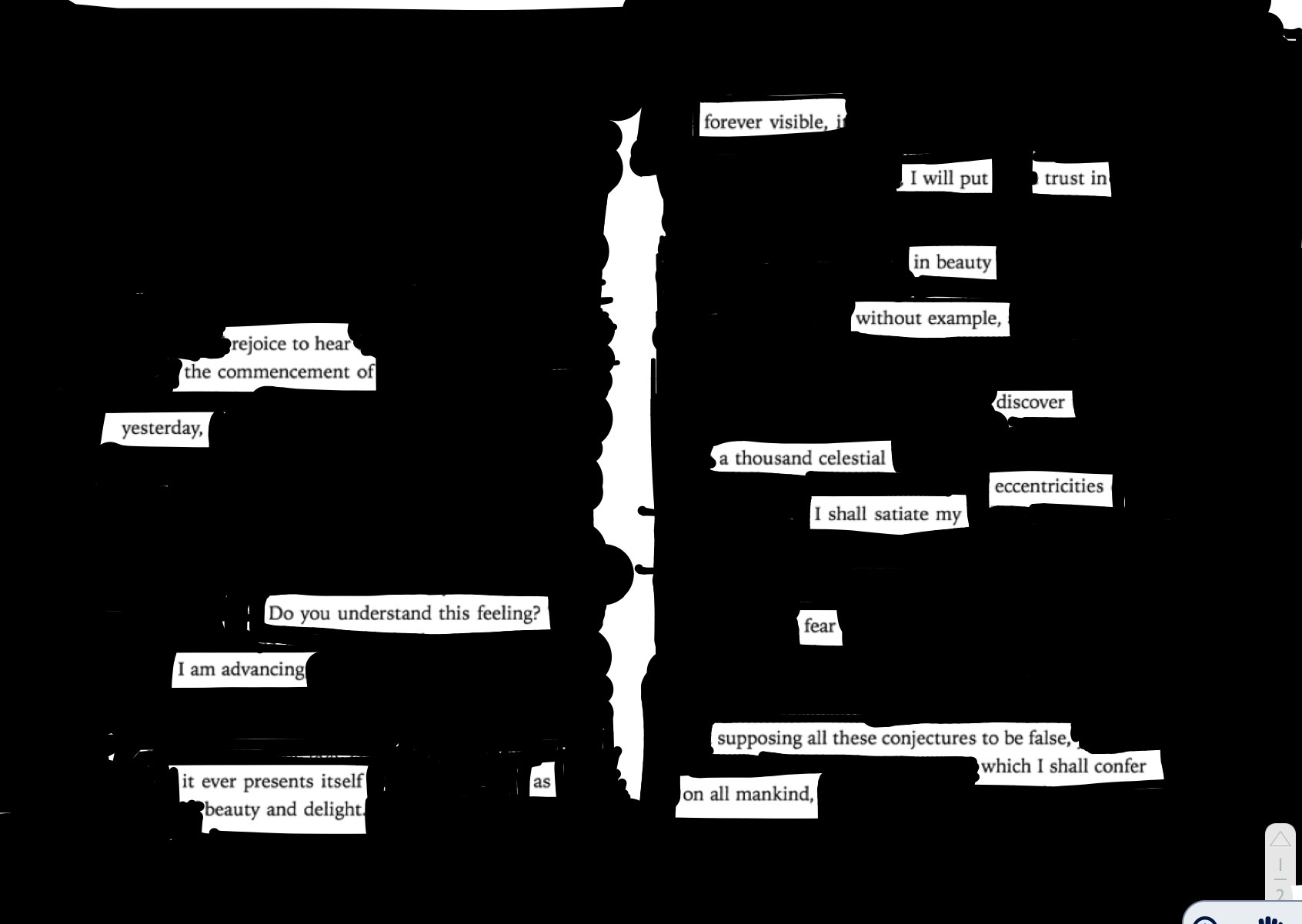
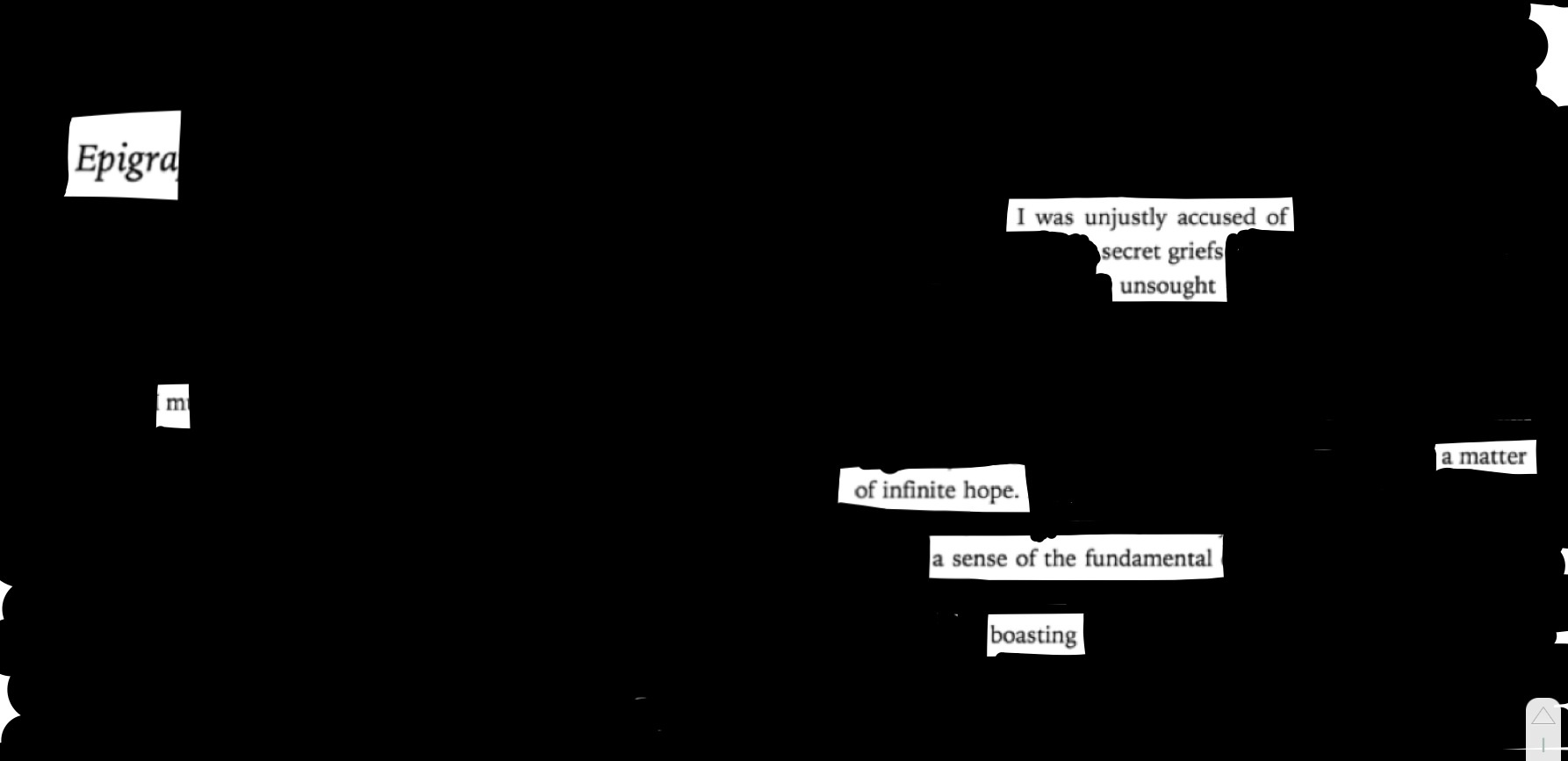
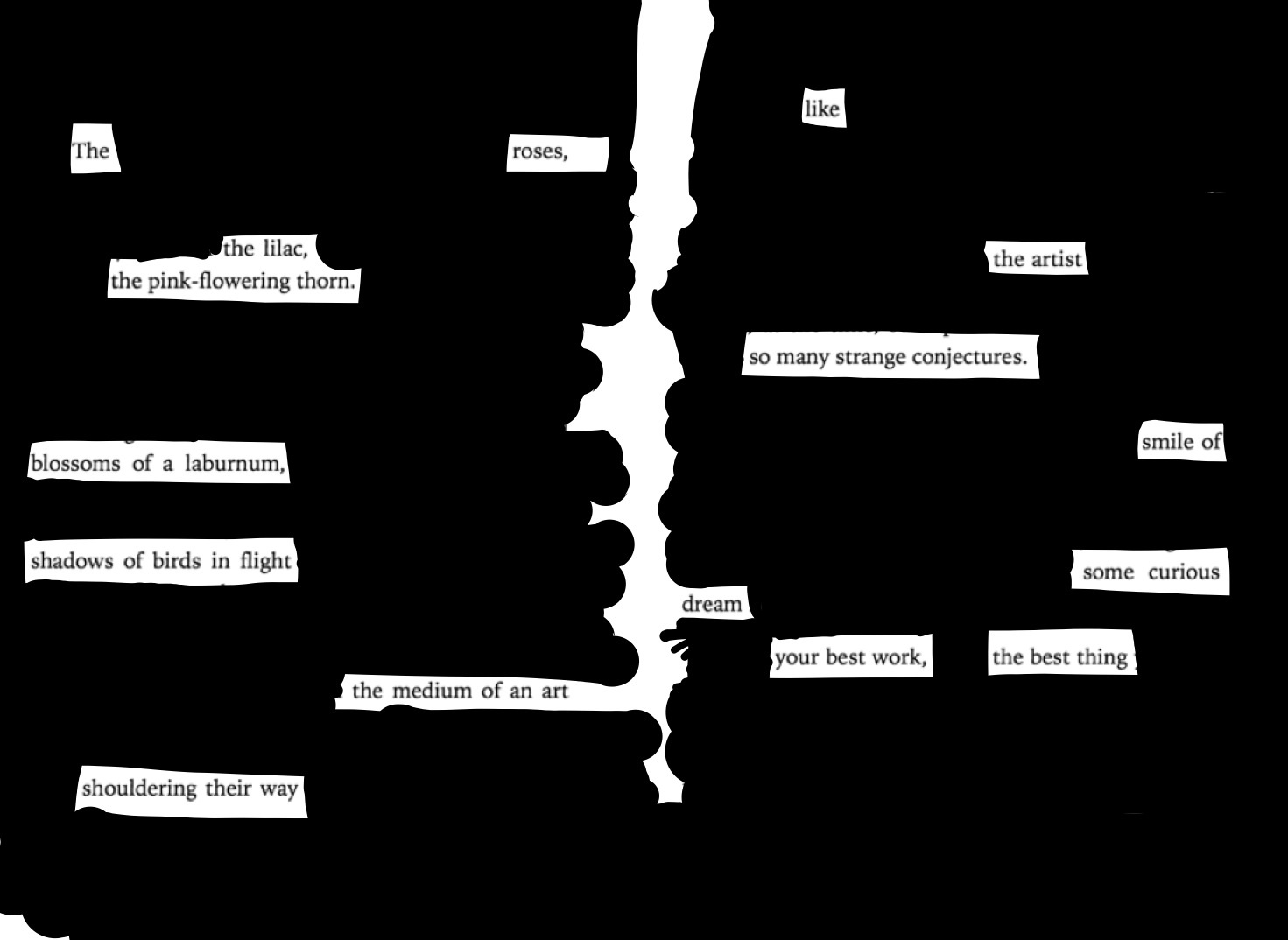
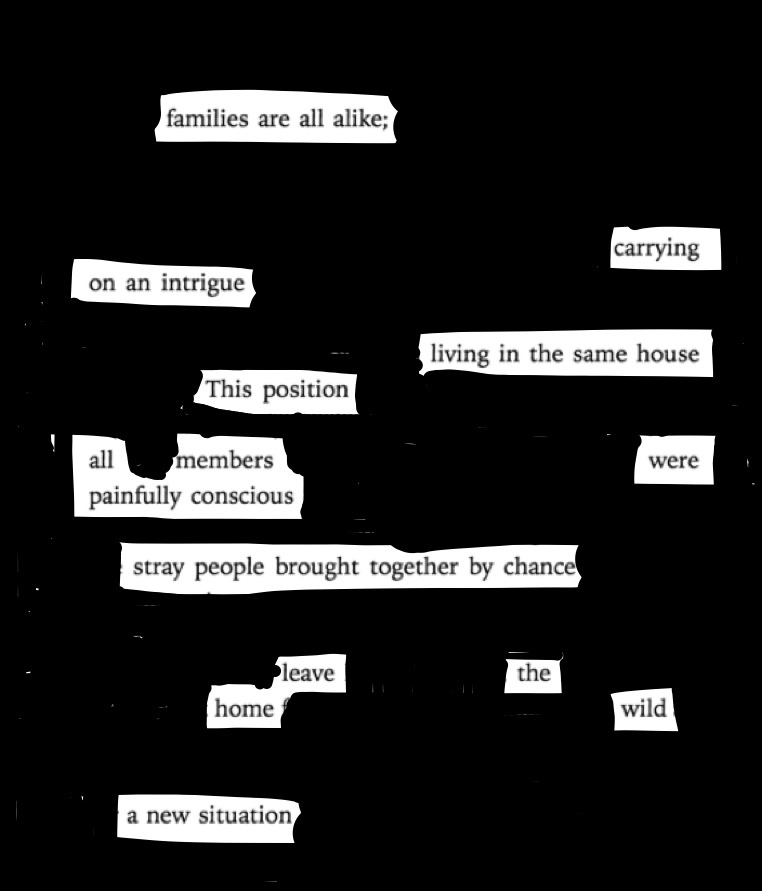
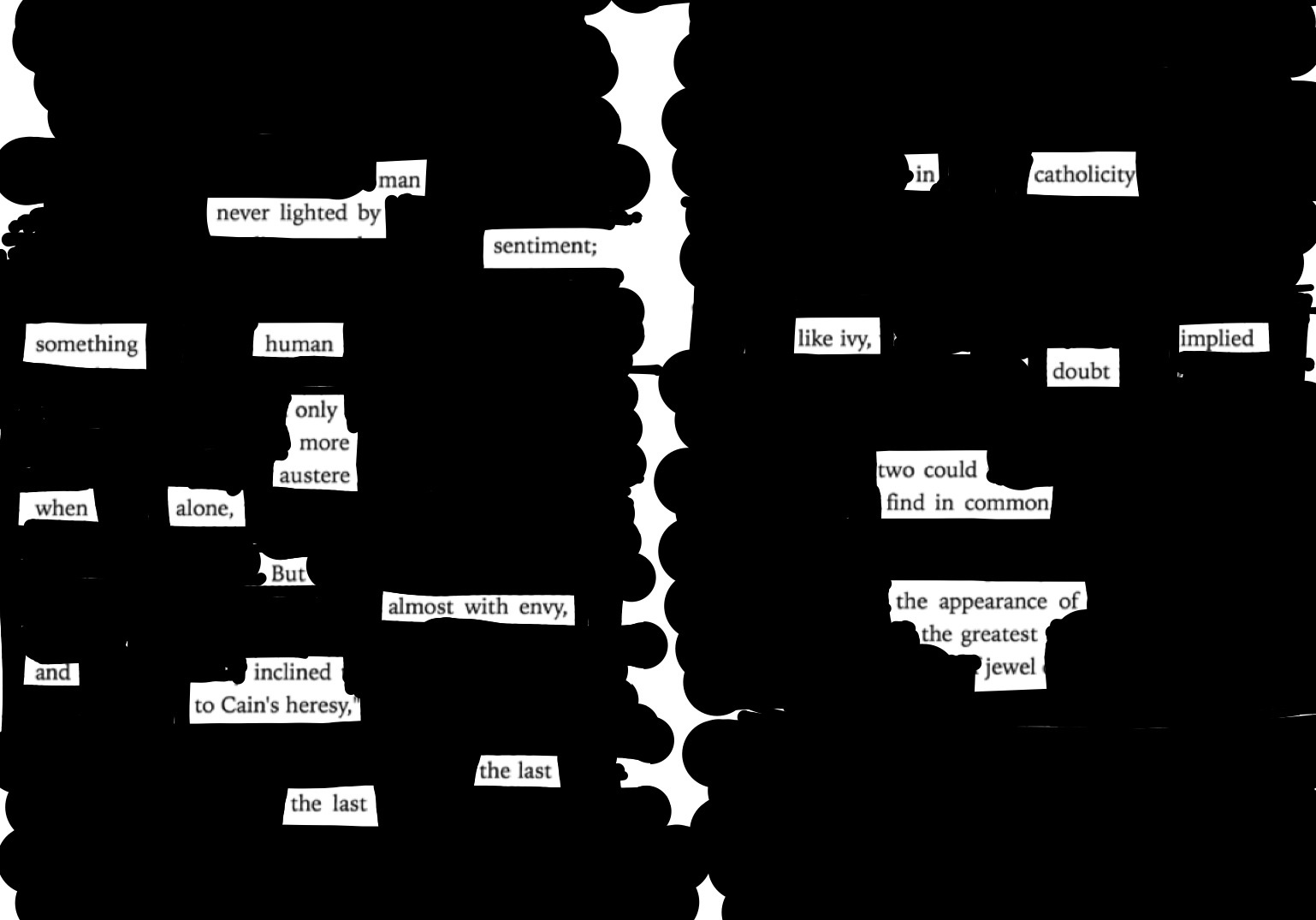
When In Doubt, Write Poetry By Erasing Words

Diving back into the classics for more blackout poetry.

You’ll find my first two attempts here (Moby Dick – Herman Melville) and here (Heart of Darkness – Joseph Conrad)

I have taken the first page of a range of texts and used the tone and ideas to create something new.

Epistemology

from Frankenstein – Mary Shelley (click image to enlarge)

image

Who I Am

from The Great Gatsby – F. Scott Fitzgerald (click image to enlarge)

image

What Your Mind Has Made 

from The Picture of Dorian Grey – Oscar Wilde (click image to enlarge)

image


A New Situation for Families

from Anna Karenina – Leo Tolstoy (click image to enlarge)


image


Like Ivy

from The Strange Case of Dr. Jeykll and Mr. Hyde – Robert Louis Stevenson (click image to enlarge)

image

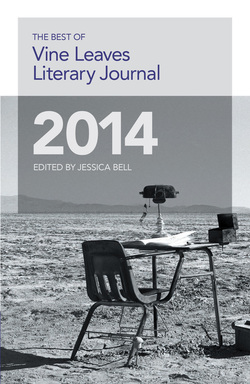
Small Achievements – Best of Vine Leaves Literary Journal 2014

Earlier this year I had a poem, Elihu’s Meditation on Questions Unanswered, published in Vine Leaves Literary Journal.

And now it is being published in the Best of Vine Leaves Literary Journal.

I would encourage you to support small press and publishers as they are pushing boundaries and discovering brilliant new literary voices. This edition is full of remarkable vignettes, poetry and art.

Follow Vine Leaves (@VineLeavesLJ) and its editor-in-chief, Jessica Bell (@MsBessieBell) on Twitter.

Orders can be made directly through the web site. Order HERE. It would make for a wonderful Christmas present for the book lover in your family.

Best of Vine Leaves 2014

Throw Out Thursday – 99 Word Stories

Recently I came across a site 99fiction.net running a monthly competition for stories no longer than 99 words.

I started to write a couple of pieces but ended up abandoning them. It was a good experiment and writing exercise but they were taking away time from other projects that needed priority.

I will share them below as I intend to adapt them into poems in the future.

1.
He pulled up on the footpath, bringing the scooter to a halt before the STOP sign in literal, simple obedience. A first trip around the block without Mum or Dad. He waited with an understanding that permission needed to be granted before he could GO.

He waited, hands hung loosely over the handle bar, one foot on the deck while the other poised to push off the concrete footpath, shifting feet when one became tired of bearing weight.

Cars pulled up to the intersection, stopped, proceeded and he wondered who gave them permission. Looking around, he rebelled.

2.
I wait for the days when the four lanes of road outside my house are silent. When I can stand in the middle of the road, one foot on each of the parallel white lines, and watch the road bend and dip to the right when facing south. Or turn north, feet still planted on the parallel lines and see the road rise towards the crest and veer slightly to the right again. It is when I imagine I am the only person. Today I intend to stop traffic.

You may want to have a crack at writing your own very short stories or using one of these as the prompt for your own piece of writing.

Remixing is the New Creating Part 2

Earlier in the month I mentioned I had a piece listed on the if:books Australia Open Changes project titled The Storm. It was a remix of a previous work, Jodi Cleghorn’s poem, ‘Later.’ I took the line, “born up on the cicada chorus.”

In good news, I have another piece featured in the last week. You can read ‘The Naked Rosehere.

I took inspiration from Jodi Cleghorn’s piece, ‘She Would Be Grass.’ In particular, the line “On the ninth day, green patches of turf appeared.”

Now the project is closed, it will take the form of a story tree. I will let you know when it is up for you to have a goosey gander at.

Do You Want Story Time?

My collaborative writing partner, Jodi Cleghorn (with whom I wrote Post Marked: Piper’s Reach) has just released a new collaboration with Claire Jansen.

She explains the process here.

Let me give you the blurb.

Three days before Christmas Amber lands in Australia to celebrate the festive season with Ben. But he’s not expecting her or the news she brings. Her presence sends radial fractures into Ben’s life and those close to him, from his sister to his lover and beyond.

Told across a single day, through the eyes of five characters, ’24’, delves into the complexities of the relationships closest to our hearts.

This is not a long read, 12 episodes of approximately 500 words each, criss-crossing between blogs. What hooked me was the multiple narrative points of view telling different aspects of the story, but more than that, in such a concise word limit and narrative time frame, the characters are wonderfully fleshed out.

I can see the possibilities of this being developed further into a longer short story, even a collaborative novel. Dare I say it, a TV miniseries. 

This is a great read and well worth your time with a cup of tea or coffee and your favourite biscuit.

The first instalment of your reading journey starts here with “24” – 06:00.

Understanding Alchemy – My Writing Process

I suspect many readers, and indeed if conference questions are anything to go by, are mystified by the process writers have of hunting down, killing and skinning an idea and presenting it as a story. It’s like the medieval alchemists who attempted to combine elements and transform it into gold.

I was reluctant to write this post, tagged by another writer, my collaborative writing partner Jodi, but realised if I believe everyone can be creative then it behooves me to explain the process and guide new writers into the mystery.

Please don your robes and grab a doughnut; the initiation is about to begin.

There are many pithy quotes by writers about how to write but they are only relevant if you have immersed yourself in the craft of writing. Experienced writers nod sagely and ironically at the pithy wit and wisdom of those they admire but it doesn’t let the novice into an understanding.

The focus of the My Writing Process tagalong was to ask writers 4 questions. Here are the 4 questions asked and my attempt at an answer. Particularly #4 where I will attempt to show how I work and see if it helps novice writers on their journey.

1. What are you working on at the moment?

Too many things. Here are the most significant projects.

a. Post Marked: Piper’s Reach is a collaborate epistolary novel written with Jodi Cleghorn. It was hand written in real time and sent through the mail.
We are now at the stage of finalising our synopsis and getting it ready to submit to a variety of avenues.

b. The Java Finch (novella – working title) This is the logline I developed in my planning:
When Jack displays his finches at a bird breeding convention he meets Takashi who is painting the birds. They form an unlikely friendship and begin to come to terms with their experiences of World War 2 that shaped their lives, discovering that the very things that trap them are the things that give them the most freedom.

c. The Broken Chord (YA verse novel – working title) The (very rough) logline: Caitlyn-Rose is a gifted musician in her final year of high school, and having lost her mother in her first year of high school, struggles with her identity and purpose on the verge of graduating, afraid of the future and who she is.

d. I am also working on Degenerate Dictionary, Post It Note Poetry and a non-fiction book on creativity.

2. How do you think your writing differs from that of other writers in your genre?

I honestly have no idea. I am a newbie author so comparisons to other writers is unfounded.I do not have a substantial body of work to hold up for scrutiny. What I do have is an interest in authors who writing I admire: Tim Winton, Marcus Zusak, Craig Silvey. It is from these writers that I take inspiration in terms of style. I like Winton’s poetic prose, Zusak’s voice and Silvey’s humour.
My own writing infuses elements of all three, but it is my voice. I do not intend to be a slavish copyist but to speak articulately in my own voice. I love how the minutiae of life is a smaller version of the bigger thematic concerns of a work.

3. Why do you write what you do?

I remember watching an indie film with an old friend when we were growing up called ‘The Saint of Fort Washington’ and it was a couple of lines of dialogue that stuck with me.
“What’s your story?”
“I haven’t got one.”
“Everybody got a story.”
At the heart of it is a desire to know people’s story; how often do you hear someone say, “My life is uninteresting” or “I’m so boring” but that is the point of intersection where I want to ask the person about his or her life and listen to the stories that are important to them (I have plans for a project to take this idea a step further).
I write what I do because it’s the little things in life that interest me. For example:
* who decided it was a good idea to share a bed with someone?
* why does it take so long to hang out socks and underpants on the washing line?
* how long should you let someone walk around with their fly unzipped?
* is falling in love better or worse than getting gravel rash when you fall off your skateboard?
I wrote a manifesto some time ago, to articulate my vision for why I write.

I am a writer.

I write because I want to tell a story, but not just any story.

I write because I want to tell the story of those who are not heard.

I write because I want to tell the story of those who cannot speak.

I write because I want to tell the story of those who are disempowered.

I write because I want to tell the story for those who cannot.

I write because I believe that telling a person’s story is integral in understanding who they are.

I create art to speak into the darkness, that I may be a light for others to ignite their own flame and walk clearly.

People’s lives are not boring; writing is an exploration of how and why the everyday variables and events impact a person.

4. What’s your writing process, and how does it work?

Process assumes a regularity of work habit. Yeah, about that. Nope. Doesn’t work for me.
I know writers who can park their backside in a seat for an entire day and churn out 2000 words, 5000 words or even 10,000 words. Others I know work in small chunks of time, half an hour or an hour while others write until they have 1000 words.
For me, I work in bite-sized portions of time, snatching words in paragraph fashion. I have, in the past, written in chunks of time and written to 1000 words. It is always dependent on the workload of my day job.
I can go days or weeks without substantial writing yet still manage to scrawl words here and there. And I write slowly.
I also don’t have a regular process because I also write poetry and short stories. What I am working towards is a more consistent pattern, say 2-3 times a week of set aside time to write.
There is no formula to writing; you simply write.

How you create stories is another matter.

When I first started writing I knew a story needed a beginning, a middle and an end; a complication, a series of events, a resolution. But how to put these into a cohesive piece was what I needed to learn. I read as many blogs as I could about the writing process and how to craft a good story. I wrote 1000 word pieces of flash fiction and posted them to my blog, linked them to others and sought feedback to improve my work.

You learn to write by writing and reading. A writer is the sum of their reading influences and their vision and perspective on the world. You tell stories for myriad reasons but at the heart of it for me is the power of story to transform the individual and also a love of words and language.

Find a pen, a piece of paper, and write a story. Find your voice.

It Is Written – Micropoetry

It Is Written

It is said,
“It is written”
The oral tradition
Of received wisdom
In a fortune cookie
Platitude while we
Forget to read
The written truth