Tag Archives: fiction

Your Life In Centimetres

You stood beside me as the workmen gutted the kitchen, stripping the carcass to its constituent framework. Twenty-eight years of old Formica and lino, wonky hanging doors, spilled food stains and enough crockery broken through accident and anger.

“Hey Dad, I’m Jonah trapped inside the belly of the whale,” you said waving your hands beneath the exposed timber beams.

You winced as a crowbar jammed into the doorframe leading into the dining room and levered the old timber.

“Please be careful,” you said. Almost an invocation and the workman stopped. You walked over to the bending wood and ran your hand over the names and numbers. My hand followed yours down the lists like a medieval scribe interpreting the sacred texts and pictograms.

I remember when it started, when you were a wobbly one year old, unsteady on her feet. Against the doorframe between the kitchen and the dining room I measured your life in centimetres.

On the evening of each birthday you stood with your feet flat on the floor and I placed a ruler on your head and scratched at the mark with a pencil. You slipped out from under the ruler at the first instance to compare it against last year’s mark. I reached for the permanent marker and fixed your height against the wall like the rising marker of a flood level.

When you were smaller you bounced on the balls of your feet, pigtails dancing in unison, the tape measure in your hand. You wanted to hold the end of the tape measure flat to the floor, looking up it extended towards the ceiling. Scrambling up, you watched me scribe your height onto the wall, writing the secret code shared between us on the wall.

“How high am I now, Daddy?”

“How tall are you now.”

“How tall am I now, Daddy?”

“One hundred and twenty one centimetres.”

Sometimes I would catch you measuring yourself against the wall in-between birthdays.

“Measure me today Dad because I’m taller.”

“It’s not your birthday.”

“I can’t wait that long.”

“You’ll have to.”

A resigned smile followed by a mental calculation of how many days remained until your birthday.

Against the markers the extended family was subjected to a heightist conspiracy: uncles, aunts, cousins, friends. And Gary Brown remains the tallest person you know and measured against the wall, even taller than your younger brothers.

Your mother refused to be measured after a certain age, convinced she was shrinking. Especially after you celebrated the day your line passed your mother’s. You even tried to stand on your tiptoes to prove you were taller than me when you maxxed out at nineteen.

You charted and graphed the growth of you and your brothers for a maths assignment, logging the differences in height from year to year; the growth spurts and the gradual slowing down.

And when I thought you were too old to care about measuring your height, when your friends became more important, you sidled up to me as I was sitting in my chair working on the computer. In your hand was a ruler, pencil and permanent marker. You kissed my forehead, took my hand and pulled me towards the doorframe and said, “You have to measure me, Dad. It’s my birthday.”

Now the wall is flaking and peeling in a thousand layers of sunburnt skin. Or pulled up by the Batlow Red Delicious apple stickers (your favourite) applied around the doorframe. A trail of two hundred and twenty six minute green stepping stones traversing the frame beginning at the floor, following the markers of your height and extending beyond until it came back down the other side of the frame. It annoyed your mother but she relented.            

“At least she’s eating fruit,” she said.

This is your life, measured in increments, dated and catalogued until you were taller no more. This is my photo album, my filing system of memories.

At each evening meal you sat on my left hand side to see the television better but I watched your face and matched it to the lines on the wall.

And then there’s the photo on your wedding day, crouched beside the doorframe pointing at your first height marker. The freckles are still there, I know they are, hidden beneath the layer of makeup. You played dot-to-dot on your nose with a purple texta when you were seven. You scrubbed your face until it was red and raw. Going to school the next day you were so embarrassed about faint lines evident on your face.

Taking your hand from the wood the workmen continued and you waited for the delivery of the totem.

You cradled the wrenched wood as you would a child. Moving out of the noise of the renovations I followed you outside where you leaned it against the wall near the back door.

“It won’t be the same without the old height marker there,” I said.

“It would be nice if you started a new one,” you said. “For the grandchildren.”

You circled your stomach with your hand, looked at me and smiled.

Best of Friday Flash 2: Australian Blog Hop Tour

Today marks the launch of Best of Friday Flash 2 which contains one of my stories, Scar Tissue.

#FridayFlash is an online writing community where people post a piece of flash fiction (1000 words or less) to their blog, link it to http://www.fridayflash.org/ and drop in to read and comment on the work of others.

Writers are from all over the world and five of us included in this anthology are from Australia.

It is my privilege to host Jason Coggins (Melbourne) whose Moult World stories are brilliant (and not for the faint of heart).

Vigilance

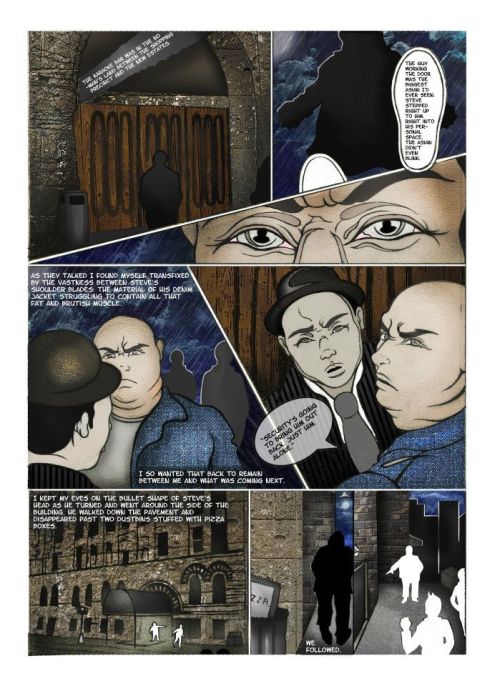
Back in town the amber beams of the street lamps swept us like inept search lights. They lit nothing more than our shoulders and baseball caps. The night wanted us out of its darkness. The roads were empty of traffic. The streets silent save for the sound of heavy breathing and thud of our footfalls.

It was gone Nine when we reached Cutlers flat.

The note taped to the door said: “See you at Wild Notes Karaoke Bar”.

Steve tore it from the door with his fat fist. The two pink rolls beneath his chin –which wrapped around where his neck should have been– wobbled.

We got the bastard,” he growled.

Blake Byrnes Art - all rights reserved

Blake Byrnes Art – all rights reserved

For a couple of years back there I was knocking out tales of monsters and wise-ass protagonists as if I was mining a big fat, juicy mother lode of fantasy fic. I was hitting a word count of a few thousand a week as my mind kept me awake at night telling me bonkers narratives I was simply compelled to share with the interwebs. Sadly, this proliferation was pretty much fuelled by a solitude you can only experience upon moving to a new country and having no friends. The only ‘friends’ I actually had any day to day ‘contact’ with existed behind the #FridayFlash and  #TuesdaySerial hashtags. Anyway, I guess I was carving a bit of an outrageous niche writing that which I loved to write. Still, I got to thinking about those poor pathetic actors who are typecast in the same role for their entire careers. And urged on by the amazing Carrie Clevenger to “ditch the unicorns and break the mould!” I decided to write something, gulp … realistic.

Thing is I am an ICU nurse and I get “real” handed to me in big globules of hard to swallow reality all the time. That is why I wrote bonkers stories in the first place. So, no way was I going to retreat into the bloody and often macabre world of modern day hospitals for the ‘authenticity’ I craved.

Fortunately, my iPod saved me! When good old fashion, gritty realism smacked me in the face as New Model Army’s “The Hunt” rang out from my playlist.

The song evoked images of teenage years spent walking the perpetually raining streets of my hometown; always in a gang, always walking with grim intent (though to be honest our only intent was to look menacing). Dark imagery galore! Yet provocative as the imagery of the song was it played second fiddle to the inference that something really … really … nasty was about to be done to someone who totally deserved it … and then some.

Anyway, not once stopping to consider why I was operating under the assumption that for something to be considered real it also had to be dark and nasty I opened Jodi Cleghorn’s #[Fiction]Friday prompt #169. “The note taped to the door said: See you at Wild Notes Karaoke Bar. ” and was off!

The comic strip adaption you see attached above came some time later and in collaboration with Blake Byrnes who wields a paintbrush like Zorro wields a sword. Now, with this story being published in the Best of #FridayFlash 2 courtesy of the mastermind, which is J.M Strother I feel I have come full-circle.

So thank you to all my old friends who lived behind the hashtags #FridayFlash and #TuesdaySerial … it was a honour and an absolutely pleasure hanging out with you x

Once upon a time Jason Coggins wrote speculative fiction to escape the real world. He wrote (a lot) and was published (a little). However, the real world bit him on the ass in 2011 to 2012. He came to realize that outside his door, a growing disenfranchisement in society was growing and playtime was over. Today, he organizes a Street Medic collective, which provides medical and emotional support to social justice activists throughout Melbourne and Victoria.

Jason may return to writing one day … but that day probably will only happen when the sun rises to shine upon a much nicer world.

You can visit the other Australian writers listed below and read a little about what inspired their story.
Jodi Cleghorn (who is hosting Stacey Larner)

Jason Coggins (who is hosting Jodi Cleghorn)

Tim Collard (who is hosting me)

Stacey Larner (who is hosting Tim Collard)

You can purchase Best of Friday Flash 2 from eMergent Publishing.

Dream a Little Dream

People love to dream of what they could achieve.

I dream about what I could achieve as a writer. You may dream about what you can achieve your creative sphere: in music, painting, sculpture, cooking, gardening, craft.

When I began writing three years ago, I didn’t have a dream of what I wanted to achieve. I began to write because it was something that was burning in me to do. As time has progressed, my vision has become clearer in regards to what I want.

I dream of having books published.

I dream of earning passive income through the books I write.

I dream of becoming a known blogger in the areas of writing and creativity.

I dream of seeing my name on the list of nominees for the Miles Franklin Literary Award (a prestigious literary award in Australia).

Recently I wrote down the projects I wanted to complete. Written on the first page of my first moleskine notebook are: 4 novels, 2 novellas (both collaborations, one is multi-media), 2 non-fiction projects, 1 picture book, 1 anthology of short stories.

Beyond the completion of these projects, there will be others to fill their place. More novels, novellas, non-fiction books, picture books, collaborative projects, anthologies, scripts, graphic novels. Plus other things I haven’t even dreamed or contemplated. And then in the “weird, but why not” category: I want to write a book about drumming, writing and spirituality.

Over the washing up (one of my “Thoughtful Spots” as Winnie The Pooh would call it, where I think through plots, ideas, blogs), I dreamed that Post Marked: Piper’s Reach was the break out book of the season. Jodi and I were invited to readings and signings, television show interviews.

That’s a dream.

But how do you go about achieving your dreams?

Some flirt with the idea of following their dreams but never act on it. Their dreams fade away and waft away like a fart on the breeze.

Others begin with gusto and vigour but they become wisps of ghosts, withered husks, as their seeds wither in the ground. Their dreams never come to fruition because they never followed through.

Dream with me a little more.

How do you achieve your dreams?

1. Make Plans

Dreams require planning. Without planning and commitment, dreams will only remain in the imagination.

John Lennon wrote: “Life is what happens to you/While you’re busy making other plans.”

Really?

Life involves planning. There is room for spontaneity. Between the hours of 3pm and 6pm on the fifth Sunday of the month. Book it in.

Let me counter this statement with a proverb: “Like a city whose walls are broken down is a man who lacks self-control.”  Proverbs 25:28

Go and get a pen and come back. Now.

You’re back? Good.

Write down what you want to achieve, no matter how simple or unrealistic they seem. Putting it down on paper begins to solidify the intent and instill the need to be in control of your dreams.

I’ll see it when I believe it.

2. Set a Timetable

It’s no good to make plans and then use the paper to wipe your bum. You need to timetable your projects.

How long will each project take? How long do you want it to take? What time do you have available to work on a project? When can you make time? Do you want to write a novel in a year or 3 months?

Break it down into monthly, weekly and daily targets.

Prioritise your projects, but allow for flexibility.

And make sure you finish what you start.

3. Be Accountable

A little wisdom again from the Book of Proverbs (11:14): For lack of guidance a nation fails, but many advisers make victory sure.

Developing a good network of creative (or non-creative) people can keep you accountable, keeping you on track to achieve your goals. Have them check up on you on a regular basis.

Lastly, dreaming is easy. Making them a reality is hard work.

What are your dreams? How do you go about fulfilling them?

Give Me Your Hands

Checking her watch in the dim light of the community theatre, Louise approximated the ending of the performance and gauged she would miss seeing her favourite band. At best, she could catch the last couple of songs of the set. Looking back down to her notepad with the programme folded inside the back cover, she skimmed over her notes.

In the shadows of the stage, a solitary actor moved towards a cardboard boulder. Sitting down, the stage lights focused on him and Louise watched his thick tongue protrude slightly from his mouth and move from side to side as he scrunched his eyes. His face took on a look of concentration, trying to recall information. He looked at his hands and then off stage, the pause lengthening causing the audience to shuffle in their seats, as he failed to remember the final lines.

A quiet prompt whispered from the side of the stage caused a wide smile to appear. Short hands and stubby fingers repositioned the ivy wreath crowning his broad and listing forehead and began.

If we shadows have offended,


Think but this, and all is mended,


Louise stopped scrawling notes for The Hopetoun Chronicle’s entertainment blog.  She had come along to the opening night at the invitation of the director, in order to spruik the performance. Shuffling back in her seat, Louise replayed the earlier mental conversation with herself.  Work was work and some things needed to be done to move up the journalistic ladder.  Amateur theatre was a rung above school theatre and musicals.  She had scorned the black skivvy and beret brigade at college, concluding that it would be ironic to not use a silencer should you need to kill a mime. 

That you have but slumber’d here


While these visions did appear.

Titania was a vision, entering the stage in a wheelchair, festooned like a Mardi Gras float. She pushed by a retinue of fairies and elves with the disjointed gait of legs like insects, or a pudgy waddle or felt their way across the stage with the aid of a long white cane. There was a party in the carriage of the Fairy Queen accented by costume and streaks of glitter reflecting the stage lights.

And this weak and idle theme,


No more yielding but a dream,


She scanned the list of actors’ profiles and found the actor playing Puck.  Andrew Davison.  His first performance, the program stated.  The glossy black and white photo showed a rounded, slightly pudgy face characterised with an expansive smile that creased the corners of his eyes and somehow captured the essence of life and innocence.

Gentles, do not reprehend:


if you pardon, we will mend:

Scanning back through the list of actors Louise noted the different abilities: Downs Syndrome, cerebral palsy, deaf, blind, spina bifida. Puck continued his delivery with the slightly slurred and mumbled delivery of a person with Downs Syndrome. Yet the cadence and metre of the Bard’s words shaped itself to the timbre of Puck’s delivery like water rolling over stones on the creek bed creating its own music.

And, as I am an honest Puck,

If we have unearned luck


Now to ‘scape the serpent’s tongue,

We will make amends ere long;

Louise scanned the audience and saw the attentive faces of fathers and mothers, aunts and uncles, brothers and sisters.  She saw in their faces a distinct pride, a connection with the actor on stage that Louise did not share. The faces in the program had family in the audience, all who had come to watch a play. They did not see physical impediment or intellectual disability.

Else the Puck a liar call;

It pricked at Louise.  Here in the forest, they were kings and queens and mischievous sprites. This was a world in which she had no connection.

So, good night unto you all.

When the lights would be turned up and costumes packed away, Louise surmised the actors would return to this world, existing as the forgotten ones; the shadows around the periphery of community, held at arm’s length as lower castes.

Give me your hands, if we be friends,

And Robin shall restore amends.

The audience erupted in applause as Puck walked to the front of the stage and bowed stiffly from the waist, his right arm across his stomach and his left behind his back. Here was life and love and acceptance. 

Louise realised her hands had retreated, firmly pushed into metaphorical pockets. Even the openness of the simple act of a handshake refused. She found herself applauding, not as Puck requested, but in the words she scrawled into her notebook.

Author’s Note: Last week I wrote a post, Speaking for the Voiceless, in which I outlined a little of my thinking regarding the focus of my writing. It reminded me of a story I wrote about 2 years ago for the now defunct [fiction]Friday. I dragged it out and gave it a little polish to present here. Still not perfect, but it captures the essence of last week’s post.

Speaking for the Voiceless

While working on my novel I was thinking about its content and thematic concerns. I then thought about another novel idea I have in development and ideas I have for a couple of short stories and noticed there was some similarities in regards to their thematic focus. 

My stories are not about people who are broken, because we all are broken, and I like to explore that aspect of people in what I write. My stories are about those who are unable to express themselves, are marginalised, the outsider, the forgotten.

In particular, seeing my mother working with people with disabilities at the art studio where she works, has influenced the focus of what will be my second novel.

In part I am also influenced by the parables in the Gospels and the stories that revolve around the dispossessed and those considered “outsiders.”

I wrote down some statements to clarify my thinking about the purpose of my writing and what I want to achieve from it. These statements will inform the basis for my writing.

I am yet to fully explore what this all means, but I am excited by the prospect of what it can do for the focus of my writing. Perhaps in a later post I’ll explore the connection between speaking the voiceless and the innate ability for everyone to be creative.

  • I write because I want to tell the story of those who are not heard.
  • I write because I want to tell the story of those who cannot speak.
  • I write because I want to tell the story for those who cannot.
  • I write because I want to tell the story of those who are disempowered.
  • I write because I believe that telling a person’s story is integral in understanding who they are.

50 Shades of Writing Style

“Murder your darlings” is a catch cry of the writing fraternity, painted on placards and waved around as if it were a protest rally cry.

What do we want? Destruction of adverbs.

When do we want it? Immediately.

It is touted as one of the foremost rules of writing. But what does it REALLY mean?

Sir Arthur Quiller-Couch, in 1916, said, “Whenever you feel an impulse to perpetrate a piece of exceptionally fine writing, obey it – wholeheartedly – and delete it before sending your manuscript to press. Murder your darlings.”

I’m calling shenanigans. I’m calling it an old fashioned dictum that needs to be questioned.

Writers are fond of dispensing advice. I’ve just finished ready Stephen King’s memoir/instruction manual On Writing, and he’s not short of dishing out advice either, including the above mentioned idea of excising all adverbs.

The interweb is full of pithy statements by known authors, which could be distilled into a handy gospel of “Thou shalt…” and “Thou shalt not…”

But have we actually asked the question of “Why?” Why dispense with all adverbs? Why excise long descriptions? Why should we write with the idea that there needs to be a pause for the reader to put down the book so they can void their bladder?

The “rules of writing” is actually a combination of cultural and aesthetic preferences. Cultural and aesthetic taste is reflected in its art, music and media. And it changes. Tastes change in all types of culture, writing not the least of them. The rules about writing are arbitrary and they, too, will change.

Art and culture are the revolutionaries, the questioners, the pragmatists of a society. They push forward, restrain, challenge a culture.

For writers, the question of HOW we do it is the focus of all the writing dictum and rules. Only writers care about “good” writing (as we should, but does the reader care about good writing? I posit they care more about the story).

We decry the shabby writing of “Twilight” and “50 Shades of Grey” and rightly so. Bad writing is bad writing and will always be present like the foul smell emanating from a teenage boy’s bedroom. Is there, perhaps, a twinge of jealousy at the success of a story badly told?

Think about music, where lists of the “Worst Pop Songs of All Time” appear from time to time. We may hate them if we are a musician for their cliched style or gimmick. If you’re a non-musician, maybe it’s a “guilty pleasure” knowing it’s not highbrow but enjoying it nonetheless.

But most important of all is story.

HOW that story is expressed is the choice of the author.

The expression of our ideas through story demands a style. For some writers, they prefer clean, simple prose. Others prefer lengthier descriptions, philosophical concepts, arcane language and paragraphs of prose postulating on the placement of condiments on the breakfast table and its significance to the character’s sense of self and power.

Consider why texts are considered “classics?” Is it the language, the ideas, the characters or a combination of all? Where would the “classics” fit into the scheme of things if they were presented today? The languid, turgid prose of the Brontes and Austens would surely be decried as overdone, but they are still read and republished, as is Shakespeare.

There should be “high” and “low” art, but not to create a divide; it should be recognised as a continuum. No one art form is superior to another; it is simply an expression. Some artists will want to go deeper and use a form where it is permissible. Others will prefer a more consumer-orientated form.

It’s a grey area between low and high art, and I would argue that writers should protect and champion language.

Before we dismiss a writer’s prose (whether it conforms to preconceived “rules” about writing or challenges them), we should listen to how the writer speaks in their work. We need to listen to their voice. It is as important to listen to the voice of the writer as it is to listen to what they have to say.

Are we listening?

Post Marked: Piper’s Reach Blog Tour – Victoria Boulton

As launch day rapidly approaches for Post Marked: Piper’s Reach, today on the blog tour, we drop in on the delightful Victoria Boulton (@Vicorva).

In this interview, Victoria asks us why we decided to write our story completely in letters. She also asks us about the origin of our characters, how they are informed by the process of letter writing and what we love about this project.

A letter is intimate and personal. It is a private, shared moment between two people – Adam

There is a sense of freedom and danger in pursuing a non-traditional form of story telling – Jodi

Ella-Louise is broken and burned out, living a sea change to try and reclaim her life. This is the most intimate connection I have ever had with a character. I’m drawn to the first person POV, but this is something altogether different – Jodi

Jude is the essential every man. But at the same time he’s vulnerable, he’s loyal and has a deep centred sense of place and purpose – Adam

To read the rest of the interview click here.

[FGC #2] The Photographer’s Concerto

[FGC #2] The Photographer’s Concerto

 “Charlotte,” she said, extending a hand. “Charlotte MacKay. I’m the photographer.”

A figure in black extended his hand. It was sweaty but cold and the reek of curry wafted over her. “Michael Bailey, band manager. Knock yourself out.” He stepped to one side allowing her through to the side of the stage. Around her black figures unwound mic cables, tuned guitars and placed various bottles around the stage. The crowd congregated at the other end of the room, sipping beers and drawing on cigarettes.

The thud of a kick drum felt like a punch to the stomach as the drummer ran through a sound check. From the side of stage, Charlotte watched the lean musculature of the drummer’s left arm as it raised and lowered like a pendulum, cracking the snare. Through the viewfinder of her camera she reeled off a few shots.

With the sound check over, the crowd pressed forward to the barrier, drinks abandoned at the bar. The lights dimmed and the crowd gave its approval: whistling and yelling, their voices tearing apart the darkness. Four shadows crossed the stage, fine-tuning, swigging from bottles, turning volume knobs. At the crescendo of the crowd’s voice the lights exploded like a thousand suns and the band struck the opening chords.

Across her line of sight past the bass player and lead singer, Charlotte glimpsed the guitarist. He wore an unbuttoned paisley vest, no t-shirt and long shorts with his guitar sitting slightly high. His hair danced around his shoulders and the guitar was an extension of his arms. Moving from the side Charlotte dropped between the barrier and the stage. Squeezing past the bouncers she stood before the guitarist, a worshipper before the shrine. Putting the viewfinder to her eye she sought the soul of this man.

Behind her the crowd pulsed in an orgiastic cycle of adoration, worship and dancing. Charlotte’s heart quickened, racing in concert with the shutter. Each frame captured a little of his essence, a relic to be fingered in quiet moments of prayer and contemplation.

The set finished and the house lights raised but the crowd lingered, unwilling to let go just yet, savouring the rapture of the music. Charlotte squeezed past security, back to her camera bag. From the corridor leading off stage a figure emerged, his head wrapped in a towel. His chest gleamed with sweat as he towelled off his head, drying his hands before offering one to Charlotte.

“Jake de Brito.”

His voice was softer than she imagined, and she noted a slight fragility in his frame, obscured by the stage lights. Bereft of his guitar he stood before her, a mere mortal. She watched his fingers move involuntarily, forming shapes and patterns in the air like a secret language; the fingers invoking sounds from the darkness of the void.

“Thanks for, like, coming to take photos of the band.”

“No, it was fantastic. I haven’t done a band shoot for ages and this was an awesome gig. What the street press are writing about you guys is spot on.”

He shrugged. “Did Michael, like, look after you?”

“Yes, thank you.”

A voice called from the corridor leading back stage. “Jake, you comin’ man?”

“Yeah. Hang on,” he yelled back. “Might see you soon, yeah?”

“Sure.”

Charlotte watched Jake disappear into the black. The persona captured on film was powerful and articulate; a shaman who summoned life and let it explode through his guitar. Without it, he was human but the magic boiled away at his fingertips.

“Hey, MacKay.” The waft of curry shot through with beer and cigarettes announced Michael Bailey’s arrival behind her. “Thanks for shooting. Send your invoice to my office.” He handed over a business card. “If you want, you’re invited to the post-gig party. Address is on the back.”

Charlotte scanned the address and pocketed it like an Access All Areas back stage pass.

Killing the engine of her Datsun 180 she flicked on the interior light and rummaged amongst the loose papers and film canisters on the floor of the passenger side. Finding an old lipstick she applied it while looking in the rear vision mirror. Pocketing another full roll of film she made her up the driveway to a broad fronted house.

At the end of a long corridor a second-hand clothes store explosion of flannelette, torn denim, scuffed boots lounged on chairs, stood in doorways and congregated in every spare area of the huge lounge room. The stereo cranked out late night radio through the haze of cigarette smoke. Adjusting her leather mini skirt Charlotte felt more glam metal than grunge, the bulkiness of her camera bag against her thigh an added layer of self-consciousness.

She lent against the doorframe, scanning the room unsure of where to go.

“Hey, you’re the photographer from the gig.”

“And you’re the drummer.”

“Mitch. Come in and grab a beer.”

Following through the house Mitch took her to the kitchen and grabbed a beer from the fridge.

“Let me introduce you around,” said Mitch.

Mitch lead her through the lounge, the only name Charlotte remembered was a girl’s with a towering teased and tasselled fringe in need of a structural engineer to code it for safety.

In the kitchen a group of guys gathered around the table, populated with loose cards, a bottle of Jack, cans of beer and bottle tops, and loose change. She recognised Michael Bailey, the bass player and singer but her eye fell onto Jake.

“I suck. That’s why I’m not invited to play,” said Mitch.

“Mind if I take some photos?”

Through the lens she snapped Jake’s fingers as they tapped the back of the cards. His hair was tied back into a ponytail and Charlotte noticed again the fragility. Not as a weakness, more a humility of character.

The radio cranked another tune. At the sound of a cello Jake inclined his ear to the sound and mimicked the song.

“Nice work cello boy,” said Michael.

Jake shrugged the insult and caught Charlotte’s eye as she moved the camera from her face. A brief smile formed on his lips as the opening lyrics invaded the smoky haze.

“I just died in your arms tonight.”

There was a chorus of disapproval from the flannelette wearing crowd but enough supporters to form a sing along.

“Mitch, take my place,” said Jake holding up his hand of cards. Moving from his seat Jake came to Charlotte.
“I’m seeing you sooner than I, like, thought.”

He led her out onto a concrete verandah, a rusted Hills Hoist rearing up from an overgrown lawn. They tossed musical preferences back and forth until they found a common ground.

“You remind me of the drummer in my first band,” he said after half an hour of false starts and half-finished sentences. “His time was, like, more fluid than water and he often didn’t know where the ‘1’ was. We were playing rock’n’roll, meat and potatoes music, not some Billy Cobham fusion piece from Mahavishnu Orchestra.”

“Sorry I’m so awkward,” said Charlotte, pulling on the strap of her camera bag. “I’m usually more… articulate.”

“I find music, like, easier. Notes, arpeggios, solos. Words are clumsy in comparison.”

“Next time I’ll be less like your first drummer. Promise.”

“I’ll get your number from Michael.”

****

Tucking the photo portfolio under her arm to avoid the rain, Charlotte dashed from the taxi to the restaurant awning. In her mind she replayed Jake’s message from earlier in the week.

“Hi Charlotte, it’s Jake de Brito. I was wondering, if you had your photos ready you could, like, join us for dinner on Saturday night. We’re at Belafonte’s, say seven-thirty. See you then.” Even through the tinny machine speakers his voice sounded musical.

She had spent the week arranging the shots from the gig and after party, agonising over which shot and in which order to present them.

Shaking off the rain she stepped inside and the raucous laughter from the table at the rear pointed her in the right direction. Jake stood and kissed her politely on the cheek and introduced her to the rest of the table. The band was there, Michael, and a girlfriend or two.

“Would you like something to drink?” he asked.

“Red wine, please.”

Charlotte sat down in the vacant chair, still awkward around these new people. She’d made a habit of existing on the periphery, invisible behind the camera. Putting the portfolio on the table, the girl to her left quickly snapped it up.

“These are brilliant,” she cried and the table turned its attention to Charlotte’s photography. “Oh my God, Mitch. Look at your arm!”

Blushing at the adulation she fielded questions from the girl to her left, identifying herself as an artist. A familiar topic allowed her to proceed smoothly, unaware Jake had returned. She sensed the quietness beside her, a reserved figure simply observing.

For the remainder of the evening her attention was divided between commentary on her portfolio and Jake. It pulled at her; she revelled in the attention her work received but it didn’t allow her to focus her attention on Jake. He politely deferred to the table, not offended by the interruptions. She wanted to drink from his presence, bathe in it. The continual movement of his fingers, playing imaginary songs, created gossamer strands around her heart.

Back at his place, she was surprised to see a cello positioned in the corner of the lounge room.

“I was classically trained from an early age. I wanted to learn guitar but my folks were classical musos. The guitar was, like, beneath them. Had they never heard of Slava Grigoryan?But it was Eddie Van Halen I idolised. I learnt cello as a concession in order to play the guitar. I even learned a bit of piano until they were convinced guitar wasn’t a passing phase.”

He poured two glasses of wine, offering her a seat on the lounge. “Besides, playing cello doesn’t get you the chicks.”

“Do you still play?”

“All the time. It’s different to guitar. Feel. Tone. Pitch. Sound.”

“Would you please show me?”

Setting his wine on the low bookshelf Jake placed the cello between his legs, resting it against his shoulder, tightening the tension in the bow. With a light finger he plucked the strings, his ear held close to the strings as if he were listening for a heartbeat. Charlotte watched the tattooed arm adjust the tuning pegs.

Satisfied with the tuning Jake drew the bow across the strings, pulling out long notes, full of longing, resonating deep in Charlotte’s chest. She pulled a camera from her handbag and a roll of film. Careful not to interrupt the virtuoso she adjusted the camera’s settings and closed her eyes for a moment, carried by the music. Opening her eyes Charlotte moved between notes and passages with the rhythm, pressing the shutter in time with the music. Through the view finder her eye caught the lines of the bow perpendicular to the strings; Jake’s arched fingers against the neck, his knee hooked into the curve of the cello’s body.

Jake grinned at her once, changing the tune to a quicker, lighter pace before the sonorous tones emerged again. Charlotte crossed her arms and held her camera to the right of her chin, studying her subject. Moving back to the couch she wound off the film and began to reload.

“The sound is sensuous, almost melancholic, yet beautiful,” she said.

“Playing cello is like making love to a woman,” said Jake, his legs straddling the dark stained wood. His fingers rested lightly on the body of the cello, the bow waiting for the invocation of music, the horsehair tickling the strings above the bridge.

“And like all guitarists, you name your instrument.”

Charlotte crossed her legs on the couch and sipped at her wine.

“What’s her name?” she asked.

“Celie.”

The woman frowned, no knowledge forthcoming.

“From The Color Purple,” he said.

“The movie with Oprah in it. I’ve seen it. But isn’t Celie raped by her father and beaten by her husband?”

“I read the novel. It’s the redemption found in love. And you can’t treat a cello like a loose woman. That’s what guitars are for.”

Returning his focus he looked at the woman seated on his couch. She leaned back into the furnishings, her feet crossed beneath her.

“If this is your lover,” Charlotte said indicating the cello with her wine glass, “how do you make love to her?”

Jake adjusted his legs around the cello. “You embrace her. Find the position where she is resting against you, comfortable and intimate. The body of the cello has the shape of a woman, curved and full.” Jake ran his hand down its body as if he were feeling a woman’s breast or the curvature of her thigh. Taking up the bow he began to play.

The cello’s notes, full of anticipation, took up the melody. “Each note made up here on the neck is her breasts: sensuous, ripe, engorged. With each touch you develop the song. You caress, press, touch.”

Jake saw Charlotte glance down at her own breasts, the fingers of her hand fiddling with the shirt button, perhaps conscious of their small size. He hesitated to make eye contact and let the music weave throughout the room, passionate incense perfuming the room.

“When you make love, you must remember all parts of a woman’s body. You embrace her to feel the softness of her skin, to inhale her fragrance, to consume her. But her breasts are but one part of the symphony.”

The bow arched and fell as Jake pulled and pushed it across the strings watching flakes of resin disintegrate from the hair and float under the light. The strokes gained intensity, no longer pushing and pulling, but thrusting with controlled ferocity. The music reached a crescendo, held sustained but not resolved. Jake plucked at the strings, a quick pizzicato, holding the tension. Attacking with the bow, the notes were drawn out in a hasty flight up and down the neck of the cello. An improvised solo, pushing, pulling, thrusting.

The bow arched sharply, the final note held in a vibrato by his fingers on the neck. Jake felt his breathing slow and become deeper. He rested his hands on his knees, touching the body of the cello, a light intimacy, with the headstock leaning into his shoulder.

Charlotte, the raven-haired woman with the camera for eyes, placed her empty glass on the table. Crossing the floor she felt Jake’s arm curve around her waist, pulling her into his lap. Positioning the cello between her thighs, her hands shadowed his fingers. The bow moved arched slowly over the strings and her fingers followed his like a spider on the neck. Even now she could feel the vibration through the bow moving up his hand and into hers.

Turning her head, her mouth brushed against his ear.

“Play me.”

I must thank Jodi Cleghorn for giving me permission to use her characters, writing the beginning of their relationship. Thank you for the trust in staying faithful to the characters you created.

You can read the story that inspired it, and what happens to them here: What I Left to Forget

Word Count: 2500

Jake and Charlotte


He invited her back to his place, their conversation far from finished. She was surprised to see the cello positioned in the corner of the lounge room.

“Classically trained from an early age and all through high school. My folks were classical musos and the guitar was beneath them. Had they never heard of Slava Grigoryan? But it was Eddie Van Halen I idolised. I learnt cello as a concession in order to play the guitar. I even learned a bit of piano until they were convinced guitar wasn’t a passing phase.”

He poured two glasses of wine, offering her a seat on the lounge. “Besides, playing cello doesn’t get you the chicks.”

“Do you still play?”

“All the time. It’s different to guitar in its feel, tone, pitch, sound.”

“Would you please show me?”

Setting his wine on the low bookshelf Jake placed the cello between his legs, resting it against his shoulder as he tightened the tension in the bow. With a light finger he plucked the strings, his ear held close to the strings as if he were listening for a heartbeat. Charlotte watched the tattooed arm tune the strings.

Satisfied with the tuning Jake drew the bow across the strings, pulling out long notes, full of longing, resonating deep in Charlotte’s chest. She pulled a camera from her handbag and a roll of film. Careful not to interrupt the virtuoso she adjusted the camera’s settings and closed her eyes for a moment, carried by the music. Opening her eyes Charlotte moved between notes and passages with the rhythm pressing the shutter in time with the music. Through the view finder her eye caught the lines of the bow perpendicular to the strings; Jake’s arched fingers against the neck, his knee hooked into the curve of the cello’s body.

Jake grinned at her once, changing the tune to a quicker, lighter pace before the sonorous tones emerged again. Charlotte crossed her arms and held her camera to the right of her chin, studying her subject. Moving back to the couch she wound off the film and began to reload.

“The sound is sensuous, almost melancholic, yet beautiful,” she said.

“Playing cello is like making love to a woman,” said Jake, his legs straddling the dark stained wood. His fingers rested lightly on the strings, the bow waiting for the invocation of music, the horsehair tickling the strings above the bridge.

“And like all guitarists, you name your instrument.”

The raven-haired woman crossed her legs on the couch and sipped at her wine.

“What’s her name?” she asked.

“Celie.”

The woman frowned, no knowledge forthcoming.

“From The Color Purple,” he said.

“The movie with Oprah in it. I’ve seen it. But isn’t Celie raped by her father and beaten by her husband?”

“I read the novel. It’s the redemption found in love. And you can’t treat a cello like a loose woman. That’s what guitars are for.”

Returning his focus he looked at the woman seated on his couch. She leaned back into the furnishings, her feet crossed beneath her.

“So this is your lover?” Charlotte asked indicating the cello with her wine glass. “How do you make love to her?”

Jake adjusted his legs around the cello. “You embrace her. Find the position where she is resting against you, comfortable and intimate. The body of the cello has the shape of a woman, curved and full.” Jake ran his hand down its body as if he were feeling a woman’s breast or the curvature of her thigh. Taking up the bow he began to play.

The cello’s notes, full of longing, took up the melody. “Each note made up here on the neck is her breasts: sensuous, ripe, engorged. With each touch you develop the song. You caress, press, touch.”

Jake saw Charlotte glance down at her own breasts, the fingers of her hand fiddling with the shirt button, perhaps conscious of their small size. He hesitated to make eye contact and let the music weave throughout the room, passionate incense perfuming the room.

“When you make love, you must remember all parts of a woman’s body. You embrace her to feel the softness of her skin, to inhale her fragrance, to consume her. But her breasts are but one part of the symphony.”

The bow arched and fell as Jake pulled and pushed it across the strings watching flakes of resin disintegrate from the hair and float under the light. The strokes gained intensity, no longer pushing and pulling, but thrusting with controlled ferocity. The music reached a crescendo, held sustained but not resolved. Jake plucked at the strings, the pizzicato quick, flicking the strings, holding the tension. Attacking the strings with the bow, the notes were drawn out in a hasty flight up and down the neck of the cello. An improvised solo, pushing, pulling, thrusting.

The bow arched sharply, the final note held in a vibrato by his fingers on the neck. Jake felt his breathing slow and become deeper. He rested his hands on his knees, touching the body of the cello, a light intimacy, the headstock leaning into his shoulder.

Charlotte, the raven-haired woman with the camera for eyes, put down her empty glass. Crossing the floor she felt Jake’s arm curve around her waist, pulling her into his lap. Positioning the cello between her thighs, her hands shadowing his as fingers. The bow moved arched slowly over the strings and her fingers followed his like a spider on the neck. Even now she could feel the vibration through the bow moving up his hand and into hers. Turning her head, her mouth brushed against his ear.

“Play me.”


This is an extract of a longer piece, which you can read on Sunday, as part of the Write Anything Form and Genre Challenge. Many thanks to Jodi Cleghorn for giving me permission to use her characters, writing the beginning of their relationship.

You can read the story that inspired it here: What I Left to Forget


Meditative Domesticity

Meditating. Percolating. Doodling. Chewing things over.

Writers have a plethora of ways to describe the thinking process of their creativity.

I prefer the term ‘composting.’

I remember my grandfather having an old compost heap, as did my father. It was a homemade enclosure of spare bricks stacked to form a small wall, about 4 bricks high. It had three sides with the fourth side open. As kids we would take down the bucket of scraps from the kitchen and dump it onto the pile of other food scraps and grass clippings.

From time to time my grandfather would turn the pile with a four tine garden fork revealing the decomposed layers beneath of nutrient rich soil. Shovelling forkfuls into the wheelbarrow, the compost was deposited around the pumpkin vines, beetroots other vegetables in season, around the citrus trees and under the rose bushes. As kids we would point excitedly and carry on if we saw a worm writhing and wriggling when exposed; a sign of good soil.

I like to ‘compost’ stories and characters in the back of my head, adding layers of ideas, concepts and problems. Sometimes all I get are choko vines (the world’s most bland and inedible vegetable unless used in McDonald’s Apple Pies) and the inevitable tomato plants (I don’t even like tomatoes).

I keep adding layers of scraps and in time, it yields a crop.

And as there are many ways to describe the creative process, there are as many places for a writer to go to spark their creativity or solve a problem with a narrative.

Time to mix my metaphors.

I may be no gardener, but I am a good washer-upperer.

For some reason, the place I best yield a crop of ideas or solve a plot problem is when I am over the kitchen sink, elbow deep in suds and bubbles, scrubbing dried on tomato sauce from plates. It’s meditative domesticity.

It’s a focused but unconscious activity requiring little deep thought and allows my brain to ruminate or compost a story I am working on. Maybe it’s the methodical process I use when washing up (glasses, cutlery, crockery, pots, miscellaneous – can we say OCD?) that allows a story to bubble to the surface and somehow gain a better perspective.

Often I’ve had to step away from the sink, dry my hands and head to the laptop to scribble down a paragraph or lines of dialogue. Maybe I need a dictaphone or speech recognition software so I can operate hands free.

Other writers I know hang out washing, iron clothes, go for walks or work out.

I told my wife that if she saw me washing up when I’m on long service leave I’m probably trying to solve an issue with my novel.

What’s your creative process and thinking space?