Nothingness Two empty mugs sit on the kitchen table. One has the teabag still inside drawing up the dregs to the string and into the cardboard label. The other has a teaspoon beside it. A knife rests on a side plate, smeared with Vegemite and margarine. Toast crumbs are scattered as half-finished sentences. The budgie chews on the plastic frame that once held a mirror. A novel lies face down on the table, open at where the story was left off to be resumed later. The house is empty. She is outside watering the garden, insouciant as he is while hanging out the bedsheets on the clothesline. A mourning dove calls from the tv antenna on the neighbour’s roof.
Sparrows When taking the clothes off the line, I leave the pegs on as weightless sparrows affixed to a point, and I imagine them to be notes awkwardly arranged on the stave. A random chord arrangement. Major, minor, augmented, diminished. Dad hates it when I leave them out and prefers to take the pegs in when he does the washing. He leaves a blank stave with no notes. These are the shapes of our voices. When he’s not looking, I sneak out to leave one or two pegs on the line.
When you ask me to give you love, in what shape do I present it to you? Or what object is the better representation that I may give it to you, my brother? I try and think of the presents I’ve given you over the years, at birthdays, at Christmas, but I remember more the donuts and cans of soft drinks we bought at servos, the hot chips from the takeaway joint down the street, and in doing so I have a better understanding of you and how we related to each other. I argued for the profundity of literature and language; you argued for the profundity of the saw and the hammer. We built our worlds within these frameworks and admired each other’s handiwork without truly understanding it and entertained one another with suggestions of how to manage the interior design. Your birthday is coming up next month and I want to buy you something but the dead cannot accept the gift. Maybe I’ll go for a kebab and keep the torn pieces of foil and add them to the sculpture of your soul.
At Christmas time, when all the relatives have gathered, seated as garlands of gossip around the dining room table, I will sit at the children’s table instead. I will listen to the prophets utter newfound wisdom and I will not be the one to poison kids with their own fears.
He’s overfilled the kitchen sink with suds again and is elbow deep in bubbles, fishing for the last teaspoon he knows is in there. Scoops it out, puts in the cutlery rack then reaches for the plastics on the bench. The first one is pockmarked on the inside and stained by leftover spaghetti bolognese nuked in the work microwave. He knows the stain will never be removed. It’s part of the container now. Still, he scrubs at it, if only to remove the grease. Tipping out the dishwater he gives it the once over, thinks the stain is a shade or two lighter and puts it on the rack. Yes, dear reader, there is a metaphor in this scenario. I’ll let you work it out.
in the evening, the rain falls/ punctuating the pergola roof/ what if rain/ was the language of God/ the tongue of tactile vernacular/ we wait within the silences of drought/ sitting with our commission and omission/ afraid of the deluge of the flood/ holding a cup to catch holy water/ to slake our thirst
I trailed after my older brother down the street to the creek, and continued to follow him through the bush as the track ran parallel to the water. The cicadas were out in force, the aural accompaniment to the heat haze we walked through. I was following him because he’d had this shit-fight with Dad and had to duck to avoid the backhander swung at his jaw. When he stormed out, I followed him as a shadow. Under the broken shade of the eucalypts he kept walking, and still I followed. Said nothing. Watched his feet pick their path. I didn’t watch where I was going and tripped over a small branch. I looked down to pick myself out of it, check the branch hadn’t scratched my leg and saw my shoelace was untied. Once I’d done my shoelace I looked up and my brother had gone beyond the bend in the track. Picking myself up I jogged to catch up with him. Coming around the bend, I saw him a little ways ahead, but he had stopped and was facing the way I was coming. I pulled up, drawing deeper breaths. He nodded, turned and kept walking. I understood the irony that while Dad had broken him, he was not fragile.
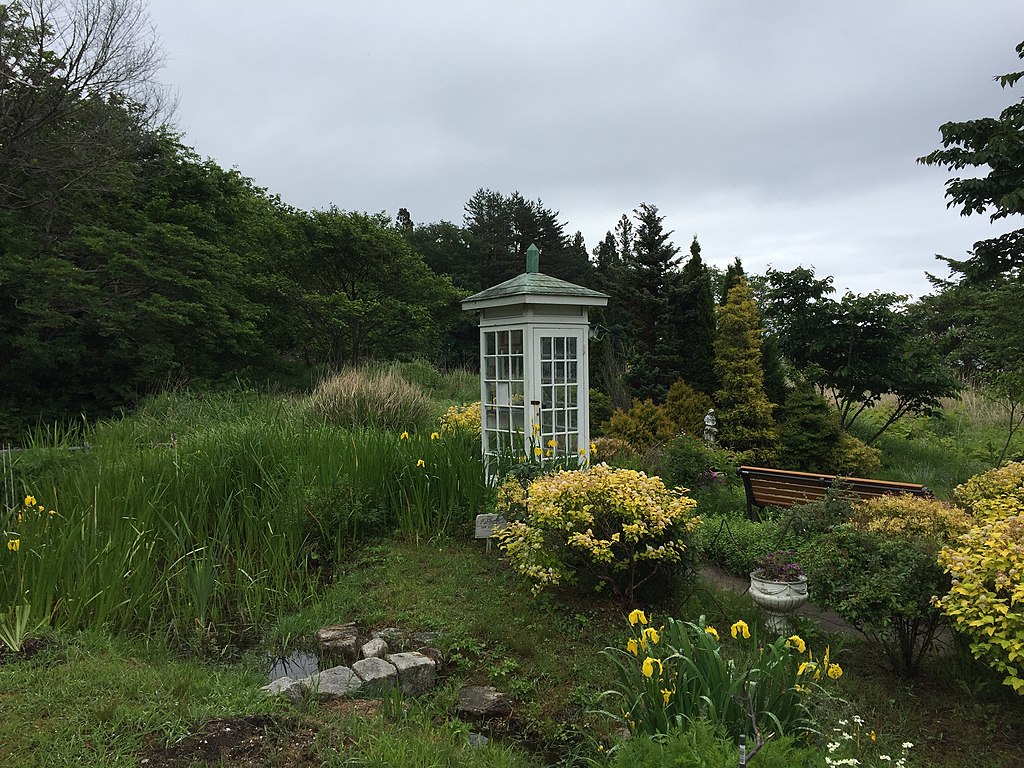
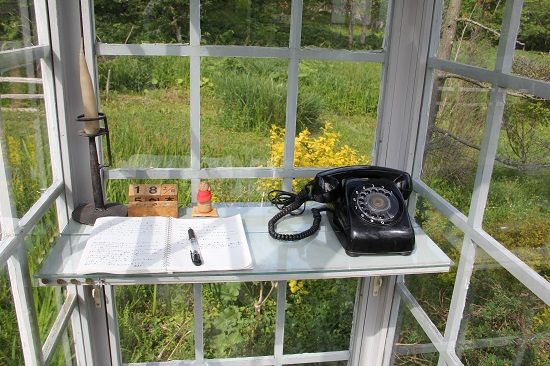
FICTION FRIDAY The Wind Phone “Hey Mick, I remember all the times at the parties at your place when you’d get out your old motorcycle helmet and you’d jimmied a piece of dowel on top, this small makeshift post, and you’d bung a whole pile of catherine wheels on it, light the sucker up and walk into the middle of the circle while it spat colourful bolts of fire in this kaleidoscopic circle of frenzied chaos. And you’d be there pissing yourself laughing, safe from harm, completely sober; you never touched booze or smokes or anything. We all took refuge behind whatever, or whoever we could. You’d be smiling like the Cheshire cat, usually only wearing your jocks. Once you were naked and we all feared you’d lose your pubes to a stray bolt of firework and from that time we took it in turns to buy you a 7-pack of undies from K-mart for Christmas. Why did you have creases in your jeans like they were old man slacks from Lowes?” He slowly moved the telephone away from his ear, wiped his spit from the mouthpiece and replaced the receiver into the cradle. The cradle accepted the phone as receiving a solemn gift, sinking to a final click. Around him in the telephone booth, the air was still, like a held breath. As he exhaled he opened the door and closed it gently, knowing the end of the door’s trajectory was the end of the conversation. The wind phone (風の電話, kaze no denwa) is an unconnected telephone booth in Ōtsuchi, Iwate Prefecture, Japan, where visitors can hold one-way conversations with deceased loved ones. It was initially created by garden designer Itaru Sasaki in 2010 to help him cope with his cousin’s death.
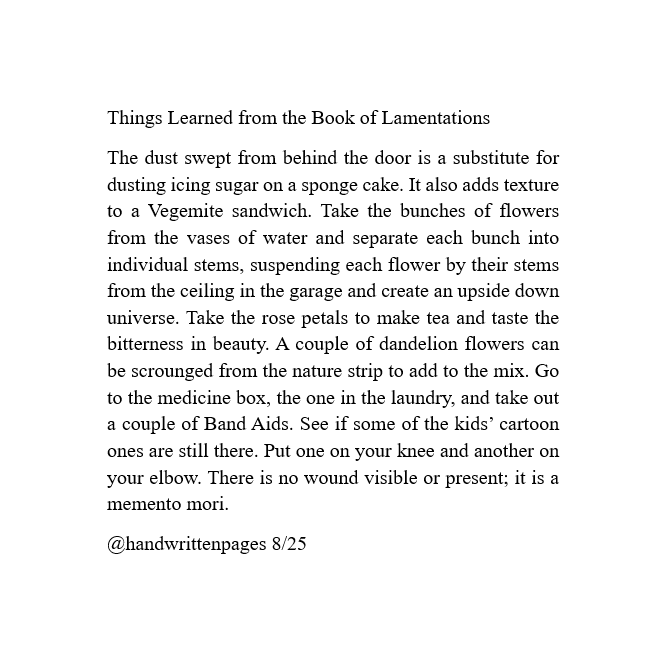
The dust swept from behind the door is a substitute for dusting icing sugar on a sponge cake. It also adds texture to a Vegemite sandwich. Take the bunches of flowers from the vases of water and separate each bunch into individual stems, suspending each flower by their stems from the ceiling in the garage and create an upside down universe. Take the rose petals to make tea and taste the bitterness in beauty. A couple of dandelion flowers can be scrounged from the nature strip to add to the mix. Go to the medicine box, the one in the laundry, and take out a couple of Band Aids. See if some of the kids’ cartoon ones are still there. Put one on your knee and another on your elbow. There is no wound visible or present; it is a memento mori.
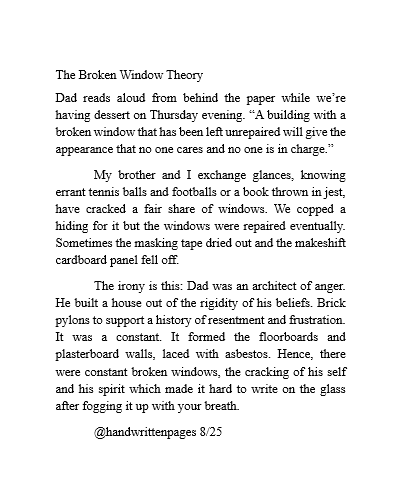
Dad reads aloud from behind the paper while we’re having dessert on Thursday evening. “A building with a broken window that has been left unrepaired will give the appearance that no one cares and no one is in charge.”
My brother and I exchange glances, knowing errant tennis balls and footballs or a book thrown in jest, have cracked a fair share of windows. We copped a hiding for it but the windows were repaired eventually. Sometimes the masking tape dried out and the makeshift cardboard panel fell off.
The irony is this: Dad was an architect of anger. He built a house out of the rigidity of his beliefs. Brick pylons to support a history of resentment and frustration. It was a constant. It formed the floorboards and plasterboard walls, laced with asbestos. Hence, there were constant broken windows, the cracking of his self and his spirit which made it hard to write on the glass after fogging it up with your breath.
Do you really want an answer to the question, ”Who are you?”
I am an English teacher and drummer/percussionist with an interest in literary pursuits, creative endeavours, rhythmic permutations, theological amplifications and comedic outbursts.
Here you will find my creative detritus: articles on living a creative life and writing explorations.
And other ideas I have snaffled from the papers stuck on the fridge door.


 A Fullness in Brevity - Adam Byatt