As a child, colouring outside the lines was the mark of a juvenile understanding of boundaries and parameters: they were ignored.
You were handed a pencil or crayon and a colouring book and told to have fun. And fun was most definitely had. Scratched lines of pencil or crayon all over the page. There was fun simply in the act of creating marks on the page.
Yet gentle adult encouragement made you aware of the lines of the picture; the boundaries drawn to keep the colours within.
So you took extra care and effort to colour within the lines and make the picture look special. You were disappointed if your pencil or crayon slipped over the line, extending the colour beyond its prearranged designation.
And so it is with any creative endeavour. Initial enthusiasm and fun is gradually replaced with awareness of the skills, parameters and boundaries of your chosen creative medium. You become a skilled practitioner of your creative art and can produce good work.
So, how do you extend your creative skills? How do you extend your knowledge and understanding of your medium? When you are entrenched in your chosen creative medium, whether it’s art, literature, film, painting or music, how do you extend the boundaries and parameters?
You learn to colour outside the lines again.
As a drummer playing contemporary music and musical theatre, I am used to the drums forming a rhythmic foundation, providing timbre, dynamics and tone colour, the beat and rhythm.
The other day I had the opportunity to meet up with Adrian, an old teaching colleague of mine who is an art teacher, musician, boutique record label owner and producer, and a mutual friend and drummer, Costa.
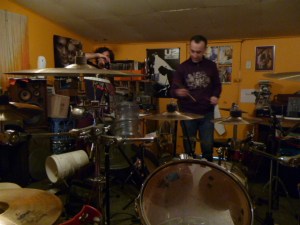
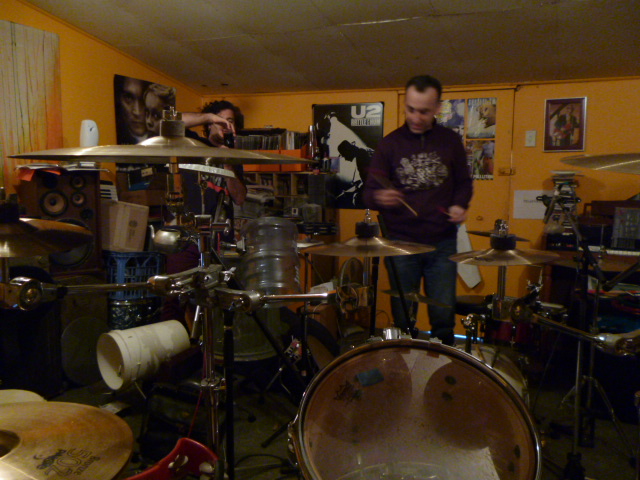
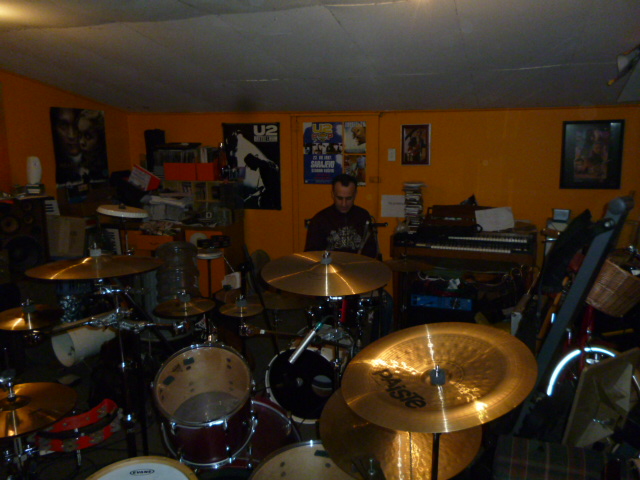
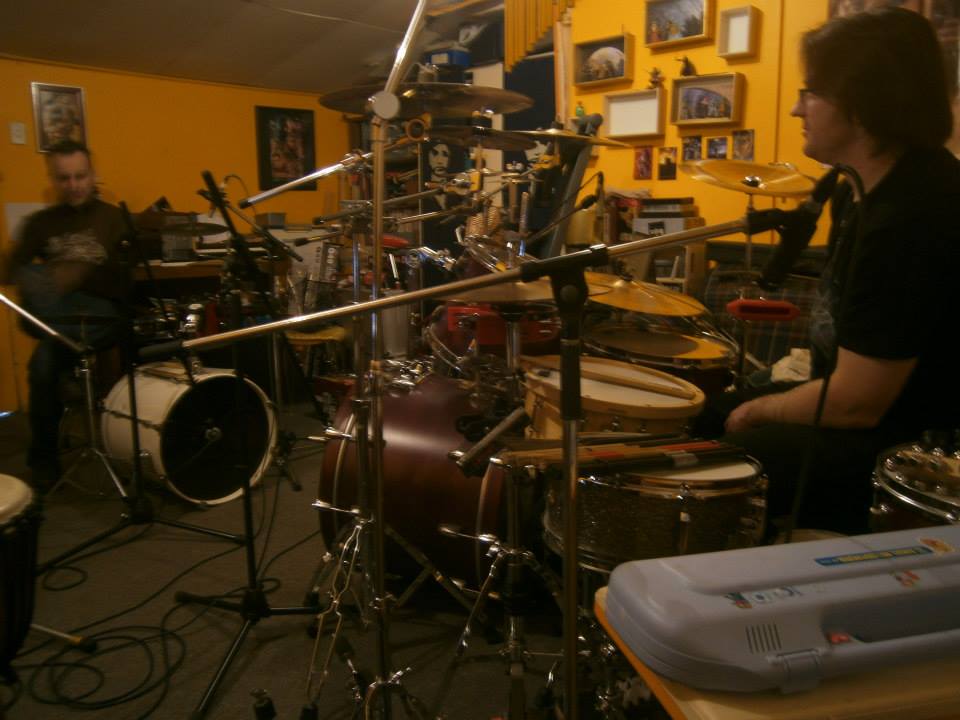
The three of us convened in a small home studio out the back of Adrian’s house. We lugged gear in and set up while Adrian placed mics.
There was no preconceived ideas as to what we were going to play and record, except for some youtube clips we had looked at earlier. There were no lines to demarcate the boundaries of our creativity.
Yet how easy it is to rely on the boundaries of what we know. As drummers Costa and I fell into an improvised jam in 6/8, using a form that was familiar to us, creating a beat and rhythm. As we played we listened to each other, playing around each other’s grooves and timbres, sometimes playing with the groove, sometimes playing against it.
We were colouring within the lines.
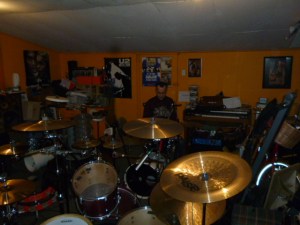
I learned to colour outside the lines because of Adrian’s artistic vision and creativity.
Adrian suggested for the second jam an experimental form playing in different time signatures: Costa played in 4/4, I played in 5/4 and Adrian played in 7/4. It sounded gloriously messy as we experimented within the constraints of the time signature allocated while listening to what the others were playing.
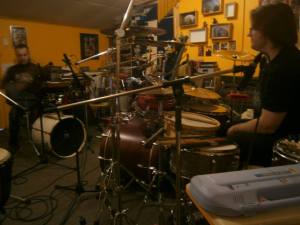
The last jam was truly a learning experience of colouring outside the lines. Adrian suggested we play not rhythms or beats, but focus on the sounds produced from each part of our instrument.
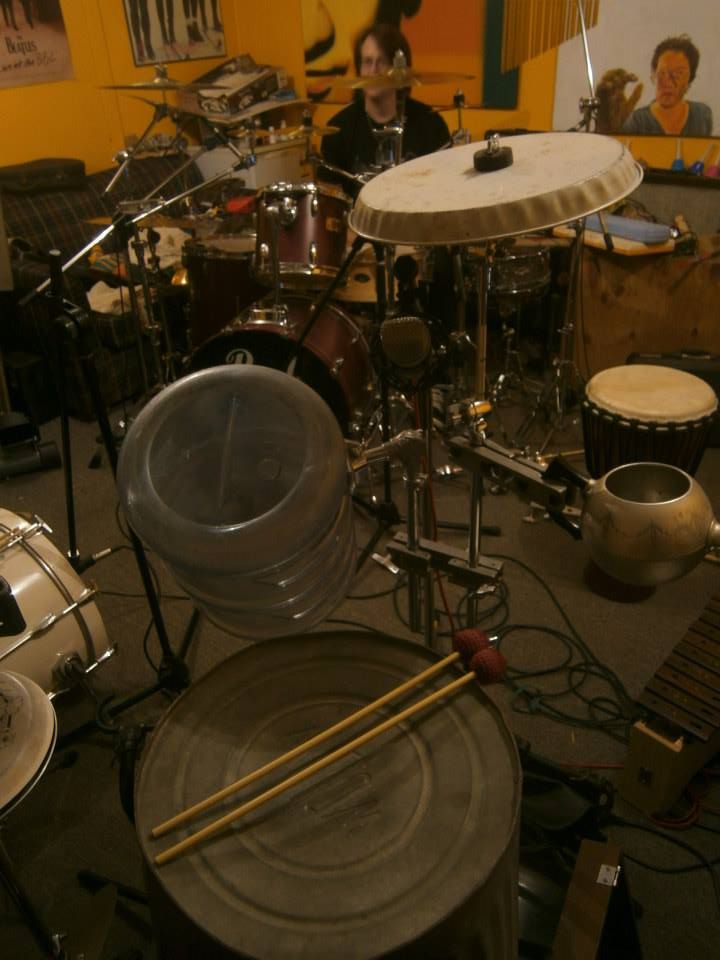
We used sticks, mallets, brushes, rods, plastic rods on all parts of the drums and cymbals including the rims and stands. I threw a handful of sticks into the air and let them fall where they may. I bounced sticks, mallets and rods off my snare to see where they landed. Adrian used a violin bow on cymbals and played mallets on my kit, Costa’s kit and their “junk” drum kit which consisted of a metal garbage bin, water bottles, saucepan lids made into hi-hats and a metal tea pot.
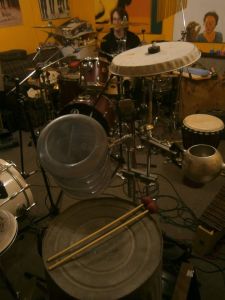
It was this last improvisational jam that really expanded my understanding of rhythm, drums and music in terms of creativity. It allowed me to colour outside the lines as I was not focused on the traditional parameters of my instrument, rather learning to see outside the lines and create accordingly.
Artists talk about the ‘negative space’ on the page; what is not there is as important as what is there.
My next step is to apply this principle to my writing.
Whatever creative medium you are engaged in, whether it’s writing, music, art, have you learned to colour outside the lines again?


 A Fullness in Brevity - Adam Byatt