
I wanted to go behind the scenes to my award-winning short story, Crowd Surfing (First Place in the 2024 Stringybark Short Story Award), particularly the music that I was listening to in the editing phase.
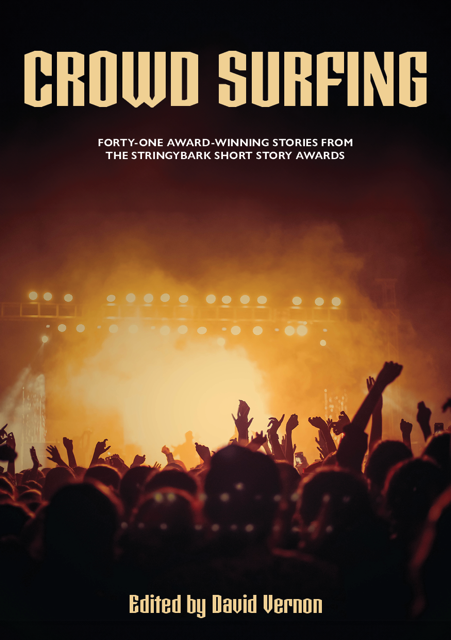
Crowd Surfing is about the search for healing in the middle of grief. A mother has lost her son to suicide, and after finding a ticket for a punk rock show in his room, goes along to the show to search for understanding about who he was, what the music meant to him, and what he meant to her and other people.
The inspiration behind the story came from a brief article I read about a mum crowd surfing at a gig. I introduced the suicide of her son as the conflict of the narrative. I love my heavy music and have been in a few mosh pits back in the day (these days I will happily take a seat if it’s offered). The catharsis I find in heavy music was the emotional core of the story and its purpose, and each draft was an excavation to achieve that goal.
In contrast to the heaviness and weight of emotions in the story, it was a quiet, melancholic and meditative song that was the soundtrack while I was editing. Circles on Circles by post-rock band Caspian was the song I had on repeat when working on this story. It was the concept of circles, of circular motion, of the cycles of grief that helped frame the narrative. My story was not influenced by the lyrics of the song but the tone and mood certainly did.
To build the narrative, I needed to get the mother in her place of grief to the venue. I imagined what it would be like to have to do the final load of washing of your child, to put it out on the clothesline, bring it in when it is dry, fold it and then put it away. It allowed me to focus on a mundane moment and endow it with a heaviness and an emotional weight, and then to build into the narrative the character of her son, Jeremy. I named him “Jeremy” after the Pearl Jam song.
When she enters his bedroom, she is confronted with all of the items that she identifies with her son: music, CDs, instruments, his laptop where he records his podcasts. This leads her to seeing a ticket for a local punk show and her decision to attend, to try and make sense of why this angry music was engaging for her son. As he says to her,
“I play angry music for happy people,” he said when she asked why he enjoyed it. She nodded like she understood in the same way she nods when people ask her how she’s doing, except she wants to scream, “If he was happy, why did he take his life?”
I noted to myself earlier this week when I was finishing a draft for a story, that it’s not until about the 4th or 5th draft of a short story, when I have really excavated its bones and begun putting on its flesh, that I can see the depth of purpose in the story and find ways to make that clear in every sentence.
Hence, it was the mundane act of washing that provided a motif for the story: the circular chaos of a washing machine in parallel to the frenetic actions of a mosh pit and the maelstrom that is grief. It appears in the narrative in different ways but was a constant thread throughout for a cohesive connection between mother and son, and between mother and her son’s music, and her own grief and sorrow. She sees it in the actions of the crowd as they make a circle pit with those on the inside, arms and legs tumbling like socks and undies in the washing machine, and those on the edge and perimeter, waiting and wanting to be drawn in, even if something is holding them back.
With Jeremy as a known entity in the scene, it is discovered that his mum is in the audience, and the band brings her up on stage, acknowledges her loss, and their loss, but want to show her what Jeremy meant to them, too. Again, Circles on Circles was the soundtrack in my ears when I was working on this last section of the story as a vehicle for helping me focus on the emotional core of when she is taken to the edge of the stage, the edge of her own grief and sorrow, to lean back and be carried by the hands of the crowd. When she is safely returned to terra firma, the crowd embraces her in community, closing the circle and providing the beginning of her healing.
Crowd Surfing is available from the Stringybark website or a digital version is available on Smashwords.

 A Fullness in Brevity - Adam Byatt