
As Iron Sharpens Iron

Writers, by nature, are solitary beings, loitering in libraries, browsing bookshelves and hunkering over a laptop or paper alternately cursing and praising the words in front of them.

You do find them congregating at literary festivals and the adjacent pubs and bars where they will hold court and pontificate about process, craft, literary technique, genre, publishing, moleskins and every other ennui about writing.

But there’s one thing I’ve noticed writers tend not to talk about: story ideas. In particular, the current WIP. Writers become like professional poker players when it comes to discussing their WIP. The dark shades go on and the cards are held close to the chest. Is there a fear someone will steal our precious and brilliant idea?

A writer works in isolation, writing, drafting, editing, polishing.

A writer knows the benefit of a beta reader in helping to shape a novel/flash fiction from what it is into something better. The beta reader helps identify when the plot is flagging or the characters are not fully realised. But this is normally done only after the piece is written.

A new way?

If we were to collaborate with another writer, a critical friend or trusted beta reader, in the initial planning and drafting stages, would our WIP benefit from it? Would we avoid a flagging middle section, have more developed and real characters because we’ve talked it over with a trusted writer?

Do we not talk with someone because we are afraid of our brilliant story idea being stolen. We always think our ideas are brilliant, don’t we?

But why are writers so different from other creative types? Musicians collaborate all the time. Dramatists workshop a play before performance. A fresh set of eyes and ears could open possibilities you as a writer may not have thought of. Develop a critical friendship with a peer who writes in the same genre or a different genre.

I’m working on a multimedia project with a colleague where I am doing the writing (novella length) and she is the artistic director for the short film/website/graphic novel/art installation. It’s a partnership where the dialogue about possibilities and options will make for a better product. It will still require a beta reader in the later stages, but the collaborative approach is engaging, inspiring and fun.

During a rehearsal for a carols performance this week (where I was playing percussion), I was chatting to one of our singers, another creative type.  We were talking about the need for developing creative texts like short films and dramas for events like Easter and Christmas. It sparked a brief, but enthusiastic discussion. While no real plans were made, it opened an avenue for new directions to explore in the new year.

Whilst driving to the carols performance on the weekend, I had an idea for a short film for Christmas next year. And no, I’m going to keep it a secret. Hey, it’s Christmas, so there’s a limited repertoire and focus, know what I mean.

But as iron sharpens iron, so a discussion with someone creative opened new possibilities. My idea requires refinement and development, but the collaborative approach can surely produce a better product.

Would you consider a critical partnership to make your work better, even before you start?
Tis the Season for Giving

It’s the Christmas season, a time of giving and rejoicing.

Therefore, I have a gift for you. I have written a Christmas-themed story for you to enjoy.

Click on the link below to download your copy.

A Christmas Story – The Cracker Factory

If you would like a signed hard copy, send me your address. Please be careful not to post your address in the public eye (I want to protect your privacy).

Blessings and Merry Christmas

Adam

Voices of Creativity

A brief twitter discussion about maths, science and the humanities took me down a little garden path about the subjects we studied at school and the voice of creativity we develop.

It began with a discussion about the correlation between music and mathematics (explains my humanities/maths/music balance) then veered into the vagaries of the quality of the teacher in front of the room (caveat: I am an English teacher).

The quality of the teacher does have an impact on the learning of the student. A good teacher recognises the different learning styles of the students in the classroom and differentiates the curriculum. A good teacher also understands there is a world beyond the classroom and brings it into the dialogue of the classroom. A good teacher shows students the applicability of the curriculum and content to the wider world.

But it led to one person in the discussion recounting a statement that discounts a student’s aptitude: “You’re not mathematically inclined.”

You can substitute “mathematically” for any subject: You’re not artistically inclined. You’re not historically inclined. You’re not scientifically inclined.

We all have preferred learning styles and ways of expressing our learning and creativity. I refuse to believe students should be placed into categories regarding their learning. We need to expand our thinking beyond the boundaries and confines of subjects (English, Maths, Science etc) to learning skills and problem solving, to develop higher order thinking skills.

The modern approach to learning is to know a lot about a narrow field of enquiry. Rather, we need to know a little about a wider field of enquiry. Kind of like a talk back radio host, except with a higher IQ and a lot more common sense; a modern Renaissance Man. I want to be a modern Renaissance Man.

However, we have preferences and passions in our learning and our interests. For some it is the humanities (English and History) while for others it is the formulae of Maths and Sciences. I am securely in the former while I enjoyed Maths and Sciences in high school. And others find their passion in music and instruments or paints and pencils.

We have voices. We have different voices. Each subject is a different voice to express one’s creativity and passion.

I have found my voice in writing. I also another voice that dabbles in music and there is some correlation and cross over between the two.

Creativity is not limited to the “arts” i.e. writing, music, drama, art, dance, film making.

There is beauty in the mathematical language of the universe, a deeper understanding of the shape and form of the natural world in the patterns of the ecosystem.

Find your own voice.

A Writer’s Emotions

Prompted by a previous post The Reasons Why, a question was raised that is specifically focused at writers: What does it feel like when you write?
As with any creative endeavour, the creative process is a Hydra, a labyrinth, a slippery bar of soap and having to sort out the pile of electrical cables that have somehow entangled themselves behind the television cabinet (all electrical cables, speaker leads and instrument cables are sentient beings that tangle themselves in knots even when coiled correctly – for the non-musician, think of a plate of spaghetti).
Each creative person has their method, but at the heart of it, what does that person FEEL when creating.
Here’s what a few twitter friends had to say:
WookiesGirl Its the most frustrating and yet fulfilling thing I do.
LilyMulholland  to get those people out of my head…it’s getting pretty crowded in there…
Emma Newman Much better.
Helen Howell I’ve just finished writing a flash for my blog for friday, and it feels good. Just did a book review and I kinda feel pleased when I see the effort I have put into it up on the screen. When I write I become transported to the world I create. I not just see and hear my characters, I feel what they feel – writing is more than a therapy it’s a magical experience.

How do I feel when I write?

My other creative endeavour is music. I play drums. I equate writing and drumming/music, two artistic endeavours, as sharing the same process. There is the “rehearsal” phase, developing craft and technique (the drafting and editing phases), and there is the “performance” phase (the finished product).

The rehearsal phase is often a dog’s breakfast, splattered from one end of the kitchen to the other. Whatever you put your hand to is smeared rancid custard. It’s gruelling, tiresome, frustrating, painful and makes you want to take out your eyeballs with a crayon.

But there are times in the practice room when rudimental exercises become meditative. You find a flow, a rhythm, a beat.

Then there are moments when playing music is sublime. Those moments during a live performance when every part connects seamlessly from drums to guitar to bass to vocals to keys. You carefully execute the parts you hear in your head, translated into your hands.

However, to make roses bloom, (to mix my metaphors even further) you have to get your hands filthy dirty and smelling of manure.

How do I feel when I write? I feel a spectrum of emotions from giddy excitement of a new idea to the joy of the first few drafts. Then comes the hard work of shaping and refining. It can suck the life out of you and the story. Think of fingernails dragged down a chalkboard.

But…

There is a certain smugness and self satisfaction when a story is as perfect as you can make it.

And it feels good.

How do you feel when you write?

Writing and Sex – A Dubious Metaphor

Writing and Sex – A Dubious Metaphor

In the process of editing a story for submission, I thought about the relationship a writer has with the story. Dark fantasy and sci-fi author Alan Baxter wrote during the week of the editing process as flensing. It is well worth your time to have a read.

I’m going to dirty it up and compare it to sex.

The First Draft – This is when you rip off each others’ clothes and engage in primeval, animalistic, urge-driven sex. It’s a quickie. Pants are down around your ankles. There is no thought to foreplay or decorum. It just happens. It’s rather selfish as all you think about how good your idea is.

Subsequent Drafts – You’ve know reached the “awkward” phase in the relationship with the story. You’ve seen each other naked. But you know there is work to be done.

In a half-baked attempt at romance, you take things a little slower. There is the offer of flowers, desserts, sensuous massage, candles, walks along the beach. Even a movie if you’re particularly keen. You’ve even made a mix tape to make out to. But, you still can’t quite figure out how to get the bra off without appearing like you’re an incompetent teenager and breaking the mood. You have even remembered to shower.

Each time you come back, you’ve learned a little more. You know when and where to stimulate to make it work. You take your time. You luxuriate in your story. You have even gone out and bought new underwear to let the story know it’s special.

Each time you are together, you learn to work more closely, watching, listening, learning.

The Final Draft – You have now learned to make love to your story. You have explored every nook and cranny; you know what turns your story on. You can undo the bra. In the dark. One handed.

Truly you have learned to make love to your story. You consider its feelings by not passing wind when you are intimate together. Snuggling after sex is  enjoyable. Intimacy is achieved; a connection of souls.

If you love something, set it free. If it comes back, you have to work on your relationship some more.

Cigarette, anyone?

What Does A Writer Do?

After reading a blog post by Zena Shapter “The Age of What?” I began thinking about the cultural and social trends that are currently in play in our society.
We focus on the individual but protest the rise of the few who have against the most who do not. We shun a belief system focused on one set of values because we like to wander the Supermarket of Life and pick and choose the values and beliefs that pertain to me, but not you.
This is the Age of Caffeinated Globalisation with a side order of fries and a cappuccino.
This is the Age of Meh.
This is the Age of Me.
Millions of words will have been written about current political and social events in the form of media, political commentary, blogs and conversations at the pub. Writing is an integral part of our cultural communication. However, the use of narrative, story and parable takes a little longer to permeate the collective mindset.
Writing is a part of the cultural tableau as is music, film, art and dance. So, what role do writers/authors/playwrights/poets play in our society?
I think writers have been the vanguard, the forefront, the middle of the pack and bringing up the rear when it comes to cultural trends and movements. We critique, comment, lament, poke fun, entertain, challenge, educate, satirise, all in the guise of narrative and parable.
What do I want to do as a writer? I write what can be best described as “suburban realism.” I look at the everyday and find an angle to explore.
I threw these ideas up on twitter as starting points for my thinking:
  • Writing involves holding a mirror up to the reader to reflect on themselves. Then you shatter the image.
  • Writing involves rearranging the reader’s mind so they see the world how you see it, even just for a little while.
The pen is mightier than the sword if wielded effectively.
What do you think writers should do? What is your aim as a writer?

Ashes to Ashes – Behind the Scenes

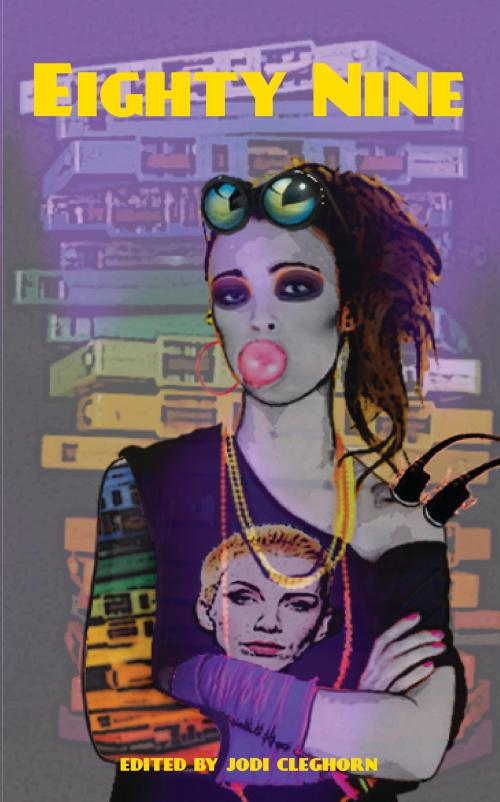
What do you do when you are asked to take a song from 1989, combine it with an historical event from the same year AND make it speculative fiction? This was the brief given for the latest Literary Mix Tapes’ anthology, “Eighty Nine.”

You can do one of two things. Firstly, you run screaming in falsetto tones like your favourite hair metal band. Imagine your testicles squashed into a pair of leather pants 2 sizes too small.

Secondly, you can dig out your denim jacket, black t-shirt, acid wash jeans and hair gel; grab a roll of gaffer tape, Swiss Army knife, some matches and take it on MacGyver-style.

The authors from “Nothing But Flowers” submitted a song from 1989. By process of random number generation, Jodi Cleghorn (editor) allocated each writer to their song. I received Bon Jovi’s “Lay Your Hands On Me.”

The next step was to research the historical events of the year. I was only in Year 9 in high school at the time, so a refresher history lesson was in order. There were so many events from that year, not only of historical significance, but also of cultural/social significance.

As a writer, one event piqued my interest: the fatwa against Salman Rushdie. What if the fatwa had been successful, creating a group called The Book Burners? This became the launching point for an alternative history. Would it have sparked a cultural or social, or even a theological revolution? Would books have been affected, regardless if they were sacred or secular, theological or pornographic? The Book Burners sought moral integrity, but the indiscriminate nature of their acts calls into question their motivations.

In part, my story has echoes of Ray Bradbury’s “Fahrenheit 451.” A quote attributed to Bradbury was spoken by Father Jim:

“There are worse crimes than burning books,” Jim said. “One is not reading them.”

In my notebook I had two characters: a priest, Father Jim, and his best friend, Robert Forsyth, a publican. They are old friends who represent two different perspectives and became the focal point of the story. Jim is a priest and scholar and understands the value of books, even having a collection of novels and comics. Rob is his good friend, trying to understand the philosophical reasons for burning books. I had written one line of dialogue in my notebook, which I had to include in the final version of the story: “I’ve had more shags than you’ve had belts of communion wine.”

But, how to include the song into the story? I decided to use the song as a part of a scene.  For Father Jim and Rob, it was a light comic moment; another way of exploring the characters’ relationship and their ideas.

For a few months, there were times when I loathed my story. It read like the scrawling of a madman, written in litres of rancid custard on vellum made from baby seals. I considered ditching the whole thing and starting again, but thanks to the input of Jason Coggins, Icy Sedgwick and Rebecca Dobbie, they rescued me from drowning in the vat of rancid custard.

I was not consciously looking at religious fundamentalism as the focus for the story. At its heart, the story is about ideas. Are ideas, even controversial ones, to be dismissed simply as unorthodox? Is cultural homogeneity to be prized about discourse and dialogue? I may not agree with someone’s ideas or perspectives, but I respect their right to express it. I should also seek to learn from it.

In the modern technological age, the rhetoric of those who shout the loudest becomes the static that fills our ears. We need to listen more carefully before we open our mouths.

The pen is mightier than the sword.

The Reasons Why

The question of “Why do you write?” is fraught with assumptions, expectations, suppositions, hypotheses and inferences. And that’s just from the writer. Does the audience really care why you write, or are they more interested in the story that you have written and are engaging with?

There are two answers to this question: One aspect of the question refers to genre: Why do you write fantasy/horror/sci fi/romance/suburban realism? The other aspect of the question is the philosophical underpinning of a writer’s purpose and their skill in the craft.

I write “suburban realism” (a term coined by @icypop). Therefore, this is why I write:

* I write because I can make the beautiful ugly, the ugly beautiful and because people’s lives matter.

* I write because it challenges, entertains, questions, pushes buttons, makes you laugh and cry, lets you escape.

* I write because it’s the little things about life that intrigue me.

I put the question out there on twitter. Here are a couple of responses.

@texistential (author of Crooked Fang) had this perspective: You know what, to be honest, it’s nobody’s goddamn business why you write. Just that you do.

Whether you’re nuts, desperate, attention whore, drama queen, or just looking to give is your business.

I write the stuff I want to read. I write because it gives this force within a voice and a life.

Writing is the perfect introverts’ pastime.

@icypop weighed in from a writer’s perspective: Always fascinated to hear what makes other people pick up a pen. 

Always curious!! Just don’t think any one person can state why writers write. We’re all different.

Check out her reasons for writing by visiting her blog, Icy’s Blunt Pencil.

The question sparked a twitter conversation between @Dannigrrl5 and myself.

revhappiness (Adam) – Is the reader really interested in why you write or they simply enjoying the story you’ve written? Or is it only writers who want to know?

Dannigrrl5 (Dannielle) – Non-writers always say “How do you come up with that?” but I think it’s a rhetorical question. If you try to answer, their eyes glaze over and they fall into a deep coma.

revhappiness – You see writers blogging about why they write, but I assume they are writing for other writers, not for their readership.

Dannigrrl5 – In general I think this is true. It’s for each other or for people interested in trying to write.

revhappiness – Assume not many readers want to know why. Some do, like I do with music. Others may be curious about the creative process.

From a muso perspective, I like to know why an artist composed a piece, but I also enjoy the music without knowing its story.

From a writer/muso angle, my appreciation deepens when I understand the craft behind it. I also listen/read for the joy of it.

Dannigrrl5 – I’m amazed @ how musicians compose & wonder how they do it, but I don’t want to listen to the explanation, I just want to enjoy it in my wonderment.

But I’m going to leave with this gem of a final statement from my best mate who is not a writer but a musician/computer whiz/all round good guy. More importantly, he’s also a reader. It’s a good summary of what writers are aiming for.

rotassator (Steve D) – I’d say most readers are more interested in *what* you write, and how the experience of reading affects them.

“I write because…” Every writer has their own answer to this statement. I write because it’s the little things about life that intrigue me.

I hope the reader enjoys the experience.

Back to 1989

The newest anthology from eMergent Publishing’s Literary Mix Tapes drops on October 25.

In it you will find 26 stories weaving the music, culture and history of that tumultuous year blended with a twist of speculative fiction. Think fluorescent clothing, spandex, poodle hair perms, leather and lace. And that’s just for the guys.

My story, “Ashes to Ashes” has the privilege of being the opening story. Next week I will post the background to the story in the lead up to the release, giving an insight into the ideas, events and music behind it.

You can preorder a copy now through Literary Mix Tapes.

Eighty Nine - edited by Jodi Cleghorn

To whet your appetite for each unique story, here are brief one line reviews and the song behind the story.

Ashes to Ashes – Adam Byatt (Bon Jovi – Lay Your Hands On Me)

A priest, a publican and a secret horde of books. We could all be wearing sackcloth and ashes.

Shrödinger’s Cat – Dale Challener Roe (Eurythmics – Don’t Ask Me Why)

Are you really dead or really alive in a world similar to the Matrix?

Diavol – Devin Watson (Alice Cooper – Poison)

Some really weird alien activity in the midst of revolution.

Nowhere Land – Maria Kelly (Tin Machine – Tin Machine)

A great tale of conformity and distopia with hints of Dante’s “Inferno.” Pick your circle carefully.

Angelgate – Tanya Bell (Red Hot Chili Peppers – Higher Ground)

Tanya takes urban fantasy to the edge of a precipice and hurls us off. How are you at flying?

Chronicle Child – Lily Mulholland (Cindi Lauper – I Drove All Night)

This story has the grace and beauty of the Japanese culture with a prophetic vision of the future.

All I Wanted – Rob Diaz (Tone-Loc – Funky Cold Medina)

An immersive, interactive world of technology with a dark and sinister edge. You might wish the dream was real.

Drilling Oil – Kaolin Imago Fire (Michael Damian – Rock On)

An ecological apocalypse where the thing you covet most may be the thing that destroys you.

30 Years in the Bathroom – Icy Sedgwick (The Wonderstuff – 30 Years in the Bathroom )

Greek mythology with a Faustian twist is at the heart of story so pertinent in today’s media obsessed society.

Amir – Benjamin Solah (Tears for Fears – Sowing The Seeds of Love)

Music is a weapon and violent acts call for violent music, yet there is still the need to find the seeds of hope.

Over the Wall in a Bubble – Susan May James (The Jesus And Mary Chain – Head On)

Susan’s story has a deft, light touch as the Berlin Wall stands but one young person can see a vision of a better future.

Disintegration – Stacey Larner (The Cure – Fascination Street)

Come on a trip into the darkness but beware lest it strangle you.

Choices – Laura Eno (The Proclaimers – Cap In Hand)

There is such a sense of sadness and loss in this story. What if you were the cause of sadness and loss?

Divided – Emma Newman (Richard Marx – Right Here Waiting For You)

Follow this one through to the end, reading it very carefully. A good, twisty ending.

Blueprints in the Dark – Rebecca Dobbie (Deacon Blue – Real Gone Kid)

A crushing sense of claustrophobia dominates this story and you wish you could do something to help out the little boy.

Eighteen for Life – Jo Hart (Skid Row – 18 And Life)

Vampires and the 80s. There is no better combination.

New Year, Old Love – Jim Bronyaur (The Cure – Lovesong)

A love story with a very heated kiss.

Solider Out of Time – Laura Meyer (Martika – Toy Soldiers)

Time travel and boy’s hormones combine with spectacular results. And there’s a cool fart joke.

The Story Bridge – Josh Donellan (Debbie Gibson – Electric Youth)

At the very point of utter despair, salvation comes along in the guise of a little kid who you would just like to up-side the head for sticking his nose in where it don’t belong. But you’re glad he did.

If I Could Turn Back Time – Alison Wells (Cher – If I Could Turn Back Time)

What do you do for someone who’s stuck in 1989 when the rest of the world is accelerating away from you?

An Exquisite Addition – Paul Anderson (King’s X – Summerland)

Two delightfully creepy characters with a penchant for wax and some fabulous dialogue.

The Banging on the Door – Jonathan Crossfield (The B-52s – Love Shack)

This is one creeped out ghost story. Do not read this at night. Alone. With the lights off.

Maggie’s Rat – Cath Barton (Bob Dylan – What Good Am I?)

This story has a great use of allegory in the vein of “Animal Farm.”

Now Voyager II – Monica Marier (Billy Joel – We Didn’t Start The Fire)

An alien news reporter who sees life in a very different way to us. There is a wonderful light touch to this story.

Cocaine, My Sweetheart – Jodi Cleghorn (REM – Stand)

Swapping time streams and some really dark, weird stuff.

Paragon – Jason Coggins (Aerosmith – Love In An Elevator)

We create our own gods in this modern world, and one of them needs to stand witness to the atrocities of our age.

Pre-order your copy of “89” through Literary Mix Tapes. You will not be disappointed in this anthology.

Teaser Trailer for 89 Book Launch

Check out the teaser trailer for the 89 book launch. My story, Ashes to Ashes, is included in this speculative fiction anthology from Literary Mix Tapes.

This book has some outstanding stories focused on events and music from the year 1989.

Launching in October

The trailer was produced by Devin Watson. You can find him here on twitter @dklon

I’ll write about my story closer to release date and give you some background on what inspired my story.