Category Archives: Short Stories

And The Kettle’s Whistle Went Unattended

A cold torrent shudders from the tap into the cauldron-like bowels of the kettle. He clanks it down on the stove and presses the ignition switch, hearing the click, click, click, WHOOOSH as prelude and prologue to conversation. The flames tickle the kettle’s underbelly as an anticipatory act, fostering his nervousness while he waits.

He dispenses one, two, three teaspoons of leaves into the round-bellied glass pot. On the bench two cups sit side-by-side, their handles turned inward, barely touching.

The kettle whistles and he pours a question. Silently she lets it draw. He pours the milk, stopping when she nods and stirs the words again. She adds sugar to both cups, two for him and one for her, and posits a question of her own.

The tendrils of steam rush headlong into each other, tripping over one another and caught in tangles, melding into one breath.

Lest they burn their lips the conversation is spoken in sips. As the beverage tempers and cools, deeper thoughts are expressed in longer draughts. Drained almost to the dregs, remainders of words stain the bottom of each cup. An unfinished conversation threatens to evaporate as each hand holds the cup for the last whispers of disseminating heat.

She ignites the flame knowing it simmers close to the boil.

They depart while the kettle’s whistle remains unattended.

Post It Note Poetry Collection

Back in February I started a little creative project, Post It Note Poetry. The premise was simple: everyday, for 28 days, write a poem on a Post It Note.

I have collected all the poems, and a few bonus pieces I’ve written since, into a single download for you to read (and apologies for the size of the file – it’s a little image heavy).

I hope you enjoy it and it inspires you to do something creative.

Click on the link below to download the book.

Post It Note Poetry Ebook

National Geographic

My first exposure to, and subsequent interest in, breasts was at the impressionable age of nine, fastened to the vinyl waiting room chairs of the local doctor. A kindly old chap with more hair protruding from his ears than sprouting from his head. I was there because swallowing felt like drinking a cup of marbles, broken Weet-Bix and Sao biscuits topped with a covering of sand.

In a measure to keep the idle from making mischief, and in the hope of expanding my educational perspective, my mother handed me a dog-eared copy of National Geographic dated around the time of my birth. Boredom is the birthplace of genius yet the prospect of a bored nine year old frightens adults. To appease my mother’s insecurities more than anything else I flicked through the pages enraptured by sumptuous photography of urban landscapes, scientific phenomena and pastoral idylls.

Within the pages a tribe of African women stood with their hair matted by ochre the colour of dried blood. I was fascinated by this first glimpse of human nudity, unsullied by sexuality. The glossy brown of their naked chests was bedecked in beads of bold reds, summery yellow and horizon blue cresting above the rising and falling curvature of their breasts. I saw in their mammary tissue the topography of life: full, taut and shapely to wrinkled and deflated like a week old balloon, sagging without shape or form.

My attention was transfixed on the shape and form but lest I be caught staring intently at something that my brain believed was wrong but my groin said was right, I flipped the page, keeping a finger lodged between the appropriate sections.

Called into the doctor’s office, my attention wavered, concocting a plan to liberate the copy of National Geographic from the waiting room and into my possession. Inside the doctor’s office I opened my mouth and recited the mantra, answered the official petitions and let my mother accept the diagnosis of tonsillitis.

Returning to the waiting room I approached the receptionist’s desk, a bold request forming on my lips. “May I please have the copy of National Geographic for a school assignment?”

The receptionist nodded and I scurried to claim my prize and followed in the wake of my mother to visit the chemist for medicine. Seconded to bed rest for a couple of school days I took the opportunity to develop an understanding of my initial discovery with the benefit of the encyclopedia and a dictionary.

Perusing the article again I was drawn to the mathematical artistry and beauty of their curvature and form in space, the tone colouring of the areola and the cylindrical form of the nipple.

Upon my return to school the copy of National Geographic came with me. I thought nothing of it in terms of it containing pictures of naked breasts. At recess I was thumbing through the pages, rereading an article on spelunking. The breeze rustled the pages and opened them to the focal point of the magazine.

“Check out the tits,” said Jude Templeton over my shoulder.

I was initially non-plussed, unfamiliar with the vulgar colloquial vernacular. My ignorance made knowledge by Jude stabbing his finger at the page before flicking the pages back and forth. A small crowd flocked around, aghast and intrigued by the display of the naked female form.

I was lord of the Lunchbox, King of the Canteen. For twenty-four glorious hours I had stature and kudos but its presence was ephemeral. Until Jude Templeton smuggled his older brother’s copy of Playboy to school. A few too many leering eyes caused a commotion, whereby our teacher upon discovery, promptly confiscated it as Jude attempted to stow it under his desk.

Aiming to deflect his guilt Jude pointed in my direction, “He has one, too, Miss.”

She raised her eyebrows, folded her arms and I gambled. Withdrawing the magazine from under my desk, I held up my National Geographic. She turned and faced Jude.

“That is not a Playboy,” she said, holding her hand towards Jude for his magazine.

“But…” He was cut off by a snap of her fingers. The magazine was handed over, a guilty baton. Miss hurriedly rolled the magazine and stuffed it into her desk drawer. “I will be speaking with your parents,” she said to Jude.

I imagined the male staff sitting around the lunch table, cups of tea and coffee in hand, turning the pages, tut-tutting at the indiscretion of youth while having a good gander.

At lunch Jude tried to convince me to show him the pages again but I refused. However, I convinced him “areolas” was the name of a Spanish goalkeeper.

In the following years of developing adolescence when my friends mined the seam of hormones laid down by puberty they moved on from the simplicity of nudity to secret collections and surreptitious glances. The embarrassed indignity of being caught with masturbatory material did nothing to quell their enthusiasm. Conversations used thirty-two synonyms for genitals, male and female, with salacious intent. They snorted at vintage adult magazines, at the variation of shape and form against the homogenous shapes they ogled in contemporary glossy pages.

If I wanted nudes, I didn’t go to the magazines my friends pored over, nor to the sewerage pipeline of the internet in this modern age. I went to art galleries and studied the Reubenesque women of art books, the voluptuousness of the Renaissance, modern abstracts, Titian, Whitely, Picasso, the sculptures of the ancient world and of Rodin’s sensuality.

I pursued another learning and became a collector of National Geographic, browsing second hand bookstores, scrounging copies from relatives on the pretext of research for school assignments, random doctors’ surgeries, looking for issues from a bygone era of a different censorship. My interest in breasts was cultural, sociological, anthropological, medical, scientific, artistic, more so than simply sexual.

Even now I have an extensive collection. If you’ll excuse me, I think I hear the postman, and with him I hope, the next edition of National Geographic.

Your Life In Centimetres

You stood beside me as the workmen gutted the kitchen, stripping the carcass to its constituent framework. Twenty-eight years of old Formica and lino, wonky hanging doors, spilled food stains and enough crockery broken through accident and anger.

“Hey Dad, I’m Jonah trapped inside the belly of the whale,” you said waving your hands beneath the exposed timber beams.

You winced as a crowbar jammed into the doorframe leading into the dining room and levered the old timber.

“Please be careful,” you said. Almost an invocation and the workman stopped. You walked over to the bending wood and ran your hand over the names and numbers. My hand followed yours down the lists like a medieval scribe interpreting the sacred texts and pictograms.

I remember when it started, when you were a wobbly one year old, unsteady on her feet. Against the doorframe between the kitchen and the dining room I measured your life in centimetres.

On the evening of each birthday you stood with your feet flat on the floor and I placed a ruler on your head and scratched at the mark with a pencil. You slipped out from under the ruler at the first instance to compare it against last year’s mark. I reached for the permanent marker and fixed your height against the wall like the rising marker of a flood level.

When you were smaller you bounced on the balls of your feet, pigtails dancing in unison, the tape measure in your hand. You wanted to hold the end of the tape measure flat to the floor, looking up it extended towards the ceiling. Scrambling up, you watched me scribe your height onto the wall, writing the secret code shared between us on the wall.

“How high am I now, Daddy?”

“How tall are you now.”

“How tall am I now, Daddy?”

“One hundred and twenty one centimetres.”

Sometimes I would catch you measuring yourself against the wall in-between birthdays.

“Measure me today Dad because I’m taller.”

“It’s not your birthday.”

“I can’t wait that long.”

“You’ll have to.”

A resigned smile followed by a mental calculation of how many days remained until your birthday.

Against the markers the extended family was subjected to a heightist conspiracy: uncles, aunts, cousins, friends. And Gary Brown remains the tallest person you know and measured against the wall, even taller than your younger brothers.

Your mother refused to be measured after a certain age, convinced she was shrinking. Especially after you celebrated the day your line passed your mother’s. You even tried to stand on your tiptoes to prove you were taller than me when you maxxed out at nineteen.

You charted and graphed the growth of you and your brothers for a maths assignment, logging the differences in height from year to year; the growth spurts and the gradual slowing down.

And when I thought you were too old to care about measuring your height, when your friends became more important, you sidled up to me as I was sitting in my chair working on the computer. In your hand was a ruler, pencil and permanent marker. You kissed my forehead, took my hand and pulled me towards the doorframe and said, “You have to measure me, Dad. It’s my birthday.”

Now the wall is flaking and peeling in a thousand layers of sunburnt skin. Or pulled up by the Batlow Red Delicious apple stickers (your favourite) applied around the doorframe. A trail of two hundred and twenty six minute green stepping stones traversing the frame beginning at the floor, following the markers of your height and extending beyond until it came back down the other side of the frame. It annoyed your mother but she relented.            

“At least she’s eating fruit,” she said.

This is your life, measured in increments, dated and catalogued until you were taller no more. This is my photo album, my filing system of memories.

At each evening meal you sat on my left hand side to see the television better but I watched your face and matched it to the lines on the wall.

And then there’s the photo on your wedding day, crouched beside the doorframe pointing at your first height marker. The freckles are still there, I know they are, hidden beneath the layer of makeup. You played dot-to-dot on your nose with a purple texta when you were seven. You scrubbed your face until it was red and raw. Going to school the next day you were so embarrassed about faint lines evident on your face.

Taking your hand from the wood the workmen continued and you waited for the delivery of the totem.

You cradled the wrenched wood as you would a child. Moving out of the noise of the renovations I followed you outside where you leaned it against the wall near the back door.

“It won’t be the same without the old height marker there,” I said.

“It would be nice if you started a new one,” you said. “For the grandchildren.”

You circled your stomach with your hand, looked at me and smiled.

Starting The Creative Life Afresh

Over the Christmas/New Year period I ran a series of three posts about the creative life: Reflection, Resurrection and Recreation.

I have combined the three posts into a PDF you can download for FREE.

Starting the Creative Life Afresh

This article is for you if:

  • you were once creative and you have abandoned your creative life.
  • you need to shut down a creative life in order to resurrect it.
  • you want to recreate yourself and reclaim your creativity

Download the article for yourself to read.

Please share it with someone you know who would benefit from reading it.

Creativity As Seeing The Real World Differently

Gary Brown, owner of G3 Photographics, wrote this on my Facebook wall in response to my questions about how he sees the creative life.

It is one of the most powerful statements about creativity I have ever read. It is an insight into Gary’s creative mindset, and into the darkness that sometimes plagues creative people.

It is a statement asking for understanding, a declaration of intent to bring beauty and art into the world .

It is reprinted here with permission.

The reason so many creative people feel alone, whether they are in a crowd, married, have many many friends, even at the moment of being applauded or recognised for their work… the alone feeling is this: in our imagination, in our soul, in our music, in our writing, in our photos is a world that we see/feel/envision in ourselves.

We try to express it, to share it but we know our skill can never truly, perfectly represent what we hear or see or feel. It’s like a parallel universe overlayed on our real life that we try to pull into existence. We can’t be placated, we can’t be made truly at home because our home is somewhere only we can visit.

So when the ‘real’ world dominates our time, thinking and/or efforts, we feel torn away from paradise. That’s why we go off, and spend time alone, visiting the place we truly feel at home.

Thanks for understanding and maybe, just maybe, you can get a glimpse of where we truly exist in peace.

I think this has been part of my reason for the battle I have with depression. I have fought for the first 30years of my life to try and bring the beautiful world in my soul into this one and used up all my life’s energy in doing so too fast. Then at 30 had nothing left but the realisation that I really don’t belong here. Went catatonic with this realisation, literally for 2 months. Then have spent the next 5 years learning that may be it’s good enough just to add a dash of colour and be happy at that.

I see such beautiful places, hear such powerful music, get to sit and just BE with some amazing people in my imagination. The worlds I walk through, exploring the landscapes of impossibility, skipping through time, dancing with thoughts, feasting on emotional realities, testing possible outcomes, directing hordes, caring for a ONE, saving many, loosing a few, battling on the battlements and lamenting the fallen. It all happens in vivid colours, vibrant sounds.

Here, here I am truly REAL.

You can see Gary’s work here at G3 Photography or on Facebook.

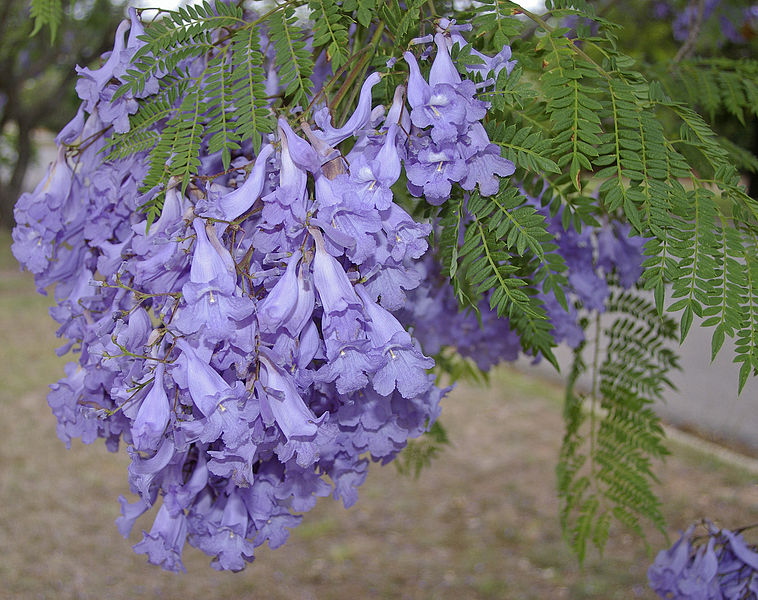
The Naked Jacaranda

As October faded and decayed, November blossomed; the jacaranda tree exploded in fireworks of purple flowers amongst the green tree tops haggling and hunkering over the back fence. 

The invasion of colour  occurred at the same time they injected her with drugs to fight the cancer in her blood. 

And the flowers began to fall, denuding the tree, forming a purple carpet on the backyard lawn; scattered randomly and suggesting they could be counted where they fell or numbered as the hairs on her head. The purple flowers faded, cut off from the tree, turned brown and became one with the earth. 

As the last of the flowers fell, tiny green shoots pushed through, heralds of the turning season. And she waited. 


Best of Friday Flash 2: Australian Blog Hop Tour

Today marks the launch of Best of Friday Flash 2 which contains one of my stories, Scar Tissue.

#FridayFlash is an online writing community where people post a piece of flash fiction (1000 words or less) to their blog, link it to http://www.fridayflash.org/ and drop in to read and comment on the work of others.

Writers are from all over the world and five of us included in this anthology are from Australia.

It is my privilege to host Jason Coggins (Melbourne) whose Moult World stories are brilliant (and not for the faint of heart).

Vigilance

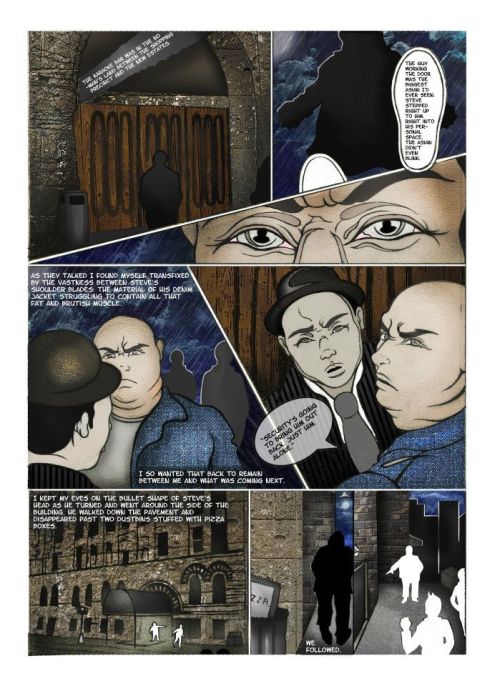
Back in town the amber beams of the street lamps swept us like inept search lights. They lit nothing more than our shoulders and baseball caps. The night wanted us out of its darkness. The roads were empty of traffic. The streets silent save for the sound of heavy breathing and thud of our footfalls.

It was gone Nine when we reached Cutlers flat.

The note taped to the door said: “See you at Wild Notes Karaoke Bar”.

Steve tore it from the door with his fat fist. The two pink rolls beneath his chin –which wrapped around where his neck should have been– wobbled.

We got the bastard,” he growled.

Blake Byrnes Art - all rights reserved

Blake Byrnes Art – all rights reserved

For a couple of years back there I was knocking out tales of monsters and wise-ass protagonists as if I was mining a big fat, juicy mother lode of fantasy fic. I was hitting a word count of a few thousand a week as my mind kept me awake at night telling me bonkers narratives I was simply compelled to share with the interwebs. Sadly, this proliferation was pretty much fuelled by a solitude you can only experience upon moving to a new country and having no friends. The only ‘friends’ I actually had any day to day ‘contact’ with existed behind the #FridayFlash and  #TuesdaySerial hashtags. Anyway, I guess I was carving a bit of an outrageous niche writing that which I loved to write. Still, I got to thinking about those poor pathetic actors who are typecast in the same role for their entire careers. And urged on by the amazing Carrie Clevenger to “ditch the unicorns and break the mould!” I decided to write something, gulp … realistic.

Thing is I am an ICU nurse and I get “real” handed to me in big globules of hard to swallow reality all the time. That is why I wrote bonkers stories in the first place. So, no way was I going to retreat into the bloody and often macabre world of modern day hospitals for the ‘authenticity’ I craved.

Fortunately, my iPod saved me! When good old fashion, gritty realism smacked me in the face as New Model Army’s “The Hunt” rang out from my playlist.

The song evoked images of teenage years spent walking the perpetually raining streets of my hometown; always in a gang, always walking with grim intent (though to be honest our only intent was to look menacing). Dark imagery galore! Yet provocative as the imagery of the song was it played second fiddle to the inference that something really … really … nasty was about to be done to someone who totally deserved it … and then some.

Anyway, not once stopping to consider why I was operating under the assumption that for something to be considered real it also had to be dark and nasty I opened Jodi Cleghorn’s #[Fiction]Friday prompt #169. “The note taped to the door said: See you at Wild Notes Karaoke Bar. ” and was off!

The comic strip adaption you see attached above came some time later and in collaboration with Blake Byrnes who wields a paintbrush like Zorro wields a sword. Now, with this story being published in the Best of #FridayFlash 2 courtesy of the mastermind, which is J.M Strother I feel I have come full-circle.

So thank you to all my old friends who lived behind the hashtags #FridayFlash and #TuesdaySerial … it was a honour and an absolutely pleasure hanging out with you x

Once upon a time Jason Coggins wrote speculative fiction to escape the real world. He wrote (a lot) and was published (a little). However, the real world bit him on the ass in 2011 to 2012. He came to realize that outside his door, a growing disenfranchisement in society was growing and playtime was over. Today, he organizes a Street Medic collective, which provides medical and emotional support to social justice activists throughout Melbourne and Victoria.

Jason may return to writing one day … but that day probably will only happen when the sun rises to shine upon a much nicer world.

You can visit the other Australian writers listed below and read a little about what inspired their story.
Jodi Cleghorn (who is hosting Stacey Larner)

Jason Coggins (who is hosting Jodi Cleghorn)

Tim Collard (who is hosting me)

Stacey Larner (who is hosting Tim Collard)

You can purchase Best of Friday Flash 2 from eMergent Publishing.

Give Me Your Hands

Checking her watch in the dim light of the community theatre, Louise approximated the ending of the performance and gauged she would miss seeing her favourite band. At best, she could catch the last couple of songs of the set. Looking back down to her notepad with the programme folded inside the back cover, she skimmed over her notes.

In the shadows of the stage, a solitary actor moved towards a cardboard boulder. Sitting down, the stage lights focused on him and Louise watched his thick tongue protrude slightly from his mouth and move from side to side as he scrunched his eyes. His face took on a look of concentration, trying to recall information. He looked at his hands and then off stage, the pause lengthening causing the audience to shuffle in their seats, as he failed to remember the final lines.

A quiet prompt whispered from the side of the stage caused a wide smile to appear. Short hands and stubby fingers repositioned the ivy wreath crowning his broad and listing forehead and began.

If we shadows have offended,


Think but this, and all is mended,


Louise stopped scrawling notes for The Hopetoun Chronicle’s entertainment blog.  She had come along to the opening night at the invitation of the director, in order to spruik the performance. Shuffling back in her seat, Louise replayed the earlier mental conversation with herself.  Work was work and some things needed to be done to move up the journalistic ladder.  Amateur theatre was a rung above school theatre and musicals.  She had scorned the black skivvy and beret brigade at college, concluding that it would be ironic to not use a silencer should you need to kill a mime. 

That you have but slumber’d here


While these visions did appear.

Titania was a vision, entering the stage in a wheelchair, festooned like a Mardi Gras float. She pushed by a retinue of fairies and elves with the disjointed gait of legs like insects, or a pudgy waddle or felt their way across the stage with the aid of a long white cane. There was a party in the carriage of the Fairy Queen accented by costume and streaks of glitter reflecting the stage lights.

And this weak and idle theme,


No more yielding but a dream,


She scanned the list of actors’ profiles and found the actor playing Puck.  Andrew Davison.  His first performance, the program stated.  The glossy black and white photo showed a rounded, slightly pudgy face characterised with an expansive smile that creased the corners of his eyes and somehow captured the essence of life and innocence.

Gentles, do not reprehend:


if you pardon, we will mend:

Scanning back through the list of actors Louise noted the different abilities: Downs Syndrome, cerebral palsy, deaf, blind, spina bifida. Puck continued his delivery with the slightly slurred and mumbled delivery of a person with Downs Syndrome. Yet the cadence and metre of the Bard’s words shaped itself to the timbre of Puck’s delivery like water rolling over stones on the creek bed creating its own music.

And, as I am an honest Puck,

If we have unearned luck


Now to ‘scape the serpent’s tongue,

We will make amends ere long;

Louise scanned the audience and saw the attentive faces of fathers and mothers, aunts and uncles, brothers and sisters.  She saw in their faces a distinct pride, a connection with the actor on stage that Louise did not share. The faces in the program had family in the audience, all who had come to watch a play. They did not see physical impediment or intellectual disability.

Else the Puck a liar call;

It pricked at Louise.  Here in the forest, they were kings and queens and mischievous sprites. This was a world in which she had no connection.

So, good night unto you all.

When the lights would be turned up and costumes packed away, Louise surmised the actors would return to this world, existing as the forgotten ones; the shadows around the periphery of community, held at arm’s length as lower castes.

Give me your hands, if we be friends,

And Robin shall restore amends.

The audience erupted in applause as Puck walked to the front of the stage and bowed stiffly from the waist, his right arm across his stomach and his left behind his back. Here was life and love and acceptance. 

Louise realised her hands had retreated, firmly pushed into metaphorical pockets. Even the openness of the simple act of a handshake refused. She found herself applauding, not as Puck requested, but in the words she scrawled into her notebook.

Author’s Note: Last week I wrote a post, Speaking for the Voiceless, in which I outlined a little of my thinking regarding the focus of my writing. It reminded me of a story I wrote about 2 years ago for the now defunct [fiction]Friday. I dragged it out and gave it a little polish to present here. Still not perfect, but it captures the essence of last week’s post.

Shoelaces – Postcard Prose


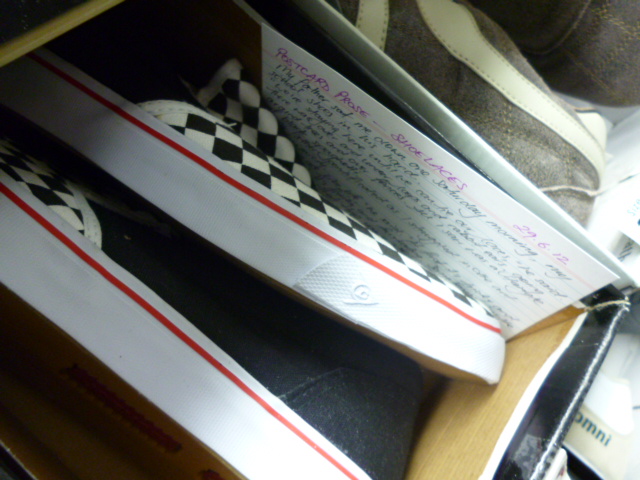
My latest effort in guerrilla literature, ironically dropped in a shoe store as I was buying new shoes.

Payless Shoes – Centro Shopping Centre, Seven Hills

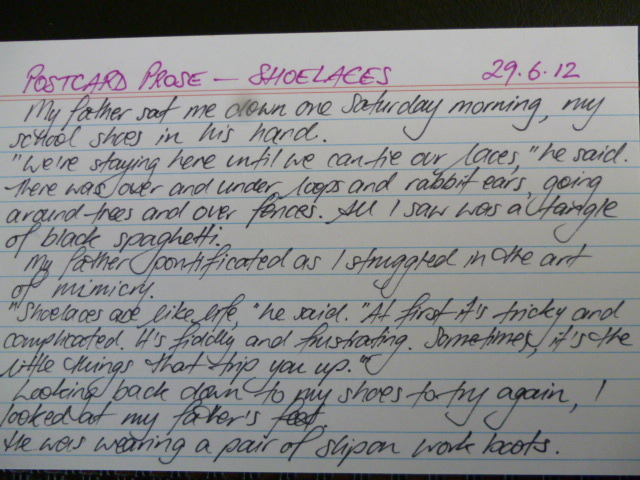
My father sat me down one Saturday morning, my school shoes in his hand.

“We’re staying here until we can tie our laces,” he said.

There was over and under, loops and rabbit ears, going around trees and over fences. All I saw was a tangle of black spaghetti.

My father pontificated as I struggled in the art of mimicry.

“Shoelaces are like life,” he said. “At first it’s tricky and complicated. It’s fiddly and frustrating. Sometimes, it’s the little things that trip you up.”

Looking back down to my shoes to try again, I looked at my father’s feet. He was wearing a pair of slip on work boots.

And, yes, I did put the postcard into a box of slip on shoes.