The Post It Note Poetry Challenge was initially a frivolous idea I threw out to my collaborative writing partner, Jodi Cleghorn (@JodiCleghorn).
28 days.
28 poems.
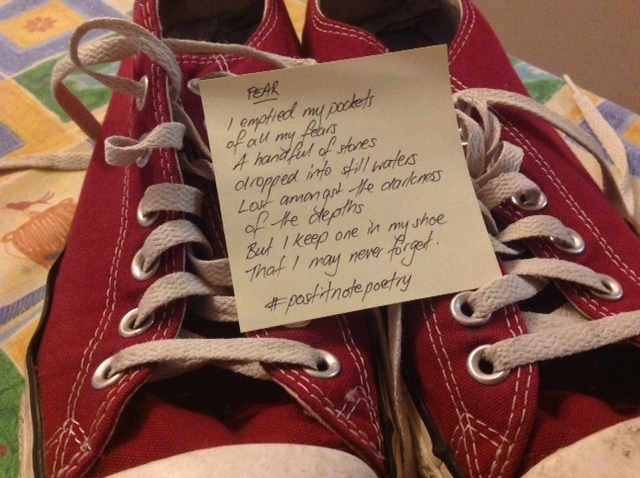
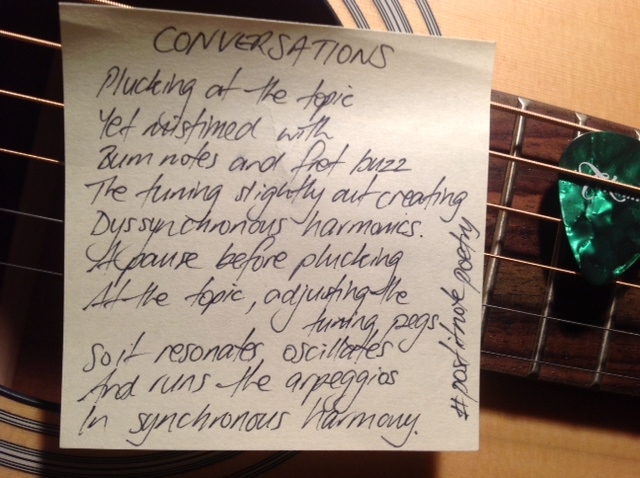
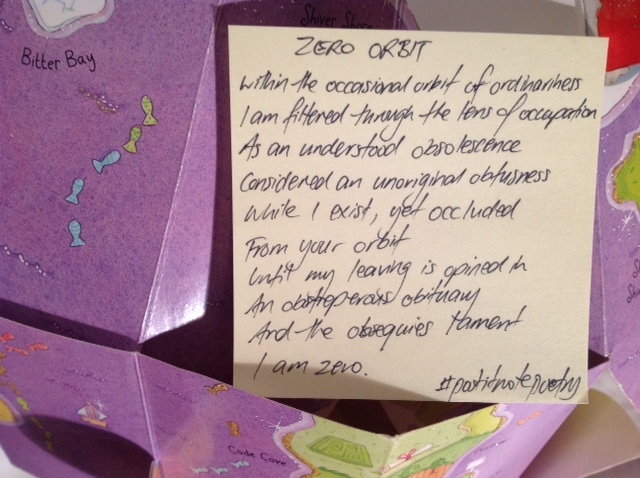
Written on a Post It Note.
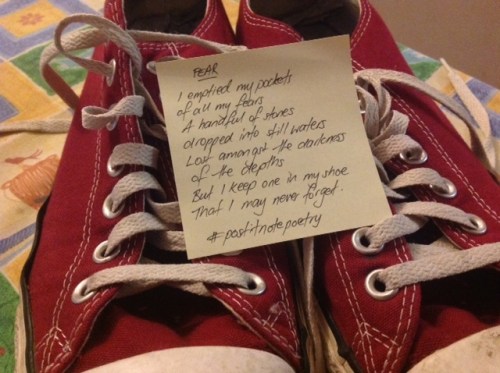
I was returning to school (I’m a teacher) and the beginning of the term is a dearth for creativity and continuing with longer projects. It was something to keep the creative wheels turning while the busyness of school consumed time and effort, allowing me to return to other projects when things settled down.
I haven’t written much poetry, although I teach the mechanics of poetry deconstruction (and poetry appreciation) in my English classes. I understood rhyme, rhythm, meter, onomatopoeia, metaphor, simile but did not have the practical experience. I usually write short fiction and I wanted to explore the intricacies of poetry, albeit in a short form, constricted by the physical boundaries of a square of paper.
The initial idea was launched on February 1, 2013 on twitter with the hashtag #postitnotepoetry. And it suddenly took off. People we knew loved the idea and began writing their own poetry, posting it to twitter and/or their blog.
Jodi’s spectacular cat-wrangling skills herded the participants towards a facebook page where it became a salon of sorts. People shared their poetry, commented, critiqued, deconstructed and analysed, in a collegial and supportive community.
The power of writers to connect and form a community is a special thing. We might write in isolation but the strength of community and the connections made between writers means we are never alone.
Therefore, in
28 days.
I wrote
28 poems totalling
1,128 words (this last point is somewhat irrelevant except I am keeping a tally of my writing output this year across all forms of fiction and non-fiction).
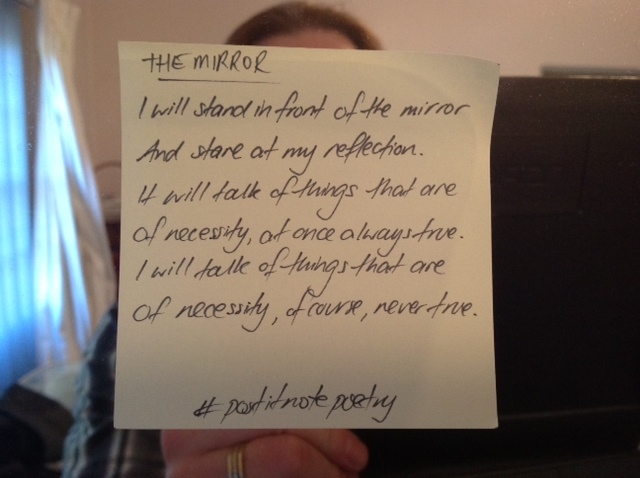
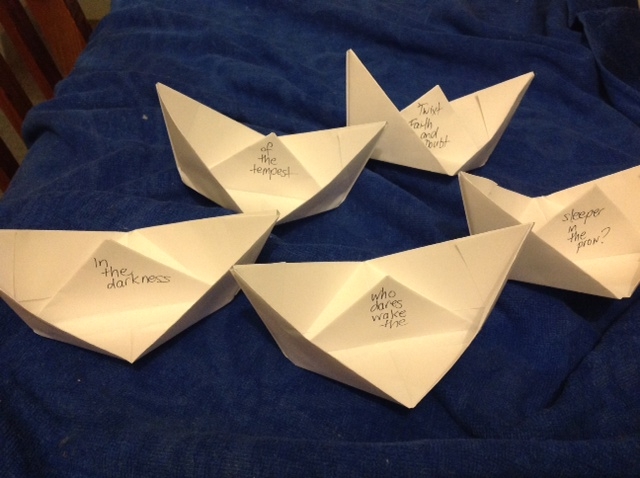
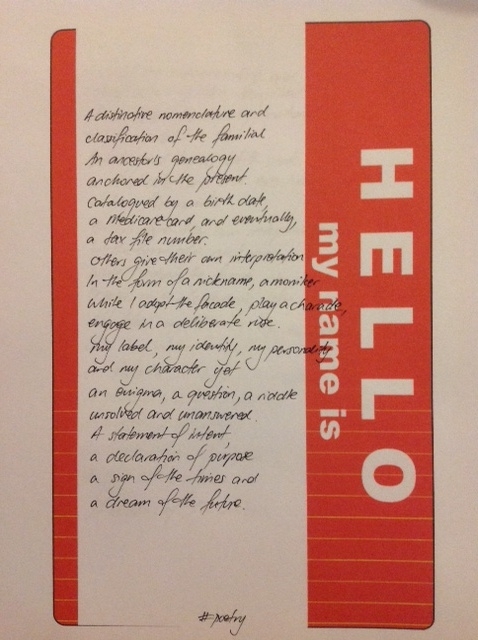
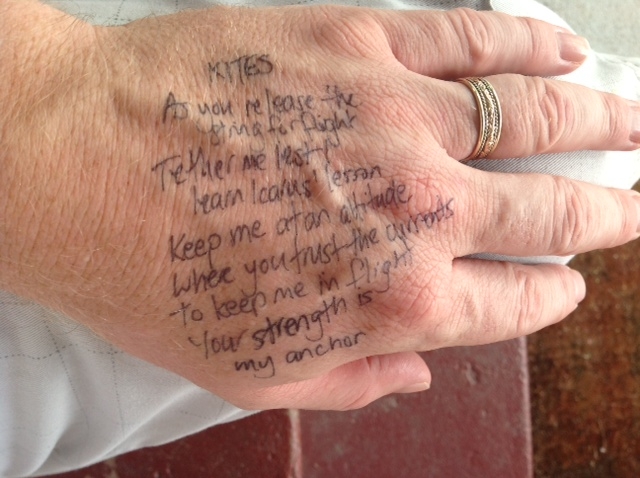
You can read the collection of poems are here.
What I Learned Along the Way
-
Creativity is habit forming.
28 days of writing poetry became an obsession. For all but the last 3 days, I had a poem written, photographed and scheduled to be posted. Yet the routine developed. Scraps of lines and ideas were hastily written in my notebook for later observation. I have a few ideas leftover I intend to use for a later project. I cannot imagine maintaining it for a longer period of time but it develop the concept of doing something creative on a regular basis.
-
It sparked new ideas for creative concepts.
Yesterday I had a flurry of new ideas for creative endeavours while in a conversation with Sean Wright (@SeanBlogonaut). Maintaining the alliterative form I threw these out (and some of them have creative potential. Feel free to take the idea and run with it).
#fableflyers, #serviettesermons, #placematproverbs, #amphoraaphorisms, #postitnoteplatitudes, #paddlepopstickpoetry
They are mostly frivolous ideas but what’s to say one of these can’t be turned into an ongoing creative outlet? Austin Kleon started Black Out Poetry using a newspaper and a black marker to create something unique.
The strength of the writing community to engage with ostensibly a trivial and frivolous concept, and to participate with enthusiasm and pride is a joyful thing. It lead to a core group of writers championing each other’s work, providing a supportive and trusting environment. The flow on effect to this is having a new group of people to call upon for feedback, critique, advice and encouragement.
I wrote a last post on the group’s Facebook page yesterday, thanking everyone for their time and effort, their participation in the journey, and for me to be able to accompany them for such a short time.
Creativity finds its strength first in the creator, then finds its purpose when shared with an audience. For when you draw crisp, clean water from the well of creativity, you slake your own needs first, then you can offer it to those around you.
I have always maintained when I become Prime Minister of Australia, no child shall be permitted to write poetry until they have reached the age of 18 and completed a one year intensive poetry course.
While somewhat facetious, there is some truth. Writing poetry is hard. I was amazed at the skill some poets had to wrangle rhythm, meter and rhyme in their work. The adage to be a writer, you need to read, is applicable to poetry. I do not read enough poetry to be conversant with styles, techniques and forms.
I wrote one poem in cinquain form; everything else was free verse. I didn’t use rhyme but was conscious of rhythm; the years of drumming give me a good feel for it.
-
My poetry is really rather prosaic.
People have commented that my short stories have a poetic, lyrical feel to them. This is not surprising considering my influences. Therefore my poetry has more of a narrative feel to it, setting up ideas and emotions through the structure of the line and words, rather than letting the words speak for themselves to create the emotional resonance and atmosphere.
To write humourous or frivolous poetry is not an easy. It takes a skilled comedian time to craft the lines and delivery of their routine and poetry is no different. Jodi commented my default (for any of my writing) is “deep” (although she typed it as “depp” in conversation and the malapropism has stuck). I do write humour but it is not my first focus.
There were times when I struggled for ideas or words or line length or structure, but it was never a chore or burden. As I said before, it is not something I want to maintain or prolong beyond the initial parameters.
And it was fun because I was doing it with a great group of people. We wrote, photographed, posted, commented and critiqued in a collegial and positive environment.
Even if there was not the group support, I would have enjoyed it anyway.
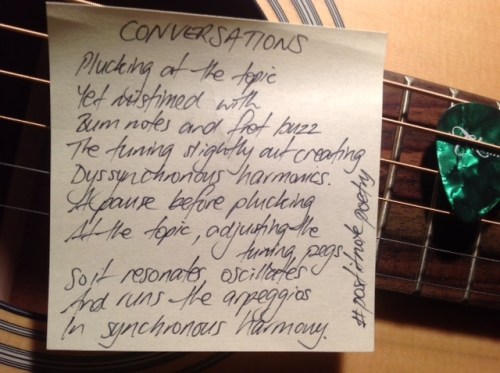
If you dropped in to read the poems, left a comment or a “like,” THANK YOU. I hope it encourages you to continue with your own creative projects or sparks you to try something for the first time.
Next February, who knows what the challenge will be. But I’m looking forward to it. Hopefully you’ll join me.




 A Fullness in Brevity - Adam Byatt