Category Archives: Creativity

Superhero Saturday – Flash Fiction

Yesterday I was teaching my Year 7s (the first year of high school in Australia) Creative Writing. They are a learning enhanced class which means there are a range of intellectual and learning disabilities. 

We were learning the structure of a story, using the primary school method of Orientation, Complication, Events and Resolution (O.C.E.R.). It works for any writer really; it’s the fundamental structure to any scene whether it’s for a short story or a novel.

I gave them an opening line, “I had my costume all planned out; I was going to be a superhero” and after a brief planning session, they were set to work. While they wrote theirs, I plugged my laptop into the data projector and wrote my own. It’s best practice to model what you’re after.

It’s far from perfect but it showed my students what to do. 

So here it is for your… pleasure… or interest… or something.

SUPERHERO SATURDAY

I had my costume all planned out; I was going to be a superhero. Sitting on my bed I could see it hanging from the wardrobe door. It was a spectacular outfit: black tights with red lightning bolts down the outside of the legs, a red t-shirt with a black lightning bolt on the front and the bestest cape ever. My Mum made it for me.

I am Super B. I seek to right the wrongs, make this world a safer place, and have doughnuts for afternoon tea.

Once Mum let me outside to play, I put on my costume and hit the streets of our cul-de-sac, ready to be the hero. It was a quiet afternoon; only the neighbour’s dog, Scruffy, was outside the fence so I put him back.

I felt pretty good having done my helpful deed for the day. Standing on the footpath I put my hands on my hips and held my best superhero pose. But there was no wind to make my cape fly out behind me so I felt a bit silly.

Was there no other good deed to do today? Not much of a superhero if you only get to do one good deed.

There was a squeal from up the street and the rattle of plastic trike tyres on the footpath. Mrs Jenkins from Number 96 was yelling as her little Patty went hurtling down the footpath on her runaway tricycle.

Patty’s feet were blurry circles as the pedals span faster and faster, threatening to throw her off. Her tiny mouth formed the biggest “O” I’d ever seen and from it came the loudest scream, enough to scare the cat!

This is my chance, I thought. I can be the hero!

I twirled my cape and ran towards little Patty, before she became patty-cake all over the footpath. Putting my feet in the brace position and crouching down I readied myself for impact. Patty came closer, the screaming louder and louder. She was almost on top of me when I stepped to the side, swung my arm around Patty’s waist and lifted her to safety. The tricycle careened off the footpath and into the gum tree outside my house. I expected the tricycle to burst into flames. But it didn’t.

Mrs Jenkins stopped right in front of me, gasping for air.

“Thank you so much,” she said as Patty jumped into her open arms. “You’re such a hero for saving my little Patty Cake.”

“The pleasure is all mine,” I said.

“Come inside and have a biscuit,” Mrs Jenkins said. “You deserve something for your brave actions.”

“Thank you, Mrs Jenkins,” I said. A superhero always remembers his manners.

Mrs Jenkins fed me choc chip biscuits. She insisted I have two, and on my way out the door, she gave me one more.

Walking home I felt pretty darn good. I wiped the biscuit crumbs from my mouth, I didn’t want Mum to think I’d filled my tummy before dinner, and wondered what adventures Super B might have tomorrow.

I stood in our driveway, struck a superhero pose and thankfully there was a breeze to make my cape billow out. I surveyed the cul-de-sac and knew it was safe. It was good to be a superhero.

Lessons Learned From Post It Note Poetry

A month of #postitnotepoetry has elapsed and 28 poems have been written and posted.

It started in 2013 when Jodi Cleghorn and I threw out some whimsical ideas with definite boundaries: write a poem to fit on a Post It Note.

It was permission to write; write dreadfully, write with abandon, write without caring what the poetry sounded like. It was permission to be creative and spontaneous; limited and restrictive in a positive way.

And we did it. We gathered adherents and spawned a community. We wrote poems and posted them. And some of them were quite good.

And we did it again this year.

I wrote 28 poems in 29 days (the last week of February was a cracker for me so I missed a day or two, posted late, crammed a few into one day and wrote the last on March 1 after half writing it the night before).

Time to reflect, look into the Navel of Introspection and see if I can find a gem to inspire you. At the very least you’ll have some blue-grey lint to take home.

1. I can write every day (but it wears me down)

Some writers pursue the notion that they must write every day. It is an adage recounted by many writers via social media, and it has validity. I like the Jerry Seinfeld approach of ticking off each day I write or meet a quota, forming an unbroken chain.

But it doesn’t work for me. My day job and other commitments do not allow an unbroken chain. I prefer to work in short bursts rather than long periods of focused attention.

Every creative person has their own cycles of inspiration, creation, recreation, restoration, production. Rinse and repeat.

Find your own rhythm and know your cycles.

2. I can think of a new idea every day (but some need more time to develop)

Finding a new idea each day was in turns easy and difficult. It was in the news, something I read, an emotional response to a situation, daily chores or activities.

The execution of the idea was also in turns easy and difficult. The easy idea was sometimes difficult to write while the difficult idea sometimes can easy in the writing.

No method, often madness; always an idea.

Exhaustion, physical and mental, made developing an idea hard. Some ideas needed more time for composting (what I mean when an ideas sits in the back of your head for a while). For example, the last poem, Frankenstein’s Classroom, needed more time for refinement.

However, that runs contrary to the spirit of Post It Note Poetry.

Pushing an idea that is not fully formed may result in a piece of work that is substandard and editing will only highlight its weaknesses. Letting an idea form over time may mean the editing is easier. Your mileage may vary.

There are plenty of ideas out there for you to catch. Know your methods for trapping them in the pages of your notebook (physical or digital).

3. It’s a whole lot of fun to do (but it detracts from my main purpose)

Creativity is meant to be fun; that was the point initially. There is fun in the hunting down of ideas, capturing the thoughts and emotional response in words, and satisfaction in the completion.

And in doing something fun, I have found a new appreciation for poetry and I like writing it. I like the framework and boundaries a Post It Note provides, similar to the framework and limitations on twitter where I also post short poetry.

However, focused for a month on writing poetry has taken me away from my main purpose of writing my novella. The timing of #postitnotepoetry coincides with the beginning of the school year (I am a high school English teacher) and it is something short I can do during the busyness of the opening of the school year.

I want to return to my novella, which is happily composting in the back of my head while I make updated notes in my notebook. I’m also in the last stages of edits for my collaborative novel.

The brevity of Post It Note Poetry is something I will continue to do throughout the year because I believe in developing my creativity; I am undecided if I will return in 2015 for the trifecta.

Have fun with your creative acts.

That’s it from me for #postitnotepoetry 2014.

Time to buy shares in the company that makes Post It Notes or see if I can get a sponsorship from them and turn it all into a book deal.

Disposable Creativity

Disposable Creativity

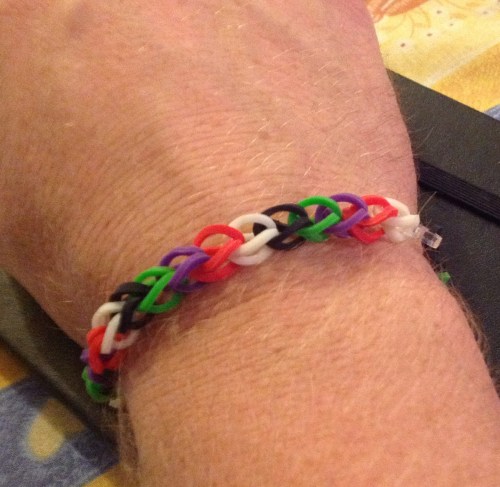
I have two daughters, aged 8 and 6.  The 8 year old likes little creative projects. At her primary school the current trend is Loom Bands. They are simply small looped elastic bands and take about 10-15 minutes to make. I love the simplicity of it (and it’s not expensive).

She made one for me and I have worn it to work (I teach high school English). When my younger students ask me who made it I take pride in I saying it was my daughter.

The Loom Band my daughter made for me.

The Loom Band my daughter made for me.

When I posted this picture on my social media feeds, a friend commented her daughter had made bands for her whole class for Valentine’s Day, her teacher and Principal. All of them wore them proudly during the week.

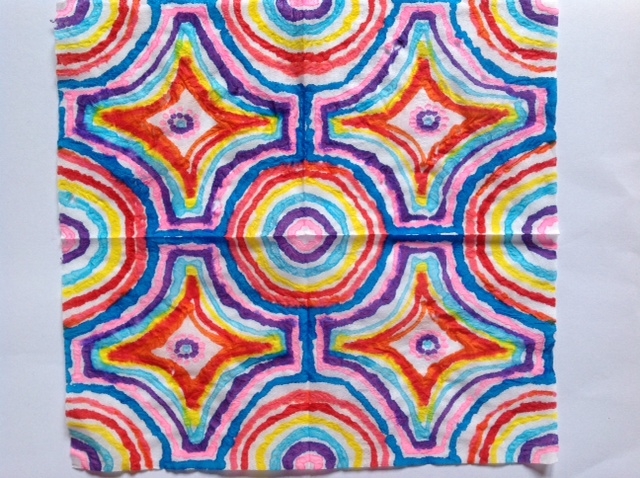
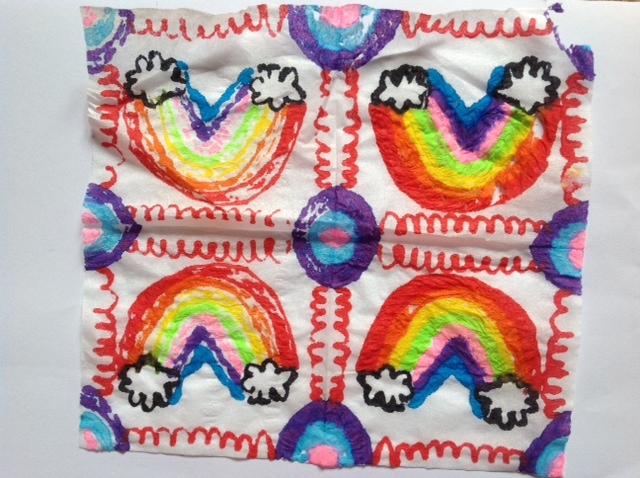
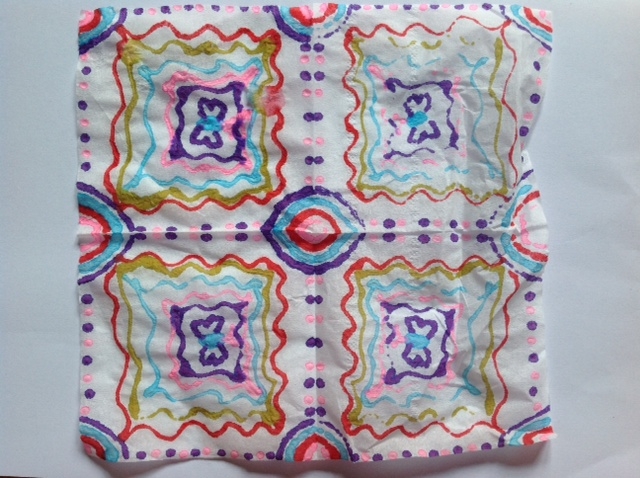
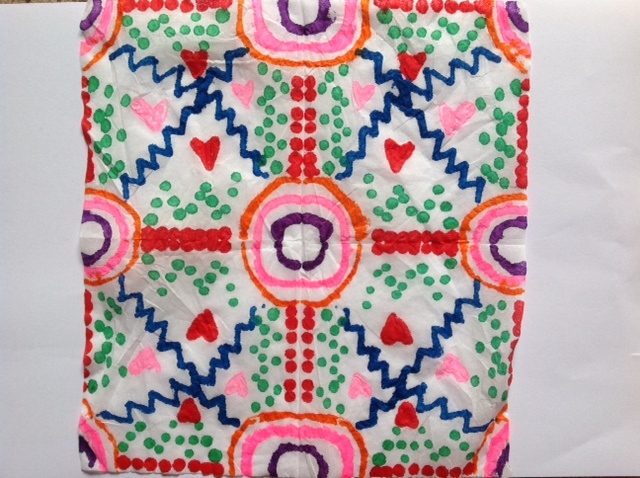
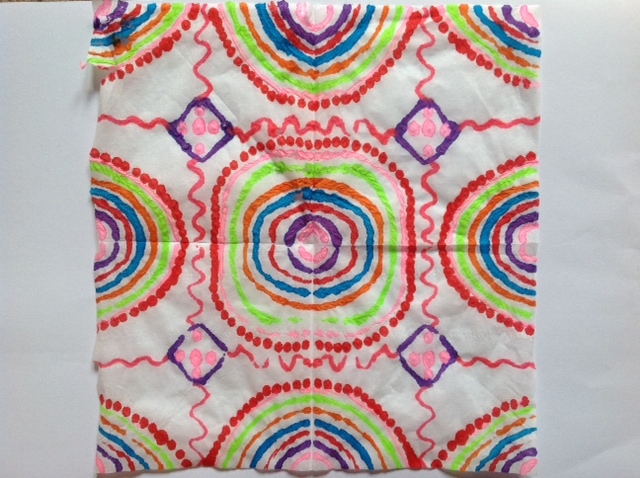
The other creative project she has been doing of late she learned at school from her teacher. Take a tissue, fold it into four squares then colour a pattern onto the tissue with Textas. The colours bleed through each other and when you open it up, it’s like you’ve cut a snowflake.

And it looks fantastic.

We took some photos of her artwork today.

CR Tissue Art B

CR Tissue Art C

CR Tissue Art A

CR Tissue Art F

CR Tissue Art D

CR Tissue Art E

Primary school teachers are fonts of many creative projects. See what your kids or nieces and nephews are coming home with.

Don’t think it’s a children’s activity; be creative and have a go.

For a writer like myself, they are cool pockets of inspiration and may find themselves into a story somewhere or are a short, brief activity to do while I let my mind wander and add compost to a story idea.

A tissue is a disposable item, repurposed into a creative work.

Any other cool creative projects?

6 Things A Writer Can Learn From Watching A Dance Show

The current season of So You Think You Can Dance is airing on television in Australia. It’s the home-grown version, not the US version telecast. I’m fascinated with the performance and artistry of physical movement that can be graceful, violent, articulate, mechanical, whimsical and profoundly intellectual.

I have two daughters who are enamoured with dance as a performing art, and my wife danced when she was younger. Many years ago, she stood in front of me, feet planted flat on the ground and proceeded to kick cleanly over my head. I’m approaching six feet tall and my wife is somewhat shorter. I vowed never to get on her bad side after that.

As a writer and creative type person I look for inspiration from a variety of sources. After watching a couple of episodes I saw parallels for writers.

1. Style in dance is genre in literature

The beginning of the series divided the dancers into their preferred style: ballet, jazz, contemporary and urban. They learned choreography in their style by an expert in the field. The dancers knew the talent and reputation of their teacher and sought to excel in the choreography they were taught.

For a writer the equivalent is immersing yourself in your preferred genre: literary, science fiction, western, romance, horror, speculative fiction, gothic. Learn from the masters of your field; absorb the lessons by reading and deconstructing their work.

2. Adaptability is essential (but know your strengths)

To whittle down the contestants, the dancers were then asked to perform in a style they were unfamiliar with. Ballet dancers had to learn an urban performance; jazz dancers had to learn a contemporary routine.

Some dancers adapted quickly to the new movements and techniques; others struggled. Yet they persevered. The results varied for each dancer; some excelled while others maintained a form of equilibrium, enough to get by but not enough to stand out from the pack.

As a writer, know your form, your technique, your movements. Then learn from another style. Adapt. But know your strengths. Learning from other genres will enhance your own writing and may even separate you from the pack and put you in front of it.

3. Discipline is Key

Part of the reality tv schtick is to give the viewer some background on individuals of note. The focus is on those who are endeavouring to succeed, but ultimately are shown their skills are wanting, and on those dancers who excel in their gifting.

And it is in these gifted individuals that you see due diligence and discipline in their practice and an innate sense of understanding about their chosen art form.

For a writer, as it is for a dancer, it is practice, practice, practice. I firmly suspect that practice for a writer and a dancer is two-fold: maintenance and improvement.

Practice for maintenance keeps you writing stories and producing work.

Practice for improvement means you’re seeking feedback on your work or taking classes, attending forums and conferences, to seek to understand your art form better and to produce better work.

4. Movement and rhythm is both graceful and violent

Every dance style has its form, repertoire, vocabulary and structure. Its manifestation in movement and rhythm is both graceful and violent. I don’t mean violence in an aggressive, physical act but the ability to portray emotion through face, body, limbs and the overall form of the dancer.

Vocabulary for the writer is the raw material to capture the emotion of the scene and engage the reader with its visceral description of beauty or horror.

A colleague described the language of “Lolita” as exquisitely beautiful while the content became darker and offensive.

Learn to utilise the movement and rhythm of language to create grace and violence.

5. Stories are interpreted through different forms

Ask a ballet dancer, a jazz dancer, a contemporary dancer and an urban dancer to perform a love story and the interpretation will vary, based on the lexicon of the specific dance style. I love contemporary dancing for its narrative capabilities, but what can I learn from the narrative in ballet? Or jazz? Or urban?

Learn to tell stories in a different form. Learn to tell a narrative from another angle.

6. Show your work, and know when to hide it

The show is built around showing the progression and development of each dancer as they learn new routines, often in styles they are not conversant with. I like seeing the growth of the dancer as artist when they are open to learning, stepping into an arena they are unfamiliar with and untrained in. Yet the psychology of dance, the mental framework of adaptability and learning allows them to rise above it.

As the viewer, I get to see the falls and stacks during rehearsal, and so appreciate the performance knowing the effort they have sustained to make it look effortless.

Sometimes as writers we are too quick to show off a new piece of work, not allowing it to settle before another round of edits or sent to a trusted beta reader.

Snippets on blogs is a good way of keeping readers hooked prior to a new release, or showing them works in progress. Know when to show your working; make it shiny and new and fresh and of a high standard.

Don’t rush it.

Now if you’ll excuse me I hear a lively tune; I’m inspired to dance.

Why Write Post It Note Poetry?

Why write poetry and why write it on a Post It Note?

In January last year my collaborative writing partner, Jodi Cleghorn, and I were having an online conversation about her month of writing bad haiku the previous year. The idea of a month of bad poetry was floated for February, you know, because creativity and complete naffness.

Between creative friends, ideas can easily get out of hand and all of a sudden they are free range chickens scratching at the dirt in your head.

My contribution to the conversation was to limit the size and focus of the poetry: it must fit on  a Post It Note.

Thus, #postitnotepoetry was birthed and the month of lyrical experimentation commenced.

It was an easy thing to do because it was a short, sharp burst of forced and focused creativity. Some days were more of a challenge to write: looking for ideas and inspiration, making it fit on to the parameters of a Post It Note, and trying to write a poem in the corners of the day.


Check out last year’s collection here.

This year I was tempted to pass on the opportunity to write because I wanted to focus on Getting Stuff Done (GSD) and sometimes you have to say “No” to opportunities. I know Jodi was the same.

But it only takes an individual, in this case Sean Blogonaut, to post one and we fell to it like seagulls on a hot chip.

But I need to answer the question posed above.

Why write poetry and why write it on a Post It Note?

* It’s a creative act ANYONE can do

I believe everyone can be creative. People are often too afraid to start or have no idea where to start.

Making the activity simple and accessible, giving people permission to try a new activity and more importantly, permission to suck at it, creates impetus to try a new thing.

I am no poet but I am quite proud of some of the pieces of I wrote last year. In the Aussie vernacular, it’s all about “having a go.”

I embrace that I suck at something.

* Limits and boundaries can be liberating

Giving yourself a restriction can free up your imagination and focus.

The size of a Post It Note doesn’t allow for an epic poem but a haiku, a senyru, tanka or couplet easily fits on. However, I do manage to squeeze a fair bit of text onto a Post It Note.

Use a range of colours. They vary from the traditional yellow square to pink and green and blue and purple squares to colourful rectangular pads with lines.

I am using the first pad I found in my writing drawer: a pale yellow, rectangular pad (Jodi says it’s cheating but she uses coloured rectangular Post It Notes WITH LINES ON THEM).

* It creates community

We started a facebook page last year and for the month of February it went off. It remained quiet during the year, but returned again with a focus.

Do it with other people. Make it a game, a challenge. Be involved with people doing creative things.

* It does not require a huge time commitment

You can scribble out a couplet in a minute or pen six lines of doggerel in less than five. Quality is not a factor; your commitment to write is.

Use moments of down time like in the shower or washing up, love making or taking the ferret for a walk to play around with words.

Creativity does not have to consume large portions of your time; five minutes a day is sufficient. You are very welcome to spend longer; if you’re enjoying it, take pleasure in it.

* I must practice what I preach

If I write about creativity and seek to proselytise the masses into the way of creativity, I must also do it. Post It Note Poetry is my reminder to be creative.

I also write random Post It Note Philosophy about the creative life. I am aiming to finish a novella in the first half of the year, have my collaborative novel out to agents and complete another short/novella in the second half. Note to self: Get Stuff Done.

I am thinking I might continue Post It Note Poetry beyond February this year and put them up on the blog from time to time.

You can see this month’s collection of Post It Note Poetry here.

* It leads to new ideas and opportunities

I subbed my first poem for publication in January (still waiting on rejection/acceptance) and it would not have happened had I not started writing bad poetry. Quality is another judgement. It’s the learning I gain from writing that is exciting.

The important thing is to DO SOMETHING CREATIVE. Take a picture a day, draw a cartoon, arrange flowers, bake cupcakes, doodle in the margins of the newspaper, deface magazines. There are many wonderful creative people out there doing things not for fame and fortune, but the fun of creating.

This guy likes to draw pictures on Post It Notes during his commute to work.

A father draws on his kids’ sandwich bags each day.

What about Moleskine doodles?

This doodle art will blow your mind.

Remember defacing pictures in magazines when you were a kid by drawing moustaches on everyone? Go and do it again.

Here’s a creative challenge for you: what else can you do with a Post It Note?

Please give examples in comments below, or better still, link to your blog and show everyone what you’re doing.

Get creative!

Narrowing the Focus – What I Won’t Be Doing In 2014

It is easy to dream big, throw all the ideas into the air and see what catches on the breeze.

It is easy to create a list of things so you can tick them off one by one.

It is easy to outline what you want to achieve in a given time frame.

Over the years I have become adept at having clear goals and foci for the year (with a little bit of flexibility for frivolity), but often lacking in the execution to complete them.

Amongst all the “Do’s” is one important thing that creative people forget.

It’s NOT doing something.

There is something I WON’T be doing in 2014.

I won’t be faffing about, stuffing around, wasting time or procrastinating.

A writer (and any other creative type of person) requires discipline and diligence to achieve her or his goals.

And I suck at it.

But I’m getting better. I need people around me who will, in the most loving way possible, kick me in the bum with a pair of steel-capped boots.

I may even take to tying a piece of rope around my ankle, bring it over my shoulder and pull quickly to kick myself in the bum. Self-discipline at its finest.

In order to achieve my established goals and projects for the year I won’t be procrastinating or wasting time or faffing around.

To conceptualise it further, and concentrate it like undiluted red cordial: DISCIPLINE.

What I will be doing in 2014 is GETTING SH*T DONE (I’m not normally a sweary person, but there’s something satisfying in this phrase).

In order to move towards our set goals and targets, we have to let things go, abandon projects or say “No” to opportunities if they are not bringing us closer to our dreams and visions.

I saw my early years as a form of writing apprenticeship. I read blogs, articles on story structure and craft. I wrote flash fiction almost every week (and the results are here on the blog – you, too, can read my beginning efforts and laugh at it). I wrote for a website about writing. I soaked up any experience I could get my hands on, including learning how to edit by being edited ruthlessly.

I am at a place where I think my apprenticeship is completed. I have not finished learning; learning is continual. I have the tools to write and I will still read blogs on the craft of writing to sharpen those tools. Even if they are often thrown higgledy-piggley into a bag, and I understand what each one does, it is now my responsibility to become a master of the tools. Which will mean taking better care and organising them correctly.

And I am learning what NOT to do.

I am no longer posting flash fiction to the blog. In the early stages, I posted my first attempts here and I spent time reading other people’s stories. I enjoyed it and I learned. But I am focused on becoming a novelist; I am reserving fiction for sale. I am writing to be published.

The writing I do post here is the practical application of my posts about living a creative life. Hence, Post It Note Poetry and Post It Note Philosophy, micropoetry and twitfic are examples of living a creative life.

I won’t be wasting time in 2014 so I can get sh*t done.

What will you NOT be doing this year?

Post It Note Philosophy #22

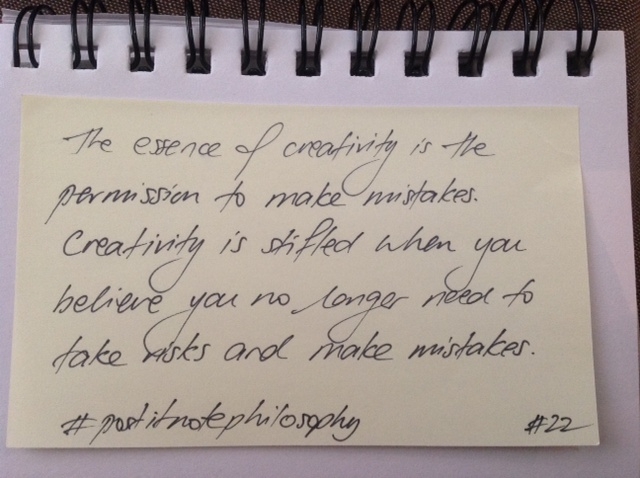
PINPY 22The essence of creativity is the permission to make mistakes.

Creativity is stifled when you believe you no longer need to take risks and make mistakes.

7 Reasons to Abandon The Myth of the Muse

I’m calling it now.

I’m calling shenanigans on the whole Muse thing.

The anthropomorphic representation of the creative inspiration is a romantic notion, used as a mythologising factor of and for the creative life. The Ancient Greeks had 9 anthropomorphised Muses (Epic poetry, History, Lyric poetry, Elegiac poetry, Hymns, Tragedy, Comedy, Astronomy and Dance) so you can appeal to any number of them. Heaven help you if you want to write YA or Gothic romance.

There have been a fair number of creative people over the years, be they writers, artists, painters, who sprouted the notion they cannot create with the inspiration of their Muse (who was probably a prostitute or mistress or as a result of drug and/or alcohol abuse, or all of the above).

And yes, they have produced some brilliant works of art in literature, painting, music or film. But if we didn’t tacitly approve of their illegal and/or immoral mores, would we look on their work any different? Or do we say they were screwed in the head and needed a good paddling? Perhaps they could have produced the same work of genius WITHOUT the chemical alterations?

All that aside *sweeps table clean*

I think the concept of a Muse is a load of rubbishy bollocks.

 I believe we can all be creative to some degree. It can be as simple as taking a photo a day on your phone and whacking it on Instagram (Note: food and selfies are long gone; try combining the two for something different) or writing a piece of bad poetry to fit on twitter or doodling in the margins of the newspaper on the way to work.

IT DOESN’T MATTER WHAT YOU DO, AS LONG AS YOU ARE DOING SOMETHING CREATIVE.

Make a cake, sew a quilt, tend a garden, write a story, learn an instrument, paint a picture.

FOR THE LOVE OF ALL THINGS HOLY, CREATE SOMETHING. AND CREATE REGULARLY.

Then we can get to this finnicky point about having a Muse. You do not require the assistance of an anthropmorphised idea to create, or to inspire you to create, or to keep you creating.

Here are 7 reasons why I don’t believe in the Muse an an anthropomorphised notion to inspire, or be the main reason for, your creativity.

1. I don’t believe in the Muse as inspiration because it’s an excuse

“I didn’t feel the presence of the Muse today.”

“I’m waiting for the Muse to inspire me.”

“My Muse hasn’t shown up today.”

“My Muse abandoned me in the middle of my writing session.”

No, no, no and just to be different, NO.

There are many, many different reasons why you are not creating but if it is not due to the presence or absence of a Muse, it’s an EXCUSE.

When you’re procrastinating from creating, know WHY. Are you being lazy? Too easily distracted? Emotionally unbalanced by something unrelated? Life happens and disrupts your creative flow: work stress, family stress, tired from being so busy. And the list could go on.

No more excuses!

2. I don’t believe in the Muse as inspiration because it undermines a positive work ethic.

If you are continually waiting for the (non-existent) Muse to arrive, you will NEVER get anything done. You wouldn’t show up to a professional level sport match and expect to play without the prerequisite years of training and discipline.

Neither should you turn up to your creative life without having done the background work.

If you’re a creative person you turn up each time prepared to work. You invest time and energy into what you do; you sacrifice time with friends, family, leisure to pursue what you are passionate about.

You don’t write a best selling novel on your very first attempt. Before you have ever set down the first word you have spent time preparing yourself for it. I have heard many authors speak of “practice novels” sitting in the bottom drawer of their desk or filed away on their computer. They put in the hours of work to write it but learned along the way of what worked and what did not.

Don’t wait. Do the work.

3. I don’t believe in the Muse as inspiration because instantaneous rewards does not bring long term benefit

Instant success can be a curse as it artificially inflates your sense of achievement. It is of greater benefit to spend time slogging it out in obscurity, honing your craft, developing the skills you need to master your choice of creative pursuit.

I have spent four years serving a writing apprenticeship so I can have the basic skills required to produce good art. And I still have a long way to go. I am nowhere near the end of my writing apprenticeship, but I have learned enough to feel confident to write a novel.

I spent a couple of years writing flash fiction and short pieces to understand story craft and structure. I read blogs, articles, received feedback on my own stories to learn more.

I will always be a learner of the craft.

Commit to the long term.

4. I don’t believe in the Muse as inspiration because it negates personal responsibility

As a teacher I see students who have not learned what it means to put in the time and effort on a piece of work. They would rather do nothing and fail, than to try and put some effort and possibly fail. And their parents often bail them out of trouble when their student is challenged on his/her lack of performance.

The percentage of people who say they want to write a novel is significant (somewhere around the 80% mark) but how many of them will actually start (not many), and how many of them will actually finish (even fewer)?

If you want to be creative, you have to do the work. No ‘ifs.’ No ‘buts.’ No excuses.

Take responsibility. If you want to create, CREATE. You cannot wait for someone else to get you to do it.

5. I don’t believe in the Muse as inspiration because it romanticises a short cut process, not a long term commitment

As a creative person, you’re in this for the long haul, not as a short fad or craze (think how fast the Harlem Shake or twerking or MC Hammer pants died out).

You create through all the cycles of life because it gives you meaning. You create when you’re happy. You create when you’re sad. When you’re curious, adventurous, melancholic, introspective, cautious, rebellious. Not because you’re at the whim of a capricious Muse who doles out ideas like rewards if you’ve been extra special today.

6. I don’t believe in the Muse as inspiration because creativity will not be handed to you without some work

The more you create, the more you look for ideas and inspiration, the more you find them. The Muse is not hoarding a treasure trove of delicious and vision-inspiring ideas, waiting for the most opportune (or inopportune) time to leave them like a trail of bread crumbs in the forest.

There are times when ideas are rare; you’re looking for canned unicorn and all you get is Spam. But to reinforce a previous note above, ask what’s going on in your life that make be cutting into your creativity? Tiredness, laziness, stress from work or family, bereavement, financial worries, commitments to family and friends.

Do the work. It will happen. Write ideas down and let them sit in the back of your mind (I call it composting – you can call it gestating, stewing over, masticating, growing flowers in the attic). Inertia and apathy are the greatest killers to your creativity.

Do the work. Read books. Watch films. Visit art galleries. Walk outside. Exercise. Talk to other creative people and brainstorm.

Feed your mind so you have ideas to draw on.

7. I don’t believe in the Muse as inspiration because you need to understand your own creative cycles

When do you work best? Is it in the early hours of the morning before everyone else wakes up? During the afternoon? In the evening? In the later hours of night after everyone else has gone to bed?

How often do you want or need to be creative? Once a week? Every third day? Every day?

You need to know how you work best to achieve maximum achievement from your effort.

Also know when you are creatively dry and in need of refilling your creative well. To quote a breakfast cereal commercial, “You only get out what you put in.”

When you know how you work, and when it is best to work, you are not at the beck and call of the Muse to create. I know someone who works best in focused, manic cycles of creativity, producing a fair amount of work in a short period of time, be it weeks or months. Conversely, there is an almost equivalent down time when work is not being produced.

Other people prefer to work in small, consistent pieces of time and produce work on a regular basis.

Is your creative locus internal or external? Where do you find your best ideas? From working alone or working with other people?

Give yourself permission to stop if you need to because life is chaotic and you need some rest but give yourself a specific date when you will return to it.

Know your creative cycle.

Final Thoughts.

I believe inspiration and creativity are two different aspects. Inspiration feeds into the creative process, but you cannot wait for inspiration. Creativity is a continual thought process. Inspiration taps into areas of thinking in order to create.

Sacrifice the idea of the Muse as archaic and unhelpful. Call shenanigans on it and do the work. Turn up when you’ve said you’ll turn up. Put your bum in the chair and create.

Post It Note Philosophy #20

image

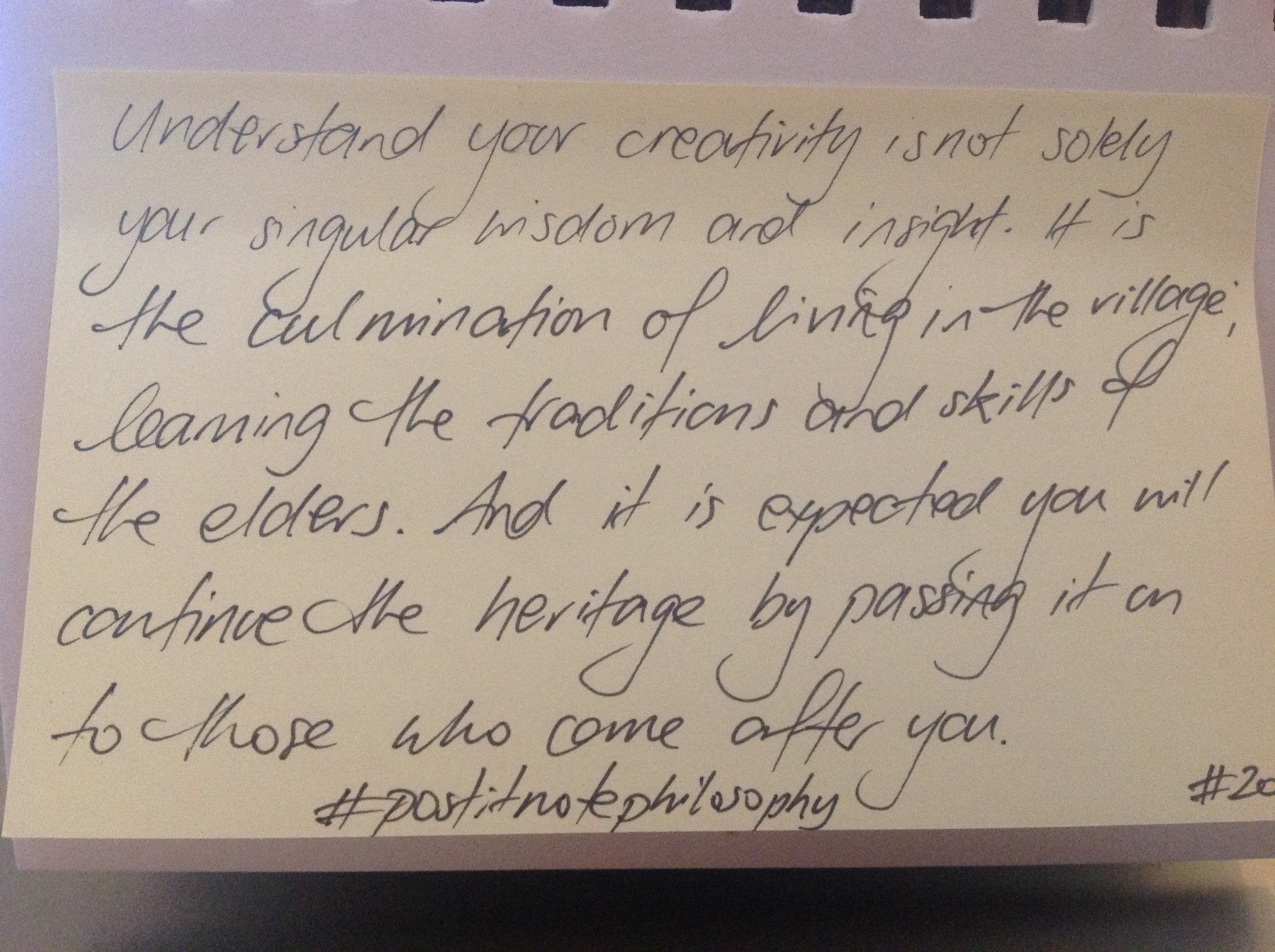
Understand your creativity is not solely your singular wisdom and insight. It is the culmination of living in the village; learning the traditions and skills of the elders. And it is expected you will continue the heritage by passing it on to those who come after you.

Jessica’s Dictionary

Opportunities for creativity come in many disguises.

A little while ago, a writing friend, Jessica Bell, began posting these quirky, idiosyncratic new definitions of familiar words on twitter and Facebook.

For example,

Politics: An involuntary twitch of the top lip only seen on corrupt members of government.

I chimed in with some of my own:

Pantomime – the dance performed when putting on underwear in a public change room.

The exchange went back and forth over a few days until a surprise message arrived in my Inbox.

The gist of it was this: Would you like to write a dictionary with me?

Me: *brief pause* Oh yeah!

And so, Jessica’s Dictionary was conceived. It appeals to our warped sense of humour and our love of playing with words and meaning.

Each day or so we post a new word to twitter with the hash tag #Jessicasdictionary.

One night we had an hysterical conversation making up new definitions with a Greek flavour (Jessica is an Australian living in Greece) with words beginning with “Con-”

Conduct – a Greek who avoided hitting his head.

Conclude – the Greek who finishes first in an exam.

It will be a little while before we have enough words for our dictionary, but you can follow the hashtag on twitter #Jessicasdictionary (via @revhappiness or @MsBessieBell) for the shenanigans.

And I heartily recommend following @MsBessieBell and checking out her awesome blog and brilliant books.

Stay tuned in the near future for the release of Jessica’s Dictionary.