Category Archives: Creativity

Those Who Can, Do AND Teach

There is a saying: “Those who can, do. Those who can’t, teach.”

What a load of bollocks.

It’s said as an insult; a derogatory, snide remark to elevate one person and denigrate another.

As a teacher, it’s particularly insulting because it’s my profession, my career, my calling. To teach is to pass on knowledge, information, insight, technique, skills, habits.

To say those who can’t, teach, is to abrogate responsibility of all people to teach one another. 

Fundamentally, every interaction is teaching. We give it different names or titles like coach, mentor, professor, guru, but the interaction is the dissemination of knowledge and the acquiring of skills.

Teaching is an aspect of our relationships with one another. As parents we teach our children right from wrong, good from bad. We teach them to tie shoelaces, ride bikes, make sandwiches, treat people with dignity and respect, how to make friends. We should also teach them to create. Never let a child feel like creativity is a waste of time.

There are skilled and gifted teachers in every creative endeavour and every profession. While they may not receive the praise and accolades of some of their peers at the higher echelons, or their names are not well known, their work is far more significant. They allow the next generation to stand on their shoulders and see further. In turn, they pass on their skills and knowledge to the next generation, hoist them onto their shoulders and help them see further still.

To teach is to create. It creates interest, passion, wonder, curiosity, desire, engagement, questions. It creates a learner.

A student is never greater than the master. No, a master should ensure that the student IS greater than the master. This is creativity. This is teaching. Equip the student with the necessary skills and understandings to excel.

Explore the “family tree” of an artist in whatever medium. See where they came from, who they learned under, what ideas they developed and passed on. Know the origins of your art. 

Understand you can teach someone. It doesn’t require a degree, time in a classroom. Teaching is done in the quiet moments of conversation, time shared over tea and doughnuts.

Those who can, do AND teach. 
 

Creativity is a Team Sport

I like when ideas about creativity surprise me from random sources; when an idea is sparked by an non-fiction article, paragraph of fiction, line of poetry, a photograph, an emotion ignited by the news or the delicious consumption of a six-pack of doughnuts.

Recently I was reading an article, “5 Practices We Need Back In Our Lives,” and one section on mutual encouragement stood out. Here is the relevant section (my emphases):

Mutual Encouragement

As a kid, I played a lot of sports. Although I enjoyed the competition, I mostly loved being on a team and working toward a larger purpose. In that context, every teammate becomes a cheerleader. There’s nothing quite like the energy created by mutual encouragement. It lifts spirits and helps everyone perform at their highest level.

Why, I wonder, does this type of encouragement fade as we grow older? Instead of cheerleaders, we become critics of one another. Perhaps it’s because we’re no longer on a team—at least that’s how we choose to see it. Instead, it’s us versus the world.

It’s time to begin encouraging those around us—family, friends, even co-workers. God calls us to “spur one another on toward love and good deeds” (Hebrews 10:24). Practicing this won’t merely lift others’ spirits and improve their performance, it will leave everyone feeling as though they’re on the same team, working toward a common purpose.

So often as creative people we think we are working in isolation (every man is an island when it comes to creative work), disconnected and removed from other creative people. This is especially true of the mythology of writers (of which I am one), that we spend our time locked away in a distant castle/apartment/coffee shop/ball pit at IKEA, removed from the smothering cloying atmosphere of people, suffering for our art.

What are we to do?

A past student of mine was a long distance marathon swimmer. He become the youngest male to swim the English Channel. While it was him in the water for many many hours, he spoke of the team around him who lifted his spirits when he was exhausted, dejected, and wanting to give up.

I feel there has been a shift in thinking and in culture regarding the isolated creator. We are moving towards a group consciousness and collectivisation in support of one another.

Whether this is groups that meet in real life or virtually in online groups and forums, the mutual encouragement gained shows that we are a team working towards a common goal and purpose.

Personally I’d like to see collectives grow organically, places where creatives of all pursuits and passions can meet to create, discuss, encourage, critique, edit, beta, inspire.

Imagine a salon of poets, writers, musicians, artists, dancers, sculptors, IT gamers, apps developers, philosophers, mathematicians, scientists, any type of creative person. A cultural think tank, brains trust, hot house, backyard barbecue  where we all bring a plate of food to share (a very Australian idiom) and get to enjoy each others’ company, ideas and encouragement (sorry to mix metaphors).

At its most basic, creativity is a team sport. We might work in isolation but our success depends on our community and relationships.

Here’s my game plan:

  • Join a team.
  • Create community.
  • Foster relationships.
  • Encourage and equip others.

The Significance of Creativity

The Significance of Creativity, or to put it another way, creativity creates significance (the noun/verb, subject/verb is a little awkward, not to mention the repetition. Oh, the vagaries of the English language).

Creativity is an act that begins with you, as an internal locus of control. It is inwardly focused, a way of understanding who you are, what you stand for and what you believe in. 

What Does Creativity Create in You?

Whether you’re at the start of your creative journey, been at it for a little while or have carved highways for others to follow, creativity creates four things within an individual: significance, community, conversation and legacy.

Significance

* Creativity creates an understanding of who you are.

Perhaps you started creating to work out the impact of a significantly emotional event in your life or as a way of exploring new ideas. 

Whatever the reason, it forms a significant part of who you are, what you identify with and how it is manifested in your creativity.

It is intensely personal, even private, and may never be shared with anyone else. It does not negate the significance of who you are. As intensely personal as creativity is, when shared with others, it gives them an insight into who you are. You have purpose and meaning, a spiritual dimension to your life.

Community

* Creativity is not a field limited to the individual.

It is often done as an individual but you should not be without a community.

Finding like-minded people as a support helps you continue what you are doing. They are a back up for when life is brutal and you want to chuck it all away. They are your confidantes and encouragers. They are also those who will love you deeply and tell you the truth about your work, especially when it sucks and needs more work.

In turn, you can teach others and expand the creative community.

Conversation

* talk to people about what you do and why.

You have a cause to champion, a positive reason to speak into people’s lives. It’s not all about you, dominating the conversation about your most recent creative project or endeavour. If people are willing to listen, speak. 

However, can you steer the conversation around to what makes your listener creative? Can you open up their mind to the possibilities of a creative project? Can you encourage them to take up an old hobby, long neglected, or aim for something new, something they have always wanted to do?

Legacy

* your work is a testament to others.

It is your character imprinted onto your creative work like children; lived, learned and loved, cherished as valuable and positive traits to have. Your commitment to others as teacher, or encourager, facilitator, supporter, collaborator.

Contribute your verse and know the significance creativity plays in your life and potentially in the life of others.

Collaborative Poetry

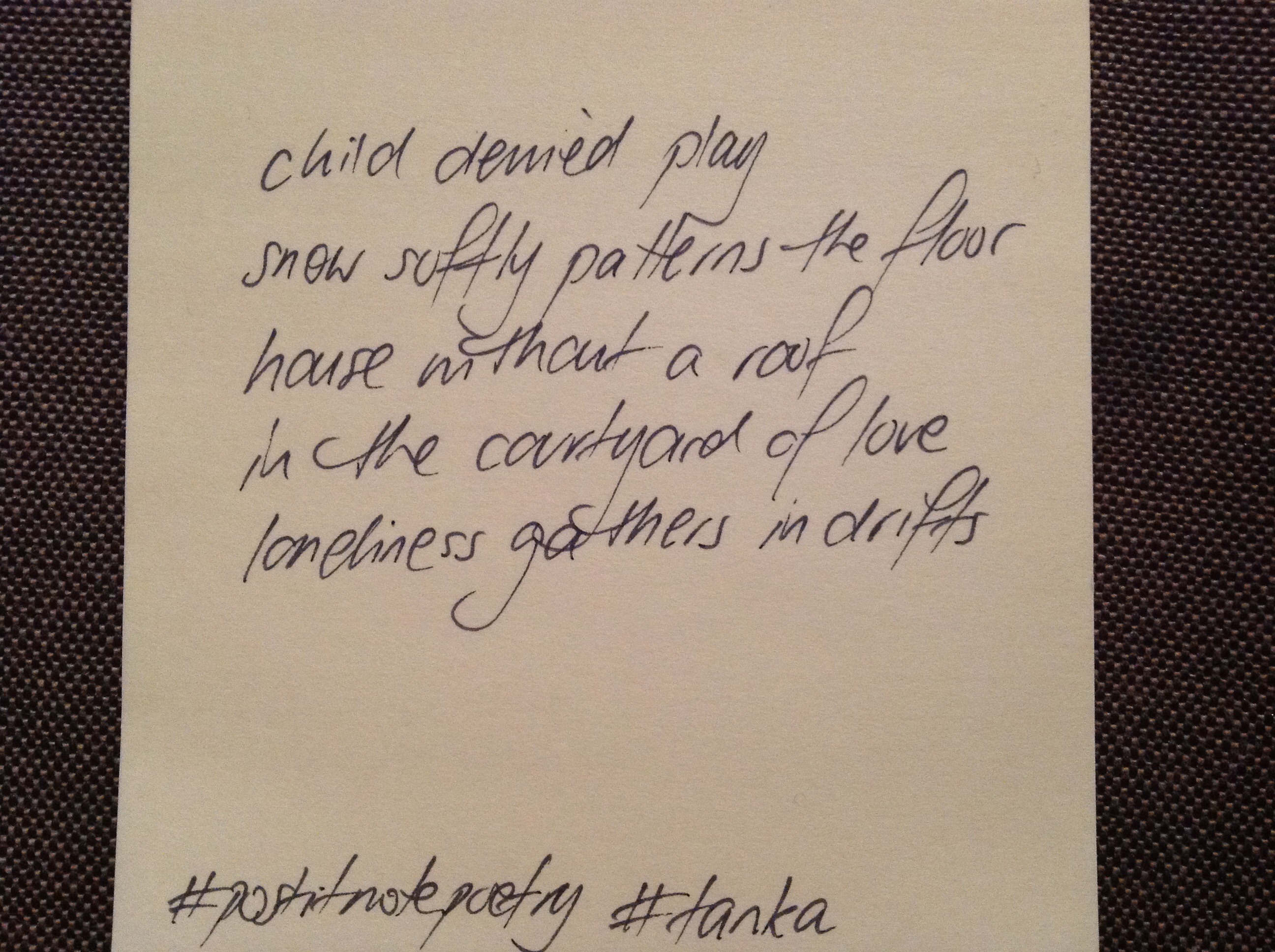
Recently I tweeted the following haiku:

child denied play
snow softly patterns the floor
house without a roof

and tagged a friend, Sean (@SeanBlogonaut) who is another poet and writer. He is particularly fond of haiku, tanka and renga. He has given my wonderful insight into how haiku should be written in English (focus more on the imagery, the phrase and the fragment, rather than the counting of syllables. It is one of the vagaries of using a poetic form which has its origins in another language; the Japanese use sound units which are different to English syllables).

He added the following two lines to form a tanka:

in the courtyard of love
loneliness gathers in drifts

Creating a new poem

child denied play
snow softly patterns the floor
house without a roof
in the courtyard of love
loneliness gathers in drifts

I am used to collaborative writing and I want to further explore it with Sean, particularly as he raised the idea with me a couple of weeks back but we haven’t been able to catch up yet to write renga.

Collaborating with a new writing partner has benefits:

1. You learn new skills

A collaboration can be of equals, or a master and novice. In the case of writing renga with Sean, I would be the novice. But the collaboration is one of exploring a poetic form and learning more from each other.

2. The sum is greater than its parts

Or, two heads are better than one. New eyes, old heads, different perspectives, new ways of writing. You learn from another about your own writing from the writing of others. You learn how the other person constructs a phrase, sentence or image, and you get to explore why. It’s another skill/technique you can add to your own writer’s toolbox.

3. It’s fun

Yep. It’s fun. Creating a piece of work should be fun. It’s also hard work but the fun of creating something together, a shared community and body of work is a fantastic feeling.

image

Find a creative partner and create something new. It may only be a one-off piece of work or it may lead to a long term collaboration. Try it. Invite someone to participate.

The Selfie and Art

The Selfie Generation and The Misunderstanding of Art
 
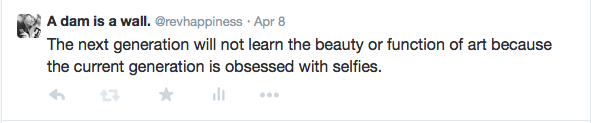
While away on holidays the thought of the ubiquitious selfie struck me as an indicative misunderstanding of the way art functions in society.  Without giving it too much thought I put the random thoughts to twitter.Screen Shot 2015-04-16 at 9.37.14 pm

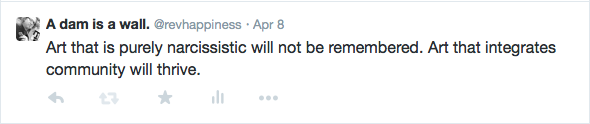
Screen Shot 2015-04-16 at 9.37.25 pm 
There has been commentary on the narcissism of the selfie, and the selfie generation. Self portraits are nothing new in terms of the history of art but the selfie has predominated in a digital age and the shift in societal thinking. It is nothing more than self-aggrandisement.
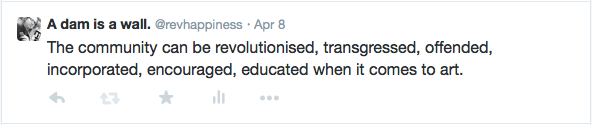
The selfie misses the vital point of art and its function in society as a whole and the community on a smaller level, leading to this statement:
 
Screen Shot 2015-04-16 at 9.37.35 pm
 
Ultimately I don’t care about the photos of yourself, or of your food, or your beverage, or any other piece of ennui you care to photograph and post on social media. What I do care about is the image you have carefully and thoughtfully constructed in order to tell a story.
It can be a photograph, a drawing, a doodle, a sketch, done with crayons, pencils, textas, salt and pepper, the spilt milk on the table and played with to create a pattern. 
The fact is, the art is deliberate and has a purpose. The fact a company can sell a book of Kim Kardashian selfies says a lot about the disposable artistic culture we live in. We have monetised narcissism which diminishes the value of art as a whole and what people are willing to pay to contribute to a vibrant arts culture. The same thing can be said for reality tv celebrities and their ‘biography.’ It cheapens the literary culture and pushes publishing to look for the next quick cash cow they can milk then slaughter. 
If we want art to have longevity it must have purpose, definition and an audience. A selfie has none of them.
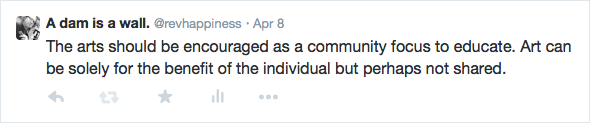
Screen Shot 2015-04-16 at 9.37.44 pm
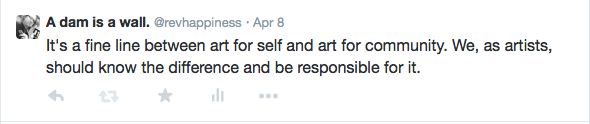
There is a place for art for the individual and the self. But it is not art to be shared publicly. It can be shared with a few select people but not for the whole community. I don’t show the scraps of sentences found littered in my notebook or my practice pieces to the readers of my blog (unless I am using it to illustrate a point). This is the art for myself. Only when the piece is completed, edited, refined will I show it to my audience. I know what is done for myself and what is done for my audience. 
By all means, take selfies and share them with your audience. Just don’t cal it art.
Screen Shot 2015-04-16 at 9.37.58 pm

 Feel free to disagree with me in the comments; I would like your feedback on this.

What’s your opinion on the selfie as ‘art’? 

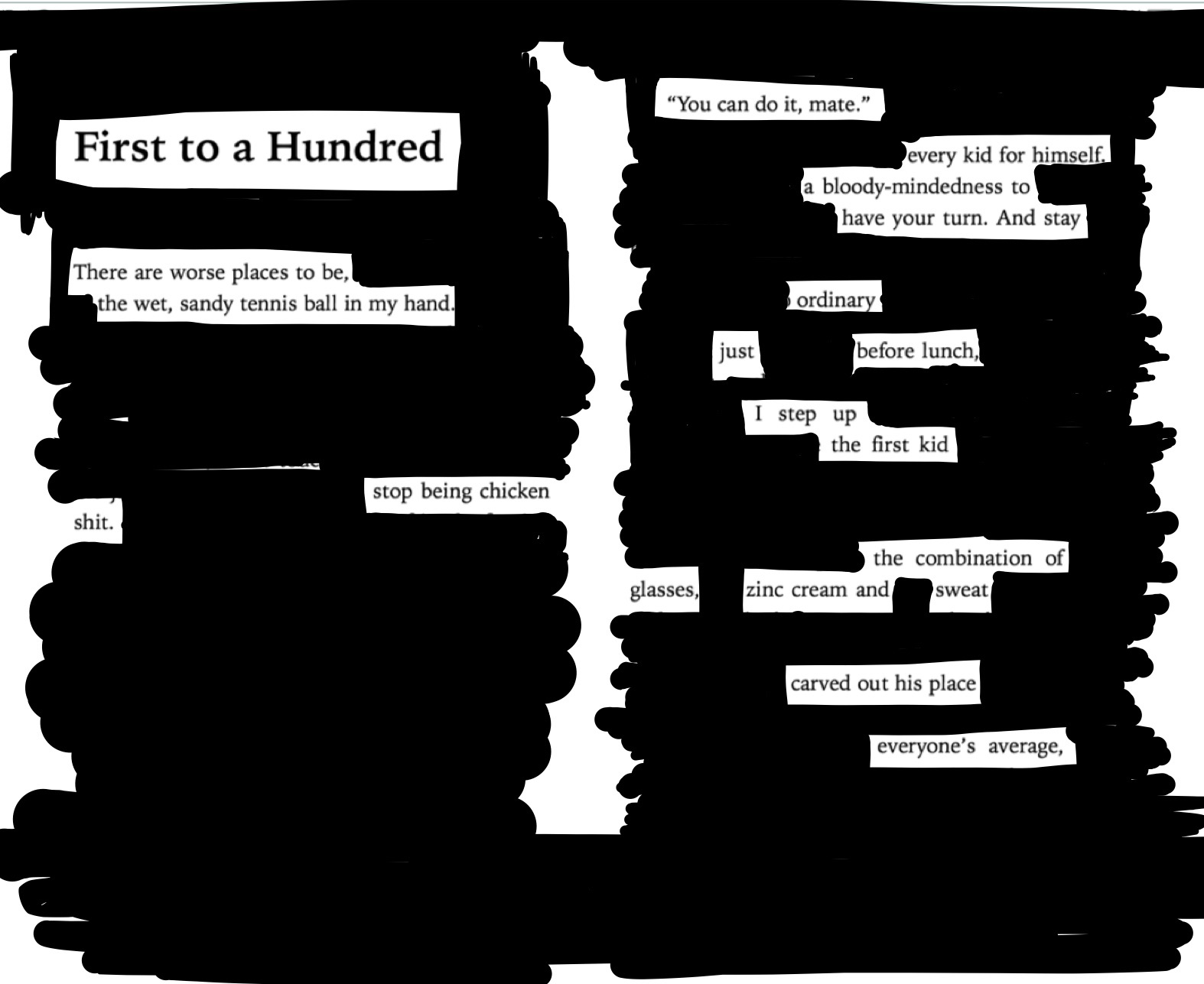
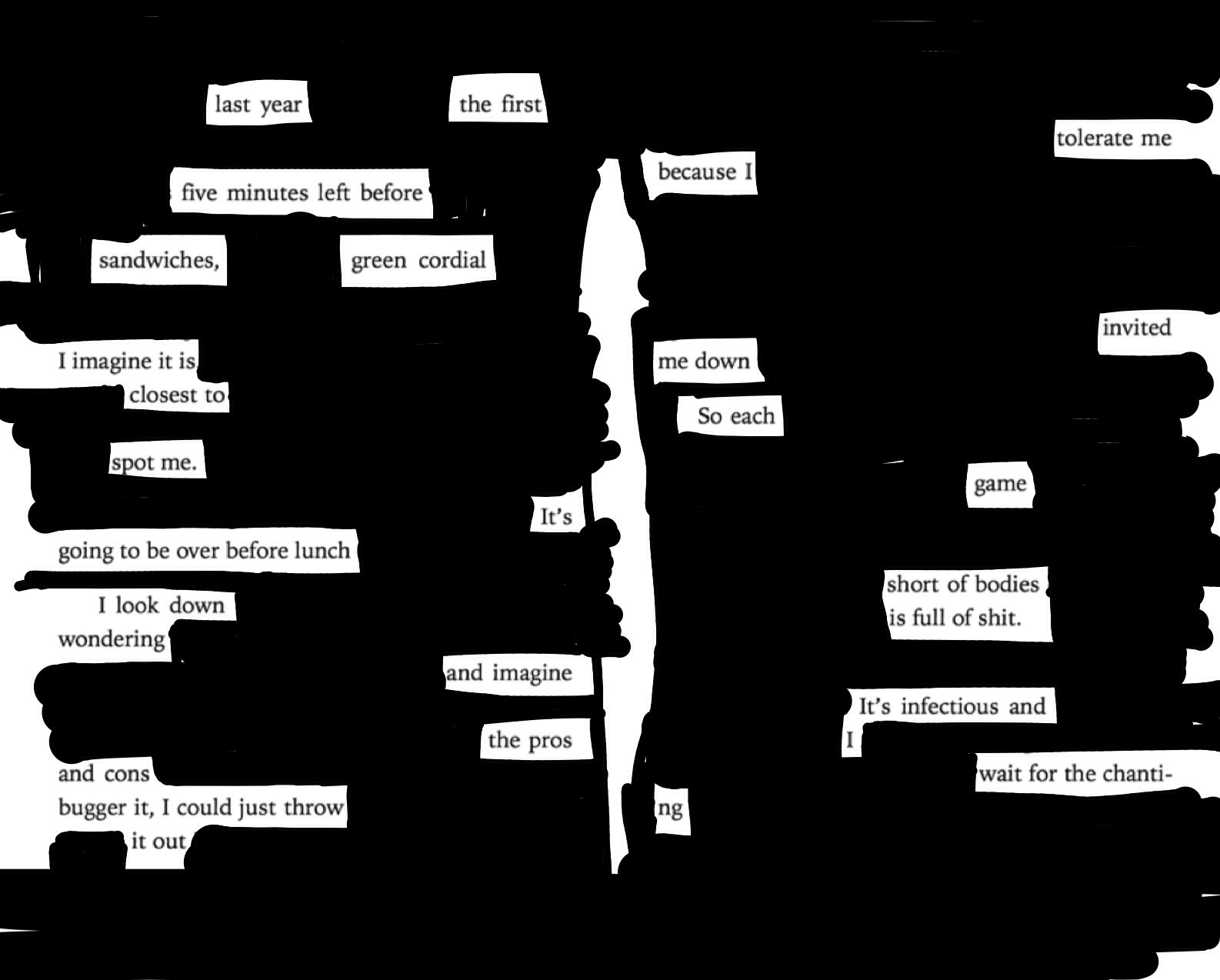
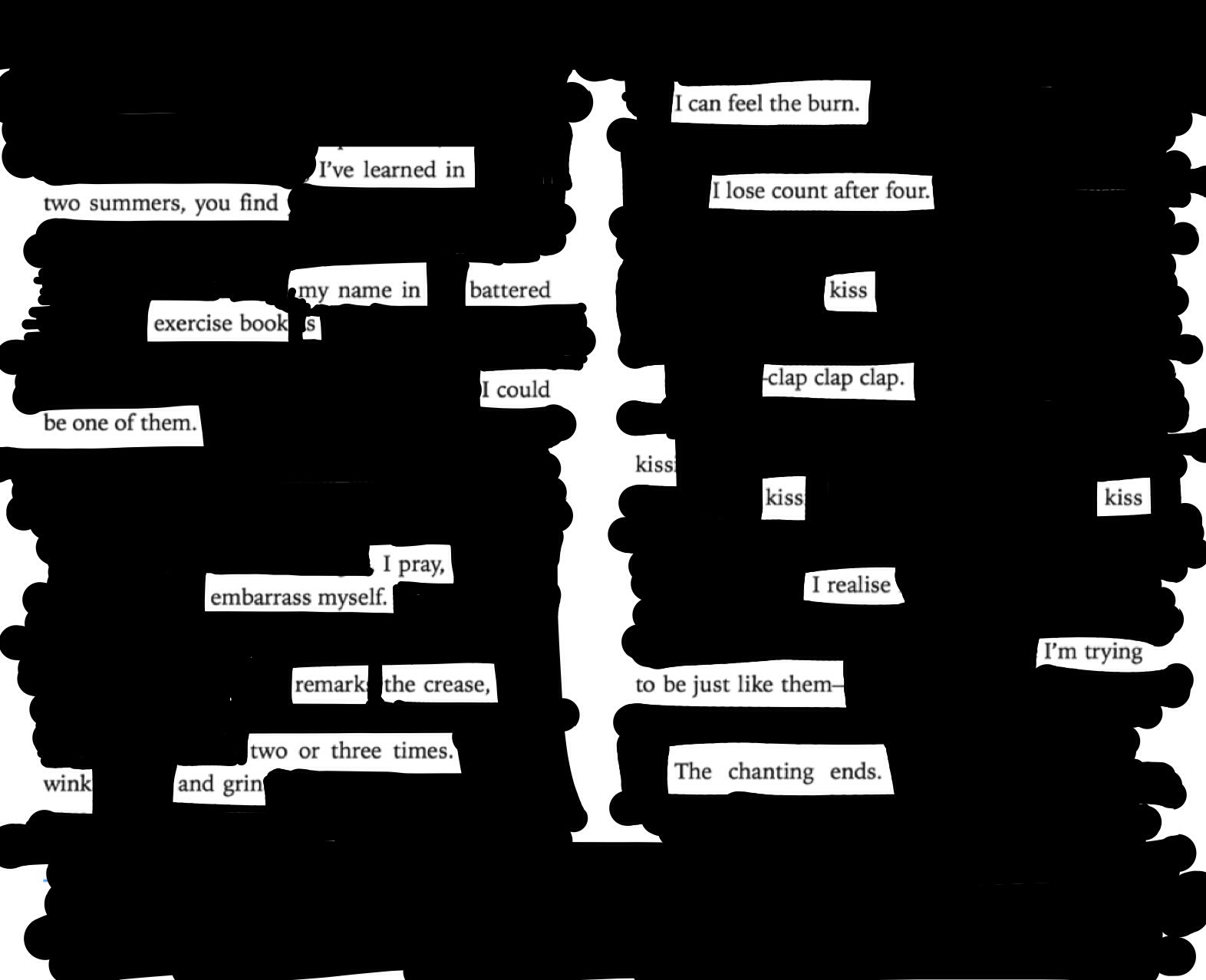
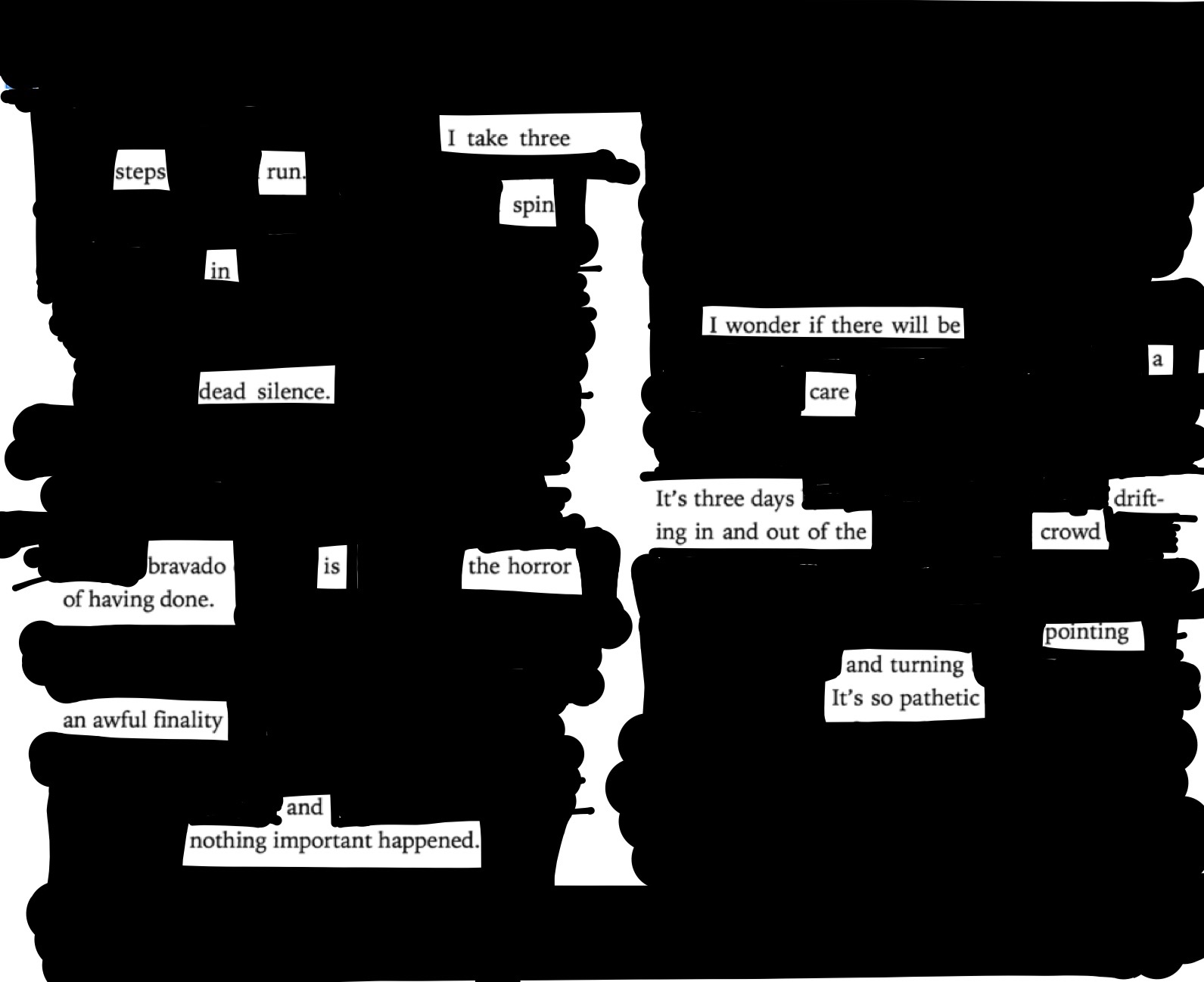
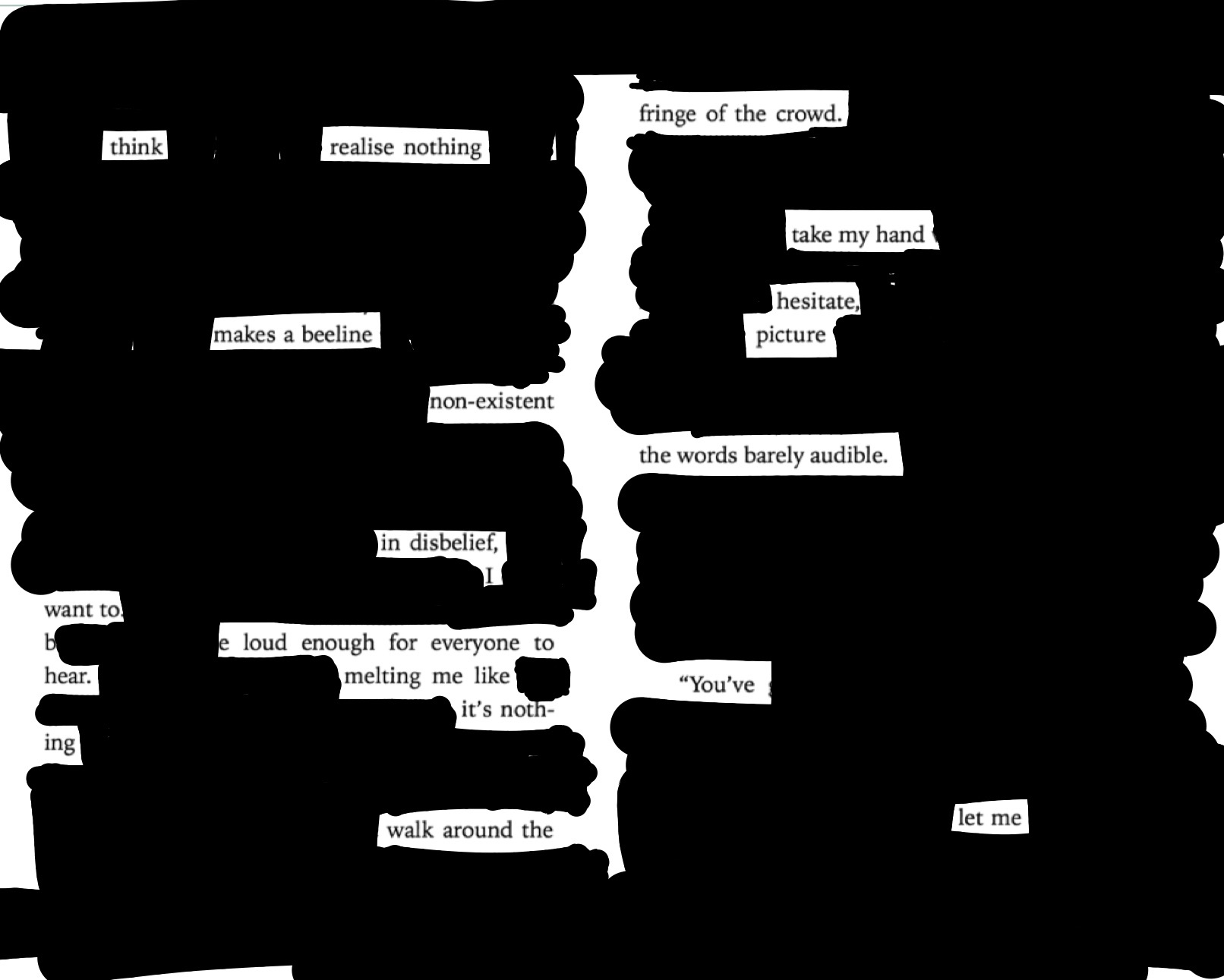
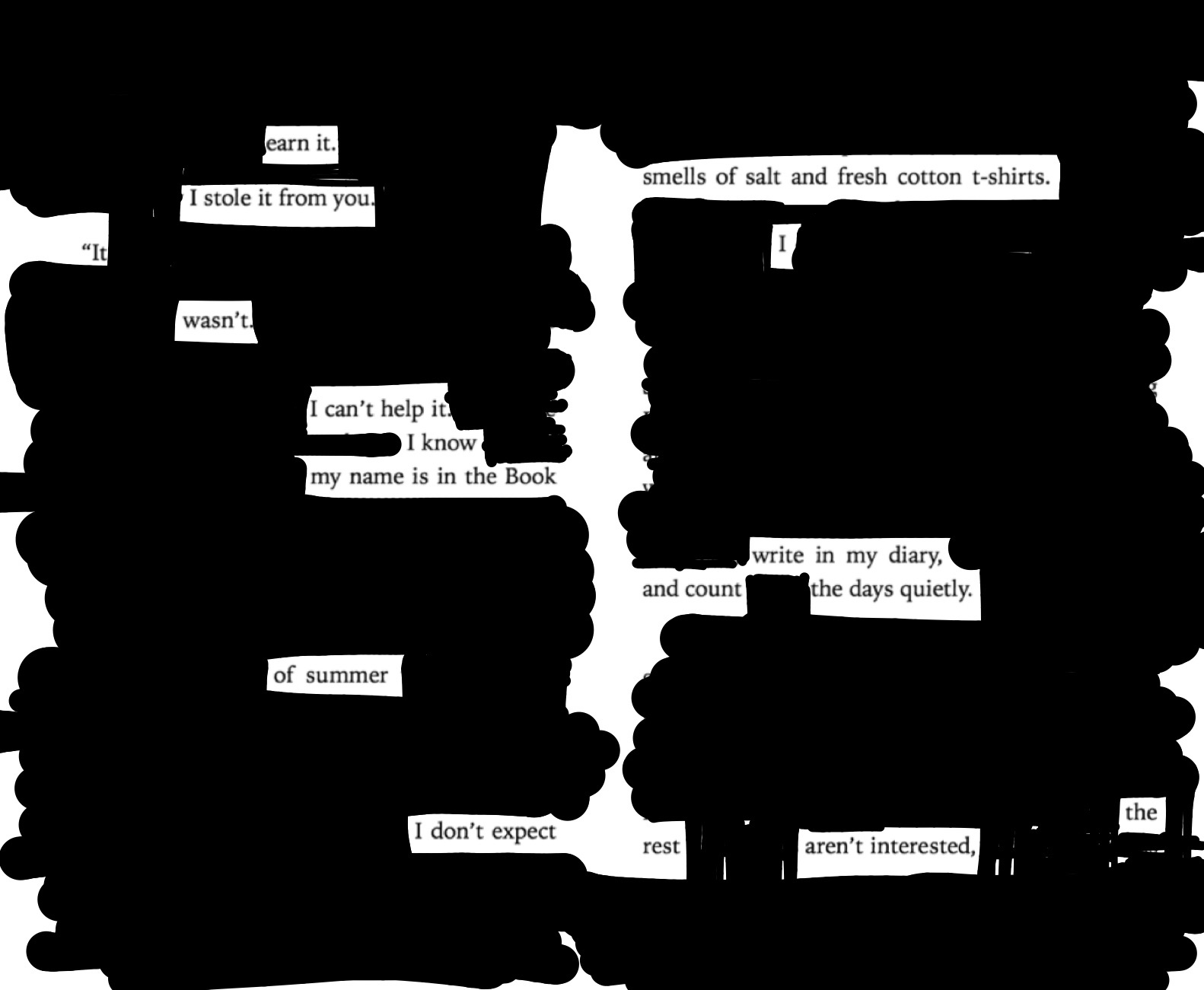
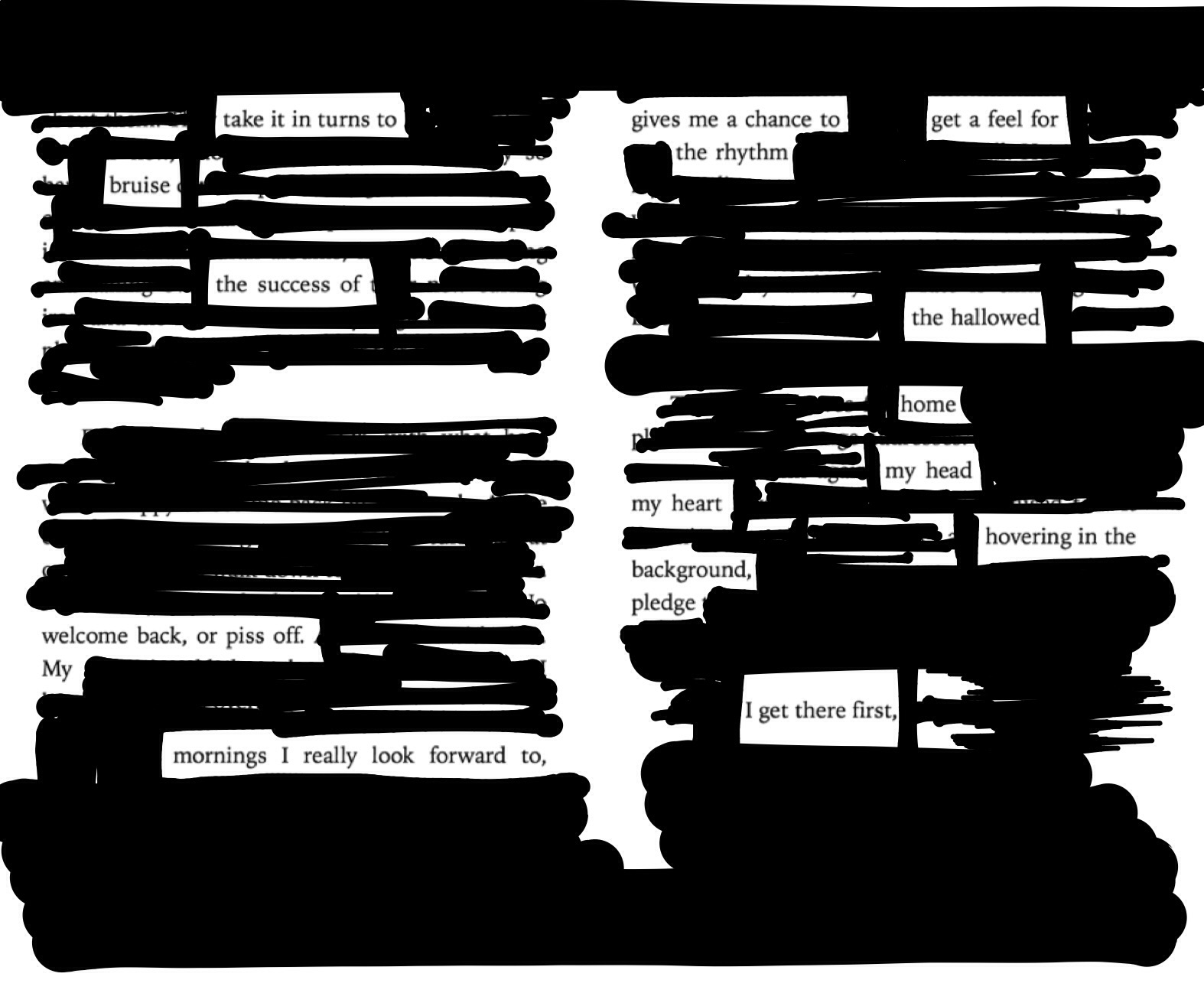
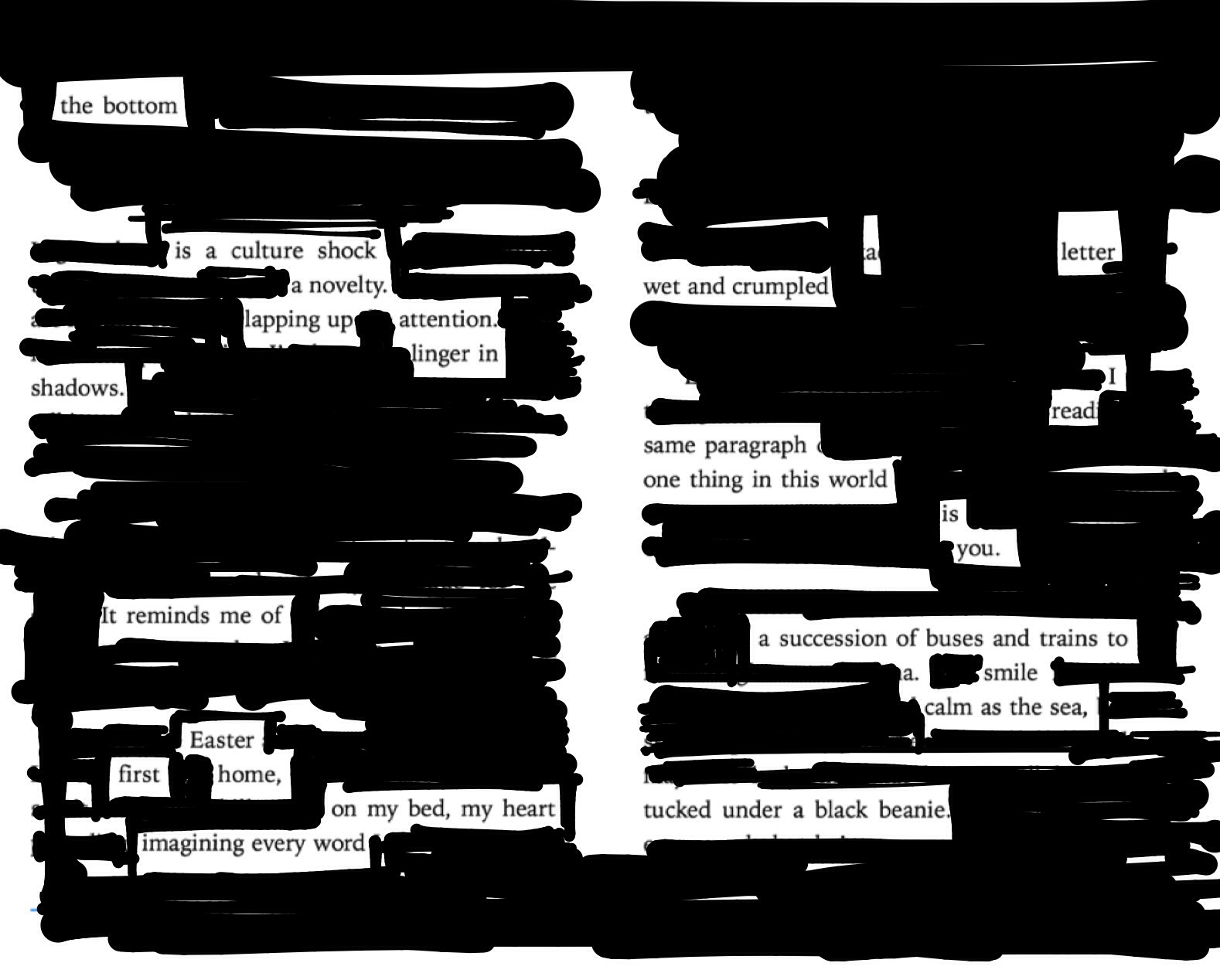
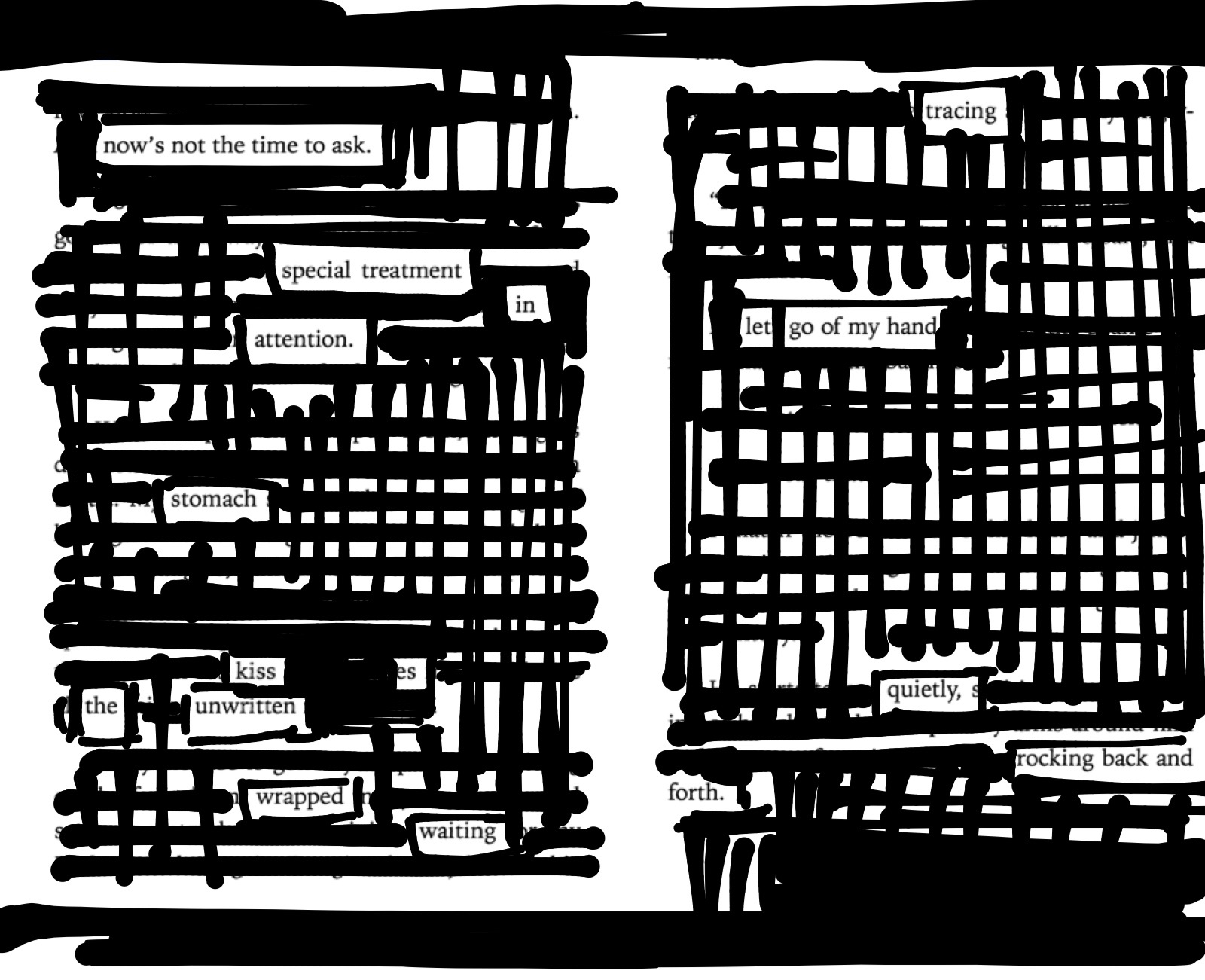
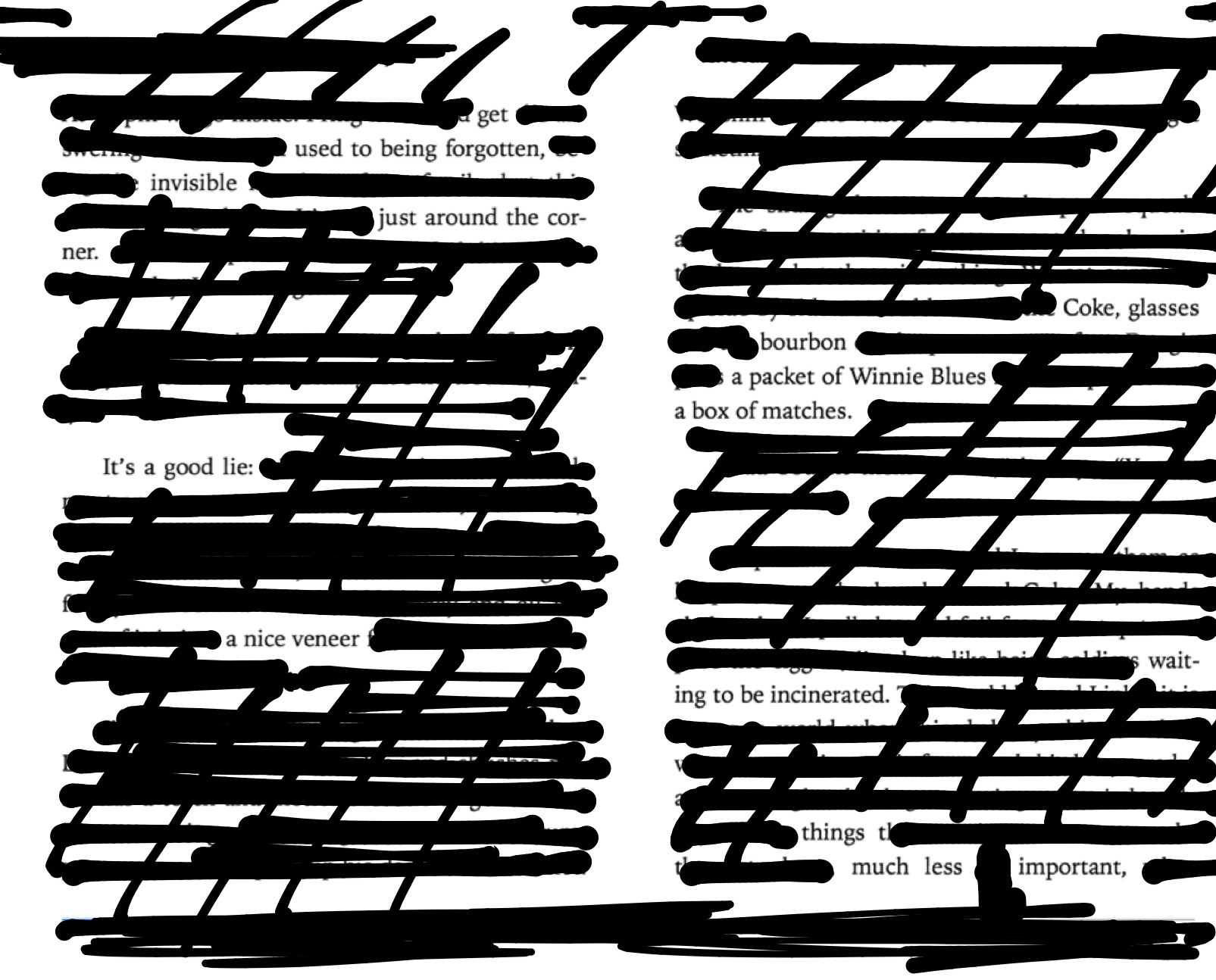
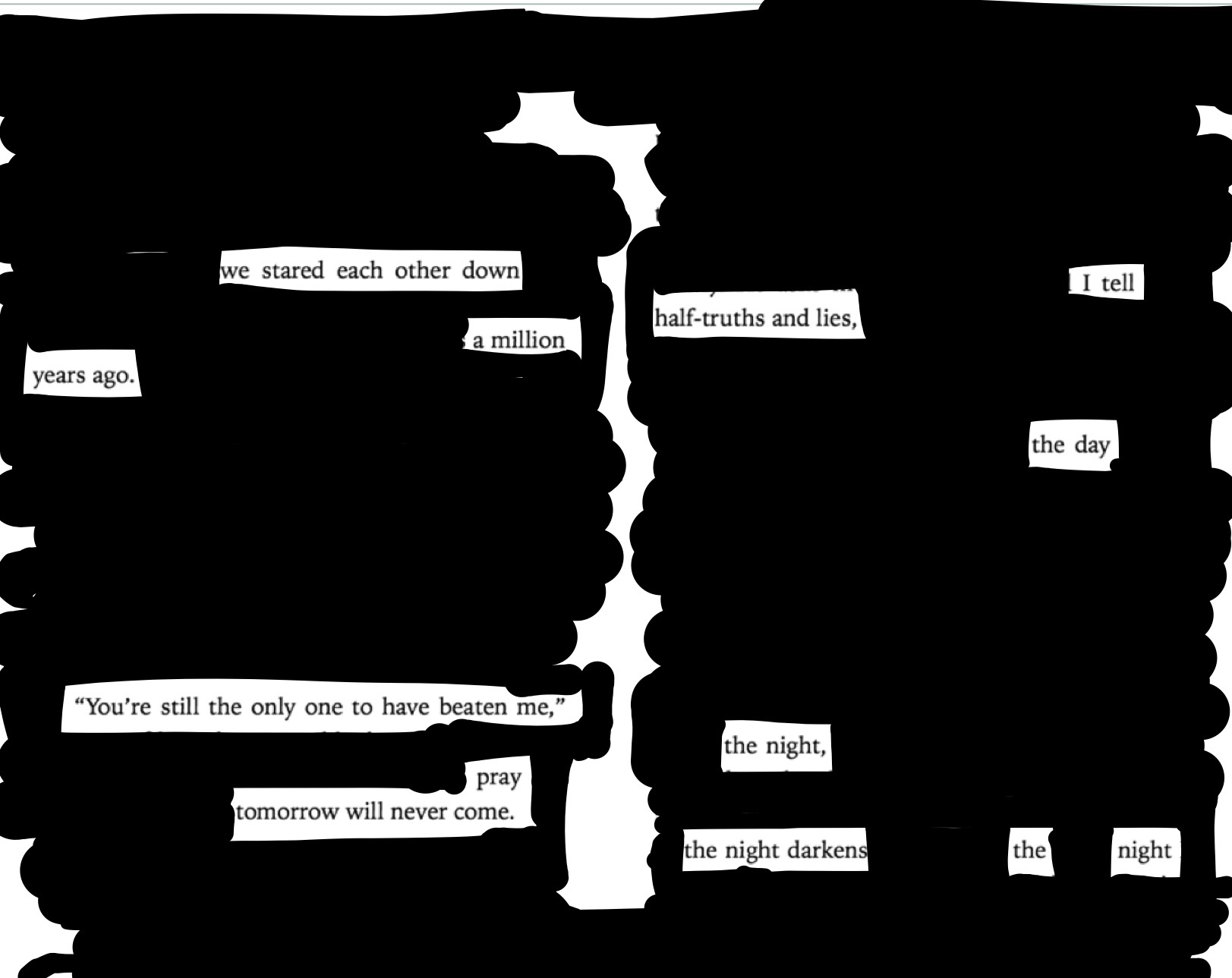
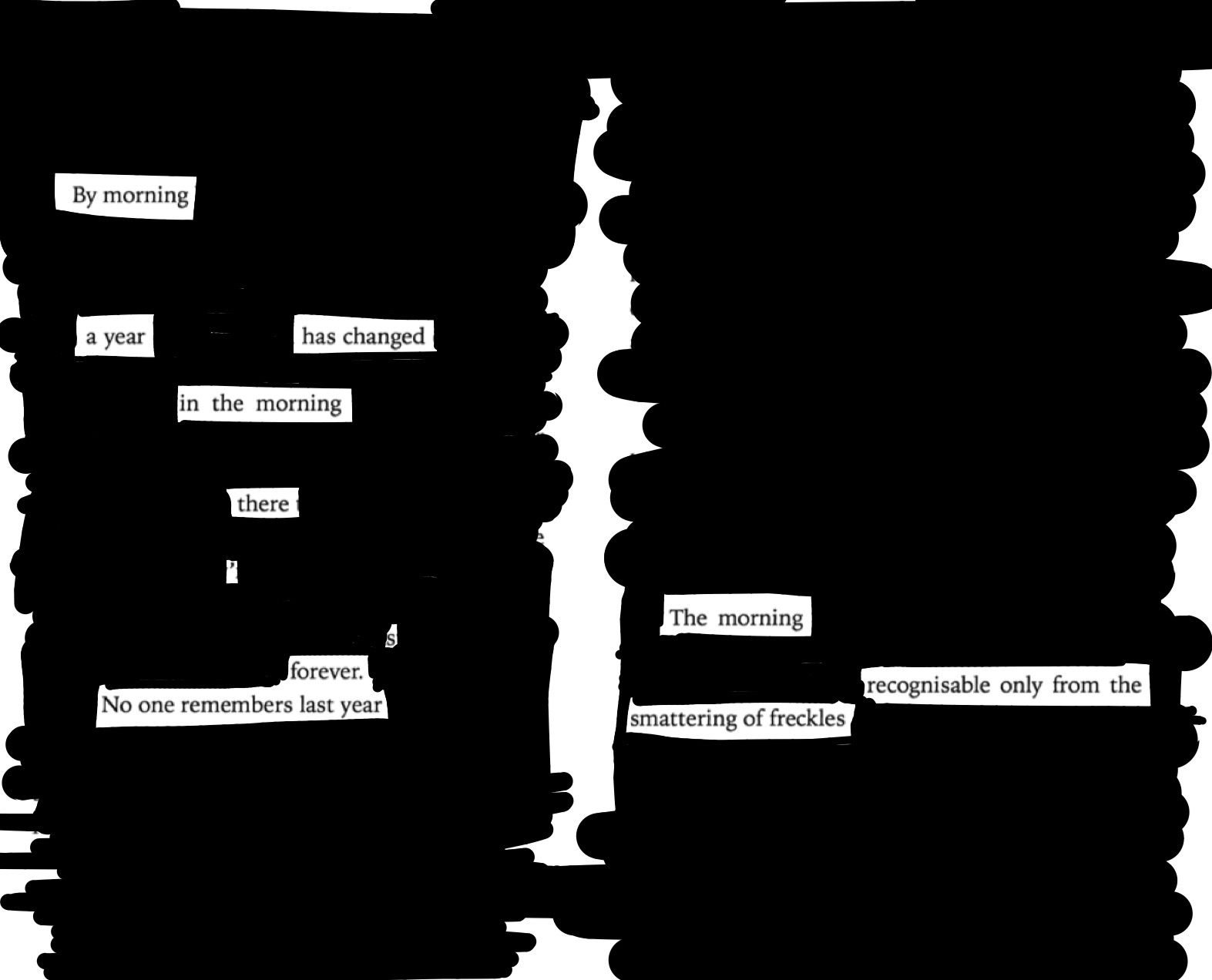
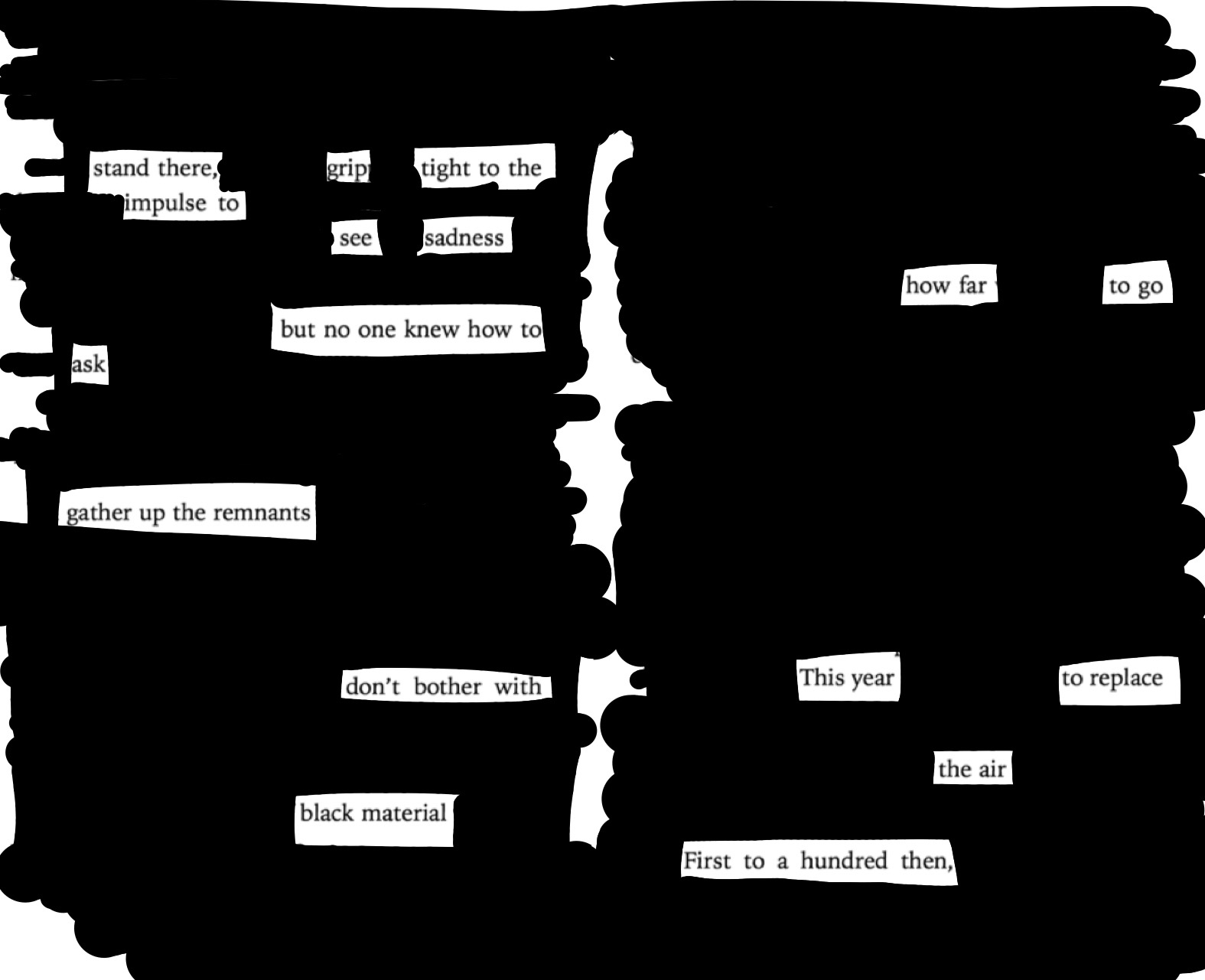
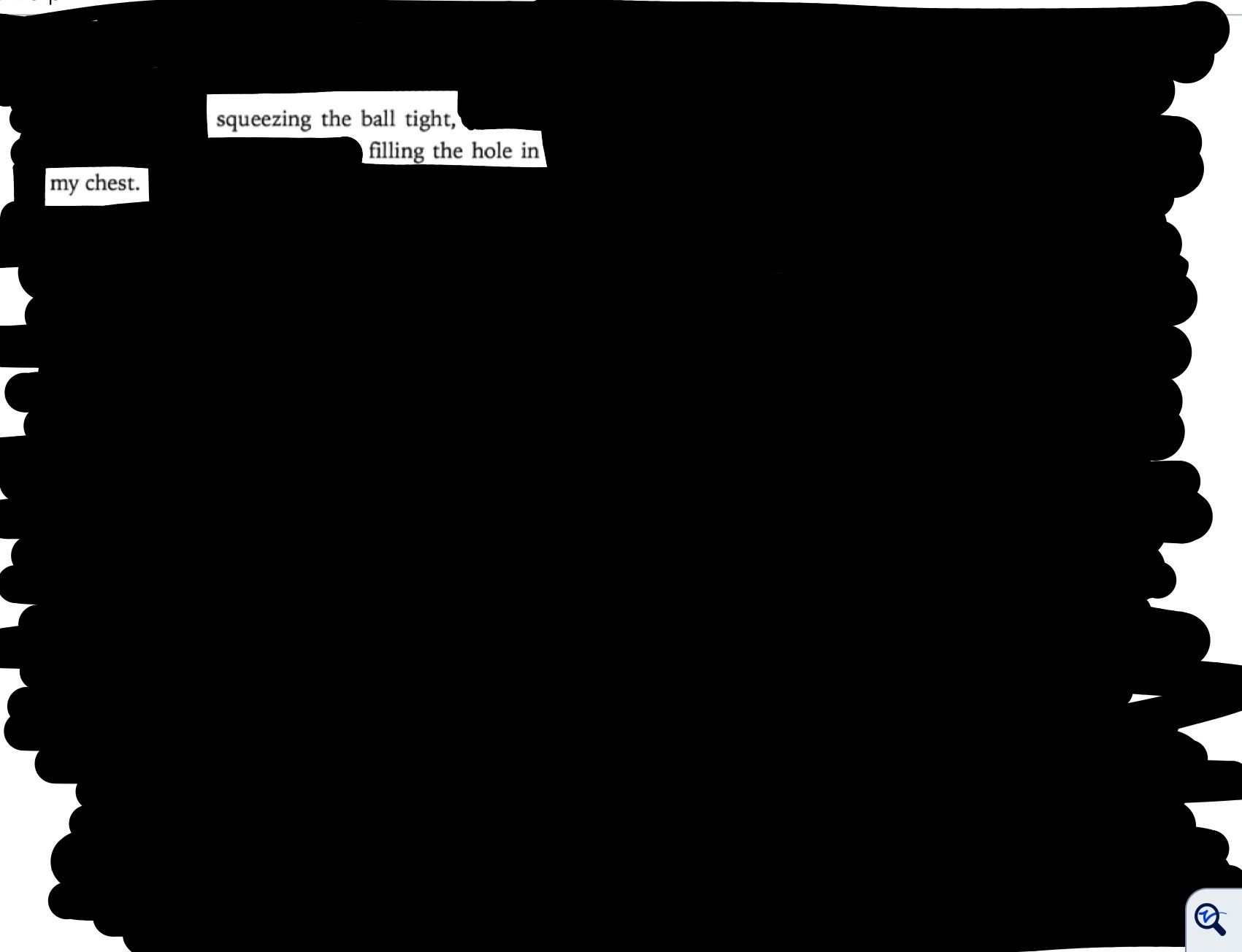
First To A Hundred – A Blackout Poem

The short story, First To A Hundred, by Jodi Cleghorn, appeared in Issue 8 of Tincture Journal. After writing Post Marked: Piper’s Reach together, and after many times making Jodi cry, she had not succeeded in making me reach for a box of tissues to wipe away the tears.

But she did it with this story.

I read early versions and drafts, and it languished for ages without finding a publication until Daniel Young of Tincture took it on.

I strongly recommend you go and buy a copy of Tincture and read the story as it is so beautiful. Then drop in here to read this version. As I was creating it, the voice of Dougie came through, almost unconsciously. It wasn’t until I was half way through that I heard the voice more clearly and channelled it for the remainder.

It’s a long story, but well worth the read.

Below is the poem. You will need to read it as a two-panel cartoon (L-R) then down the page.

Enjoy.

image

image

image

image

image

image

image

image image image image

image

image

image

Failure Is Always An Option

Why is failure a negative response?

Well, yes, failing attempts at flying, playing with power points, or gaining your friends’ attention with the exclamation, “Hey, check this out!” can have negative consequences resulting in death, bloody maiming or a great story to tell.

Failure is couched in terms of shame, of disappointment, of not being successful, of letting people down, of not living up to a set of standards, morals or values. To fail, therefore, is to be less than, to be inferior, to be forgettable and forgotten. 

So when it comes to beginning a creative project, or learning a new creative art, skill or craft, we are programmed to think of our early efforts as failures. They do not meet up to our expectations of what it should be (and yes, there is a disconnect between what we create and produce, and the expectations we have set for ourselves in the production of our work but that’s another blog post). 

But as creative people, failure should not be considered a negative response to a project.

Failure does not define who we are as creative people.

Failure is not a measure of our worth.

Failure is a part of the creative learning process.

Every creative project we start is an experiment. It may or may not work. But that’s the beauty. When I am beginning a new story I am unsure if it will work. I write the first draft, let it sit, return to it and look for what needs to be improved (often, a lot of things). Whether it’s point of view, too florid in expression, characterisation or character development, dialogue or imagery.

A recent idea in its genesis. Pure unadulterated nonsense.

A recent idea taken from my notebook in its genesis of pure unadulterated nonsense. It’s all part of the failure.

Don’t be afraid to put in the hours of practice required. I think it’s where a lot of fledgling creatives stumble. They want the accolades but haven’t put in the necessary hours. The Mythbusters make it a part of their show: failure is always an option. It shows you one way it didn’t work. Repeat the experiment until you find the solution.

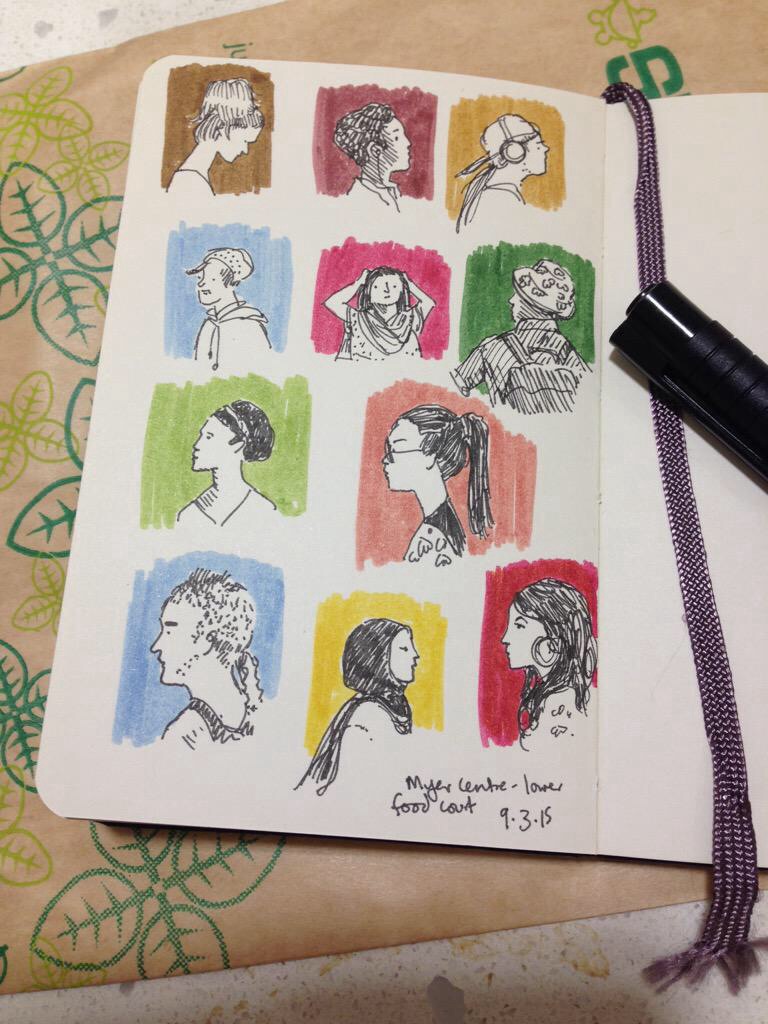
I love seeing Kathleen Jennings (@tanaudel) put up images of her sketch books, her practice pages, on twitter. She sits in public transport terminals, shopping centres, food courts and sketches people. Please check out her awesome work via her blog: Tanaudel.

I am very grateful for her permission to reproduce one of her images. I love how the colour frames a distinct individual. She had this to say about her process.

“They are part of my practice. I’m fairly timid drawing naturally. So I made myself use markers, limited colours, and draw people as they walked past. It made me commit, be bold, be confident and develop a visual shorthand.”

image

(c) Kathleen Jennings @tanaudel Used with permission.

Practice. Practice. Practice. 

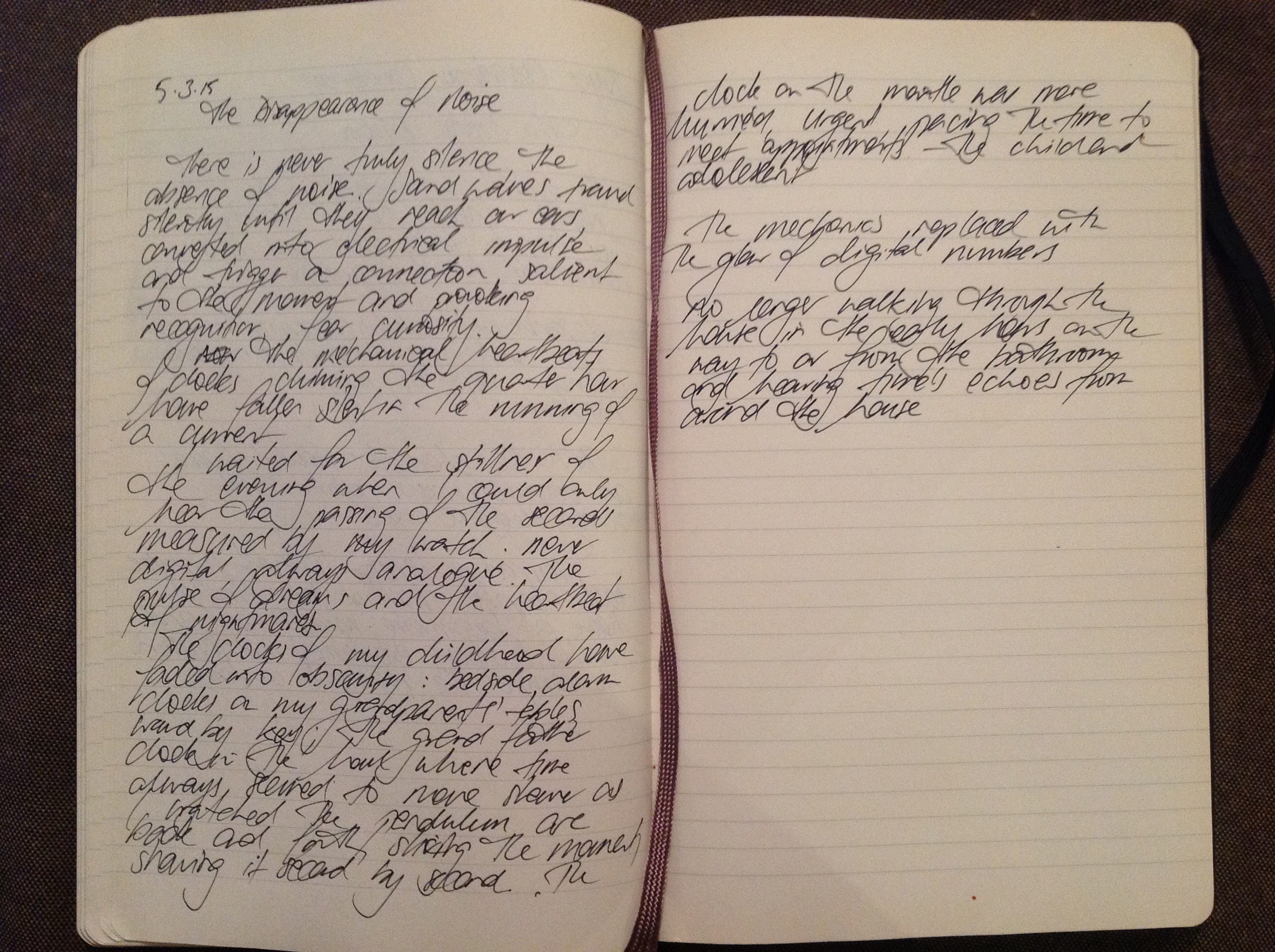
I know I have not spent enough time behind my drum kit practicing rudiments, beats, fills. I have not practiced enough. The same applies to my writing; I need to spend more time with pen and paper scratching out paragraphs, lines, half sentences.

I have many documents of half started stories, poems, scripts and the like sitting on my computer hard drive as well as in multiple notebooks. This is the practice time spent conditioning my mind and perspective like an athlete to achieve the goals I have set.

Practice is repetitive. 

Practice is boring.

Practice develops a discipline.

Practice is extending the boundaries of your skills, extending the place of your tent (to borrow a biblical phrase).

And, yes, there will be failures. Days when you feel like you’ve been given a fork to eat a bowl of clear soup. Days when you feel like there’s a hole in your shoe (and it’s raining), sit in gum, forget your lunch and suffer the ignominy of a nasty paper cut.

This is failure. And it sucks. 

Keep practicing.

Write a paragraph a day. Sketch on the back of a shopping receipt. Doodle in the margin of the newspaper. Practice rudiments or scales for 5 minutes a day.

Keep failing.

Failure is always an option because it is a learning opportunity. Failure is necessary to grow and develop in our chosen creative field.

The path behind you is not littered with the carcasses of failed projects but the evidence that you have trained and practiced.


I Could Never Be Creative

“I could never be creative!” 

A plaintive cry from those who see other people create marvellous things and all the while bemoan their own futile attempts. 

Perhaps they tried once, and failed, not to take up a creative tool again. Yet the desire is there, the want is there, the need is there. They feel something is missing, a vacant space on the mantlepiece that wants to be filled.

I suspect at the root of it is fear.
The fear of failure. 
The fear of commitment.
The fear of rejection by family and/or friends.
The fear of not being good enough.

Every creative person I know has these fears. I have these fears. However, I do not let the fear dominate. 

I know I will fail. This is how I will learn to improve.
I know I must have commitment. This is how I learn discipline. Without it, I will not achieve my goals.
I know I will be rejected. This is normal for a writer. Rejection does not define my creativity.
I know I will not be good enough. This is how I will strive for greater. Comparison is a false economy to judge yourself.

“I could never be creative!”

YES. YOU. CAN.

(Think Bob the Builder).

You can be creative. You have to give yourself permission to start being creative. You have to start. You have to continue. You have to finish. 

Then you start again.

Start small.

If you want to be a writer, write a paragraph.
If you want to draw, scribble on a Post It Note.

If you want to cook, make cupcakes.
If you want to garden, buy a pot plant.
If you want to knit, learn to knot a basic square. Knit enough to make a baby’s blanket.
If you want to serve others, volunteer for a local charity.

For whatever creative endeavour you want to pursue, start small. Something you can do in twenty minutes or half an hour once this week. Commit to doing this creative act once a week for a month. In the second month, commit to twice a week. Give yourself permission to miss it if you need to (just don’t beat yourself up over it). In the third month, commit to as often as you are able: once, twice, three times a week. Even daily.

It’s understanding the power you have to be creative. Doesn’t need to be world-changing, just changing your world. Creativity is a safe place; a place where you are able to be you.

Be creative. Create.

What To Do When You Doubt Your Creativity

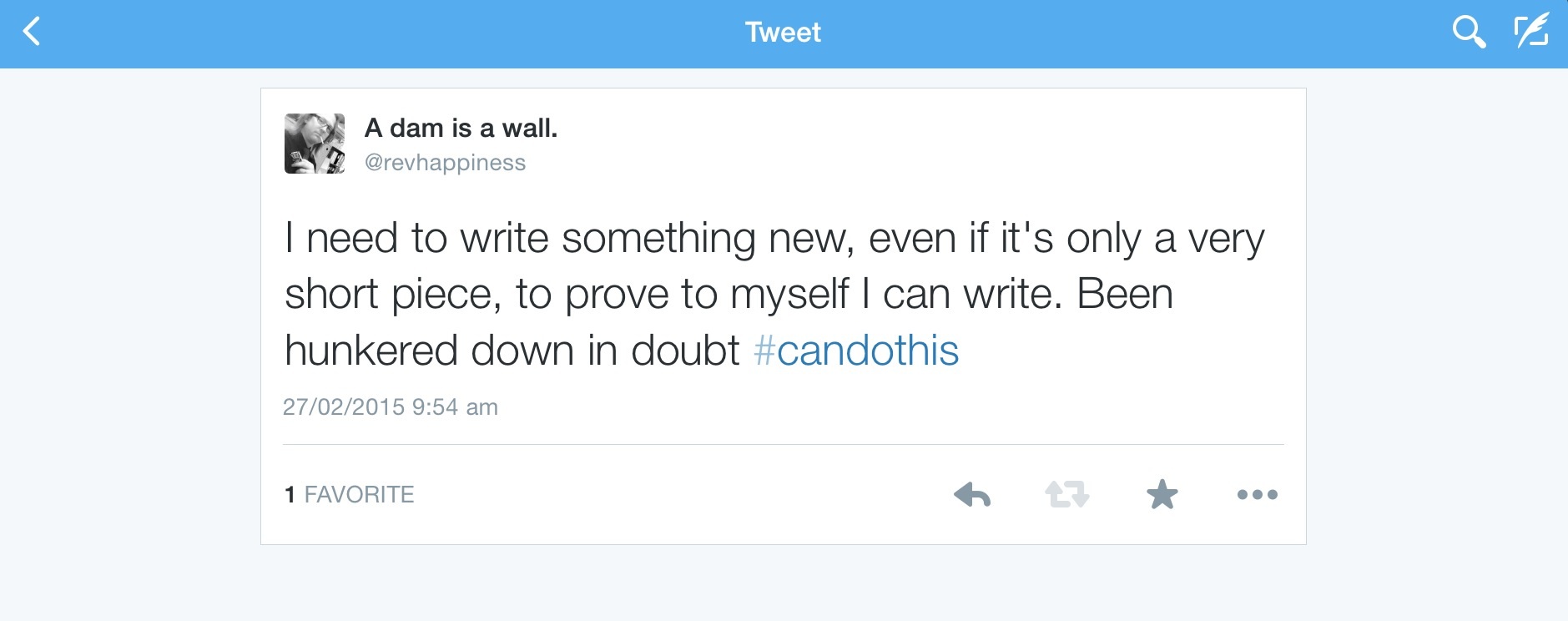
image

I wrote this last week as Post It Note Poetry was coming to a close. For the month of February I was writing something new every day on the spur of the moment with very little editing or development. Dedicated crafting and revision is not the point of Post It Note Poetry.

Side Note: Post It Note Poetry presents its own set of creative issues and problems. I’ve reflected on them at the end of the month in 2013 (Post It Note Poetry Wrap Up) and 2014 (Lessons Learned from Post It Note Poetry). There is no need to revisit them again.

It has been a long while since I have written something new as I’ve been trying to complete the first drafts on some longer pieces (one of which is the stupid novella I’ve been saying I’ll write for the past 2 years). I have another short story (approx. 3.5K) that still needs work and has been revised and reworked numerous times.

What it all means is the process from idea to first draft, then edits, more drafts and finally, completion, is time consuming.

It’s the long drag between first draft and end of first draft (when you know the work has potential but it’s not yet realised) that makes me doubt. Even the short story mentioned above has been languishing for almost 12 months as I sort through various drafts, comments and plot issues.

Similarly, my novella and verse novel need some serious reworking in terms of plot. I started the novella with an outline but have realised it needs further revision. The verse novel started without an outline (trying different methodologies) and it needs a clear direction and focus. 

On top of that, the latter half of last year was a creative wasteland in some respects. Work demands were a high priority and a creative sink hole as I worked through marking papers, editing students’ major works and completed edits on a friend’s 104K sci-fi novel.

It meant I approached January as a time to rebuild myself creatively. But it didn’t happen. Everything I returned to felt like drinking a cup of sand. It was exhausting. And I seriously contemplated bailing on Post It Note Poetry as I doubted myself and my creative abilities.

What to do, then, if you are beginning to doubt your creativity? I have 2 solutions.

1. Stick with your creative community.

Your creative community is your most valuable asset. I have a group of people I can rely on to listen when I vent, whinge, complain, throw a tantrum, doubt, despair, consider chucking it all in.

They were there either via text or Facebook or messaging. Most of the time they simply listened. Occasionally they offered advice or encouragement. I have a creative colleague at school and we have our “Mea Cuppa” sessions, talking through ideas or talking rubbish while having cups of tea.

If you’re not part of a community, seek one out either in real life or online.

2. Keep turning up to the page as persistence pays off.

Deciding to complete Post It Note Poetry meant I had to turn up to the page Every. Single. Day. to complete a poem. Some poems came easier than others but I was compelled to keep going.

Even if you think you are creating rubbish, it is all about priming and preparing yourself for the next project whether it’s something new or returning to complete something older. It’s like training is for an athlete. Do the practice, complete the exercises in readiness for the main event.

For me, March (and the coming months) brings new vision and clarity for the projects I want to complete and the new ones on the horizon. For right now, I’ll keep turning up to the page and pressing on.

How do you keep your creativity flowing when you have doubts? Leave your ideas in the comments.

A Little Prompting #5

A Little Prompting

How have you been doing? What have you been creating? I would love to hear if anything has transpired.

Here is this week’s set of prompts.

THEME Reconnection
RANDOM LINE PROMPT The telephone wires kept pace with the road; long tendrils connecting the lover and the loved as a physical symbol of their connection
PHOTOGRAPH RetroTelephone_01_640x-thumb-520x390

http://gadgets.boingboing.net/2008/12/04/a-perfect-nobullshit.html

SONG/MUSIC VIDEO Primitive Radio Gods – Standing Outside A Broken Phone Box
SENSORY SUGGESTION The pulse of the dial tone before you hit the buttons
QUOTE You can discover more about a person in an hour of play than in a year of conversation – Plato