Category Archives: Ars Poetica

Experimenting With Storybird Part 2

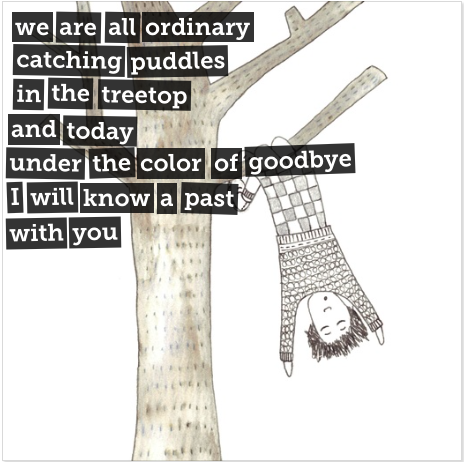
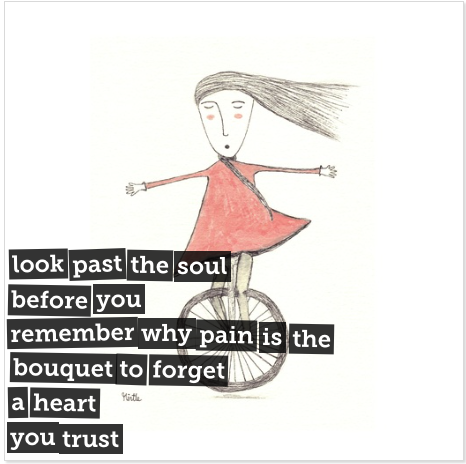
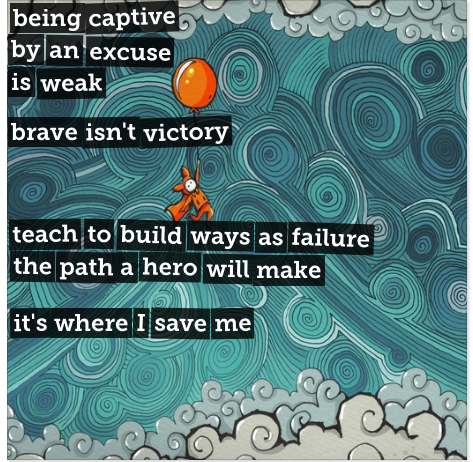
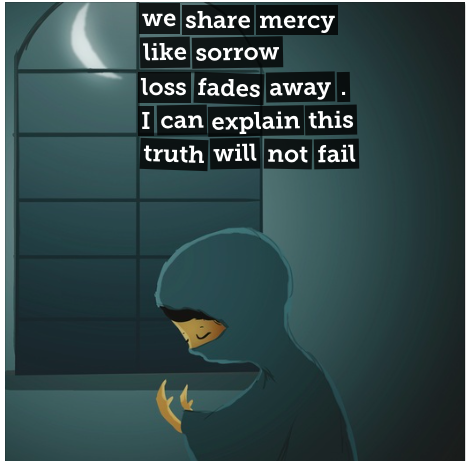
One of the joys of being on holidays, apart from wearing tracky dacks all day every day and eating any bag of chips left lying around, is playing with new avenues for writing. I mentioned Storybird last week and presented a few poems.

I have been playing with a few more and present them here for fun.

Screen Shot 2015-09-27 at 6.00.27 pm Screen Shot 2015-09-26 at 4.36.56 pm Screen Shot 2015-09-26 at 4.37.06 pm Screen Shot 2015-09-26 at 4.37.12 pm Screen Shot 2015-09-27 at 2.53.54 pm

What’s In A Pronoun?

The other day I scribbled this hastily worded poem onto twitter

She ties the night sky
loosely at her throat
a cape of stars trails behind
curls it around the boy
with the cape of sunshine
a gentle kiss

So far, so good.

However, it started differently.

The original line was “He ties the night sky/loosely at his throat”. To me it was reminiscent of children playing superheroes, tying an old towel or something similar around their throats as an impromptu cape (even if Edna Mole says, “No capes!”).

I was halfway through writing the poem, had an ending in sight, and I stopped myself and asked why I had used the masculine pronoun. On Twitter space is a premium and the inclusion of an extra letter could mean tighter editing in other places.

If I am writing poetry I will use pronouns in place of names for the sake of brevity and to give the persona a general facade for the reader to ascribe her/his own interpretation.

However, the masculine pronoun is not my default position; the content of the poem generally dictates my choice of gendered pronoun. Many of my stories focus on the feminine.

In this case, the use of the masculine pronoun was predicated by the content. Boys and capes are familiar tropes. The masculine is the dominant voice in our culture, to the exclusion of the feminine.

Therefore to change the pronoun is to change the emphasis of the narrative. 

There is nothing deep or meaningful on this poem but to change the pronoun order from masculine to feminine is to give agency and power, something our society needs to do more of.

Even in looking over the word choices in the poem as it currently stands, changes would affect meaning. If I used “man” instead of “boy” I alter the emphasis, the perception of the reading. Similarly, replace “boy” with “girl.” How would you read it now?

The written language is the best way we have to communicate, as inadequate as it some times. 

Are you conscious of the gender you ascribe to your work? How do you apply it?

Untranslatable – Poem

Sometimes you come across a phrase, a sentence, a line or two of poetry that resonate with power; a demonstration that words are remarkable.

Recently I came across Felicity Plunkett (@FelicPlunkett) via a tweet. It was only a few lines of poetry but the strength of them moved me.

“I want both that you find me
and that my disappearance
                    is untranslatable”

from Lost Sea Voices

It was the word “untranslatable” that piqued my mind; it’s use is unpredictable, causes you to stop and pause, contemplate the word choice and see that no other word fits so perfectly.

I wrote this in response when I retweeted it: “When you want to dress yourself in another’s words as they’re so beautiful, play dressups & pretend you’re this good.” (And this in itself is composting for a new poem)

It pushed me to thinking, to explore the idea, because I couldn’t shake it.

But all of this has a further backstory.

It all began with an image from Stuart Barnes, and its caption “the moon gathers its lamps”.

Stuart Barnes Image

I knocked out the following lines in a brief 3-minute window of opportunity

the moon gathers its lamps
arranges them in lines
along the tide of evening
like footsteps, to watch
them fade at dawn

It was favourited by Felicity. And as you do, you find out who is the person behind the favourite who is not following you (promise I’m not a stalker, but now a definite fanboi). She is a poet, a critic and poetry editor and recently long listed for the Montreal Poetry Prize. This is someone who knows poetry far better than me.  

Of course I followed her on twitter. Reciprocation and then conversation. I sent a copy of the poem to Felicity before I posted it; I didn’t want it to be rubbish and sour the reputation of a wonderful poet.

She approved *smug mode engaged* had some positive comments to say (will be feeding my ego for some time to come).

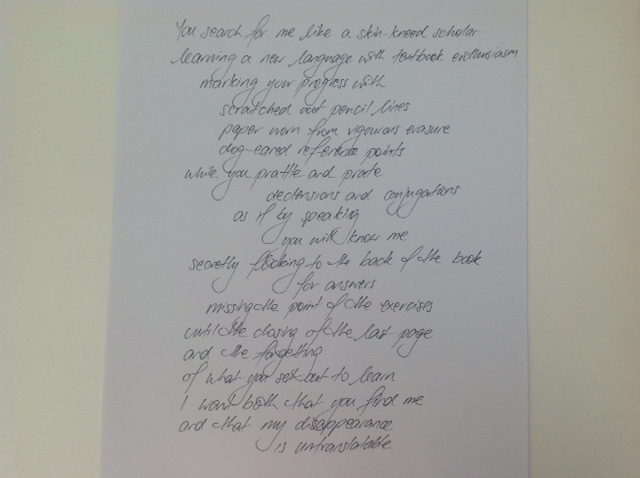
This is the poem, “Untranslatable”.

You search for me like a skin-kneed scholar
learning a new language with textbook enthusiasm
     marking your progress with
          scratched out pencil lines
          paper worn from vigorous erasure
          dog-eared reference points
while you prattle and prate
                    declensions and conjugations
          as if by speaking
                    you will know me
secretly flicking to the back of the book
                    for answers
     missing the point of the exercises
until the closing of the last page
and the forgetting
of what you set out to learn
I want both that you find me
and that my disappearance 
                    is untranslatable

Untranslatable

Hopes and Fears – A Poem and Deconstruction

As I am wont to do, I write poetry on twitter to explore, experiment and elucidate. 

This is today’s poem

Hopes and Fears

we are scared of our dreams;
not that our worst fears
will come to life
but the fulfilment of our hopes
will be the end of who we are

But I also have a good group of writing friends who are happy to pile on critique and feedback. Rob C suggested this: “This is great: simple-yet-complex, hugely poignant, heavily true. If you’ll allow a suggestion – ‘afraid’ instead of ‘scared’, for the softer sound, the more thoughtful intonation to match the philosophical backbone of the poem, and to match the ‘f’ sounds that run throughout.”

My response was this: It’s a little more philosophical than I am used to writing; there is no concrete imagery to ground the idea (my writing modus operandi), relying more on the intellectual to make it function.

Rob felt he may have overstepped the mark. He hadn’t. I said to him, “Nope; I like the feedback. Helps to see new things. It was written on the spur of the moment, as is most of my twitter poetry so refinement is not a part of the process. Some editing is involved but without depth. Comments help refine and edit, with the hope of putting it into an anthology in the near future.”

Writing is never a solitary act; it’s collaborative. I may write in isolation but my writing tribe helps me refine and improve my work. 

So a simple suggestion, the replacement of a single word, has made the poem stronger. 

we are afraid of our dreams;
not that our worst fears
will come to life
but the fulfilment of our hopes
will be the end of who we are

Finally, there is the reader who is involved in the construction of meaning. That’s you. What meaning do you make?

Things To Throw Away – A Poem And Its Deconstruction

This started as a poem on twitter and I thought I wanted to expand on the idea a little as a practice exercise.

Things to Throw Away:
the shaggy toothbrush
the unworn shirt
the leftovers
the poetry I wrote as a child
the fear I cannot do this

When I came to expand it, I saw the completeness of it; adding to it would be padding out the original idea, hastily written as it was.

Instead, let me explain why I chose the images and the final line. As an English teacher, this is what I get my students to do: deconstruct a text to see how the components fit together. Therefore it behoves me to do it to my own work, to understand what I am doing and why; to make conscious the unconscious.

I chose the images as concrete ones, specific items the reader would recognise, an item they could visualise in their own house. Each item contains the principle that they have been held on to for too long, or has outlived its usefulness.

I am known to hang on to toothbrushes for longer than is recommended, and it’s not a big effort to get a new one, but there’s a comfort in what is known. I could replace the shaggy toothbrush image with that of holey underpants for more of a giggle.

The image of the unworn shirt suggests an item that we hold on to because it was a gift, or it was something we want to fit into, but it’s another delusion of ourselves.

Leftovers in my fridge are either consumed immediately or linger like a lost soul, discovered when there is a culture of organisms breeding. Why do we do it? Neglect? Forgetfulness? Apathy? 

Bad emo poetry; we all have to start somewhere as writers. I still have notebooks I wrote in as a teenager and I recognise the child that I was. Nostalgia holds very tightly onto objects of significance and is afraid to relinquish them.

The final line was always designed to be a twist, a shift from the concrete to the metaphysical and emotional. For me, a poem about emotions needs to be grounded in physical objects, a concrete image. It can also be done with clever similes or metaphors but I prefer physical descriptions (perhaps a weakness to strengthen – to think more poetically).

It’s about letting go, releasing yourself and being free of objects, memories or emotions that restrict your development. Would it help you to know it’s autobiographical?

There you have it. A poem and its deconstruction. If you disagree, have at it in the comments.

Thanks for reading.

Absence – A Poem

It’s been a week of rediscovering micropoetry, using the boundaries and confines of 140 characters on Twitter.

This poem was inspired by a comment from Australian author, James Bradley, on depression. His comment also inspired an idea for a short story I have written down and filed away for further development. Right now it’s on the compost heap, fed with scraps of thought until I see what sprouts.

Absence

Absence grows like a shadow
lengthening with the sun
and turns light to darkness
to fill the space
retreating at its turn
never disappearing

On reflection on the type of poetry I write, focused on the little things of the everyday, I resist the urge to use simile. Metaphor, or sustained metaphor, feels less jarring than the input of a simile. However for this one the imagery required the simile to set up the remainder of the poem and the final line. 

Looking at it now, I could replace the first line with a metaphor, “Absence is a shadow,” and I feel it works better, making the link to the imagery cleaner and less like a teacher demonstration. 

The other issue is the use of “its” (line 5) as it is unclear what is the subject of the preposition. I know “its” refers to the sun but that may be unclear to the reader and you want the imagery and lines to stand for itself, not require the reader to unpack the grammar to find out what is truly meant.

So, an edited version.

Absence is a shadow
lengthening with the sun
turns light to darkness
to fill the space
retreating at the turn
never disappearing

Slogans for Poetry – A Poem

This excerpt was the inspiration for another twitter poem. 

Tomorrowland, directed by Brad Bird, was a box office disappointment and has been poorly received by critics. It has a 49% on Rotten Tomatoes. A. O. Scott of the New York Times wrote that the film, “searching for incitements to dream, finds slogans and mistakes them for poetry.”
The full article is here on Buzzfeed.

our poetic voice
of heart’s passion
mind’s emotion
is reduced to
soundbite
slogan
sycophancy
slowing the heart
until the pulse
peters
out

To be honest, I’m not happy with the result because A. O. Scott says it so much better. There’s such poetry in his statement that my attempt to remix his words into something new seems feeble.

It’s a sentiment I like and one I will return to after it has composted in my head for a while longer.

What do you think of it? In the words of Count Rugen, “Remember, this is for posterity, so please, be honest.”

The Death of Youth – A Poem

The Death of Youth

This then,
is the death of youth:
the blunt pencil
the dried out pen
the paper, crumpled
and tossed into the bin
untouched

I love twitter as a forum for having conversations, speaking my mind on something and using it as a boundary when writing poetry. It is similar in scope to Post It Note Poetry where the size of the Post It Note defines the length of the poem.

Twitter’s limitation of 140 characters means brevity is the essence of the writing. Make a statement, make it clearly and let it go.

This poem was inspired by another poem I read on twitter and gave me the opening two lines. My mind was asking the question, “What signifies the end of youth?” It echoes a line from my favourite novel, “Maestro” by Peter Goldsworthy, where the narrator, Paul Crabbe says that the end of childhood is when one becomes aware of it.

As a creative person, it was the idea of the death of creativity that connected me with the death of youth. Thus the last image of the untouched piece of paper, unsullied by the first explorations of creativity, or that time in our life when we are told to put away “childish things” that signals the death of youth. 

We can have a child-like enthusiasm for creativity and not lose the spark, and develop a creative maturity so that we do not mourn the death of the thing we love.


Collaborative Poetry

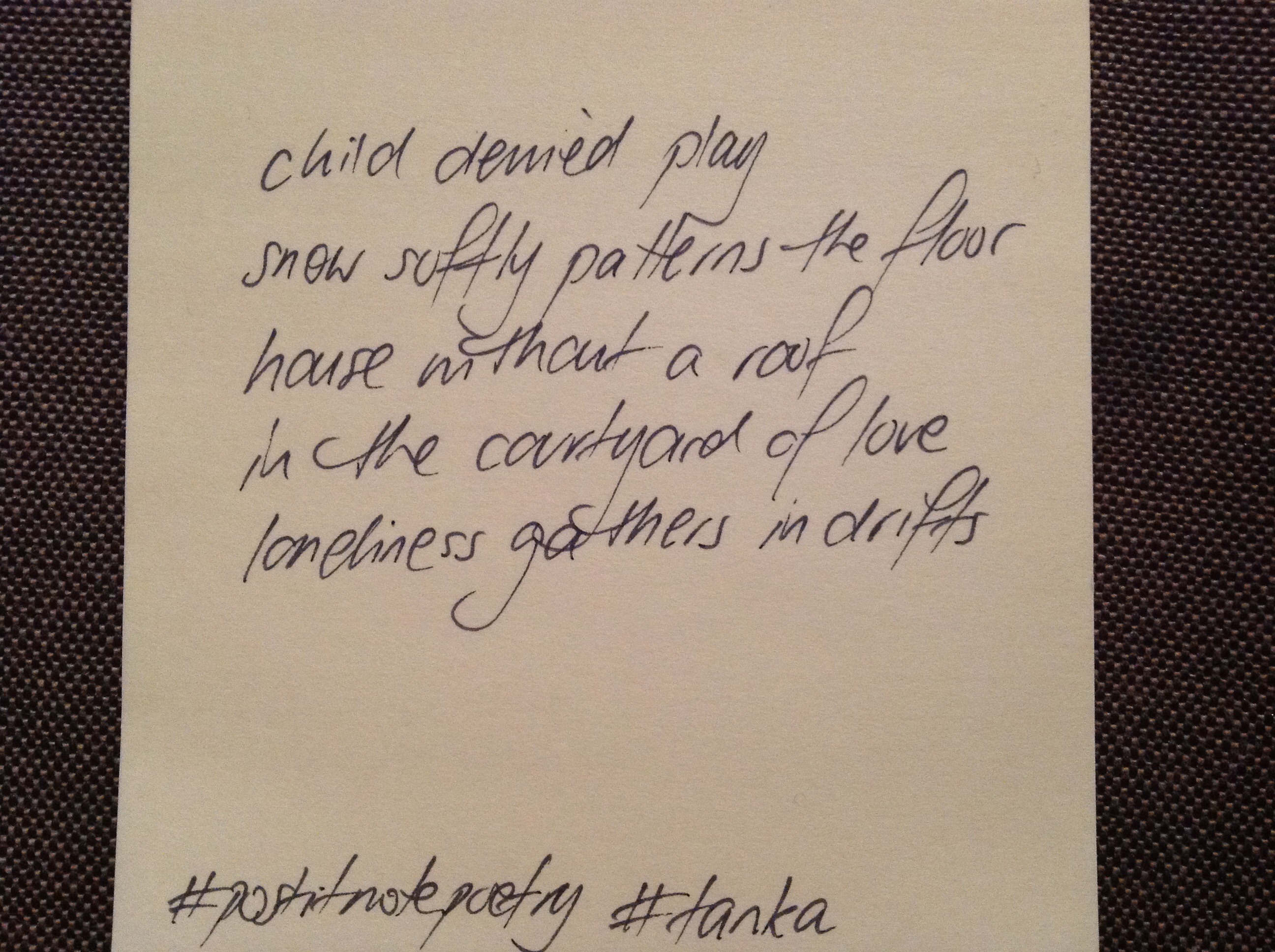
Recently I tweeted the following haiku:

child denied play
snow softly patterns the floor
house without a roof

and tagged a friend, Sean (@SeanBlogonaut) who is another poet and writer. He is particularly fond of haiku, tanka and renga. He has given my wonderful insight into how haiku should be written in English (focus more on the imagery, the phrase and the fragment, rather than the counting of syllables. It is one of the vagaries of using a poetic form which has its origins in another language; the Japanese use sound units which are different to English syllables).

He added the following two lines to form a tanka:

in the courtyard of love
loneliness gathers in drifts

Creating a new poem

child denied play
snow softly patterns the floor
house without a roof
in the courtyard of love
loneliness gathers in drifts

I am used to collaborative writing and I want to further explore it with Sean, particularly as he raised the idea with me a couple of weeks back but we haven’t been able to catch up yet to write renga.

Collaborating with a new writing partner has benefits:

1. You learn new skills

A collaboration can be of equals, or a master and novice. In the case of writing renga with Sean, I would be the novice. But the collaboration is one of exploring a poetic form and learning more from each other.

2. The sum is greater than its parts

Or, two heads are better than one. New eyes, old heads, different perspectives, new ways of writing. You learn from another about your own writing from the writing of others. You learn how the other person constructs a phrase, sentence or image, and you get to explore why. It’s another skill/technique you can add to your own writer’s toolbox.

3. It’s fun

Yep. It’s fun. Creating a piece of work should be fun. It’s also hard work but the fun of creating something together, a shared community and body of work is a fantastic feeling.

image

Find a creative partner and create something new. It may only be a one-off piece of work or it may lead to a long term collaboration. Try it. Invite someone to participate.

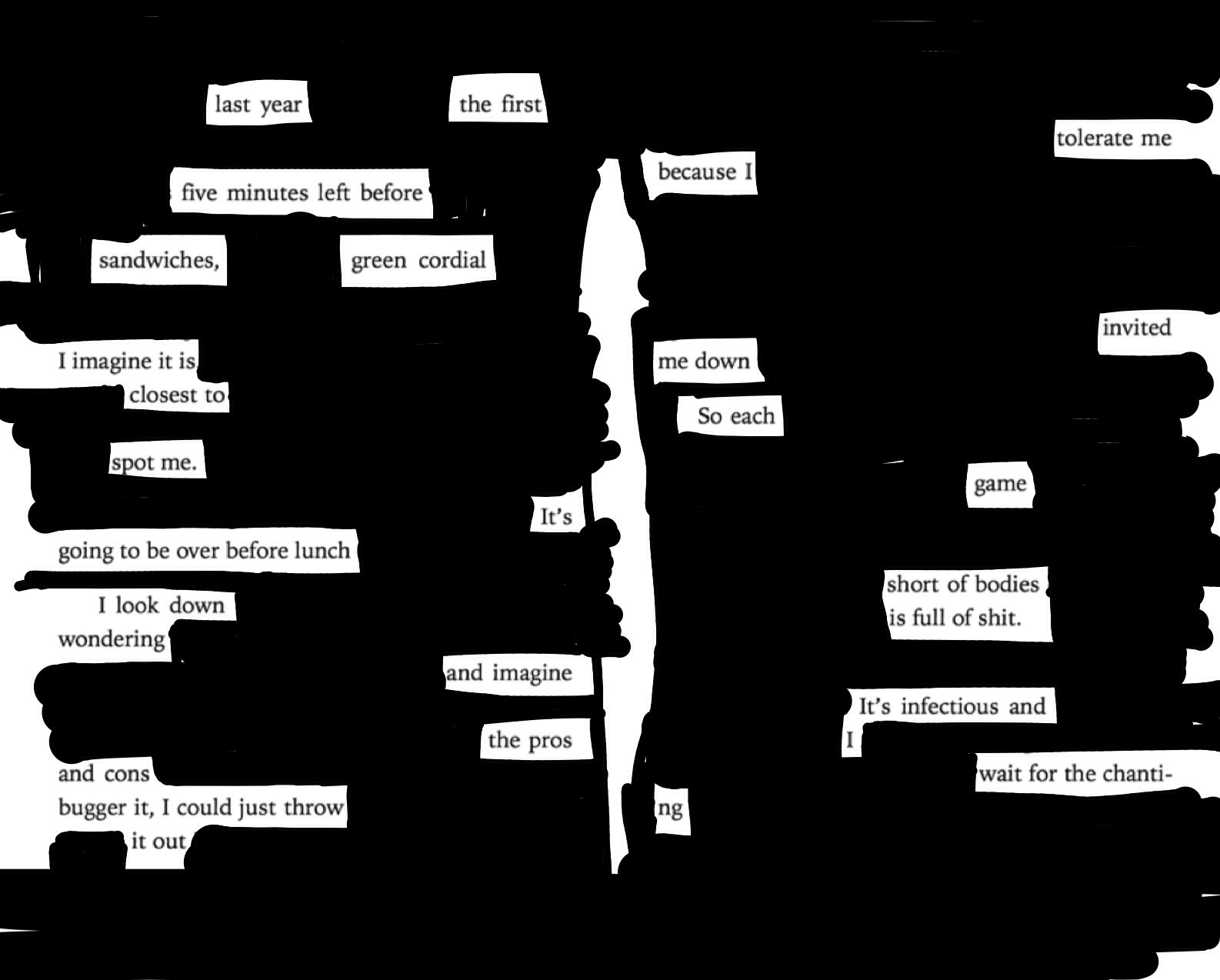
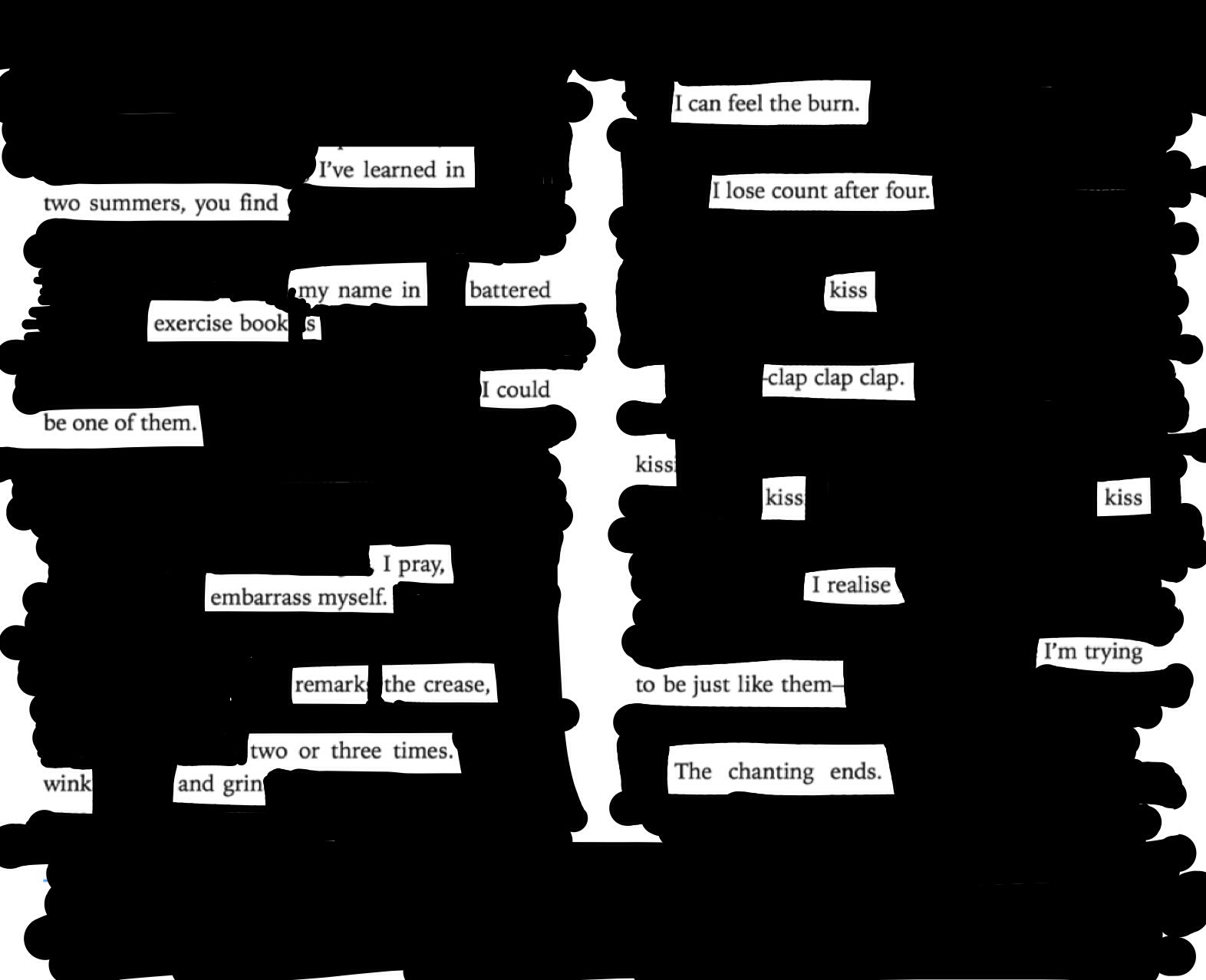
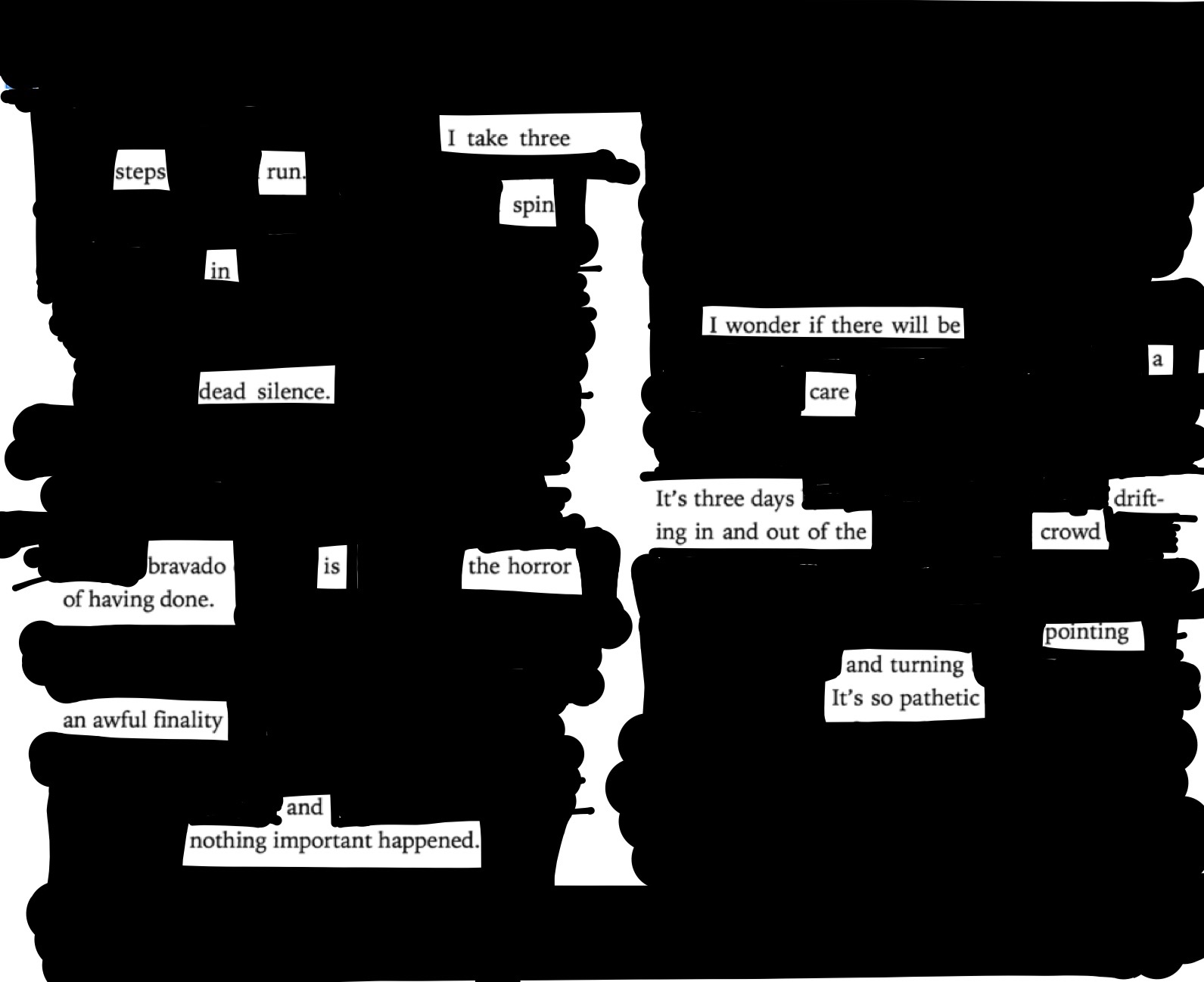
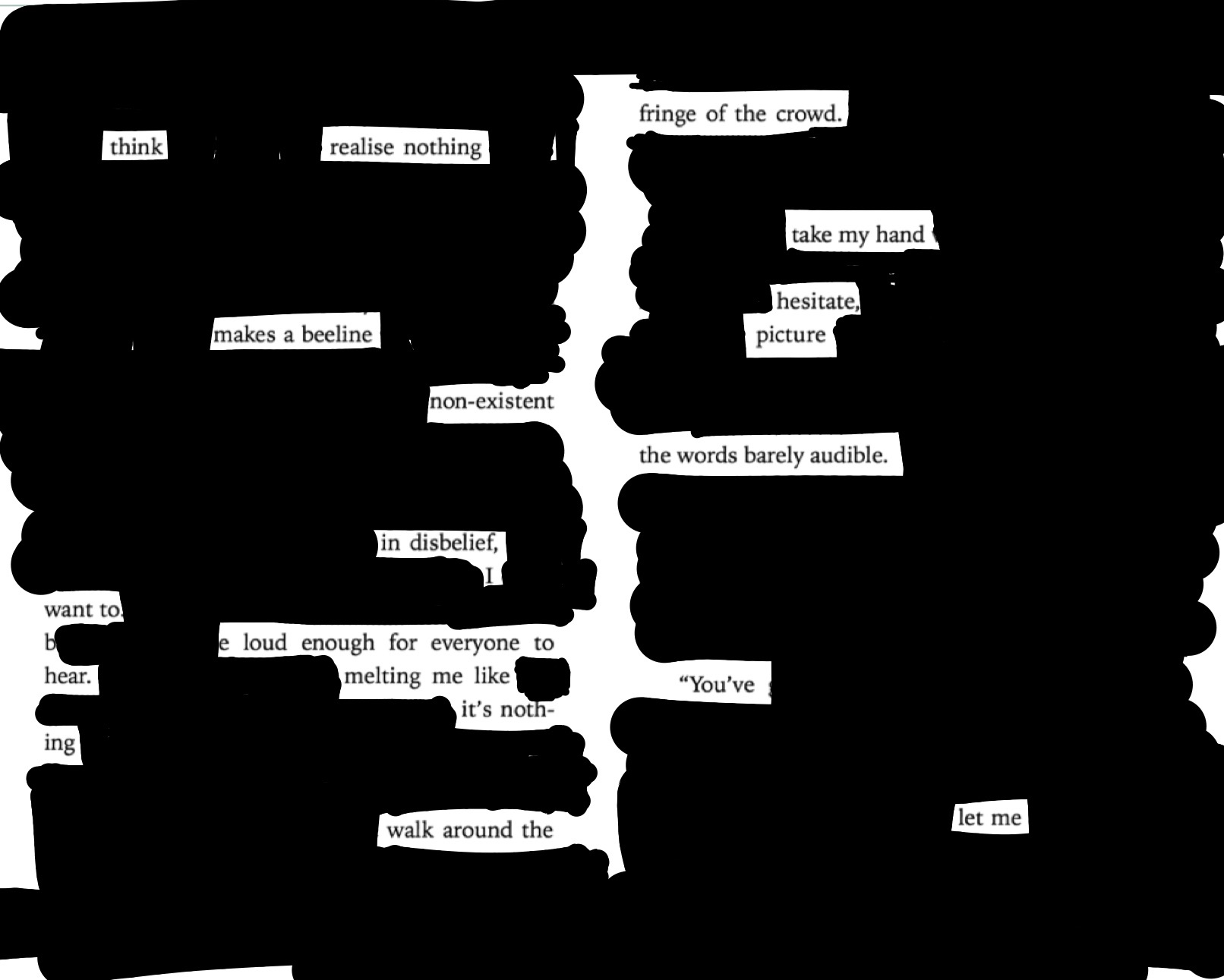
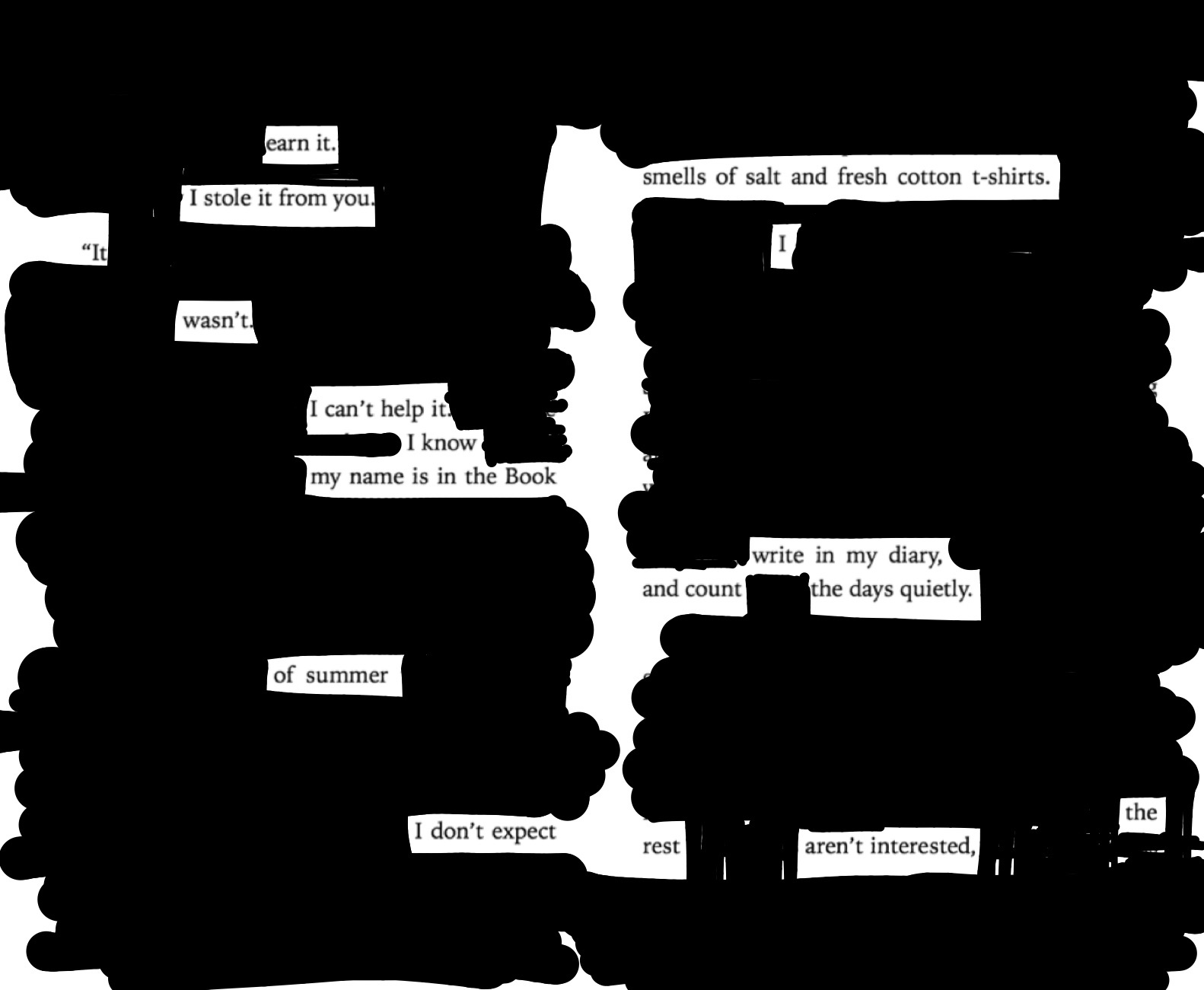
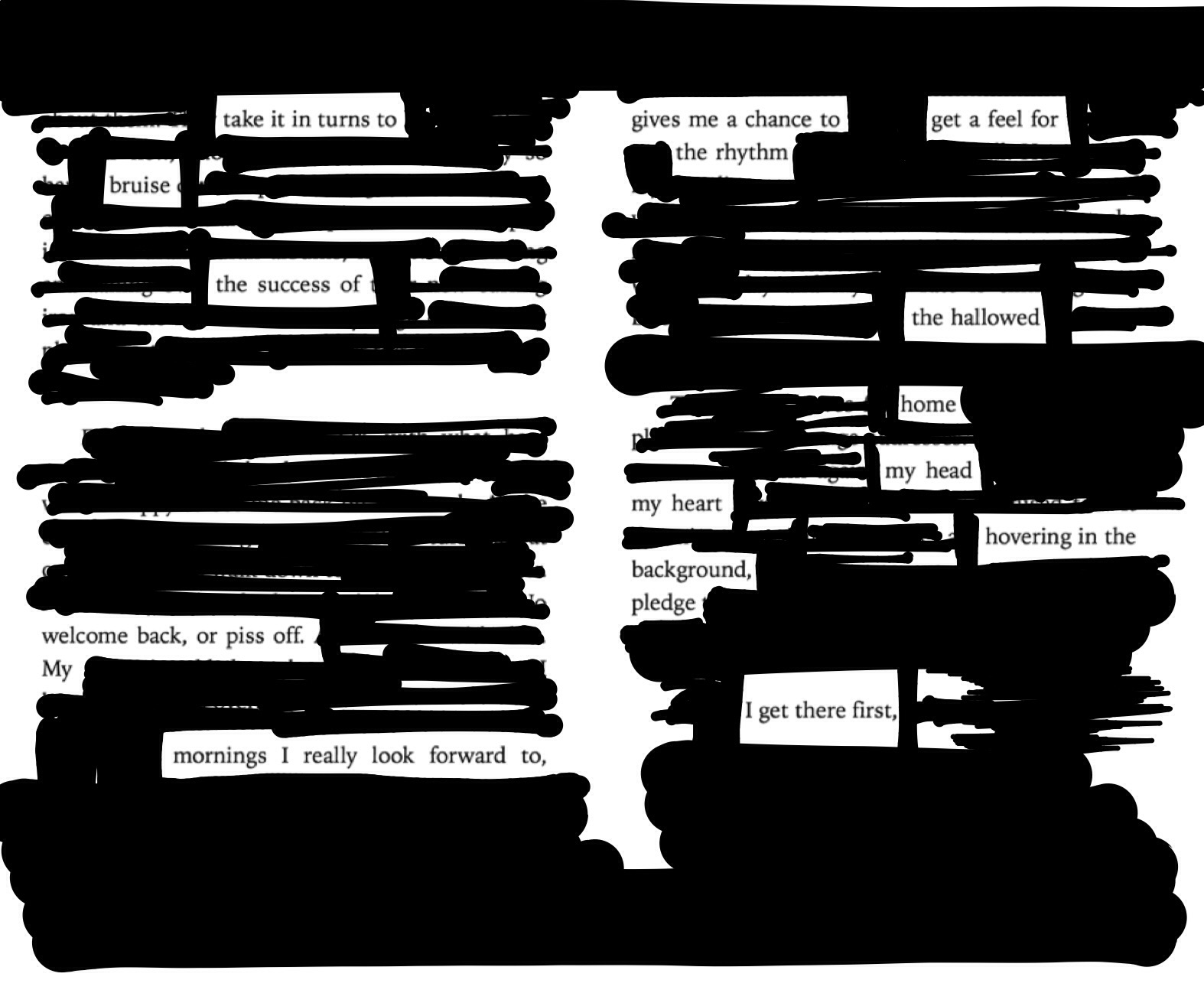
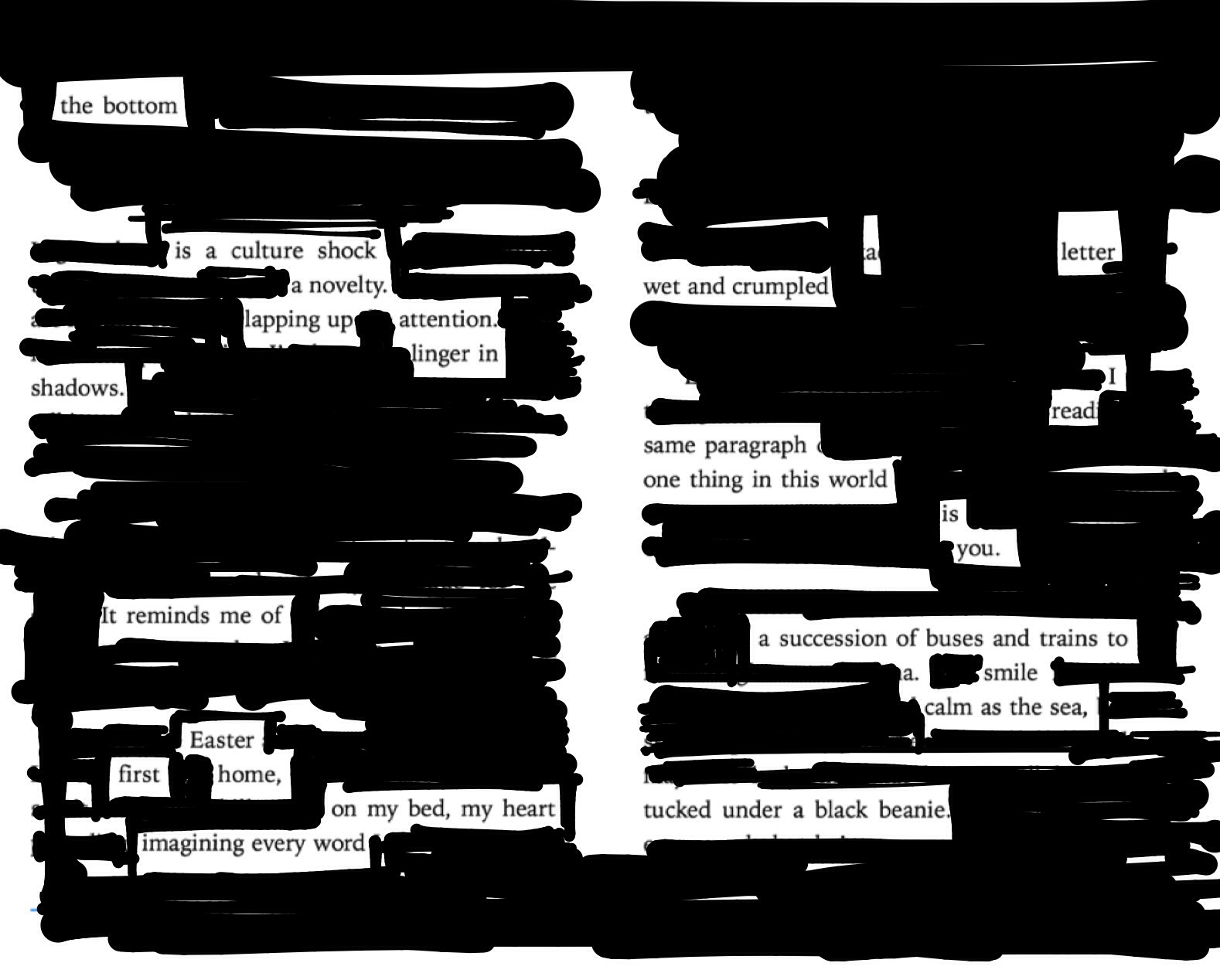
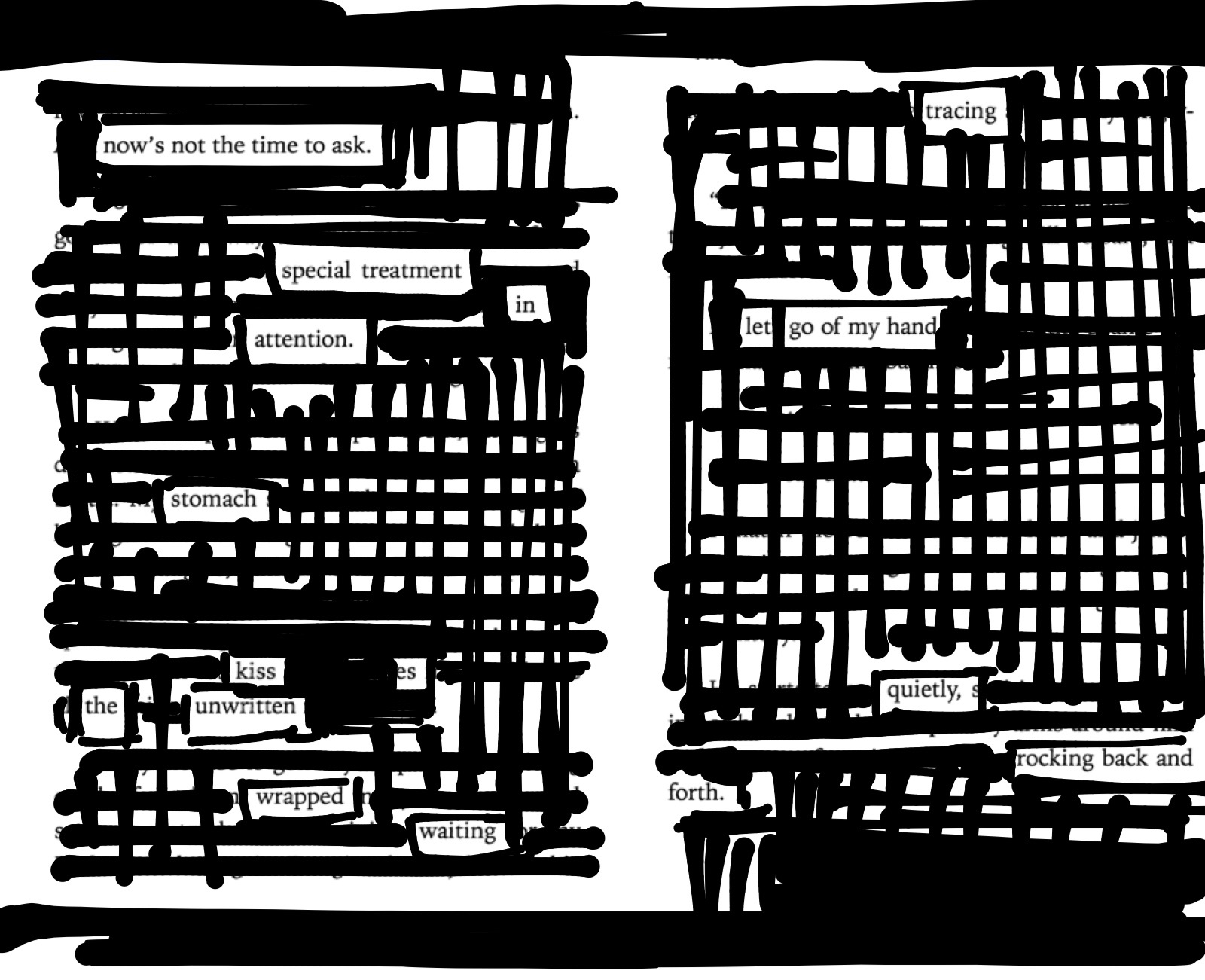
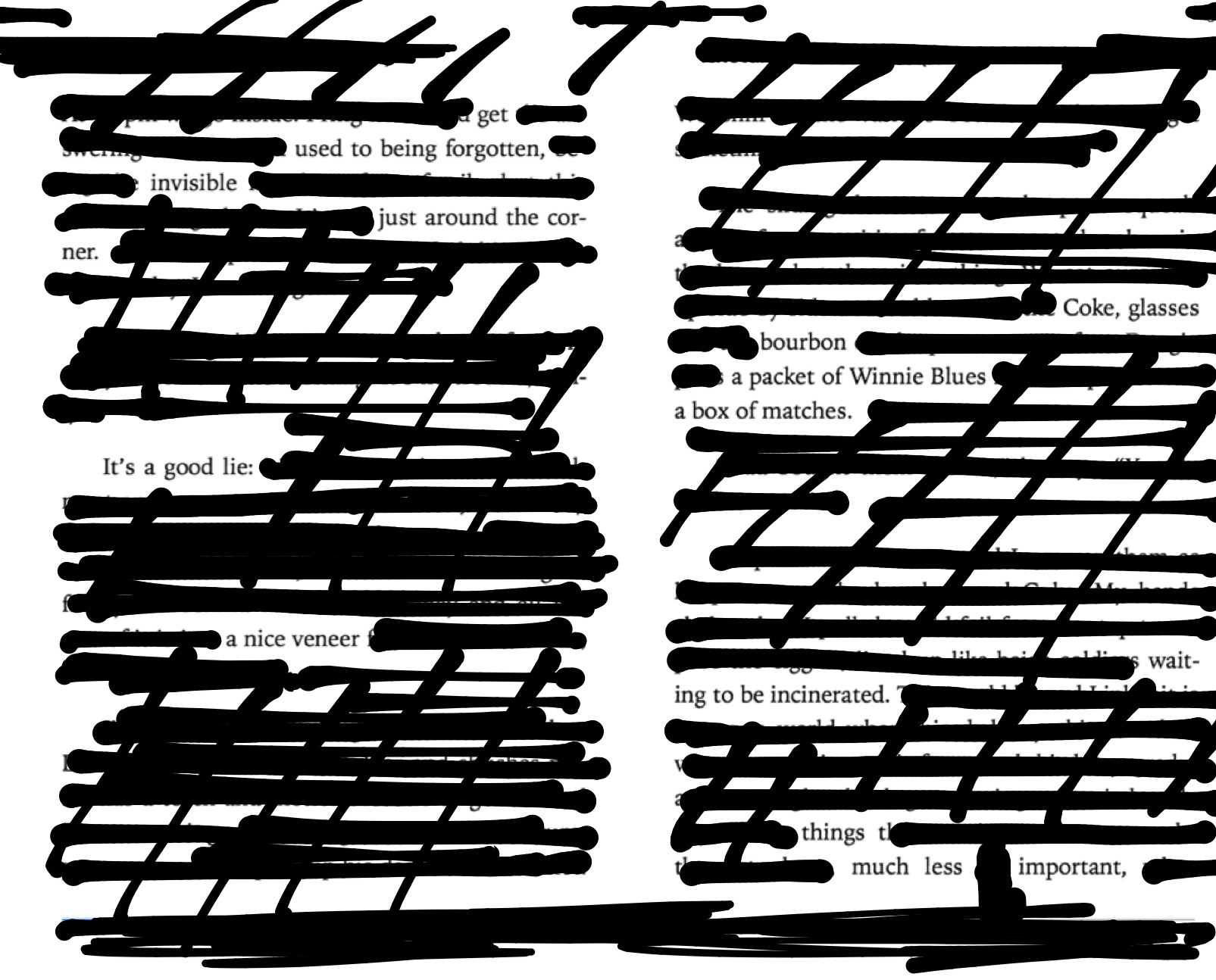
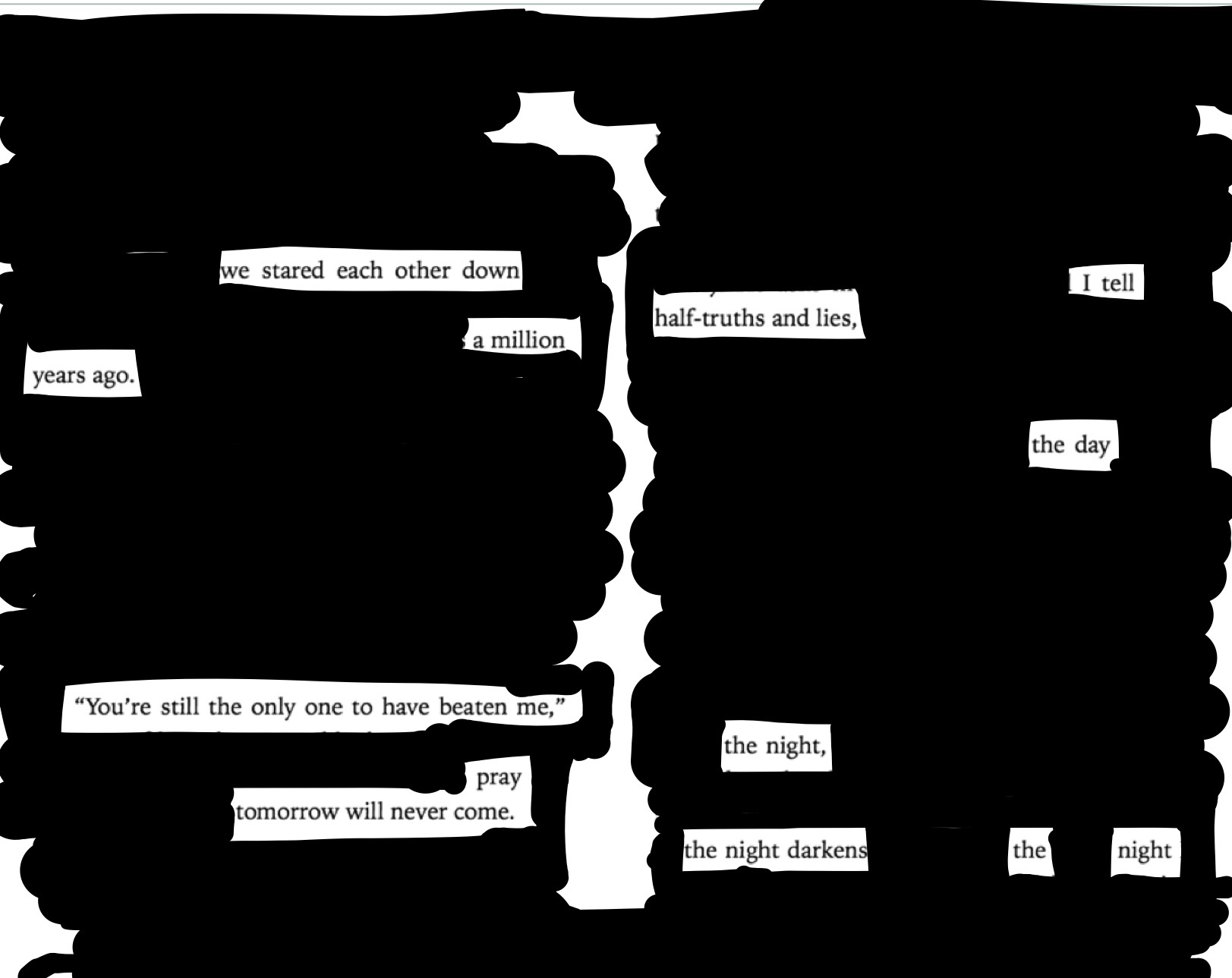
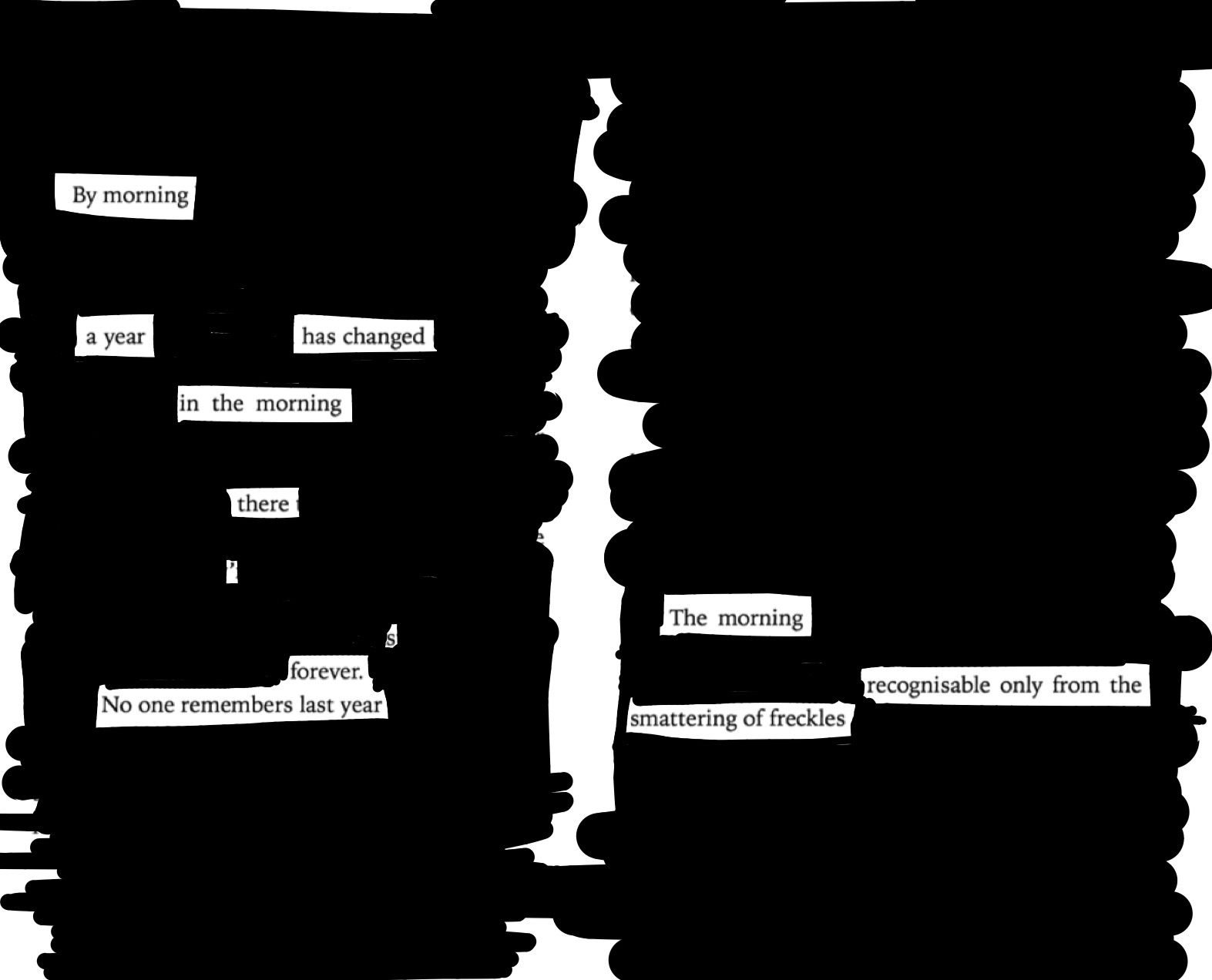
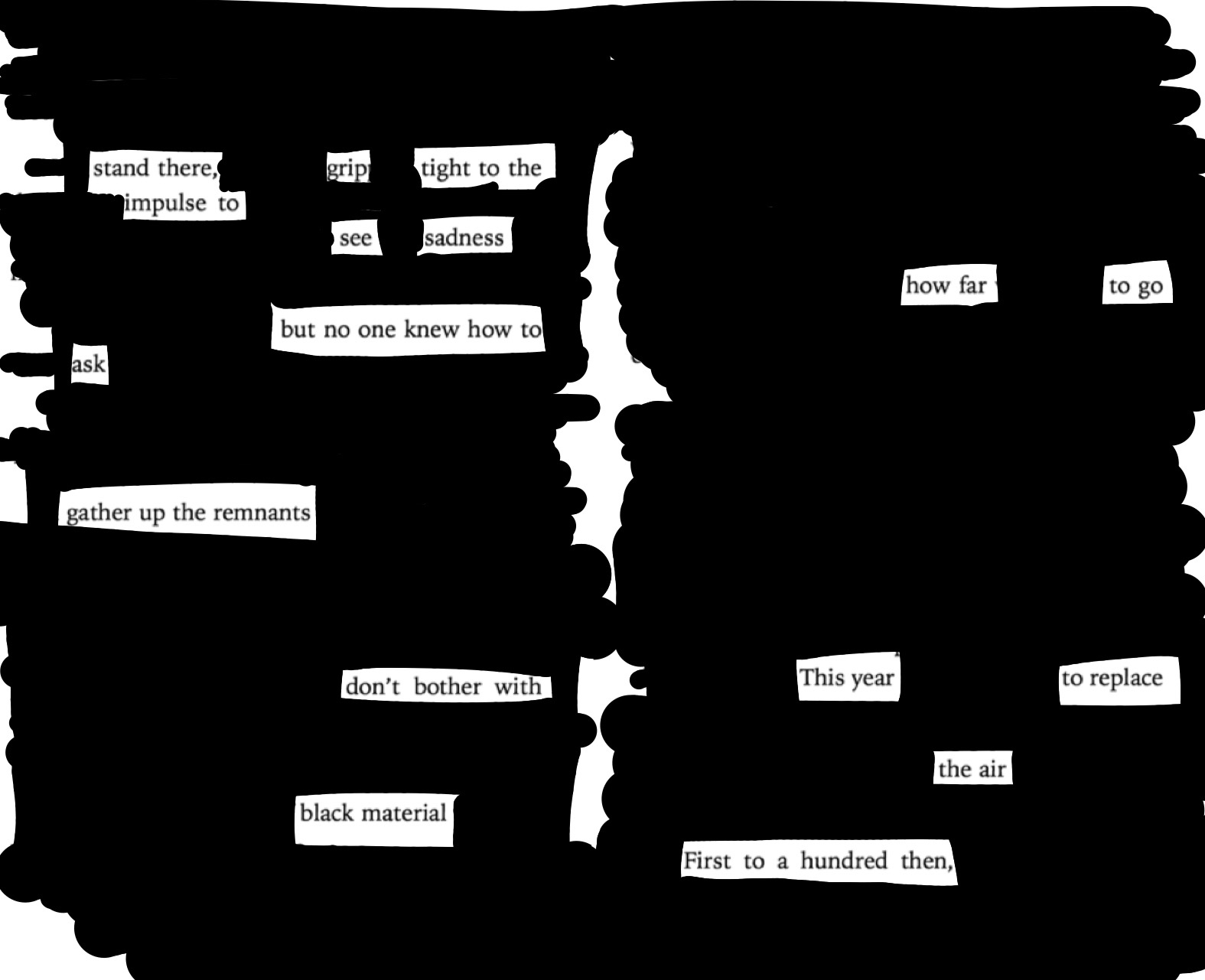
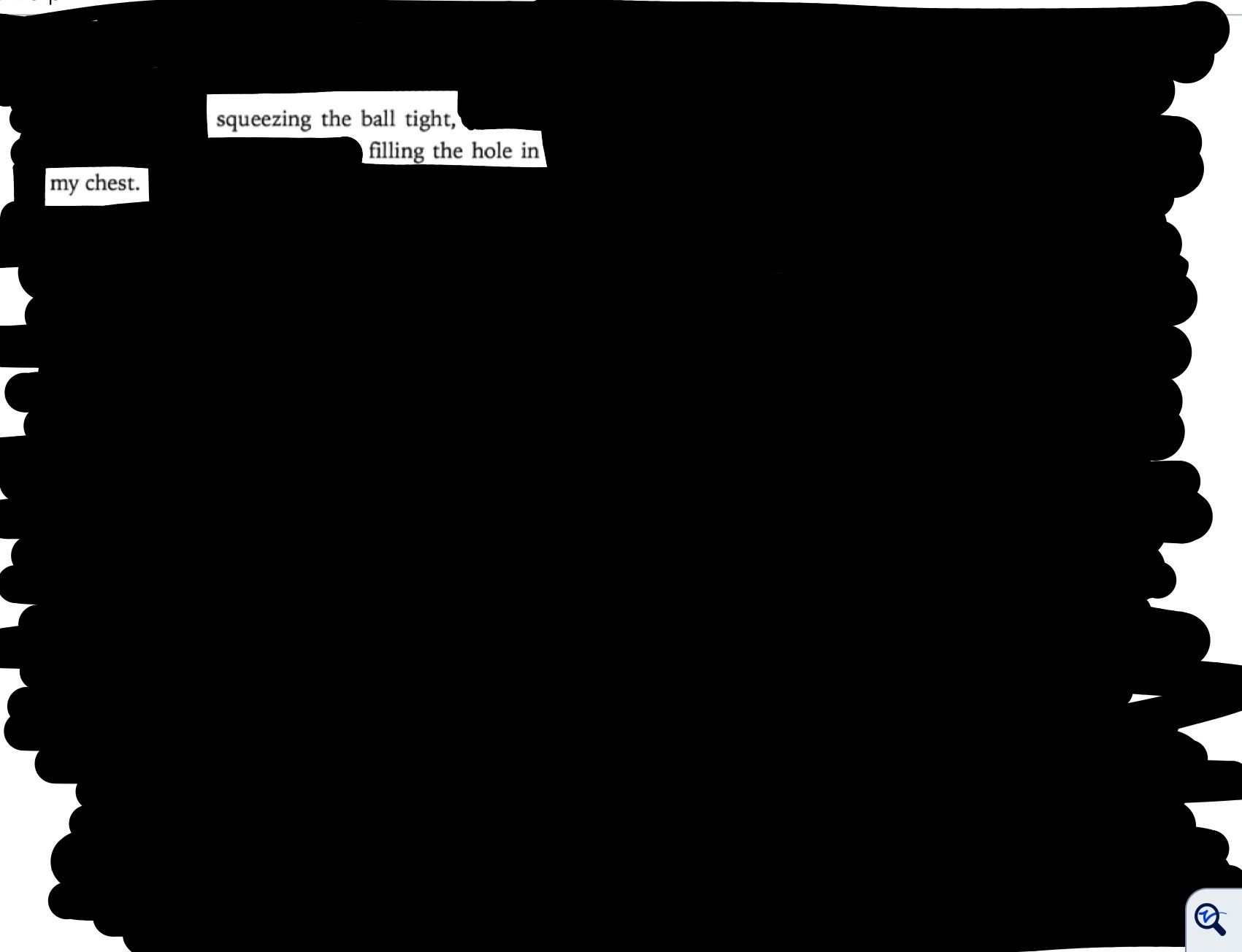
First To A Hundred – A Blackout Poem

The short story, First To A Hundred, by Jodi Cleghorn, appeared in Issue 8 of Tincture Journal. After writing Post Marked: Piper’s Reach together, and after many times making Jodi cry, she had not succeeded in making me reach for a box of tissues to wipe away the tears.

But she did it with this story.

I read early versions and drafts, and it languished for ages without finding a publication until Daniel Young of Tincture took it on.

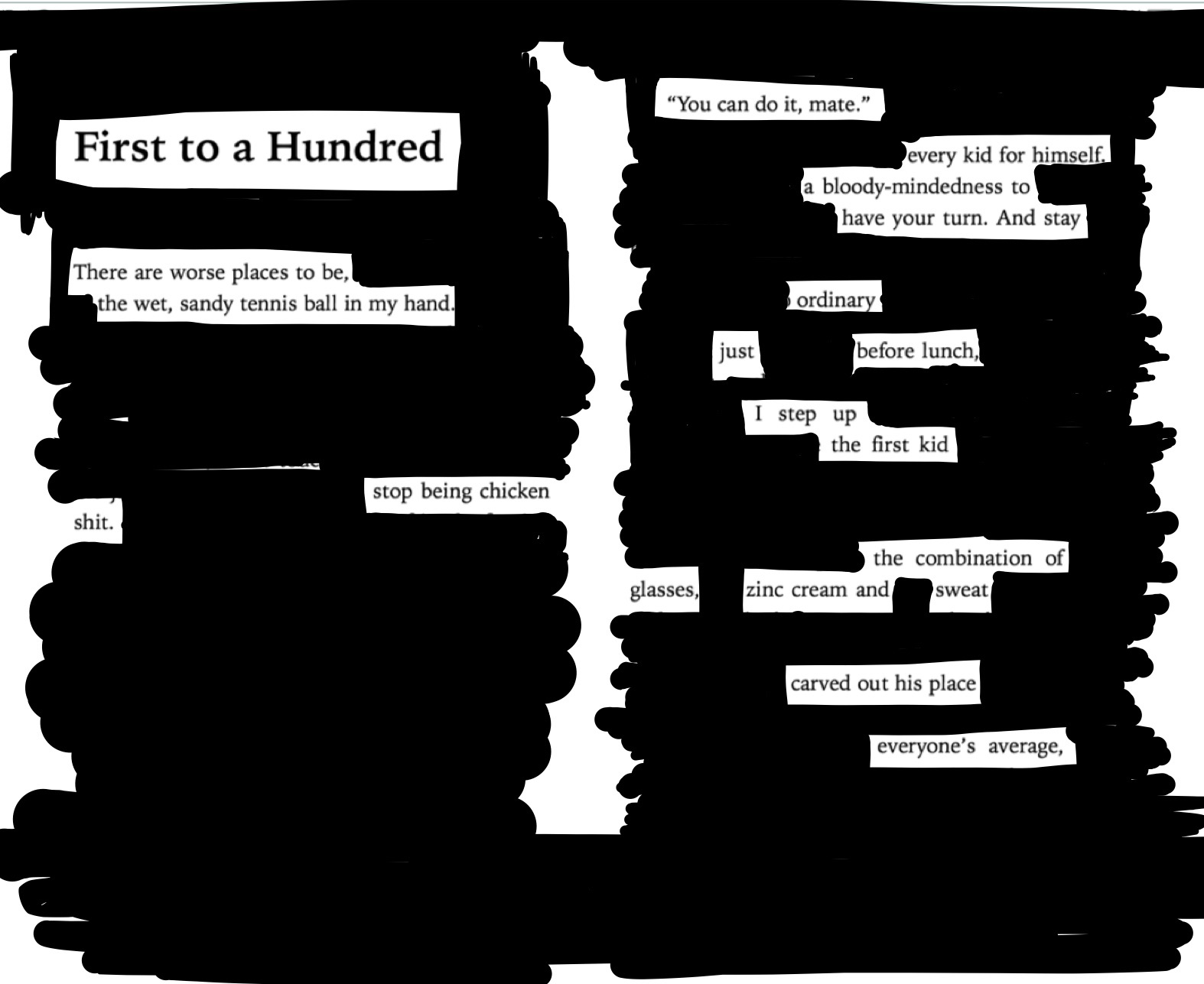
I strongly recommend you go and buy a copy of Tincture and read the story as it is so beautiful. Then drop in here to read this version. As I was creating it, the voice of Dougie came through, almost unconsciously. It wasn’t until I was half way through that I heard the voice more clearly and channelled it for the remainder.

It’s a long story, but well worth the read.

Below is the poem. You will need to read it as a two-panel cartoon (L-R) then down the page.

Enjoy.

image

image

image

image

image

image

image

image image image image

image

image

image